By cutting off oil and gas exploration as part of a global campaign to achieve net zero emissions by 2050, policymakers aligned with climate activists are “misdirecting scarce innovation resources,” according to an analysis of energy transition efforts.
While proponents of Environmental, Social, and Governance investing continue to seize upon the International Energy Agency’s (IEAs) “roadmap” for reaching net zero as a plug for their ambitions, the authors of a new study probing into the agency’s projections find that they are based on faulty assumptions.
The net zero initiatives that IEA foresees can only materialize if demand for coal, oil, and natural gas plummet while consumers gravitate toward so-called renewable energy in the form of wind and solar. But as the report from the RealClearFoundation and the Energy Policy Research Foundation makes clear, this is a dubious proposition.
“Rather than being a plausible description of the future, demand for hydrocarbons withering away is best thought of as an expression of a political or an ideological aspiration, as opposed to an objective assessment of the future,” the report says. “The failure to invest in increased supply is far more likely to result in upwardly spiraling prices as demand increasingly exceeds supply, as the Biden administration understood when it used the Strategic Petroleum Reserve for the nonstrategic purpose of tamping down gasoline prices.”
The foundation is a nonprofit group founded to examine energy economics and policy with an emphasis on energy security. The geopolitical implications of net zero policies and ESG investing figures into its analysis of IEA’s roadmap. A big part of the problem lies with the Organization of Petroleum Exporting Countries, widely known as OPEC, and the leverage it could gain over western nations including the U.S.
If the demand for petroleum is higher than what is projected in IEA’s roadmap, which is highly likely, the foundation estimates that OPEC’s share of global oil market could rise to an astonishing 82 percent by 2050. OPEC includes Iran, Iraq, Kuwait, Saudi Arabia, and Venezuela.
“Wittingly or otherwise, ESG investors are undermining the security interests of the West during a period of rising geopolitical tensions,” the foundation warns in its analysis. The upshot is that the west is well positioned to maintain a healthy level of independence from OPEC with the right mix of policies. The foundation points out that IEA was initially established in response to the “first oil price shock” in the early 1970s “to act as a buyers’ group of western nations in an attempt to counteract OPEC market power.” But given how politically fashionable “net zero” efforts have become, the agency has clearly strayed from its mission.
“The IEA could have chosen to remain faithful to its original mandate, but as the Energy Policy Research Foundation report shows, in seeking to become a cheerleader for net zero, the IEA has allowed itself to be used as a tool for climate extremism, has misled policymakers, and has endangered the world’s economy and Western security, all while forsaking the purpose for which it was created.”
A key part of the foundation’s report focuses on the negative consequences that would flow from halting investment in new oil and gas fields based on the idea that a seamless transition can be made to renewables. American energy consumers can expect to take it on the chin.
In the first decade under net zero emissions, the foundation estimates that global oil and gas fuel receipts will be between $12.2 trillion and $52.6 more than what IEA envisions under its policy scenarios. Put simply, consumers will have to pay more for less oil and gas along with all the costs associated with making the energy transition.
The foundation’s analysis also highlights the environmental degradation that could result from a headlong rush toward net zero that does account for financial and technological realities.
“Reducing oil and gas supply will contribute to various environmental and health effects around the world. First, it will likely lead to a resurgence of coal consumption, as many low- and middle-income countries may struggle to afford higher-priced natural gas for heating, cooking, and electricity generation,” the report warns. “As a result, coal-to-gas switching in many countries may regress, increasing local air pollution and exacerbating health crises in many urban areas.”
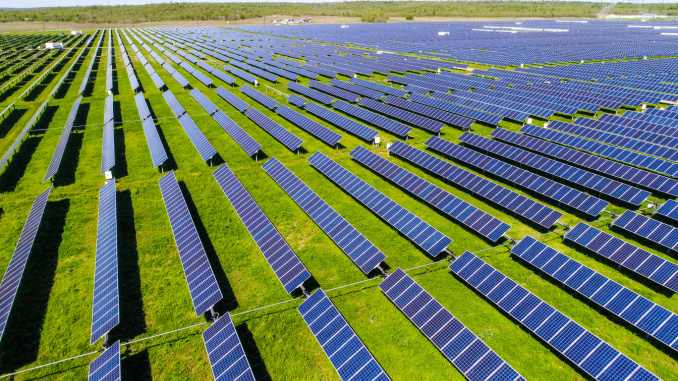
Self-described environmentalists might also want to take a hard look at the amount of land wind and solar could gobble up. The foundation calculates that solar and wind generation capacity needed to achieve net zero requires an area equivalent to the combined size of California and Texas while the bioenergy needed for electricity production would be about the size of France and Mexico combined.
Apparently, there’s more than just raw economics at stake. What environmental advocacy groups typically describe as clean, and green is neither.
The geopolitical, economic, and environmental costs of net zero call out for a political course correction.
Kevin Mooney is a contributor to The Daily Caller News Foundation and the Senior Investigative Journalist at the Commonwealth Foundation, Pennsylvania’s free-market think tank. He writes for several national publications. Twitter: @KevinMooneyDC
We’ve all seen them, the Medicare TV ads exhorting seniors to apply for enhanced benefits. Government appears to be coaxing often reluctant retirees into greater dependence.
But this is a colossally bad idea, even for those of us who support helping citizens in their sunset years. It stimulates greed (it’s freeeee!) and entitlement in the demographic which government programs have already made into the most wealthy. It expands the reach of government into our lives.
But it’s worse than that. The ads are pitching benefits in a program already teetering on bankruptcy. Americans were told that their mandatory payroll contributions were put in a fund to finance payouts in retirement, but that was a lie. Politicians raided the trust long ago and today’s retirees are dependent on the (inadequate) contributions of today’s payers – yes, like any other welfare program.
The rational response would be reforms that include reducing expenses where possible. Instead, we spend untold millions to pump up program outlays. Not smart. Consequences to follow.
But screeching Medicare ads aren’t the only government initiative which, partisan disagreements aside, simply don’t make sense. Take electric cars. They’re touted as a big key to a carbon-free future. We’re pouring public funds into subsidies, charging stations and other enticement for owners.
We may disagree over the feasibility of carbon reduction strategies to ultimately reduce climate change, but it doesn’t matter. Electric cars aren’t the answer. They still require energy that must be produced somehow.
The pollutants may come from an electricity generating plant instead of a car’s exhaust, but the damage done isn’t greatly different. The environmental costs of battery production and disposal as well as the extra power sources needed to service a national fleet of autos make EVs an environmental loser.
But politicians use them anyway to bolster green credentials. Buyers like the subsidies, the perks and driving a cool car. Manufacturers are joining the ranks of the uber-rich. So, the beat goes on.
EVs could have some environmental benefit if nuclear generation sourced their electricity. Once again, stupidity intervenes.
The environmental Left decreed long ago that nuclear was off-limits. Nuclear power plants would henceforth be discouraged by excessive regulation and harassment. The strategy has basically worked, but it’s a shame.
It’s still true that nuclear is by far the most environmentally friendly, non-emitting energy source available. Nuclear-producing France pays 50% less for energy with 10% the amount of pollution experienced by Germany, which sanctimoniously exited the nuclear market years ago.
Here‘s more lunacy. A year ago, America had finally achieved energy independence, after decades of kowtowing to Arab sheiks and oil-rich autocrats . Within days, the Biden administration returned us to supplicant status. Pipeline permits were canceled, offshore drilling cut back and even the remote ANWR oil deposits were shut down.
Meanwhile, with our consent, Russia’s Nord Stream pipeline was approved, which will dominate Western Europe‘s natural gas supplies. Biden unsuccessfully begged OPEC to increase oil production, so US gas prices have predictably skyrocketed and a cold winter looms.
Again, the environmental benefits of our foolishness are nil. Pipelines are the most environmentally safe way of transporting natural gas. The fuels from Russia and the Middle East are no cleaner than ours.
We have more inane policies. Children too young to vote, drink, smoke or drive are now permitted to change their socially constructed gender by irreversibly altering their bodies-without parental consent.
$450,000 payouts are seriously proposed for illegal immigrants who were separated from their children in a humane effort to avoid mixing children with adults during detention. In spite of causing no known harm, GMO bans limit the amount of food available to starving Africans.
The driving force for these nutty, harmful policies is the relentless pursuit of electoral success by pandering to special interest groups. We’ve come a long ways from Thomas Jefferson’s vision of a “wise and frugal government, which shall restrain men from injuring one another…”
Listen to political analysts uncritically predicting the fate of multi-trillion dollar spending bills based solely on how the vote would affect legislators’ prospects for remaining in office another term.
It’s disgraceful, but we expect no more, so that’s what we get.
It turns out that upending Utility energy production and mandating “clean” energy by an arbitrary date costs money. A lot of money actually—to the tune of over $6 billion according to a new study commissioned by the Corporation Commission.
This study comes over a year after the Commission first announced its Green New Deal Energy Rules. Many votes have taken place since then, votes that would impact ratepayers, yet no independent cost analysis had been done until now.
The green energy lobby repeatedly told the Commission that the mandates (which were rejected by a margin of two to one on the ballot in 2018), would actually save ratepayers money and have an economic benefit of $2 billion. Seemingly everyone in the Corp Comm echo chamber and the media actually believed these suspicious figures. Everyone except Commissioner Justin Olson. He introduced an amendment last April to ensure that costs incurred by Utilities to comply with the mandates aren’t passed onto ratepayers. The amendment failed. It turned out that the same people claiming that energy mandates save people money didn’t believe their own hype and fought to kill this ratepayer protection.
We already know that previous mandates have led to higher utility bills and boondoggle projects. The Renewable Energy Standard and Tariff adopted by the Commission in 2006 (requiring 15% renewable energy by 2025) resulted in APS signing a 30-year contract for solar energy costing 400% above market rates. All passed onto the ratepayer.
Thankfully prior to leaping before they looked, the Commission agreed to conduct a study with an independent firm to identify the potential cost of additional mandates. The firm they hired—Ascend—compares 3 different portfolios of energy production: “Least Cost” which relies on utilities pursuing the lowest cost option for consumers, an 80% clean energy mandate by 2050, and a 100% clean energy mandate by 2050. In order to hit the 80% or 100% mandate requirements, utilities would need to phase out all fossil fuels, purchase more solar and wind generation, expand lithium-ion battery storage and convert natural gas generation to green hydrogen…