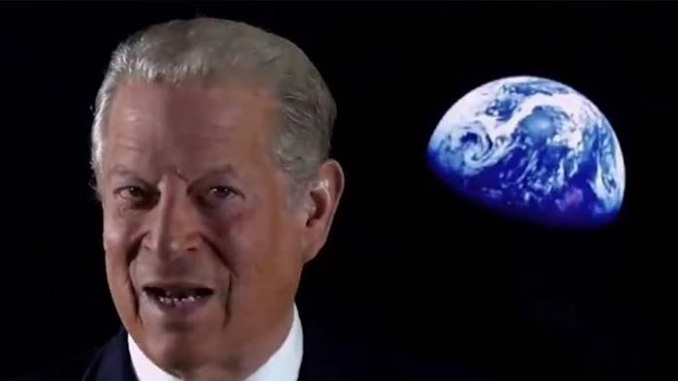
Jan. 24 marked the 20th anniversary of the release of Al Gore’s alarmist global warming movie “An Inconvenient Truth.” Gore has surfed the movie and climate alarmism to a net worth estimated at $300 million and a Nobel Peace Prize.
But the rest of us have been saddled with: (1) a hoax that has debased the field of science; (2) an energy scam that has cost the world more than $10-20 trillion dollars and threatens our national security; and (3) a political power grab that has reduced our freedoms.
Gore’s movie was junk from the get-go. I attended a meeting in early January 2006 where Gore presented the slide show that was the basis for the movie to a group of conservatives at a weekly meeting sponsored by Grover Norquist’s Americans for Tax Reform. After the presentation, I approached Gore and asked if he was interested in participating in some sort of debate about his claims. Although he said he was interested, his staff later declined.
The movie premiered weeks later at the Sundance Film Festival, and the rest is history. And here’s what that history is.
The “documentary” was initially a hit, grossing $50 million in theaters. Problematically, though, the film soon became part of many secondary school curriculums. Its credibility took a major hit in 2007 when a British court ruled that the movie could not be shown to school children with a warning label about its factual errors.
As I noted in a FOX news column at the time, the judge ruled that Gore’s claims about global warming drying up Lake Chad, causing polar bears to drown while being forced to swim farther for food; and shutting down the Gulf Stream were false and/or impossible. Based on the judge’s ruling, I estimated that “the footage that ought to be excised adds up to about 25 minutes or so out of the 98-minute film. What’s left is largely Gore personal drama and cinematic fluff that has nothing to do with the science of climate change.”
Despite the embarrassing ruling, Gore was awarded the Nobel Peace Prize that December. His acceptance speech doubled down on the movie claims and added a few more. None of his predictions came true.
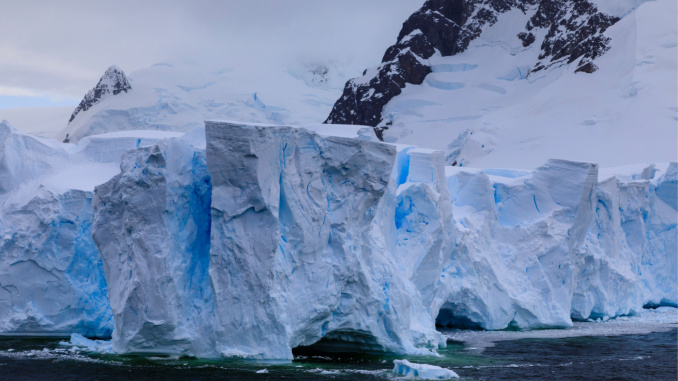
His most well-known prediction was that the Arctic might be ice-free during the summer of 2014. But at its 2025 summer minimum, the Arctic still had more than 5 million square kilometers of sea ice — about the same as in 2007. His lesser known but equally erroneous predictions relate to global temperature, drought and glaciers, agriculture, wildfires, hurricanes, deforestation, and species extinction.
Al Gore inspired former-Marxist-turned-normal-person film director Martin Durkin to produce a counter to “An Inconvenient Truth” called “The Great Global Warming Swindle” that I also reviewed in a FOX News column. Though Gore dodged my debate challenge, I was able to make him “debate” by splicing together clips from Gore’s movie with opposing experts from Durkin’s film. Though now blocked for copyright claims, this “debate” can still be found on YouTube.
After all these years, the one thing Gore has been partially correct about is this: At the beginning of the United Nation’s COP-27 meeting in Egypt in 2022, Gore said “We have a credibility problem, all of us: We’re talking and we’re starting to act, but we’re not doing enough.” He’s correct about his credibility problem. It’s never gone away.
Arizona Senate Majority Whip Frank Carroll (R-LD28) introduced a measure on Tuesday, urging the U.S. Congress to clearly define and limit the Environmental Protection Agency’s (EPA) regulatory authority. Carroll and his cosponsors argue that ambiguous federal power threatens jobs and economic growth in Arizona. The proposal, SCM 1004, was advanced by the Arizona Senate Republican Caucus earlier this week.
Carroll’s measure calls on Congress to affirm its role in setting national environmental policy and to draw explicit boundaries around the EPA’s authority under federal law. The memorial highlights that, under the Clean Air Act, the EPA is charged with setting and reviewing National Ambient Air Quality Standards (NAAQS) every five years to protect public health and welfare, but argues that compliance requirements have grown burdensome for businesses and workers.
“Americans deserve clean air, land, and water, but they also deserve an economy that can grow without unnecessary federal interference,” Carroll said in a statement distributed by the Arizona Senate Republican Caucus. He added that the measure urges Congress to ensure EPA regulations are “grounded in law and sound science” and do not impose undue economic restrictions.
In additional remarks included in the memorial, Carroll said he is seeking to define the limits of EPA authority to prevent what he described as regulatory overreach.
“I am working to clearly define the EPA’s powers to prevent regulatory overreach that negatively impacts Arizona’s economy,” Carroll said. “While the Clean Air Act allows for specific emissions regulations, the EPA must not exceed its authority or violate fundamental principles of separation of powers. By preventing bureaucratic overreach, we can protect both the environment and the economic opportunities Arizona families and businesses rely on.”
SCM 1004 directs the Arizona Secretary of State to transmit copies of the memorial to leadership in both chambers of Congress and all members of Arizona’s federal delegation. The measure notes that while the EPA’s mission is to enforce environmental laws as intended by Congress, concerns over overreach have prompted states to call for clearer statutory limits on the agency’s powers.
Carroll’s push reflects broader national debates over the scope of federal environmental regulation. Critics of recent EPA proposals have warned that aggressive regulatory action could affect industries including agriculture, energy production, and water resources. Such debates have included congressional hearings examining the consequences of EPA actions on sectors like American agriculture and rural economies.
The memorial challenges key assumptions underlying EPA policies formulated under Democratic administrations and proponents of policy such as the ‘Green New Deal’, stating:
“Greenhouse gases like CO2 and methane are not acutely toxic like other hazardous pollutants and have no direct impact on human health;”
“There is no consensus as to whether global warming is a problem or a benefit or how current temperatures fit into the broader climate context;”
“Global temperatures, droughts, floods and hurricanes have not increased with increasing global CO2 emissions;”
The memorial further refutes the EPA’s authority regarding greenhouse gas emissions, stating directly: “The EPA has no explicit statutory authority to regulate greenhouse gases.”
The memorial comes amid ongoing statewide discussions about the balance between environmental protection and economic growth, with Arizona lawmakers questioning the appropriate reach of federal agencies in areas ranging from air and water quality to land use and energy development.
SCM 1004 was co-sponsored by a group of Republican Arizona Senators, including Hildy Angius (R-LD30), David Gowan (R-LD19), Kevin Payne (R-LD27), Janae Shamp (R-LD29), and Thomas “T.J.” Shope (R-LD16).
The Trump administration took a major whack at the climate-industrial complex this week. It’s a fantastic move. But another event this week spotlights the need to do more.
White House Office of Management and Budget Chief Russ Vought announced this week that the Trump administration would “be breaking up the National Center for Atmospheric Research (NCAR) in Boulder, Colorado.” Vought added: “This facility is one of the largest sources of climate alarmism in the country. A comprehensive review is underway and any vital activities such as weather research will be moved to another entity or location.”
The announcement put climate hoaxers into orbit.
In “Trump officials to dismantle ‘global mothership’ of climate forecasting,” the Washington Post reported: “The announcement drew outrage and concern from scientists and local lawmakers, who said it could imperil the country’s weather and climate forecasting, and appeared to take officials and employees by surprise.”
“If true, public safety is at risk and science is being attacked,” Democratic Colorado Gov. Jared Polis said. “Climate change is real, but the work of NCAR goes far beyond climate science. NCAR delivers data around severe weather events like fires and floods that help our country save lives and property, and prevent devastation for families,” he added.
NCAR “is quite literally our global mothership,” said the Nature Conservancy’s chief scientist. “Dismantling NCAR is like taking a sledgehammer to the keystone holding up our scientific understanding of the planet,” she added.
Beam’em up, Scotty.
While NCAR does valuable research related to weather, its climate-related work is awful. In 1970, NCAR researchers predicted that a new ice age would set in during the first third of the 21st century – i.e., right about now.
In 1979, NCAR climate legend Stephen Schneider predicted that global warming could cause the entire East Coast to be flooded within decades – i.e., right about now.
In 2009, NCAR all-star researcher Kevin Trenberth was caught in the Climategate e-mail scandal admitting to fellow climate hoaxers: “The fact is that we cannot account for the lack of warmth at the moment, and it is a travesty that we can’t.”
The good news is that the weather work NCAR does will continue. But NCAR’s always wrong, if not ridiculous, climate hoax work will be cut.
But as with other Trump administration efforts to terminate the climate hoax, fixing NCAR is not enough. Earlier this week, the National Oceanic and Atmospheric Administration (NOAA) issued its annual “Arctic Report Card,” in which it claimed (as usual) that the Arctic is heating up faster than the rest of the planet. The climate hoax-friendly media outlet, The Guardian, headlined the story as “Arctic endured year of record heat as climate scientists warn of ‘winter being redefined.”
The science problem with NOAA’s report card is that it lacks any historical perspective. We don’t have very good data on the Arctic. The Soviet Union established the first temperature station near the North Pole in 1937. But summer ice melt washed it away. The U.S. didn’t make it to the Arctic until 1952 – in a submarine. The satellite record of the Arctic didn’t begin until 1979, which was the very end of the mid-20th century cooling period and so Arctic ice was at a peak.
It started warming in the 1980s – no one knows why for sure – and Arctic sea ice extent began to shrink. Arctic sea ice extent stopped shrinking in the mid-2000s (despite huge emissions growth) and has never been close to ice-free in the summer as Al Gore predicted it would be by 2014.
Yet NOAA is still sounding the climate alarm. The White House needs to get on top of NOAA and give it the NCAR treatment: Weather, yes. Climate, no.
The Environmental Protection Agency officially proposed to terminate what President Trump has long called the “climate hoax.” If successful, the federal government will be out of the climate regulation business with no hope of returning to it without congressional authorization.
The Trump EPA proposed to rescind a 2009 Obama EPA rule called the “endangerment finding.” In that rulemaking, the Obama EPA determined that emissions of greenhouse gases threatened human health and welfare by causing global warming. Simultaneously with the EPA proposal, the Trump Department of Energy issued a scientific report summarizing why emissions are actually a good thing and threaten nothing.
The scientific findings, however, are superfluous since EPA never had express authority from Congress to regulate greenhouse gases under the Clean Air Act in the first place. Controversy and litigation about EPA’s authority to regulate greenhouse gases resulted in the 2007 Supreme Court decision in Massachusetts v. EPA. In that case, the Court determined in a 5-4 holding that EPA could, but did not have to, regulate emissions.
But the decision was controversial. Clean Air Act co-author and famed Democrat Congressman, the late John Dingell, afterwards stated: “I think the Supreme Court came up with a very much erroneous decision on whether the Clean Air Act covers greenhouse gases. I was present when we wrote that legislation and we thought it was clear enough that it did not, and we didn’t clarify it thinking that even the Supreme Court was not stupid enough to make that finding.”
Following the decision, the Bush EPA decided that it would not regulate emissions. When the Obama administration came into power in 2009, it reversed the Bush EPA’s decision and began using the endangerment finding as the basis for regulation of smokestack and tailpipe emissions of greenhouse gases.
Although many questioned the scientific basis of the Obama EPA’s decision, it was impossible to get a judicial hearing on the science. Federal judges informally decided decades ago that they would defer to regulatory agency decisions on questions of science.
With the endangerment finding apparently firmly in place, the Obama administration, and later the Biden administration, proceeded to regulate tailpipe and power plant emissions of greenhouse gases.
Cracks in the ability of EPA to use the endangerment finding soon began to appear. In 2014, the Supreme Court determined that the Clean Air Act did not authorize EPA to use the endangerment finding to regulate emissions of greenhouse gases from industrial smokestacks. In 2022, the Supreme Court in West Virginia v. EPA nullified an effort to regulate emission from power plants, holding that EPA could not launch major regulatory programs without express congressional authorization.
Today, all that remains of EPA’s endangerment finding-based rules are tailpipe regulations in the form of the Biden EPA’s de facto EV mandate, a rule that the Trump administration is in the process of reversing.
Since the Obama EPA made the endangerment finding, electricity prices have soared. Gas prices and inflation soared during the Biden administration. Tens of thousands of high-paying coal miner jobs have been destroyed and their communities devastated.
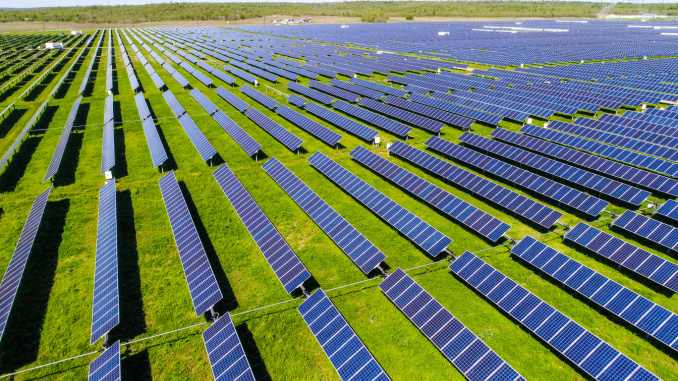
Our electricity grid has been made less reliable by the advent of existentially subsidized wind and solar power. Periods of peak electricity demand like summer heat waves and winter cold spells now routinely result in blackout/brownout warnings. This problem will get worse before it gets better with the ongoing electricity demand from AI data centers and the re-industrialization of America.
Blue states and their climate activist allies will no doubt sue the Trump EPA to stop the rescission of the endangerment finding. But all this will accomplish is the Supreme Court almost certainly reversing its original sin committed in Massachusetts v. EPA. Some of us can’t wait.
Steve Milloy is a contributor to The Daily Caller News Foundation, a biostatistician, and lawyer, who publishes JunkScience.com and is on X @JunkScience.
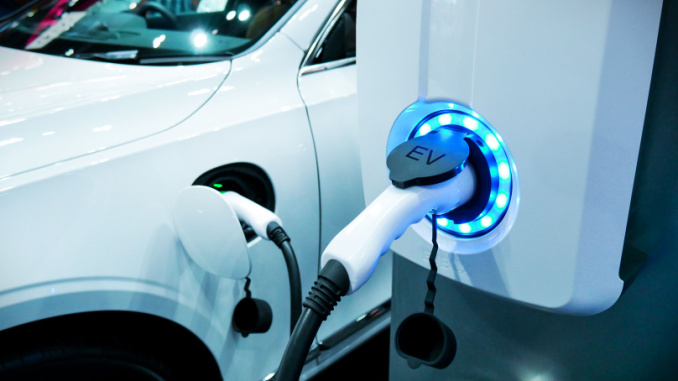
Electric vehicles have become the centerpiece of the plan to ward off climate change by drastically reducing greenhouse gas emissions. The Biden administration seems to feel that if we can just get people to plug in their cars to a non-emitting electrical socket instead of filling up with carboniferous fossil fuels – voila! By 2050 we’ll be at zero-carbon emissions, no problem.
That would be a nice world, but it’s not the one we live in. In fact, EVs check virtually every box indicating an unrealistic policy bound for failure.
For starters, personal vehicles aren’t even the right target, despite the claim of the Union of Concerned Scientists that they are a “major cause of global warming.” The New York Times agrees that cars are a “major driver of climate change.”
Really? Transportation globally accounts for 20% of total emissions, but cars and vans are only 8% while personal vehicles, because they accumulate less mileage, generate just 3% of all emissions. But the U.S. owns just 12% of the world’s cars. That means that just 0.36% is the global carbon reduction we would achieve if every American car were electrified and if all carbon emissions were thereby eliminated.
But it gets worse. EVs don’t necessarily reduce carbon emissions at all. Energy must still be produced to power them, like any other car. It just happens in a different location.
The net emissions of an EV depend on how its electricity is generated. Since fossil fuels still generate the bulk of our power, many EVs are a little more than carbon neutral. Moreover, the manufacture and eventual disposal of the required batteries are intensely energy consuming.
California, New York, and other states plus the EU have promised to be fully EV by 2035. But these states are already straining under the increased demands of a power-hungry world even without EVs.
The task of fueling all these EVs would be overwhelming. According to one estimate, achieving a “net-zero economy” for New York would require building 2,500 giant, 680-foot tall turbines, which would hopefully generate electricity 40% of the time.
The turbines would require 110,000 tons of copper alone, for which 25,000,000 tons of copper ore would have to be mined and processed, after removing 40,000,000 tons of overlaying rock. Then, birds, bats, and endangered species would be regularly massacred by the millions. And that’s only for one state.
The unwelcome fact is that sustainable fuel sources have received massive subsidies for years to “help them get started.” Yet wind, solar, and other minor sources of energy still produce just 12% of global demand and have yet to demonstrate the potential to replace fossil fuels in the future as the main source of energy for EVs.
EVs are more popular with green activists than with drivers. They accounted for just 5.8% of all auto sales last year, despite being heavily subsidized. Buyers benefit from generous production subsidies, from fueling subsidies, from special driving privileges such as use of HOV lanes, and are unfairly excused from participating in the fuel taxes which fund road construction and repair.
Yet most consumers still find the extra cost of an EV is not justified. Automakers, with the notable exception so far of Tesla, are beginning to feel the pinch. Many were bull rushed into EV production by government pressure and subsidies as well as fear of getting left out of the presumed coming boom market.
But now Ford, for one, expects to lose $3 billion on EV production this year. Volkswagen is cutting back on EV production as well, stating that “we are noticing customer reticence quite vehemently in the electric world.” It’s going to take a mountain of subsidies and mandates to get anywhere near 100% EVs by 2035.
There are other big problems too. The batteries average 1,000 pounds or so in weight, resulting in excessive wear to roads and bridges. Collisions are more damaging – for the other guy. There are not nearly enough mines, metals, and minerals on earth to supply EV battery manufacture. EVs are an ineffective solution to an exaggerated problem. We can only hope environmental alarmists come to their senses before their unrealistic dreams bankrupt us all.
Dr. Thomas Patterson, former Chairman of the Goldwater Institute, is a retired emergency physician. He served as an Arizona State senator for 10 years in the 1990s, and as Majority Leader from 93-96. He is the author of Arizona’s original charter schools bill.