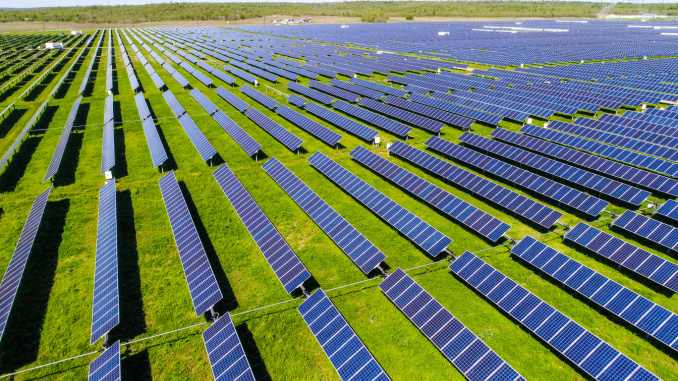
In the first five months of 2025, solar and wind dominated new U.S. electricity generation. Of the 15 gigawatts (GW) added, solar was 11.5, wind was 2.3, and gas was just 1.3, according to the Federal Energy Regulatory Commission (FERC). Industry voices like Stephanie Bosh of the Solar Energy Industries Association hail this as proof that solar delivers power “faster and cheaper than any other source.” Is this true?
As we accelerate toward a grid increasingly reliant on wind and solar, a closer look reveals a troubling reality: these intermittent sources are driving up electricity costs, not slashing them, through a web of hidden expenses that threaten reliability and affordability.
Solar and wind’s part-time nature is the root issue. Solar generates nothing at night, little in the first and last hours of daylight, and falters under clouds, rain, or snow. Wind generation varies unpredictably. This intermittency doesn’t just displace fossil fuels like natural gas and coal—it forces them into inefficient backup roles.
Calling fossil fuels backups is a misuse of the English language that only serves the wind and solar industrial complex. It’s equivalent to calling the starting pitcher a backup in favor of a pitcher who can only play when the wind blows or the sun shines.
Hydrocarbon, coal and natural gas plants, with fixed costs (capital, maintenance, and employees) comprising 60-75% of operational costs, must raise prices on reduced sales volumes to break even. As renewables flood the market during peak production, they suppress wholesale prices temporarily, where subsidized low-bid renewables set the prices for all. In other grids, they get windfall profits, getting the highest price paid for electricity.
Yet, in the “pay-as-clear” system, evening ramps or scarcity periods spike prices, as expensive peaker plants — needed more frequently for renewable gaps caused by the addition of wind and solar — set the highest price, which is paid to all.
Consider the evidence from high wind and solar regions. California’s residential rates are 30-35 cents/kWh—nearly double the U.S. average of 17 cents — despite 50% wind and solar. Germany’s prices top 36-41 cents/kWh with 55% from wind and solar; Denmark and the UK follow suit at 37 and 29-32 cents, respectively.
These ambitious transitions expose the myth: wholesale dips from renewables are overshadowed by retail hikes from taxes, subsidies, grid upgrades, peakers, and using full-time coal and natural gas part-time.
In California, demand from EVs and data centers exacerbates this, and intermittency demands more peakers. These peaker plants run inefficiently, emit more when ramping up, and charge more because they are only used some of the time, causing costly price spikes. They set the price all generators are paid with the take-and-pay system.
In a grid of only hydro, nuclear, gas, and coal — dispatchable sources—peaker needs plummet. These can load-follow predictably, handling demand peaks without the supply volatility renewables cause. Hydro ramps quickly; nuclear provides steady baseload, natural gas and coal are dispatched to match demand. The system worked and was cost effective.
Pre-renewable grids used peakers sparingly, at 4-10%, versus 20% or more in solar-heavy systems like California, where the solar “duck curve” (charting solar generation creates a graph that looks like a duck, no production at night, the belly of the duck, ramp up during the day, the neck of the duck, with a sharp drop as the sun sets, the downward beak of the duck) requires rapid evening ramps of 10-20 GW.
Adding renewables means building more costly, underutilized peaker plants, inflating bills. Cancelling out much of the CO2 emission reductions that are the stated reason for adding costly disruptive wind and solar.
Transmission costs compound the problem. Wind thrives in remote plains or offshore; solar thrives in distant deserts. Connecting these to cities demands expensive high-voltage lines that cost $1-3 million per mile. Thousands of more miles than are needed for nearby hydrocarbon or nuclear plants.
U.S. estimates peg a price tag of $450 billion by 2035 for renewable integration, adding at least 2 cents/kWh to rates. In Germany, €70 billion in upgrades add 3 cents/kWh. Claims of renewables being “cheaper” rely on levelized cost of electricity (LCOE), ignoring transmission and peaker costs. Solar’s $30-50/MWh jumps 30% or more when transmission and backups are factored in.
FERC projects 84% of 133 GW additions by 2028 will come from wind and solar, making our grids less reliable and more expensive.
Policies like the One Big Beautiful Bill Act, which stripped tax subsidies and credits may slow growth, but the trend persists. We need honest accounting. We cannot ignore the wind and solar reality: more blackouts and ever higher prices.
Arizona utilities providers recently revealed plans to partner with an emerging energy market.
Earlier this week, representatives from Arizona Public Service (APS), Salt River Project (SRP), Tucson Electric Power (TEP), and UniSource Energy Services made news by announcing that their utility companies would be joining Southwest Power Pool’s (SPP) Markets+. The partnership would take place starting in 2027 if the fledgling market receives the final green light from the Federal Energy Regulatory Commission (FERC).
According to the release issued by the state energy providers, an energy market “is an interconnected network of electricity providers that help meet the supply and demand of power across a specific geography and include transmission pathways for electricity to travel from one location to another.” For example, “When demand is lower, the Arizona utilities can sell energy, like excess solar power during the winter season, to maintain a balanced electric system, while also taking advantage of cost-savings opportunities.”
The Arizona utilities promise “increased reliability, greater cost savings, [and] more clean energy” for state customers after the partnership would take effect. It is projected that this market would save approximately $100 million from the status quo, which would be, in part, realized by the energy customers of the participating companies.
“Arizona is one of the fastest growing states in the country and we are thoughtfully planning for the future and evolving our operations to continue to provide top-tier service and reliability to our customers at an affordable cost,” said Brian Cole, APS Vice President of Resource Management. “Together with our neighboring utilities, APS plans to join Markets+ to efficiently deliver energy and bolster the resilience of our shared energy grid in Arizona and across the region.”
“SRP’s participation in SPP Markets+ is a key component of our plan to meet the growing energy needs of our customers reliably and affordably and will help us achieve our 2035 Sustainability Goals,” said Josh Robertson, SRP Director of Energy Market Strategy. “We look forward to working with utilities in the region to bring the cost and resilience benefits to our respective customers.”
“Tucson Electric Power and UniSource Energy Services are excited about the value that Markets+ can provide to our customers, including cost savings and greater access to clean energy and other resources that support affordable, reliable service,” said Erik Bakken, TEP Senior Vice President. “We look forward to strengthening an already collaborative, productive relationship with Southwest Power Pool, our reliability coordinator, in its new role as market operator.”
Daniel Stefanski is a reporter for AZ Free News. You can send him news tips using this link.
Another Arizona governing body has intervened in a critical issue in place of the state’s attorney general.
Last week, the Arizona Corporation Commission (ACC) intervened in a matter at the Federal Energy Regulatory Commission (FERC), protesting BlackRock, Inc.’s Request for Reauthorization and Extension of Blanket Authorizations to own utilities. The Environmental Social Governance (ESG) – related filing was led by a coalition of state attorneys general from around the nation and the ACC.
The coalition requested that FERC decline to approve BlackRock’s application unless the following four conditions are met:
“The Commission must require that Applicants, including all affiliates and subsidiaries, limit their collective ownership to 20% or less of the shares of each FPA-covered utility.
“Applicants must function only as passive investors.
“Applicants must hold the shares subject to their fiduciary duties to their investors, including the duty to act in the sole financial interest of the investors.
“The Commission should require specific reports by Applicants of every instance when the asset managers voted contrary to the recommendation of utility management on a shareholder proposal or board of director nomination, as well as an explanation of how such votes were consistent with the asset manager’s commitments to FERC.”
Freshman Commissioner Kevin Thompson, who pushed hard for the commission to join the legal protest, told AZ Free News, “We need utilities to make decisions based on what makes the most sense for ratepayers and the integrity of our grid, not the policy goals of ESG-minded asset management cartels. This Commission is taking a more proactive role in federal matters that impact Arizona ratepayers and our grid because FERC and other federal agencies have rapidly been exerting their influence in matters that should be left up to state regulators and our utilities.”
Joining the Arizona Corporation Commission on the filing were the States of Utah, Arkansas, Florida, Idaho, Indiana, Iowa, Kentucky, Louisiana, Mississippi, Missouri, Montana, Nebraska, North Dakota, South Carolina, South Dakota, Tennessee, Texas, Virginia, and Wyoming.
The Corporation Commission’s involvement with this coalition mirrors the Arizona Legislature’s repeated efforts the past two years to join with other state officers in attempts to defend laws and protect the interests of their constituents. Both the Commission and the Legislature have been forced into acting as the state’s defacto attorney general due to Arizona’s top prosecutor, a Democrat, being unwilling to stand against certain infractions or questions of legality for state and federal laws.
The intervention into the ESG-related matter marks another instance of leadership by Arizona Republicans on this issue. The ESG movement has sought to advance an environmental agenda to bring an end to traditional and reliable energy investments across the country and world, and many have challenged the legality of such efforts in various industries. Before the current Democrat administration, the state had a Republican Attorney General Mark Brnovich, who led a handful of early ESG skirmishes. Arizona Treasurer Kimberly Yee has also joined other state financial officers over the years to oppose pro-ESG actions.
Daniel Stefanski is a reporter for AZ Free News. You can send him news tips using this link.
On Monday, Arizona Attorney General Mark Brnovich petitioned Congress to reject legislation reducing states’ land-use and energy rights in order to federalize the energy grid.
The letter warned that the legislation would empower private companies to wield the authority of eminent domain against state land, enable the Federal Energy Regulatory Commission (FERC) to construct whenever and wherever it desires regardless of state input, and authorize private companies to pass on the construction costs of new facilities from one state to another.
“These provisions eviscerate state sovereign authority, commandeer companies to carry out the will of a three-vote majority of FERC Commissioners, undermine the power of each citizen’s vote to decide policies at the state level, and inevitably force the citizens of our states to subsidize the costs of expensive and unreliable energy policy preferences of California and New York,” stated the letter.
The letter also noted that Congress was rushing the legislation through without the transparency of committee hearings, markups, or debate.
Brnovich warned in a press release that the proposed legislation, the Energy Independence and Security Act of 2022, would burden Arizonans with other states’ problems.
“The Act is unfair and takes power from states to decide policies for their own people,” said Brnovich. “Arizona and Louisiana should not be forced to pay for California and New York’s expensive energy preferences.”
Senate Majority Leader Chuck Schumer (D-NY) and Senator Joe Manchin (D-WV) introduced the legislation under the promise of creating energy independence, citing the ongoing Russian war abroad.
THREAD: If the United States wants to remain the superpower of the world, we must have energy independence. The Energy Independence and Security Act of 2022 will make necessary permitting reforms to ensure we can produce the cleanest possible energy for ourselves & our allies. pic.twitter.com/ehJ045mgSz
Some renewable energy analysts say that the legislation would help fast-track the country’s adoption of “clean” energy.
The Energy Independence and Security Act of 2022 is out! @SenSchumer , @Sen_JoeManchin led. We think it can drive a very large amount of clean energy, because transmission is renewable energy's biggest barrier. Importantly, NEPA is preserved, including public participation.🧵
Brnovich joined a coalition of 18 states led by Louisiana Attorney General Jeff Landry to request the rejection of the legislation: Alabama, Alaska, Arkansas, Georgia, Indiana, Kansas, Kentucky, Mississippi, Missouri, Montana, Nebraska, South Carolina, Tennessee, Texas, Utah, and Virginia.
Louisiana Attorney General Jeff Landry is leading a coalition of 18 states in vocal opposition to the Energy Independence and Security Act of 2022.