As host of the Sept. 9 G20 summit, India is ready to defend its use of fossil fuels despite the hostility of some of its guests toward the energy source.
Speaking at a pre-summit conclave organized by local media, Union Power Minister R.K. Singh answered criticism that his country is a large emitter of carbon dioxide from its use of fossil fuels, particularly coal. Calling the criticism ridiculous, he said that “you don’t decide on the emissions depending on the size of the country. A small island will be consuming huge quantities of energy per capita, yet its total emissions will be less. You have to talk about it in per capita terms … The narrative has to change.”
India’s per capita emissions are lowest among the top users of fossil fuels and much lower than the global average. This means many Indians continue to consume energy at a rate well below levels reached decades ago in the developed West.
G20 attendees will include the U.S., U.K., Canada, Germany and others, whose leaders seek to eliminate the use of fossil fuels in developing nations even though coal and oil helped to produce western wealth in the Industrial Revolution.
“If you have an economy that is growing at 7%, electricity from coal will also grow,” the minister said. “We will meet the energy requirement for our growth because we have a right to grow. The hypocrisy of developed countries is amazing.”
Mr. Singh pointed out the inconvenient fact that renewables are not a realistic alternative to fossil fuels for generating large amounts of electricity. The requirement to back up wind and solar with batteries increases their cost by nearly fivefold, he said.
The cost of renewables is not just an issue in developing economies. Even in the wealthiest countries, wind and solar are notorious for increasing the overall cost of power.
Writer Michael Shellenberger argues that consumers have been bearing much of these costs. For example, he says that “renewables had contributed to electricity prices rising 50% in Germany and five times more in California than in the rest of the U.S. despite generating just 17% of the state’s electricity.”
Availability and affordability of raw materials for batteries are also a growing concern. Contrary to popular claims that the prices of storage systems have declined, data show that their raw materials are becoming more expensive.
According to Energy Storage News, “Lithium-ion battery pack prices have gone up 7% in 2022, marking the first time that prices have risen since BloombergNEF began its surveys in 2010. The finding that average pack prices for electric vehicles and battery energy storage systems have increased globally in real terms … confirms the consequences of what the industry has been confronted with in recent months.”
Given these uncertainties, countries like India will not commit to any ambitious renewable transition goals. This is evident, given how India has been increasing its dependency on fossil fuels while simultaneously increasing its renewable capacity.
While India may give outward signs of interest in renewable energy installations, it will not risk the cost of risking blackouts or stunted economic growth by overreliance on high-cost wind and solar energy.
Vijay Jayaraj is a contributor to The Daily Caller News Foundation and Research Associate at the CO2 Coalition, Arlington, Virginia. He holds a master’s degree in environmental sciences from the University of East Anglia, UK.
For years, the Arizona Corporation Commission (ACC) has been the stomping ground for the left to push its Green New Deal Agenda. In fact, it was just over two years ago when the commission quietly released its plan to impose California-style energy mandates in our state. Their goal was to ban fossil fuels and require most electricity companies to provide “clean” energy by 2050. Thankfully, the commission voted down these energy mandates in January 2022. But that hasn’t stopped the left from trying to find other ways to exploit the ACC.
One of their latest efforts has centered on Tucson, and as part of its Green New Deal agenda, Tucson Electric Power (TEP) asked the ACC for rate hikes to subsidize electric vehicles. But TEP didn’t get everything it wanted…
Is the much-hyped “energy transition” starting to crumble at its foundations now? In recent weeks we have seen the following:
Ford Motor Company warns investors its electric vehicle division will lose $4.5 billion in 2023;
Reports that China has commissioned another 50 GW of new coal-fired electricity generation capacity;
The British government led by Prime Minister Rishi Sunak beginning to back away from absurdly aggressive transition timelines amid public outcry over rising energy bills and other deprivations;
The German government continuing to reactivate mothballed coal plants and facilitating new mining for coal;
The Scottish government forced to admit it has facilitated the felling of 16 million trees in this century to make way for new wind farms;
The Japanese government moving to reinvigorate its own coal-fired power sector;
Global demand for crude oil rapidly growing and outpacing supply growth, surprising all the supposed experts;
The U.S. Department of Energy forced to admit its initial estimate of consumer “savings” from converting from gas stoves to more expensive electric models was grossly overstated.
This list could go on and on, but the macro view is clear: Everywhere one looks, the aggressive timelines and heavily subsidized plans for a rapid transition are falling apart. Nowhere is the dynamic becoming clearer than in the wind industry.
In an Aug. 7 report titled “Wind Industry in Crisis as Problems Mount,” the Wall Street Journal catalogues $30 billion in planned investments in new wind projects in the U.S. and elsewhere that have now been delayed due to an expanding variety of factors. “After months of warnings about rising prices and logistical hiccups, developers and would-be buyers of wind power are scrapping contracts, putting off projects and postponing investment decisions,” the story says, emphasizing that the problems are becoming especially severe in the offshore wind business that has been so heavily promoted by the Biden administration.
I wrote a story in July detailing the fact that some of the so-called “Big Oil” companies have recently made big inroads into the offshore wind business, winning bids in the U.S. and Germany for licenses to develop large projects. But the Journal’s story quotes Anders Opedal, CEO of Norwegian oil giant Equinor, saying, “At the moment, we are seeing the industry’s first crisis.”
Along with British oil major BP, Equinor has plans in place to develop three wind farms off the Atlantic coast of New York, but recently warned state officials they would need to renegotiate power prices or the projects would not be able to obtain the needed financing. This demand by the two oil companies echoed a call by traditional wind developer Orsted in June for more subsidies from the U.K. government if its planned projects in the North Sea are to remain viable.
Make no mistake about it: Developing these offshore wind projects doesn’t come cheap. Orsted pulled out of a competitive bidding auction in Germany last month for government licenses to develop 7 GW of new offshore wind capacity when BP and French oil major TotalEnergies ran the final bids up to almost $14 billion.
“Orsted very deliberately chose not to pay record high concession prices for new offshore projects in Germany,” Orsted CEO Mads Nipper said in a post on LinkedIn. Orsted objected to the process that awarded the licenses based on the willingness of developers to pay the government for the right to develop — the same process used in oil and gas leasing all over the world — rather than the government offering more and more subsidies to incentivize development.
Therein lies the central conundrum for this subsidized transition: At some point, wind, like solar, electric vehicles and all the other rent-seeking solutions being promoted in this energy transition will have to become viable without an expectation of permanently rising subsidies, since governments already seeing their credit ratings downgraded due to overwhelming debt won’t be able to just keep printing money forever.
But, at the present moment, the business models in play do not appear to be headed for that outcome. And that’s why this energy transition seems to be falling off the rails.
David Blackmon is a contributor to The Daily Caller News Foundation, an energy writer, and consultant based in Texas. He spent 40 years in the oil and gas business, where he specialized in public policy and communications.
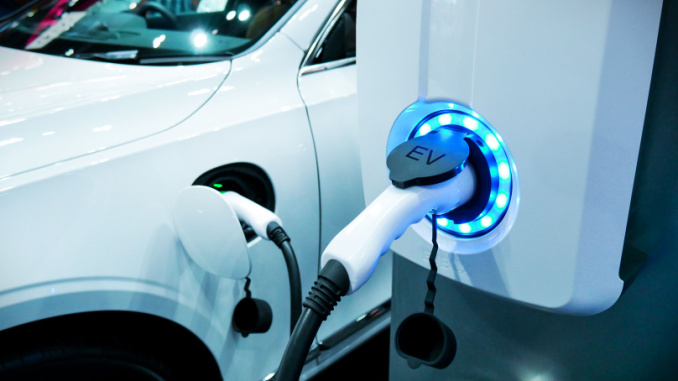
Electric vehicles have become the centerpiece of the plan to ward off climate change by drastically reducing greenhouse gas emissions. The Biden administration seems to feel that if we can just get people to plug in their cars to a non-emitting electrical socket instead of filling up with carboniferous fossil fuels – voila! By 2050 we’ll be at zero-carbon emissions, no problem.
That would be a nice world, but it’s not the one we live in. In fact, EVs check virtually every box indicating an unrealistic policy bound for failure.
For starters, personal vehicles aren’t even the right target, despite the claim of the Union of Concerned Scientists that they are a “major cause of global warming.” The New York Times agrees that cars are a “major driver of climate change.”
Really? Transportation globally accounts for 20% of total emissions, but cars and vans are only 8% while personal vehicles, because they accumulate less mileage, generate just 3% of all emissions. But the U.S. owns just 12% of the world’s cars. That means that just 0.36% is the global carbon reduction we would achieve if every American car were electrified and if all carbon emissions were thereby eliminated.
But it gets worse. EVs don’t necessarily reduce carbon emissions at all. Energy must still be produced to power them, like any other car. It just happens in a different location.
The net emissions of an EV depend on how its electricity is generated. Since fossil fuels still generate the bulk of our power, many EVs are a little more than carbon neutral. Moreover, the manufacture and eventual disposal of the required batteries are intensely energy consuming.
California, New York, and other states plus the EU have promised to be fully EV by 2035. But these states are already straining under the increased demands of a power-hungry world even without EVs.
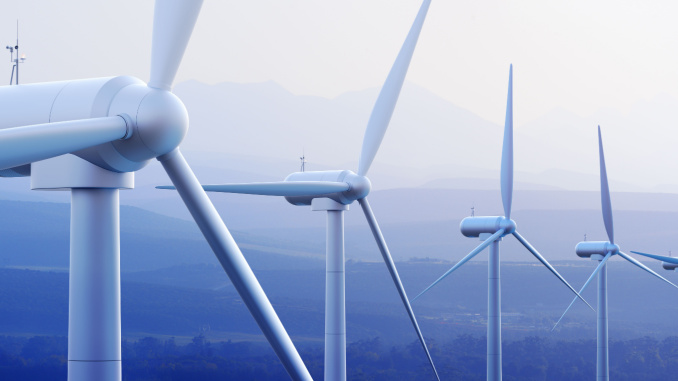
The task of fueling all these EVs would be overwhelming. According to one estimate, achieving a “net-zero economy” for New York would require building 2,500 giant, 680-foot tall turbines, which would hopefully generate electricity 40% of the time.
The turbines would require 110,000 tons of copper alone, for which 25,000,000 tons of copper ore would have to be mined and processed, after removing 40,000,000 tons of overlaying rock. Then, birds, bats, and endangered species would be regularly massacred by the millions. And that’s only for one state.
The unwelcome fact is that sustainable fuel sources have received massive subsidies for years to “help them get started.” Yet wind, solar, and other minor sources of energy still produce just 12% of global demand and have yet to demonstrate the potential to replace fossil fuels in the future as the main source of energy for EVs.
EVs are more popular with green activists than with drivers. They accounted for just 5.8% of all auto sales last year, despite being heavily subsidized. Buyers benefit from generous production subsidies, from fueling subsidies, from special driving privileges such as use of HOV lanes, and are unfairly excused from participating in the fuel taxes which fund road construction and repair.
Yet most consumers still find the extra cost of an EV is not justified. Automakers, with the notable exception so far of Tesla, are beginning to feel the pinch. Many were bull rushed into EV production by government pressure and subsidies as well as fear of getting left out of the presumed coming boom market.
But now Ford, for one, expects to lose $3 billion on EV production this year. Volkswagen is cutting back on EV production as well, stating that “we are noticing customer reticence quite vehemently in the electric world.” It’s going to take a mountain of subsidies and mandates to get anywhere near 100% EVs by 2035.
There are other big problems too. The batteries average 1,000 pounds or so in weight, resulting in excessive wear to roads and bridges. Collisions are more damaging – for the other guy. There are not nearly enough mines, metals, and minerals on earth to supply EV battery manufacture. EVs are an ineffective solution to an exaggerated problem. We can only hope environmental alarmists come to their senses before their unrealistic dreams bankrupt us all.
Dr. Thomas Patterson, former Chairman of the Goldwater Institute, is a retired emergency physician. He served as an Arizona State senator for 10 years in the 1990s, and as Majority Leader from 93-96. He is the author of Arizona’s original charter schools bill.
American school children are instructed that the late 19th century, the Gilded Age, was dominated by “robber barons” who made great fortunes creating monopolies that exploited the poor and middle classes.
Howard Zinn‘s best-selling textbook, which introduced generations of Americans to their own history, informed them that “ordinary people who lived through the Gilded Age… experienced tremendous hardships and losses… While they got poor, the rich were getting richer.” Another noted economist concurred that “the poor grew helpless, the middle class got swept away.”
But let’s look again. In fact, by the numbers, it was a golden age for American workers.
As Phil Gramm and Amity Shlaes documented in the Wall Street Journal, between 1870 and 1900, the national GNP rose 233%, per capita GNP surged by 90%, and wages increased 53%, all inflation adjusted. Meanwhile, food costs and other necessities fell by 70%. Better yet, the illiteracy rate fell by 46%, life expectancy rose12.5%, and infant mortality declined by 17%. The people did OK when government stayed on the sidelines.
But Americans, then as now, misread their history and so were doomed to repeat it. Modern progressivism was born in response to the purported outrages of the plutocrats. Government controls stifled economic growth and innovation. Later, big government was credited by many with pulling us out of the depression.
By the 1970s, the damaging effects of the dead hand of government were so obvious that Ted Kennedy and Jimmy Carter led a massive deregulation movement – airlines, communications, energy, and other sectors – that ushered in the tech revolution and renewed prosperity.
But the tendency to regard socialistic policies as inherently good is so ingrained in human nature that once again we have already forgotten the lessons learned. Now the Biden administration is creating a new industrial policy in which government handouts are lavishly dispensed but conditioned on compliance with progressive mandates.
For example, America’s semiconductor chip producers scored a $280 billion subsidy recently, on the grounds that their sector was ailing financially, and its health was so important to the economy generally, that it was, you know, too big to fail. Commerce secretary Gina Raimondo was very explicit about the strings attached, “if Congress wasn’t going to do what they should’ve done [in the Build Back Better bill], we’re going to do it in the implementation.”
She meant it. For starters, chipmakers receiving $150 million or more in federal aid will be required to provide childcare to their employees and construction workers that has been crafted in “tandem with community stakeholders including…local groups with expertise in administering childcare” (i.e., lefty nonprofits).
Chipmakers will also have to pay construction workers prevailing wages set by unions and abide by “project labor agreements” which allow unions to mandate conditions and benefits for all workers, union members or not.
That’s not all. The “lucky” chipmakers must also provide “paid leave and caregiving support” to employees as well as wraparound services such as adult care, transportation, and housing assistance to the disadvantaged or underserved.
Centralized economic planning is once again butting up against economic reality. Chip manufacturers have already been transferring production overseas because costs are 40% higher stateside. Any benefit from the subsidies will be so offset by the increased costs that the net profit may be questionable.
Still, other industries are eagerly lining up for their government handouts. In their ceaseless efforts to socialize their losses while retaining profits to themselves, banks lobbied the FDIC to guarantee uninsured deposits without limit after the recent midsize bank collapses. Broadband providers received tens of billions in grants from states to build high-speed broadband to subsidize low-income purchases of Internet service plans.
Years ago, EV producers received temporary subsidies as start-up inducers, which, of course, aren’t going away at all. They just keep expanding, like $523 billion over 10 years for vehicle consumer and battery production tax credits.
As the chipmakers are discovering, the effect of all this free stuff from government is to make big businesses the compliant wards of the state. Thus, the administration imposes a cradle-to- grave welfare system through centralized industrial policy, while unconstitutionally usurping congressional authority in the bargain.
It’s the path to nowhere – again.
Dr. Thomas Patterson, former Chairman of the Goldwater Institute, is a retired emergency physician. He served as an Arizona State senator for 10 years in the 1990s, and as Majority Leader from 93-96. He is the author of Arizona’s original charter schools bill.