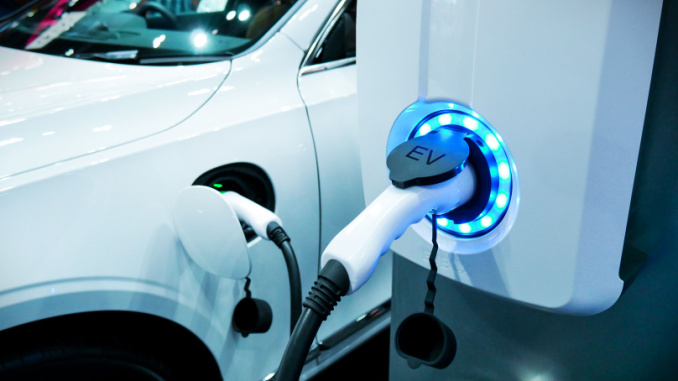
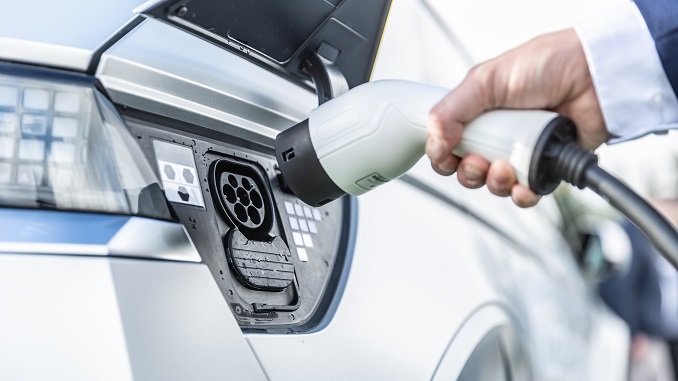
The Great Climate Change Revolution is headed for failure. You can tell because it was already in big trouble before the ultimate heavy lifting even started.
International accords, (i.e. Paris Agreement) passed with great fanfare to ensure cooperation on emissions reductions, are ignored by most of the signers, notably China. Consumers worldwide are balking at increased energy prices. Unsold EVs are piling up.
All this resistance is occurring well before the full rollout of the regulations and restrictions needed to achieve zero net carbon emissions by 2050, the agreed-upon goal of climate activists worldwide.
It may not seem at first glance like the climate change movement is struggling. After all, mainstream dogma still holds that man-made warming has us careening toward disaster, possibly an uninhabitable planet. The only solution is to “just stop oil” along with coal and gas.
As John Kerry explains, there is no alternative. Biden’s proposals have nothing to do with politics nor ideology. “It’s entirely a reaction to the science, to the mathematics and physics that explain what is happening.”
It was no surprise, then, when Biden officials recently rolled out new CO2 emissions requirements, maintaining the same endpoint by 2032. The only way for auto makers to comply would be for gas-powered cars to comprise only 30% of new car sales.
But there’s a telling detail. The 2030 requirements have been relaxed, which means that they’re still going to put the squeeze on to force more EV sales, just not right now. But what’s going to change to make regulations more palatable in 2032 than in 2030? There’s no evidence that the demand for EVs will be greater or that consumers will be more interested in purchasing them.
EVs were envisioned as the cutting edge of the “zero by fifty” campaign. If we could replace the outmoded, smoke-belching anachronisms on the roads with sleek new vehicles lacking tailpipe emissions, the new atmospheric standards would be a piece of cake.
But there are problems. Consumers aren’t wild about EVs. After years of the feds promoting them and subsidizing them in every way thinkable, they still account for just 8% of new car sales.
They are still too expensive, refueling can be difficult and they have poor resale value. Moreover the giant batteries are a disposal nightmare. EVs increase soot pollution. Depending on the fuel source used to produce the electricity, they may produce no net carbon reduction anyway!
Yet the Biden administration soldiers on, insisting EVs can capture 70% of all sales within eight years. Hint: they can’t. Look for other accommodations to reality to be made. Meanwhile they are doing a lot of economic damage, for no possible benefit.
Americans are less caught up in climate panic than ever. Surveys revealed that of all the issues in this year’s election, voters rank climate change 10th in importance. “We’re number 10” may not make an inspiring campaign slogan, but the massive media, academic, and governmental infrastructure dedicated to its promotion means the climate change industry won’t disappear anytime soon.
As Swedish economist Björn Lomborg points out, climate change is a problem but only one of several mankind must grapple with. Meta-analysis of all scientific estimates shows climate change costs will likely average one percent of GDP across the century, a figure sure to be dwarfed by anticipated economic growth. Meanwhile, the proposed solutions insisted upon by the panic advocates will average $27 trillion annually or seven times more than the problem itself.
Costs aside, we lead better lives because of fossil fuels. Abundant energy has more than doubled lifespans, dramatically reduced hunger, and increased personal income tenfold. Climate related deaths from droughts, storms, floods, and fires have declined an astonishing 97% over the last century.
The worst thing we could do is to drive ourselves into poverty by “following the (false) science.” We need to stay economically and technically strong to be able to accommodate change as needed. Human beings do that, you know.
Dr. Thomas Patterson, former Chairman of the Goldwater Institute, is a retired emergency physician. He served as an Arizona State senator for 10 years in the 1990s, and as Majority Leader from 93-96. He is the author of Arizona’s original charter schools bill.
Reports show that the Biden administration plans to finalize its final tailpipe emissions rule for cars and trucks on Wednesday, a measure 61% of Arizonans oppose.
The possible rule could mean that nearly 70% of cars sold in 2032 would need to be electric vehicles, though this is not achievable with our current infrastructure and would make us more reliant on China, according to government relations firm AxAdvocacy.
Chet Thompson, American Fuel & Petrochemical Manufacturers (AFPM) president and CEO, said the EPA policy will feel like a ban for consumers.
“It will vastly restrict both their access to and ability to afford new gas cars, trucks, SUVs and traditional hybrids,” Thompson said. “And there are no offramps in the policy in the event our infrastructure isn’t ready or consumers simply don’t buy EVs at the rate EPA would like. This is exactly why 75% of registered voters solidly oppose any government efforts designed to ban gas, diesel and traditional hybrid cars.”
President Joe Biden has been clear since 2020 he intends to use his federal agencies and the state of California to eliminate sales of new gas cars.
“While multiple administration policies push us toward this end, the Environmental Protection Agency’s (EPA’s) passenger vehicle standards will do most of the damage on their own—requiring approximately 70% of new car sales to be electric in less than eight years,” he said. “This policy is bad for consumers, the economy and national security.”
“It will sacrifice our hard-won U.S. energy strength for even greater dependence on China and the EV battery and mineral supply chain China controls,” Thompson continued.
Only 16% of Arizonans support the rule, which would deprive Americans of the right to select the car best for them, their families, and their budgets.
In Wisconsin, 64% of residents oppose the measure, while 57% of Pennyslanvanians oppose, 61% of Nevadans oppose, and 66% of Ohioans oppose. Only 9% of Montana residents support the potential rule.
Elizabeth Troutman is a reporter for AZ Free News. You can send her news tips using this link.
A major vehicle rental company is offloading thousands of electric cars in its fleet.
In a January 11, 2024, filing with the U.S. Securities and Exchange Commission, Hertz Global Holdings, Inc. wrote that it had “made the strategic decision to sell approximately 20,000 electric vehicles (EV) from its U.S. fleet, or about one-third of the global EV fleet.” Hertz plans on “reinvest[ing] a portion of the proceeds from the sale of EVs into the purchase of internal combustion engine vehicles to meet customer demand.”
Hertz added that the sale of these vehicles would “position the Company to eliminate a disproportionate number of lower margin rentals and reduce damage expense associated with EVs.” When addressing the financial results for the fourth quarter of 2023, Hertz asserted that “expenses related to collision and damage, primarily associated with EVs, remained high in the quarter, thereby supporting the Company’s decision to initiate the material reduction in the EV fleet.”
The Vice-Chairman of the Arizona Senate Committee on Transportation, Technology and Missing Children, Senator Frank Carroll, addressed this announcement from Hertz, telling AZ Free News, “When one of the largest worldwide vehicle rental companies decides to sell off a third of its electric vehicles, we should pay attention. This move sheds light on the lack of demand and increased costs associated with EVs, which is why we need to continue to stand up against liberal extremism attempts to force every American to transition to electric cars. Hertz hopped on the EV experiment and paid the price.”
Daniel Stefanski is a reporter for AZ Free News. You can send him news tips using this link.
In a story that seems to be becoming increasingly common as time goes on, The Western Journal reported this week about a Canadian EV owner experiencing some massive sticker shock over the cost of replacing the damaged battery in his electric vehicle.
Now, those of us who have always driven internal combustion engine (ICE) cars have at one time or another been faced with big repair bills for some of those vehicles. I can remember spending $4,000 on a new radiator for a 10-year-old Infiniti QX 50 with 220,000 miles on it that I just couldn’t bear to part with several years back. I did finally retire that wonderful vehicle when faced with the prospect of a $6,000 tag for a rebuilt transmission.
So, all cars will eventually cost you or your insurance company big money to repair — no one is saying that’s unique to EVs. But where EVs are concerned, it’s the magnitude of the price for replacing a damaged or worn-out battery that is often quite eye-popping.
I wrote a story in September about a fellow in the U.S. deciding to junk his paid-off EV when he got an estimate of $30k to replace his battery. We now see frequent reports that auto insurance companies are charging higher rates for EVs than for comparable ICE cars due in large part to this extravagant battery replacement cost.
If you think that $30,000 is extravagant, well, get ready, because it apparently isn’t even close to the worst-case scenario. Per the Western Journal, a Canadian man, Kyle Hsu, paid roughly $55,000 Canadian ($41,583 US) in 2022 to buy a brand new Hyundai IONIQ 5. But, less than a year later, Mr. Hsu was involved in what seemed to be a minor accident resulting in superficial damage to his beautiful EV.
Unfortunately for Hsu, it turned out that the battery protector cover on his car’s undercarriage was warped, a problem that could in certain instances cause the battery to explode. This meant that he would have to replace his car’s battery pack in addition to fixing its structural damage. Hsu says he was shocked when the estimate to replace the battery came in at $61,000 Canadian, or about $46,000 in US dollars. That’s almost $6,000 more than he paid for the car when he purchased it brand new.
Even worse, because the damage was caused by an accident, the bill was not covered by the car’s warranty, leaving Hsu with the alternative of filing a claim with his insurance carrier. But the resulting insurance implications were enormous, with Mr. Hsu facing a rate increase of up to 50% if he filed the claim. His only other choice would be to foot the repair bill himself and now have over $87,000 US dollars invested in a $41,000 car.
This is insane. This is not sustainable. The EV industry simply cannot have stories like this one popping up with increasing frequency and hope to sustain growing demand for its products.
When you combine horror stories like this one with:
range anxiety that pops up any time the weather isn’t perfect;
the lack of charging infrastructure;
the unreliability of the infrastructure that does exist;
the non-recyclability of the battery materials;
the increasing restrictions on charging due to the massive load EVs place on the grid;
and all the other significant issues EV makers have yet to address,
you see an industry that is almost doomed to failure before it really gets up and running.
I frequently remind readers that EVs have been around since the 1880s. They are not a new idea in any sense of that word. If they were really the answer to displacing ICE cars at societal scale, it seems likely they would have already done so. What we see popping up with increasing frequency now in the form of stories like this one are simply manifestations of the reasons why that has not already happened.
EVs today are what they have always been: A niche product, a luxury item suitable to fill discreet purposes for the upper 5% or so elites in any society. The technology simply is not there yet to make them anything more than that.
David Blackmon is a contributor to The Daily Caller News Foundation, an energy writer, and consultant based in Texas. He spent 40 years in the oil and gas business, where he specialized in public policy and communications.
If someone wants to own an electric vehicle (EV), it is perfectly within their right to do so. That’s what it means to have freedom. But EV owners should be the ones to bear the burden of any costs associated with the necessary infrastructure improvements. And they should absolutely be responsible for paying for any excessive demand placed on the grid.
But that’s not the way the left sees it.
As part of its Green New Deal dream, the left has been pushing an agenda that significantly increases the amount of EVs on the road despite slowing demand from consumers and companies like Ford losing billions on them just this year. And Arizona utilities have fallen right in line, planning for 1 million EVs by 2030 while APS alone plans to have a 100% “carbon free” vehicle fleet as part of its commitment to go “Net Zero” by 2050.