A rising array of threats to the public and environment stemming from the boom in “green” energy technologies and the batteries they use means the time for virtue signaling by regulators and policymakers must come to an end.
In every boom time involving any type of energy source, governments at all levels inevitably find themselves behind the curve when it comes to developing an effective set of regulations designed to minimize impacts on the public and environment.
In the early years of the 21st century, Americans witnessed this phenomenon play out when it came to the oil and gas Shale Revolution, which saw its first success in the Barnett Shale region, which happened to lie in the midst of the Dallas/Fort Worth Metroplex in north Texas. For the first time in decades, oil and gas companies found themselves struggling to drill wells and install pipelines in and adjacent to highly populated areas, leading to an array of conflicts and tensions with the public that the pre-existing regulatory structure had not been designed to resolve.
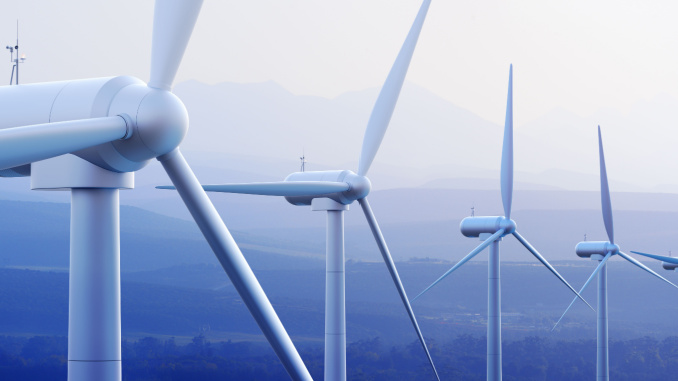
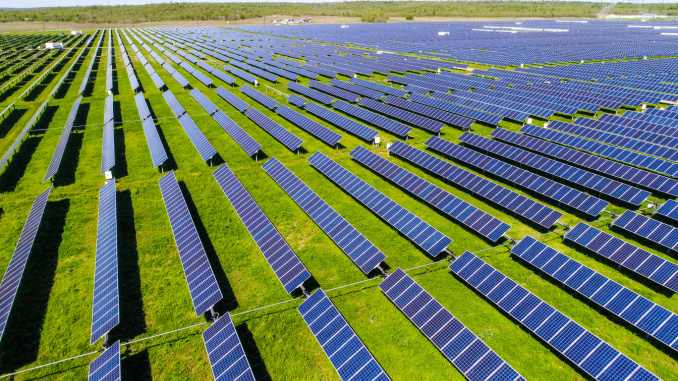
More recent years have given rise to the same societal dynamics related to boom times for the wind and solar industries. In state after state, governments have found their legacy regulations lacking when dealing with public concerns over major projects condemning large swaths of arable lands and wildlife habitats, the dumping of aged-out solar panels and wind blades in public landfills, traffic, and other impacts. Even today, 25 years into this heavily subsidized renewable energy expansion, few if any states have implemented proper regulations governing the dismantling and disposal of these often-gigantic industrial projects.
Similar concerns are now rising related to the dangers posed by lithium-ion batteries, whose use is rapidly expanding across the U.S. to power electric vehicles and provide backup for intermittent power generation provided by wind and solar. The major threat from these rechargeable batteries is their tendency to overheat and spontaneously combust under certain conditions. The problem has resulted in a proliferation of photos and videos of burning passenger and school buses, major conflagrations in large battery storage facilities, and of burned-up commercial freight ships foundering and sinking into oceans around the world.
The AP reported on Oct. 4 on rising opposition from local communities to a proposed installation of large stationary backup battery projects in or adjacent to their cities and towns. The report focused on Long Island, which could become home to an array of such installations to provide back up to multiple offshore wind projects in the coming years.
Industry proponents say the installations are perfectly safe, just as the makers of electric buses have assured city councils and school boards in recent years, only to see some of those buses erupt in flames while on their routes or in crowded bus barns with predictable results. But Michael McGinty, mayor of Island Park, is reluctant to assume the risk. “We’re not guinea pigs for anybody … we are not going to experiment, we’re not going to take risk,” he said.
An Oct. 11 report by The Epoch Times details rising concerns over the risks to airlines and travelers posed by lithium-ion batteries brought on board. The Federal Aviation Administration (FAA) reported 89 incidents during 2024 in which “lithium batteries emitted smoke, fire, or extreme heat on board planes, and up until the end of August 2025, there have been a further 61.” This troubling fact led the FAA to update its guidance on proper care and storage of such batteries on airlines in September.
In January, an Air Busan passenger jet carrying 170 passengers and six crew members was completely destroyed by a battery-caused fire on a runway in Busan, South Korea. Luckily, everyone on board was evacuated and survived, though three suffered serious injuries.
These and other significant, rising concerns surrounding wind, solar, and the batteries they use show that what proponents like to call “green” energy is neither as friendly to the environment nor as safe and benign as advertised. They also point to the very real need for public officials prone to signaling their green virtues to gullible voters to take these issues seriously and develop regulations needed to protect the public and the environment. Doing anything else is simple malpractice.
David Blackmon is a contributor to The Daily Caller News Foundation, an energy writer, and consultant based in Texas. He spent 40 years in the oil and gas business, where he specialized in public policy and communications.
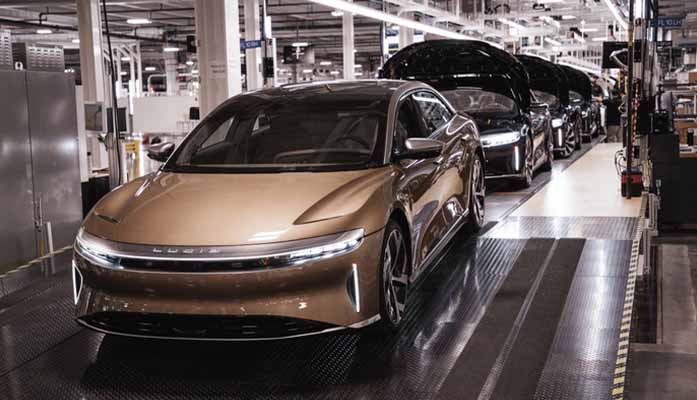
Lucid Group, the electric vehicle startup known for its luxury Air sedan, disappointed investors after missing second-quarter earnings expectations and trimming its production forecast for 2025.
The company reported $259.4 million in revenue for the quarter ending June 30, falling short of Bloomberg’s $262.4 million consensus estimate. While that figure marked an improvement over the $200.6 million recorded a year ago, Lucid posted a larger-than-expected adjusted loss of $0.24 per share and an adjusted EBITDA loss of $632.1 million.
Gross margins fell by 21%, which Lucid attributed to tariffs. The company ended the quarter with $4.86 billion in liquidity, a closely watched metric as it continues to burn cash. Production guidance for 2025 was revised to between 18,000 and 20,000 vehicles, down from the 20,000-target set earlier this year. In the April–June period, Lucid produced 3,863 vehicles and delivered 3,309, bringing its first-half totals to 6,075 units produced and 6,418 delivered.
For much of its short history, Lucid’s lineup consisted solely of the Air sedan. The automaker has recently begun ramping up production of the Gravity SUV, though early output has been modest. Fewer than 1,000 units were built in the first quarter, most of which went to Saudi Arabia, home to Lucid’s largest investor, the Saudi Public Investment Fund.
In 2016, the Arizona State government made a deal with Lucid to open operations in Arizona. At that time, the Arizona Republic reported that the company could receive as much as $46.5 million in taxpayer subsidies over time. The company’s primary manufacturing facility remains in Casa Grande, Arizona.
In July, Lucid announced a partnership with Uber to supply 20,000 battery-electric vehicles for a planned robotaxi service over the next five years.
Lucid’s near-term sales outlook also faces headwinds from the expected expiration of the U.S. federal $7,500 EV tax credit on Sept. 30. To bolster its stock price, the company plans a 1-for-10 reverse stock split, which would lift shares to roughly $10 based on current valuations and help avoid the risk of trading below $1. Shares of Lucid (LCID) fell nearly 2% following the earnings announcement.
Jonathan Eberle is a reporter for AZ Free News. You can send him news tips using this link.
America’s carmakers face an uncertain future in the wake of President Donald Trump’s signing of the One Big Beautiful Bill Act (OBBBA) into law on July 4.
The new law ends the $7,500 credit for new electric vehicles ($4,000 for used units) which was enacted as part of the 2022 Inflation Reduction Act as of September 30, seven years earlier than originally planned.
The promise of that big credit lasting for a full decade did not just improve finances for Tesla and other pure-play EV companies: It also served as a major motivator for integrated carmakers like Ford, GM, and Stellantis to invest billions of dollars in capital into new, EV-specific plants, equipment, and supply chains, and expand their EV model offerings. But now, with the big subsidy about to expire, the question becomes whether the U.S. EV business can survive in an unsubsidized market? Carmakers across the EV spectrum are about to find out, and the outlook for most will not be rosy.
These carmakers will be entering into a brave new world in which the market for their cars had already turned somewhat sour even with the subsidies in place. Sales of EVs stalled during the fourth quarter of 2024 and then collapsed by more than 18% from December to January. Tesla, already negatively impacted by founder and CEO Elon Musk’s increased political activities in addition to the stagnant market, decided to slash prices in an attempt to maintain sales momentum, forcing its competitors to follow suit.
But the record number of EV-specific incentives now being offered by U.S. dealers has done little to halt the drop in sales, as the Wall Street Journal reports that the most recent data shows EV sales falling in each of the three months from April through June. Ford said its own sales had fallen by more than 30% across those three months, with Hyundai and Kia also reporting big drops. GM was the big winner in the second quarter, overtaking Ford and moving into 2nd place behind Tesla in total sales. But its ability to continue such growth absent the big subsidy edge over traditional ICE cars now falls into doubt.
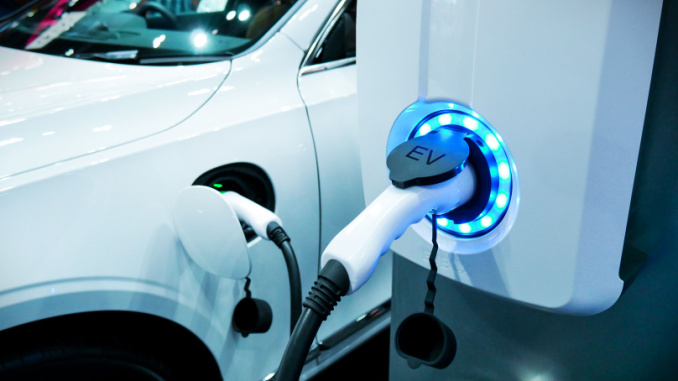
The removal of the per-unit subsidies also calls into question whether the buildout of new public charging infrastructure, which has accelerated dramatically in the past three years, will continue as the market moves into a time of uncertainty. Recognizing that consumer concern, Ford, Hyundai, BMW and others included free home charging kits as part of their current suites of incentives. But of course, that only works if the buyer owns a home with a garage and is willing to pay the higher cost of insurance that now often comes with parking an EV inside.
Decisions, decisions.
As the year dawned, few really expected the narrow Republican congressional majorities would show the political will and unity to move so aggressively to cancel the big IRA EV subsidies. But, as awareness rose in Congress about the true magnitude of the budgetary cost of those provisions over the next 10 years, the benefit of getting rid of them ultimately subsumed concerns about the possible political cost of doing so.
So now, here we are, with an EV industry that seems largely unprepared to survive in a market with a levelized playing field. Even Tesla, which remains far and away the leader in total EV sales despite its recent struggles, seems caught more than a little off-guard despite Musk’s having been heavily involved in the early months of the second Trump presidency.
Musk’s response to his disapproval of the OBBBA was to announce the creation of a third political party he dubbed the American Party. It seems doubtful this new vanity project was the response to a looming challenge that members of Tesla’s board of directors would have preferred. But it does seem appropriately emblematic of an industry that is undeniably limping into uncharted territory with no clear plan for how to escape from existential danger.
David Blackmon is a contributor to The Daily Caller News Foundation, an energy writer, and consultant based in Texas. He spent 40 years in the oil and gas business, where he specialized in public policy and communications.
Trump’s One Big Beautiful Bill (BBB) that passed the House of Representatives last month contained numerous wins for the American people: permanent tax relief, funding for border security, an expansion of Health Savings Accounts, and even a new program to expand school choice. But arguably the most impactful accomplishment in the BBB was their success in taking a machete to the labyrinth of green new scam tax subsidies created by Joe Biden and the Democrats through the inflation-creating Inflation Reduction Act (IRA). That alone makes it the most beautiful feature of the Big Beautiful Bill.
The House’s version included key provisions sunsetting some of the worst subsidies authorized under the IRA, including:
Ending the Clean Electricity Production Tax Credit (PTC) and the Clean Electricity Investment Tax Credit (ITC) for any project that doesn’t start within 60 days of the enacting legislation and isn’t in service by 2028;
Ending the Clean Electricity Investment Credit and Transferability of Tax Credits for Wind and Solar;
Eliminating the Tax Credit for Residential Solar and Rebates for “Green” Products;
Repealing the Electric Vehicle Credit designed to Force Manufacturers to Abandon Gas Powered Vehicles.
The rollback of these subsidies in the House BBB was a monumental feat, especially given the army of lobbyists hired by the green energy grifters to defend these subsidies on Capitol Hill. In fact, the big spenders in the GOP caucus almost succeeded in stopping the subsidy rollback. If not for the stalwart efforts of the House Freedom Caucus and the White House stepping in at the last minute of negotiations, the green scam subsidies would not be on the chopping block.
But now the bill is in the Senate, and the initial draft released of the revised Big Beautiful Bill by Senate Finance Chair Mike Crapo is anything but big or beautiful…
The week just passed was a rough one for California Governor Gavin Newsom. Early in the week, Newsom’s complete lack of leadership in his home state combined with a similar dereliction of duty by Los Angeles Mayor Karen Bass to justify President Donald Trump’s move to activate both the National Guard and 700 U.S. Marines to move into downtown Los Angeles to control escalating riots there.
As if that weren’t humiliating enough, President Trump held a White House ceremony Thursday during which he signed a series of three resolutions passed under the Congressional Review Act (CRA) designed to kill California’s electric vehicle (EV) mandate which has been a centerpiece of Newsom’s regulatory policies.
“Under the previous administration, the federal government gave left-wing radicals in California dictatorial powers to control the future of the entire car industry all over the country,” Trump said in remarks preceding the signing. “It’s been a disaster for this country.”
In response, Newsom said in a statement, “The weaponization of the Congressional Review Act to attack California’s waivers is just another part of the continuous, partisan campaign against California’s efforts to protect the public and the planet from harmful pollution.” It’s pretty weak sauce, but it’s all he has at this point.
Well, except for another round of lawfare, that is. Within minutes of Trump’s affixing his signature (no autopen involved) to the resolutions, California Attorney General Rob Bonta had filed a lawsuit challenging the resolutions in the U.S. District Court for the Northern District of California. Bonta was joined by Democrat attorneys general from 10 other states.
KCRA Channel 3 TV in Sacramento pointed out that this suit is the 26th time Bonta has sued the Trump administration since January. Bonta admitted during his press conference that his office has already spent $5 million in pursuing its Trump-focused lawfare agenda, but no worries: The state assembly recently authorized a $25 million boost to Bonta’s budget to continue his Quixotic strategy.
repeal a waiver under the clean air act issued by the Biden EPA in 2023 which allows California to mandate all new cars sold by 2035 be what the California Air Resources Board (CARB) classifies as “zero emissions vehicles,” or ZEVs;
block rules requiring zero-emission sales targets for commercial trucks; and
eliminate higher standards for heavy-duty diesel engines to reduce smog-forming nitrogen oxide pollution.
The central claim in Bonta’s lawsuit is that Congress’s use of the CRA to revoke California’s Clean Air Act waivers is unprecedented and illegal. Enacted in 1996, the CRA gives congress authority to revoke regulations that are finalized by an outgoing administration. Passed on a bipartisan vote of congress, it is designed to limit the exact sort of effort witnessed in the final months of the Biden administration to shove through as many new regulations as possible before leaving office.
CRA actions are exempt from the Senate filibuster and not subject to judicial review. However, because the CRA has rarely been invoked since it became law, it has never previously been used to rescind a waiver issued by EPA or any other federal regulator. Bonta is banking on the federal courts being willing to intervene based on an argument that the issuance of a waiver does not constitute a regulatory action. While what we’ve seen over the last five months indicates a likelihood that Bonta and his fellow plaintiffs will be able to shop for a district court judge who will be willing to issue a temporary injunction, their prospects of prevailing at the appellate level or the U.S. Supreme Court seem dim.
Sen. Shelley Moore Capito (R-W.Va.), who authored one of the resolutions, frames the issue as a defense of consumer choice, telling Politico, “These mandates force Americans into vehicles they don’t want or can’t afford, all while ignoring the realities of our grid and supply chains.” The reality is that few Americans really want to buy EVs, which is the motivator for Newsom’s attempt to force them.
It’s all bad news for Gov. Newsom, who has been relegated to a complaining bystander in his own state as others act to address problems of his own creation. That’s no way to run a state, Governor.
David Blackmon is a contributor to The Daily Caller News Foundation, an energy writer, and consultant based in Texas. He spent 40 years in the oil and gas business, where he specialized in public policy and communications.