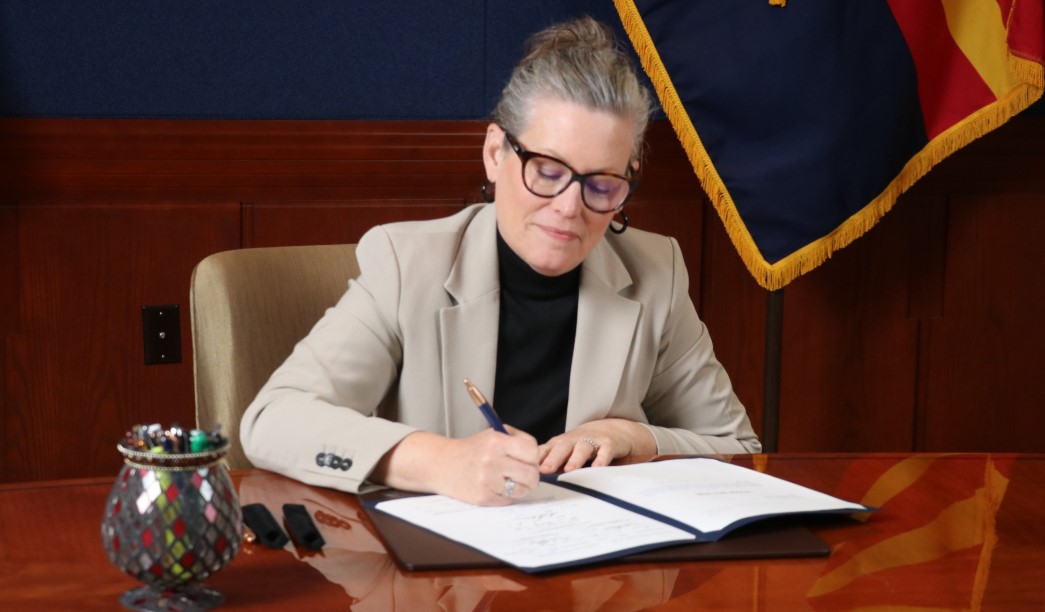
Democratic Arizona Gov. Katie Hobbs vetoed a commonsense bill that would have allowed our state to provide voters with same-day election results, moving us further away from the disastrous reporting system that is found when California voters go to their polls. Rather than our current operation of keeping Arizona voters in the dark about certain results of critical election races every two years, this legislation closely mirrored policies and procedures found in the state of Florida, which has largely perfected its vote counting over recent election cycles.
Additionally, my colleagues and I worked closely with a broad coalition of Arizona stakeholders, including most of the state’s county recorders and the Maricopa County Board of Supervisors – one of the largest jurisdictions in the entire nation.
This bill was sorely needed in our state. Yet, instead of working with Republicans in good-faith to provide much-needed reforms to our elections processes, Hobbs impeded all efforts to ensure Arizona can report the vast majority of votes on election night. Her veto was a huge mistake – not just politically, but for the future of our state’s elections.
Over the past decade, Arizona has seen a seemingly increasing share of razor-thin election results, which have proved the urgent need for this kind of legislation. In 2016, my good friend Andy Biggs won his primary election for the U.S. House of Representatives by just 27 votes. Outstanding votes were not counted until days after election night concluded, leaving supporters of the top two contenders in suspense. In 2022, current Arizona Attorney General Kris Mayes defeated her Republican challenger, Abraham Hamadeh, by fewer than 300 votes. Again, the votes were being processed and tabulated long after election night had come and gone.
In 2024, President Donald Trump was not officially declared the winner of Arizona until days after the election thanks to the myriad of un-tabulated votes after election night. There are many more examples of these kind of delayed calls on critical election races, where voters were left in the dark about the eventual outcomes.
Arizona’s delayed results have embodied more of the nature of California’s failed system in the past decade. Many around the nation shake their heads in disgust at California’s persistent inability to count most votes by the end of election night. Oftentimes, the results for several critical races for different levels of government remain outstanding for weeks, let alone days, following the election. Compare California’s delays with Florida’s successful system, which allows it to report the results of most of its races within hours of all polls closing. There’s no question which system I want my state to emulate.
These delays in our election results lead to massive distrust in our system and officials. Voters deserve and expect maximum transparency when it comes to the elections systems that select the men and women who govern us. However, by making voters wait days after the election has finished, government officials contribute to the rising fear about the integrity of our system. There is a better way.
As a long-time public servant, I was unwilling to stand by and allow the people of Arizona to live in perpetual anxiety every two years when elections rolled around. These voters deserve certainty and transparency in one of the fundamental pillars of our constitutional republic: our sacred votes. That’s why I introduced this bill – SB 1011 / HB 2703 – to speed up vote counting in our state, improve voter confidence and end the frustration felt by many waiting way too long for results on Election Day.
This bill should not have been politicized. I am baffled why, even after a broad coalition around Arizona endorsed these policies, legislative Democrats and Hobbs dug their heels into the ground and opposed our efforts to make reasonable and necessary fixes to the state’s elections system. The Democrats’ partisanship on this bill is not what Arizonans want from their state’s leaders. Republicans and Democrats should be able to work together to solve these issues in a bipartisan manner without resorting to political talking points. Sadly, that is not what happened in this case.
I promised the people of Arizona that this Legislature would be committed to making commonsense and proven changes to our state’s election processes, and my colleagues and I remain wholly resolved to achieve that goal. The status quo for our elections is not an option. Voters deserve more respect than to see their government officials content to leave their state as the laughingstock of the nation for its woefully slow election reporting.
To that end, Republicans in the Arizona Legislature will soon be pursuing a bill to send the question of same-day election results to voters in the next General Election. If Hobbs and Arizona Democrats do not want to be a part of the solution, we will let the voters decide. One way or another, it’s time to bring same-day election results to our great state.
Arizona lawmakers are advancing a series of bills aimed at increasing transparency, accountability, and taxpayer protection. These measures tackle issues ranging from government spending on elections to school board meetings and travel, with a focus on ensuring that public funds are used responsibly and efficiently. With strong support from various groups, these bills reflect ongoing concerns about how taxpayer money is spent and how local government actions are conducted.
One of the most significant pieces of proposed legislation, HB2722, is backed by the Arizona Free Enterprise Club and sponored by Rep. Neal Carter (R-LD15). The bill seeks to prevent taxpayers from indirectly subsidizing private businesses through government gifts. Specifically, it targets “gift clauses” in state and local government contracts, which some argue allow for inappropriate use of taxpayer funds to benefit private entities.
The Arizona Free Enterprise Club has been vocal about the need for stronger protections against such expenditures. The organization has stated that this bill is necessary to curb the growing trend of government spending on private corporations without clear public benefit.
“Taxpayers should not be used as a backdoor financing mechanism for private companies,” said Arizona Free Enterprise Club officials. “This bill is about ensuring that public dollars are spent in a way that directly benefits the public, not private interests.” If passed, this bill would create stricter guidelines on how public funds can be spent and would allow taxpayers to hold officials accountable when misused funds are discovered.
Another bill making its way through the Arizona legislature is SB1036, supported by the Goldwater Institute and sponosred by Sen. John Kavanagh (R-LD3). This bill targets government spending on influencing elections, a topic that has sparked considerable debate in recent years. SB1036 would create a private right of action for taxpayers, allowing individuals to sue if they believe government funds are being spent on efforts that influence an election. This would make it easier for citizens to challenge the use of taxpayer money in elections, particularly when the spending appears to be partisan or otherwise improper.
The Goldwater Institute has argued that taxpayers have a right to ensure their money isn’t used to sway political outcomes. According to a recent report by the organization, there have been multiple instances of local governments spending taxpayer funds to advocate for policies that align with political interests, which has raised concerns about government overreach.
“Governments should not be using taxpayer money to influence the political process,” said Goldwater Institute officials. “This bill provides taxpayers with the ability to stand up for their rights and ensure public resources are not misused.”
Another bill, HB2169, which was introduced by Representative Matthew Gress (R-LD4), seeks to address transparency within Arizona’s public school districts. The bill would require school board meetings to be held in public facilities within the district, ensuring that they are easily accessible to the communities they serve. Additionally, the bill mandates that school boards must receive public approval before engaging in out-of-state travel, making it more difficult for administrators to make costly decisions without community oversight.
This legislation gained near-unanimous support, with proponents arguing that it ensures greater accountability for how public schools operate and how funds are spent. Critics of the current system have pointed to examples of school board members using taxpayer money for luxury travel without clear, public approval or benefit. A notable incident involved a local school district that faced backlash after spending taxpayer funds on extravagant trips while simultaneously requesting additional funding from voters for educational needs.
“Public education is about serving the community,” said Representative Gress in a statement. “We need to make sure that the actions of school boards are always in the public interest. This bill strengthens public trust in our school systems.”
Jonathan Eberle is a reporter for AZ Free News. You can send him news tips using this link.
A proposed measure to close a significant loophole in Arizona’s election security passed the State Senate last week, bringing it one step closer to the 2026 election ballot. Senate Concurrent Resolution (SCR) 1027, sponsored by Senator Shawnna Bolick (R-2), aims to prevent foreign actors from influencing the state’s elections, especially in relation to ballot measures.
The resolution would prohibit foreign nationals, entities, and committees from contributing money or services to influence the outcome of any election in Arizona. If SCR 1027 passes the House and receives voter approval, it would be placed on the 2026 ballot, where Arizona residents will have the opportunity to cast their votes on whether to ban foreign money from election-related activities.
Senator Bolick says the bill is a response to an ongoing vulnerability in the election process that allows foreign money to potentially sway the outcome of elections. While contributions from foreign nationals to political committees are already prohibited, the current laws do not extend this prohibition to all aspects of the election process, particularly when it comes to ballot measures.
“This is a commonsense, carefully crafted measure to ensure that Arizona’s elections are free from foreign interference,” said Bolick. “The people of Arizona must be confident that foreign funds are not influencing any part of our election process. If the House approves SCR 1027, the people of Arizona will have the chance to vote on this measure to say once and for all—no foreign money in ANY part of our elections in Arizona.”
The measure is designed to add a layer of transparency and accountability to election funding. Under SCR 1027, any person or group attempting to influence the outcome of a ballot measure would be required to file a campaign finance report within 48 hours of making an expenditure. They would also need to certify under penalty of perjury that no foreign national provided funding or resources for preliminary election activities. This would be enforced by the Secretary of State’s office to ensure compliance.
Arizona is not alone in its concerns; other states have passed similar laws in recent years to protect their elections from foreign meddling. In 2020, Washington State implemented restrictions on foreign donations to initiatives, following concerns over foreign money being funneled into state campaigns.
Supporters of SCR 1027 argue that this measure will protect the integrity of the state’s election process and send a strong message about Arizona’s commitment to safeguard its elections from foreign influence. Critics, however, may raise concerns about the potential for overreach or unintended consequences that could hinder legitimate political activity.
Jonathan Eberle is a reporter for AZ Free News. You can send him news tips using this link.
The Arizona State Senate recently passed a bill aimed at addressing the ongoing shortage of election officers in the state. Senate Bill 1319, sponsored by Senator Tim Dunn (R-25), received strong bipartisan support and is now on its way to the House of Representatives for further consideration.
The bill proposes a change to the current certification process for election officers by allowing certification to occur in even-numbered years, rather than just in odd-numbered years. This adjustment is designed to ensure that Arizona has enough trained personnel to manage elections, particularly in general election years when voter turnout and election complexity tend to be higher.
Arizona law currently requires election officers, clerks of the board of supervisors, or county recorders to hold a valid election officer’s certificate, which is issued by the Secretary of State before January 1 of each general election year. However, the certification process currently only takes place in odd-numbered years, leaving a narrow window to ensure that election officers are adequately prepared for the upcoming election season.
SB 1319 aims to address this issue by shortening the certification window. Under the new legislation, individuals seeking to serve as election officers would be required to obtain their certification before June 1 of even-numbered years, allowing more time for training and preparation before the general elections.
The bill seeks to ensure that election officials have the training they need and that the state is not facing a shortage of qualified election officers by allowing certification in the first half of an election year. This adjustment would also allow for better planning and coordination in advance of elections, making it easier for county officials to recruit and train election officers in a timely manner.
Senator Dunn emphasized the importance of ensuring that Arizona’s election system is well-staffed and efficiently run. “We need to ensure that our election officials are properly trained and certified,” Dunn said. “This bill allows certification for the first six months of an election year instead of in odd years only. When we pursue commonsense solutions, bipartisan election policy is possible, and we can improve and secure the election process for all Arizonans.”
Dunn also praised the bipartisan support the bill received, acknowledging that cooperation across party lines was critical in crafting a solution to this ongoing issue. “I applaud my colleagues in both chambers for coming together and seeing value in this legislation,” he added. “I’m optimistic this bill will make its way to the governor’s desk for signature.”
Jonathan Eberle is a reporter for AZ Free News. You can send him news tips using this link.
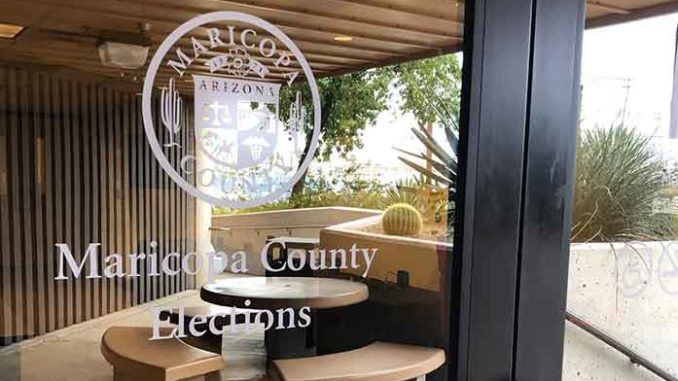
The Maricopa County Board of Supervisors and Recorder are at an apparent impasse in resolving the ongoing conflict over the recorder’s election powers.
Historically, Maricopa County officials interpreted state law governing election functions at the county level to authorize the recorder with full responsibility over elections through a Shared Services Agreement (SSA). Changes made in recent years, especially those made last year, are the source of serious conflict between Recorder Justin Heap and the board of supervisors.
For over 30 years, county supervisors and the recorder abided by an SSA which granted the recorder all election responsibilities. In 2019, the board and former recorder (now secretary of state) Adrian Fontes lessened the recorder’s responsibilities by having the recorder’s office handle early voting while the board managed in-person voting and tabulation.
Then, last October, the outgoing recorder Stephen Richer and board supervisors entered a new SSA. In a press release on Monday, Heap claimed that the new SSA further reduced the election-related responsibilities of the recorder’s office to signature verification only and reassigned a significant portion of the recorder’s budgeting and staffing to the board.
Heap announced that he submitted a letter to the supervisors claiming the new SSA was “not binding or enforceable,” referencing a consultation with the county attorney’s office.
Heap characterized the ongoing negotiations over the SSA as a “battle” beset by “rising public outrage” and “misinformation” in his press release.
“Stephen Richer’s parting gift to the voters of Maricopa County, after suffering an embarrassing primary election defeat, was a punitive backroom agreement with the lame-duck Board majority designed to hamstring the office of the Recorder,” said Heap. “For weeks, since before being sworn into office, I’ve sought reasonable, common-sense solutions with my fellow Republicans on the Board, only to be ignored. Maricopa County elections need a practical, workable SSA to ensure efficient, accurate elections; however, the Supervisors’ refusal to engage in honest dialogue risks a crisis in our upcoming elections.”
Heap requested the board revert election-related authorities under provisions similar to those outlined in the 2021 SSA, and restore his authority over early voting. Heap threatened legal action if his demands weren’t met.
In response to Heap’s press release, the county posted a slightly different breakdown of election responsibilities between Heap’s office and the supervisors that evening.
In the board of supervisor’s version of the SSA breakdown, recorder responsibilities consist of maintaining the voter registration database, preparing ballots and envelopes for voters, mailing early ballots to voters, receiving early ballots sent by USPS, managing in-bound envelope scanning, overseeing signature verification and curing of questionable signatures, sending and receiving UOCAVA ballots, administering Special Election Boards, and researching and curing all provisional ballots.
Supervisor election-related duties consist of managing candidate services and ballot-building; coordinating in-person voting for early, emergency, and Election Day voting; picking up ballots from early voting sites and drop boxes and providing to the recorder for in-bound envelope scanning; hiring and training election workers at the tabulation center and poll workers to support in-person voting; approving and managing operations of vote centers for early, emergency, and Election Day voting; processing ballots (removal of ballots from affidavit envelopes); tabulating all ballots (provisional, early, Election Day); canvassing of election results; and conducting recounts as ordered by statute.
Board of Supervisors Chairman Thomas Galvin also issued a statement describing Heap’s account of recorder responsibilities and ongoing negotiations with the board as factually inaccurate.
“Conversations between the Board and its staff, and the Recorder and his staff, have been happening for weeks. Despite the factual errors in Recorder Heap’s statement, I don’t view this as a ‘battle,’” said Galvin. “Shared service agreements in Maricopa County are frequently renegotiated, each time in consultation with our attorneys to ensure compliance with state law.
My colleagues and I happily look forward to further and continued dialogue to ensure a new SSA aligns with Arizona law and best practices in election administration.”
AZ Free News is your #1 source for Arizona news and politics. You can send us news tips using this link.