by Staff Reporter | Sep 16, 2026 | Education, News
By Staff Reporter |
Scottsdale Unified School District (SUSD) is contemplating more school closures as enrollment continues to decline.
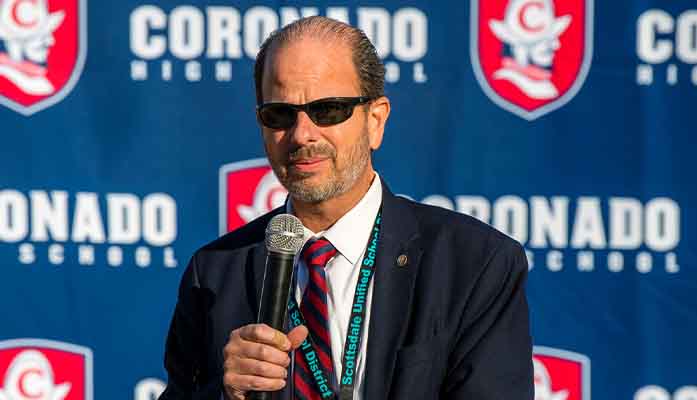
The SUSD governing board discussed their options going forward during Tuesday’s meeting. Superintendent Scott Menzel said “some very, very difficult decisions need to be made.”
Since 2010, SUSD enrollment has declined by 6,000 students and the district has only closed one school. SUSD also reported rising costs, competition against school choice programs for students, and underutilized facilities as key pressures on district conditions.
“We have far more physical space than we have students to fill that space,” said Menzel.
As part of Phase I of restructuring for “full and thriving schools,” SUSD decided to close Pima Elementary School and Echo Canyon School. The district is now in Phase II, where it will decide the fate of the Desert Mountain Learning Community and Copper Ridge School.
Capacity is below 50% at Laguna Elementary (43%), Desert Canyon Elementary (37%), and Cheyenne Traditional (11%).
SUSD is facing an open meetings violation complaint pertaining to these closed-door Phase II proceedings to determine closures and consolidations.
SUSD’s Phase II Design Advisory Team doesn’t permit the public to attend its meetings under its classification as a Superintendent Advisory Committee, but the complaint against the district contends that the team was formed at the direction of the governing board.
The Maricopa County Attorney’s Office (MCAO) is now handling the complaint after the Arizona Attorney General’s Office cited a potential conflict of interest.
The MCAO told AZ Free News that they just recently received the complaint from the attorney general on July 17, though it was filed back in April. Their office also told us that it couldn’t provide any additional details at this time since it is an open investigation.
The Phase II Design Advisory Team presented three options for further restructuring, in the following order of greatest to least preferences:
First-most preference: close Copper Ridge K-8 and Laguna Prep, redistribute boundaries, and a possible Desert Canyon K-8 merger. This option would impact 773 to 872 students and provide more than $2.7 million in savings.
Second-most preference: move Cheyenne Traditional K-8 to Copper Ridge, move Laguna Prep and Redfield to Cheyenne campus, and a potential Desert Canyon K-8 merger. This option would impact 2,126 to 2,232 students and provide nearly $2.6 million in savings.
Third-most preference: merge Desert Canyon schools into K-8 at Copper Ridge, close Laguna Prep, repurpose Desert Canyon campuses and Laguna Prep. This option would impact 2,132 to 2,153 students and provide nearly $2.7 million in savings.
Impact was measured beyond students moving into schools to include certain students at receiving schools.
All three options were presented with multiple potential models for restructuring boundaries.
Member Amy Carney attempted to explain that she believed closing schools was the “easy option,” to which she objected, but was interrupted multiple times by Governing Board Vice President Mike Sharkey and counsel with cautions that she shouldn’t express opinions about what the board should and shouldn’t do prior to community debate on the options.
Member Carine Werner urged agendizing a board discussion about the options before them prior to the board meeting in October in which they are scheduled to make a vote.
Member Matthew Pittinsky expressed caution against exploring other options beyond what the Phase II Design Advisory Team had presented to them; he characterized Carney’s position as “a very slippery slope.”
The district said it has not yet determined how it would repurpose any closed schools.
SUSD scheduled a special session to receive additional community input on September 22.
AZ Free News is your #1 source for Arizona news and politics. You can send us news tips using this link.
by Staff Reporter | May 17, 2026 | Education, News
By Staff Reporter |
Scottsdale Unified School District (SUSD) is once again facing another Open Meeting Law complaint over a non-public advisory committee.
The complaint, filed last month with the Arizona Attorney General’s Office, claims that SUSD Superintendent Scott Menzel has again violated Open Meeting Law during his phased approach to closing schools.
The Scottsdale resident who filed the complaint told AZ Free News that he felt compelled to look into SUSD’s process for school closures in response to the community shock over the governing board’s decision to close Pima Elementary School and Echo Canyon School last December.
The closures brought $2.5 million in savings to the district. SUSD began looking into the closing and consolidating of schools, among other solutions, to address an $8 million budget deficit driven by declining enrollment.
This latest complaint claims that SUSD’s non-public Phase II Design Advisory Team was formed at the direction of the board and therefore required to be open to the public. Superintendent Menzel encouraged the governing board to authorize the design advisory team during a regular governing board meeting last November.
The next month, during the same meeting to close the Pima and Echo Canyon schools, the governing board discussed the design advisory team’s formation. In that meeting, Menzel and SUSD governing board president Donna Lewis strategized on ways for the board to direct the design advisory team’s formation but style it as a superintendent’s committee. The board indicated that it wanted Menzel to move forward with the team, but didn’t take a vote to create the team.
The design advisory team operates under the classification of a Superintendent Advisory Committee, which is exempt from Open Meeting Law requirements. The newly filed complaint alleges that the governing board’s involvement in the creation of the Phase II Design Advisory Team makes that classification untrue.
The Phase II Design Advisory Team is charged with crafting recommendations on schools to the board, including further closures or consolidations.
The resident behind the complaint told AZ Free News that he filed against the district after SUSD personnel denied him entry to one of the design advisory team’s meetings in person.
SUSD told AZ Free News that it hasn’t received notification of this complaint.
SUSD got into trouble last year for similar non-public advisory committees.
Last summer, Attorney General Kris Mayes found SUSD had violated Open Meeting Law for using advisory committees in a manner similar to the alleged violation outlined in the complaint.
“The Open Meeting Law does not permit a governing board to evade the public meeting requirements by ‘informally’ forming or establishing, or by directing a superintendent to establish, a committee to perform work that would otherwise need to be conducted in public,” stated Mayes. “[W]e caution against an overly narrow reading of the law focused exclusively on the circumstances of a committee’s creation.”
The Phase II Design Advisory Team has held five meetings since it began in March. The team consists of two facilitators, Karen Benson and Quintin Boyce, and 45 members.
28 parents or guardians on the team represent current students at 11 schools: Anasazi Elementary School, Cheyenne Traditional School, Copper Ridge School, Desert Canyon Elementary School, Desert Canyon Middle School, Desert Canyon Mountain High School, Redfield Elementary School, Laguna Elementary School, Saguaro Middle School, Mountainside Middle School, and Mohave Middle School.
Other team members include eight SUSD staff members, six homeowners in the community, one community organization member, and one university partner.
AZ Free News is your #1 source for Arizona news and politics. You can send us news tips using this link.
by Arman Sidhu | May 16, 2026 | Opinion
By Arman Sidhu |
On May 12, the Scottsdale Unified School District (SUSD) Governing Board voted 5-0 to place a $375 million capital bond on the November 2026 ballot. Five months earlier, the same body voted 3-2 to close Pima Elementary and Echo Canyon K-8 over declining enrollment and its poor fiscal management.
SUSD has lost roughly 6,250 students since 2010-11, a 24% decline. Applied Economics, the district’s own demographer, projects another 2,400-student loss by 2035-36. Six additional campuses sit on the Phase II repurposing list and are likely the next to close. Yet, the district wants a bond 64% larger than the last one approved by voters to renovate buildings it is in the process of closing.
In 2019, Pima was rebuilt with funds from the last school bond approved in 2016 to boost the school’s enrollment. Seven years later, the Pima renovations are a startling example of hubris that comes at a colossal cost to taxpayers.
The Arizona Auditor General’s January 2026 financial risk analysis flags SUSD on five high-risk measures:
- State-funded enrollment is down 7.19% over four years, which directly reduces the per-pupil dollars the district receives.
- The day-to-day operating reserve lost nearly half its value in a single year, falling from $18.86 million to $10.60 million.
- SUSD spent more than it took in two years running, by 4.14% in FY25 and 8.52% in FY24.
- The General Fund savings account fell 25% in FY25 and 31% in FY24, a combined $28 million drawdown.
- SUSD pulled $4.2 million of its state capital aid, money meant for buildings, technology, and buses, and used it to cover payroll and operations instead.
In other words, SUSD is so operationally distressed that it is cannibalizing its capital fund to make payroll. A bond cannot fix that. By law, bond proceeds can only be spent on capital projects, not on salaries or classroom costs.
If this bond is approved, SUSD will still have to make cuts, most likely to staff while throwing away money to maintain spaces it cannot afford to operate.
This pattern is statewide. Chandler Unified has similarly delayed school closures and narrowly forced through a bond in 2025 after a 2024 bond request led to the district’s first school bond rejection in 30 years. Kyrene passed a $161 million bond in 2023 and is still closing six schools. Bonds do not solve enrollment declines, nor do they save jobs. Scottsdale Governing Board member Pittinsky put it plainly in the December 2025 closure vote: “SUSD is nearly 25% smaller than we were 15 years ago, yet we have closed only one program in that timeframe.”
The political machinery behind school bonds runs on the profit motives of vendors and not on the genuine needs of students, families, or the school district. The Arizona Center for Investigative Reporting documented that three architects, three construction firms, and three subcontractors captured more than half of Arizona K-12 contracts from 2013 to 2016, doing so through hundreds of thousands in political contributions to pro-bond PACs statewide.
SUSD voters have seen the worst side of school bonds co-opted by the greed and financial interests of vendors. In 2018, former Superintendent Denise Birdwell steered architectural work to Hunt and Caraway without competitive bidding, accepted $30,000 in payments during contract negotiations, and appointed an unlicensed architect with a prior felony theft conviction on the contractor selection committee. She was later indicted on 18 felony counts. Yet, the same conditions that enabled this malfeasance still remain in place with no real guardrails to protect taxpayers from the too cozy relationship between district leaders and vendors.
Before SUSD asks taxpayers for $375 million, the Governing Board and Superintendent Scott Menzel owe the district three deliverables that address the Auditor General’s findings.
- Complete Phase II closures before any new funding request.
- Align capital planning to the 2035-36 enrollment projection of 17,340 students.
- Cut district-level overhead and stop diverting capital to operations. Non-instructional positions in SUSD grew while enrollment fell and instructional spending dropped to a 20-year low at 54.0%.
These actions would constitute rightsizing in earnest through fewer schools, a smaller operational footprint, and a proportionally smaller payroll.
A district carrying five high-risk flags from the Auditor General has not earned the right to ask voters for $375 million. Scottsdale voters would be well-advised to reject the request this fall.
Arman Sidhu is a lifelong Arizonan, a professional educator, and a doctoral candidate at Arizona State University, where his research focuses on school bonds and K-12 education funding. The opinions presented are solely his own.
by Mike Bengert | Mar 19, 2026 | Opinion
By Mike Bengert |
When Dr. Menzel was hired as Superintendent of Scottsdale Unified School District (SUSD), he arrived with a stated goal: to disrupt and dismantle what he believed were systems denying access and opportunity to students of color, students in poverty, and students with IEPs.
But was that truly the reality in SUSD before his arrival?
Regardless, Menzel has moved forward with exactly that approach, disrupting and dismantling the district. His emphasis on initiatives like gender identity and social-emotional learning, often at the expense of academic performance, has produced troubling results: school closures, declining academic outcomes, falling enrollment, record levels of non-classroom spending, teacher layoffs, and increasing staff turnover.
Disrupt and dismantle.
At the November 18, 2025, board meeting, Menzel outlined reductions in FTE staff at the district office over the past three years, arguing that all reasonable cost-cutting measures have been exhausted, leaving school closures as the only remaining option.
But is that really true?
When board members Amy Carney and Carine Werner raise concerns about wasteful spending or request detailed financial information, they are often ignored or told that staff are too busy to provide answers. Meanwhile, the expenditures they question are dismissed as not necessarily wasteful just because they disagree with them.
Not only has Menzel shown little interest in cutting favored programs or non-essential spending unrelated to improving academic performance, but he has also failed to address concerns raised in exit interviews, concerns that could help slow declining enrollment.
Disrupt and dismantle.
At a recent board meeting, it was announced that more than 130 applications had been submitted for the Phase II Design Team. Selections are underway, with the first meeting scheduled for March 26.
Menzel noted that Matt Pittinsky was the only board member to suggest closing more than two schools in Phase II. When asked by Menzel for input from the board about additional closures, Mike Sharkey responded that if the committee recommends closing three schools instead of two, “that’s great”—despite having campaigned on not closing schools. He added that committee members can “feel it out as it goes along” and gauge community reaction afterward.
Carney argued that school closures should be a last resort; Pittinsky disagreed, despite also campaigning against closures. He now claims more schools must be closed to maintain a “quality student experience.” But is this the same “quality” that has coincided with declining enrollment and revenue losses?
Carney pressed for early parent input through surveys, with Werner agreeing that community feedback should come at the beginning, not the end, of the process. Menzel, however, stated surveys would occur only after the committee completes its work, likely in late May or early June. Pittinsky, Sharkey, and Lewis supported that timeline.
While district leadership claims to value community input, their actions suggest otherwise. The committee is not being asked to explore solutions to the budget shortfall; they are being steered toward a predetermined outcome: closing schools.
For those who haven’t followed closely, the public comments from last fall’s board meetings tell the story. Parents from schools like Pima and Echo Canyon described being blindsided by closures, with little to no input. Even some board members indicated they were excluded from meaningful involvement.
According to the district, the Phase II Design Team members will “help inform discussions about enrollment trends, school facilities, and long-term sustainability through respectful, student-centered collaboration.”
But what does that actually mean?
A small group, selected by Menzel and guided by a district-paid consultant, is expected, over just a few weeks, to analyze years of enrollment data, financial trends, and demographic projections, and then “inform” district decisions.
Is that realistic?
So, what will this design team actually do?
In all likelihood, it will just validate decisions that have already been made by Menzel.
Over recent meetings, Menzel has presented Phase II “repurposing solutions.” One proposal involves relocating Cheyenne Traditional School (CTS) to Copper Ridge. He describes this as an opportunity to place a high-demand program in an underutilized facility with room for growth.
However, what goes unaddressed is the likely impact on enrollment. Moving CTS to the northernmost part of the district could drive families away, not attract them. CTS draws students from across the district, many within walking or biking distance of its current location. Relocating it would add significant travel time, potentially up to 20 extra miles per day for some families.
How many parents would make that commute? How many would instead leave CTS or SUSD altogether?
Similarly, how many Copper Ridge families would choose CTS or be willing to move to the Desert Canyon schools, or simply leave SUSD? These are critical questions, but they remain unanswered.
They could be answered now through parent surveys. Instead, feedback is being delayed until after decisions are effectively finalized.
If enrollment drops following a relocation, as seems likely, the result could be the eventual closure of CTS, the district’s last remaining traditional school, which could lead to even further declining enrollment and financial shortfalls for SUSD.
And that would align with Menzel’s stated goal: disrupt and dismantle.
Parents at Phase II schools should make their views known by contacting the Board and Menzel, using Let’s Talk, writing opinion pieces, participating in PTO meetings, and sharing information with parents through newsletters and social media. Don’t wait until decisions are final; speak up now. Community input is important.
Don’t let Menzel continue to disrupt and dismantle SUSD.
Mike Bengert is a husband, father, grandfather, and Scottsdale resident advocating for quality education in SUSD for over 30 years.
by Jonathan Eberle | Dec 14, 2025 | Education, News
By Jonathan Eberle |
Hours after State Representative Matt Gress urged the Scottsdale Unified School District (SUSD) Governing Board to postpone its decision on whether to close two schools, the Board voted to permanently shutter Pima Elementary and Echo Canyon K-8—fueling frustration among families and intensifying scrutiny of the district’s financial review process.
Gress, who chairs the House Education Committee and co-chairs the Joint Legislative Audit Committee, had asked the Board to wait until February 1 before taking action. In a letter sent Monday, he warned that the district had not provided the public with a complete fiscal analysis or a thorough exploration of alternatives.
“Closing schools has lasting consequences. Before the board takes any action, the public should see a full explanation of the fiscal impact, the alternatives that were considered, and how the district plans to support the students who would be uprooted,” Gress wrote. “Based on what I have seen so far, that work is incomplete.”
At Tuesday’s meeting, the Governing Board voted 3–2 to permanently close both Pima Elementary and Echo Canyon K-8 beginning next school year. The decision comes as SUSD faces declining enrollment, rising operating costs, and a projected budget deficit that could reach $9 million by 2026.
Superintendent Dr. Scott Menzel told families that the district can no longer sustain all of its campuses under current conditions. “These realities make it increasingly difficult to sustain all of our schools in their current form while continuing to provide the world-class, future-focused education our community expects and deserves,” he said.
District data presented Tuesday showed that 12% of Pima families and 17% of Echo Canyon families have already enrolled in alternate district schools for next year—figures officials say reflect the difficult choices families are already making.
While the Board cited urgency, Gress countered that SUSD still has financial alternatives that would allow more time for a complete public review before making irreversible decisions. He emphasized that families deserve clarity before the district proceeds with closures that will significantly disrupt school communities.
“This decision can wait,” he said. “Taking the time to do this right will help the board make a more informed and beneficial choice.”
With the vote now final, the repurposing process for both campuses is scheduled to begin in the 2026–2027 school year—while families, lawmakers, and district officials continue to debate whether the closures were necessary, inevitable, or simply premature.
Jonathan Eberle is a reporter for AZ Free News. You can send him news tips using this link.