The Screwtape Letters is a satirical novel written by C.S. Lewis in which a senior demon advises his nephew on how to lead humans astray. It exposes moral issues by presenting them from evil’s perspective. It made me think about how Uncle Screwtape would react to some of Arizona’s pro-life laws.
My Dear Wormwood,
You are to be congratulated. The filing of Isaacson v. Mayes is shaping up to be one of our most exquisite triumphs.
Our legal allies are moving swiftly now, carving through the last scraps of pro-life resistance like a scalpel through soft tissue. At the top of our target list is that revolting statute, ARS 13-3603.02 — the one that dares to prohibit abortions based on race, sex, or disability. How dare they presume to protect the weak, the imperfect, the unwanted? That law, Wormwood, is an affront to everything we’ve worked for. A child has Down syndrome? Terminate. It’s a girl? Dispose. The father is the wrong skin color? Eliminate. This is not discrimination — it is efficiency. And we must preserve that efficiency at all costs.
One of our most brilliant human thinkers once said,“The demand that defective people be prevented from propagating equally defective offspring is a demand of the clearest reason and if systematically executed represents the most humane act of mankind.”Ah, Hitler — rarely quoted these days, but his reasoning lives on, albeit in more “palatable” packaging.
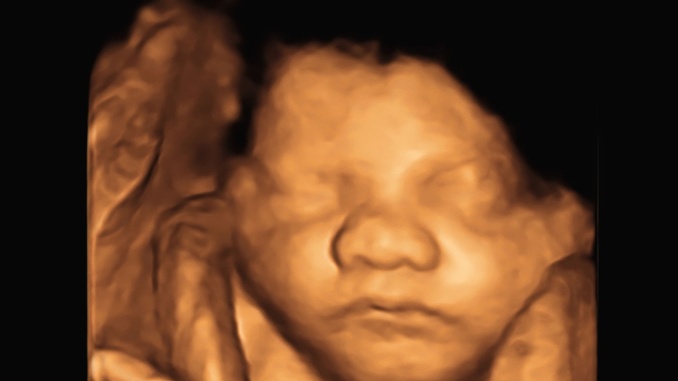
Even worse, their laws force abortionists to speak truth — to describe fetal development, risks, alternatives, and the heartbeat pulsing inside the mother’s womb. You know how dangerous truth is, Wormwood. A heartbeat can unsettle even the most hardened conscience. The shape of a tiny hand on an ultrasound has undone entire years of our work. We must strip these laws bare. Truth is the Enemy’s weapon. Silence is ours.
They call it “healthcare” — but we know it’s the slow death of conscience.Strip away protections for the preborn, and soon they’ll stop seeing humanity in the elderly, the disabled, the inconvenient. It’s a spectacular unraveling.
Expect a few murmurs — rallies, opinion pieces, even prayers (tedious, as always). But most will hold their tongues. Remind them it’s impolite to bring up such “divisive” topics. Tell them it’s not their place, that moral clarity is rude, and silence is virtuous. Make them believe that speaking truth is worse than allowing evil to proceed. That, Wormwood, is how we keep them docile.
Meanwhile, our friends in the abortion clinics are prepared. Every life ended is another efficient procedure, another soul fed to the furnace. And Arizona — scorched and sleepy — drifts closer to surrender.
Carry on. The womb is nearly ours.
Your devoted uncle, Screwtape
Katarina White serves as Board Member for Arizona Right to Life. To get involved and stay informed, visit the Arizona Right to Life website.
Arizona now prohibits health care providers from using an individual’s disability as a disqualification from an organ transplant. The sole exception would be in the case that a patient’s disability poses a medical problem when receiving an organ transplant, excluding that patient’s ability to comply independently with the procedure.
The legislation also requires health care facilities to accommodate their organ transplant-related services for disabled patients, such as communications and counseling. It included specific provisions for patients with hearing and visual impairments, as well as cognitive, neurological, developmental, or intellectual disabilities.
Comprehensive information on all organ transplant centers’ policies regarding patients with disabilities doesn’t exist — only studies exist. A 2019 study from the National Council of Disability, a federal agency, confirmed that to be the case, observing a lack of transparency and consistency concerning organ transplant policies. What’s more, the council reported that individuals with disabilities and their families actually face pressure to donate organs. One of the most comprehensive studies, conducted in 2008, estimated that 43 percent of organ transplant centers “always” or “usually” deny children with a neurodevelopmental disability, while about 39 percent “rarely” or “never” do.
One Arizona mother, Felicia (Josie) White testified to the House Health & Human Services Committee that she supported this bill because Phoenix Children’s Hospital policy didn’t confirm that they would approve her daughter for a heart transplant, due to her having Down Syndrome. The White family felt compelled to seek treatment across the country, 3,000 miles away, in Boston, Massachusetts.
“We know individuals with Down Syndrome live full and fruitful lives well into adulthood. If transplant centers can teach illiterate, non-English speaking parents to dose meds, there’s no reason someone with Down Syndrome could not be taught,” said White. “I understand that organ allocation is a limited resource, but I also know that labeling anyone with cognitive delays ‘unable to transplant’ is a slippery slope that could include everything from ADHD to who knows what.”
Another mother, Andrea Temarantz, shared that her son also has Down Syndrome and would be jeopardized if he needed an emergency organ transplant. Temarantz informed the legislators of the studies on organ transplant discrimination. She insisted that the federal Americans with Disabilities Act (ADA) already prohibited such discrimination, but that there weren’t any enforcement mechanisms to protect patients with disabilities from ADA violations in Arizona.
“Every life is precious, and no one should be blocked from a transplant because of stereotypes about persons with disabilities,” said Temarantz.
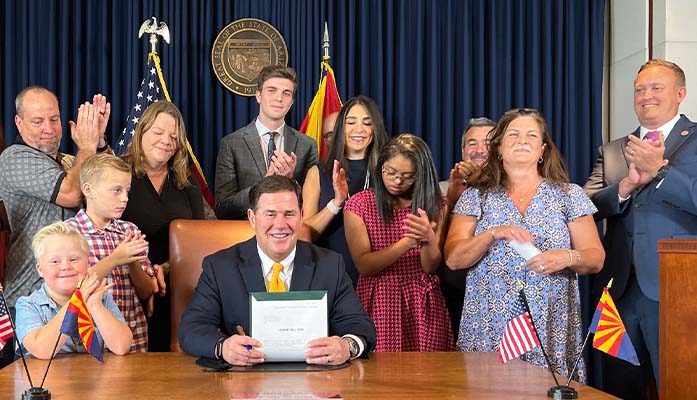
Governor Doug Ducey signed that anti-discrimination bill, HB2659, into law in March.
Every single life has value, and everyone deserves equal access to critical health care like organ transplants — H.B. 2659 will help us attain that for those with disabilities. @kaiser4azpic.twitter.com/EDgJQun9FK
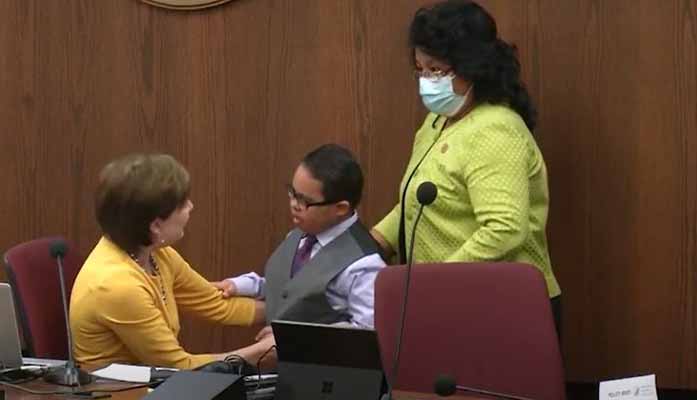
The Senate Health and Human Services Committee received a welcome surprise from 10-year-old Adam Fraleigh, when the little boy with Down syndrome thanked them for hearing his family’s testimony by hugging each senator present.
Adam’s father, John Fraleigh, brought Adam to address a bill that would include Down syndrome among the developmental disabilities recognized by the Department of Economic Security (DES) for its programs, services, and facilities. The pair matched in their attire: gray vests, light purple dress shirts, and purple ties.
Fraleigh gave a brief medical explanation of what makes Down syndrome a developmental disability. He cited the many medical procedures Adam has undergone in his 10 short years, and the likely many more ahead for the rest of his life.
“Requiring paperwork to consistently prove the effects of Down syndrome is wrong. Please pass this bill to demonstrate the understanding that Down syndrome is a disability, a cognitive disability,” said Fraleigh. “My son will require additional resources forever. With that, I’m open for questions, he’s open for hugs.”
Adam rushed over after his father’s testimony to hug each committee member, pulling them close and patting everyone vigorously on the back. He brought a welcome break from a long, packed legislative season, inspiring smiles and laughter from all in the room.
State Senator Nancy Barto (R-Phoenix) thanked Fraleigh for bringing Adam, noting that he brightened their day.
“Thank you; he brightens my day every day,” responded Fraleigh.
The bill passed the House unanimously last month.
Currently, the list of developmental disabilities under DES doesn’t include Down syndrome, but does include autism, cerebral palsy, intellectual disability diagnosis, epilepsy, or diagnosed as at-risk for developing these disabilities.
Corinne Murdock is a reporter for AZ Free News. Follow her latest on Twitter, or email tips to corinne@azfreenews.com.
A controversial pro-life bill passed out of both the House and Senate on Thursday along party lines. SB 1457, which had previously passed out of the full House and Senate along party lines, but failed to pass the final Senate vote now heads to the governor’s desk.
The vote came just days after a federal appeals court upheld a similar law in Ohio, providing more evidence of constitutionality for the prohibition of abortion based on a genetic condition like Down syndrome, according to the Center for Arizona Policy.
Supporters say SB 1457, sponsored by Sen. Nancy Barto, is a “commonsense bill that prohibits abortion based on the diagnosis of a genetic abnormality, except for those with a lethal fetal condition.” Opponents say the bill is an assault on women’s reproductive rights and “ignores the complexities of high-risk pregnancies.”
The bill also repeals a pre-Roe law that punishes women who have abortions, and it establishes Arizona laws will be interpreted in the context of valuing all human life. It also prohibits public institutions from performing abortions or experimenting with aborted human remains.