by Mike Bengert | Sep 28, 2026 | Opinion
By Mike Bengert |
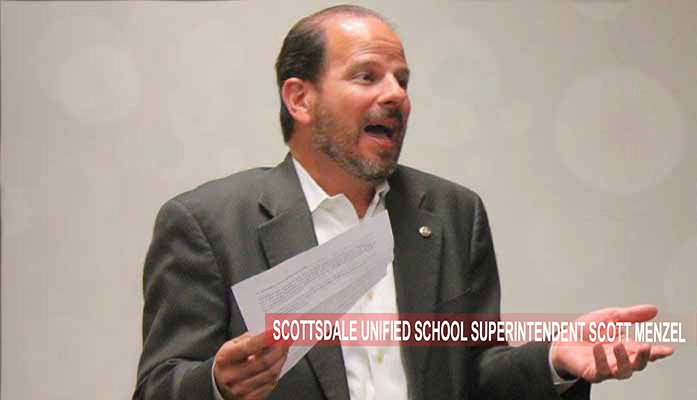
After investigating an Open Meeting Law (OML) complaint against the Scottsdale Unified School District (SUSD), the Maricopa County Attorney’s Office (MCAO) determined that Dr. Menzel and the SUSD Governing Board once again violated the rights of SUSD parents and the public. They were denied the opportunity to attend Phase II Design Team meetings and hear deliberations as the team developed recommendations on school closures and boundary changes for the Governing Board.
SUSD parents should be outraged that the Governing Board and Dr. Menzel denied them rights guaranteed by law while considering such impactful decision as closing schools.
And by “Governing Board,” I mean Members Pittinsky, Sharkey, and Lewis. All three are union-backed Menzel supporters who consistently vote for his proposals, excuse the failures and consequences of his policies, and reward him with contract extensions and pay raises.
A.R.S. § 38-431.01(A), commonly known as the Open Meeting Law, states:
“A. All meetings of any public body shall be public meetings and all persons so desiring shall be allowed to attend and listen to the deliberations and proceedings.”
In its September 16 letter to the District, the MCAO stated:
“SUSD has already been warned by the Arizona Attorney General’s Office that the Open Meeting Law does not permit a governing board to evade the public meeting requirements by ‘informally’ forming or establishing, or by directing a superintendent to establish, a committee to perform work that would otherwise need to be conducted in public.”
Despite the Attorney General’s warning two years earlier, Dr. Menzel and the Governing Board disregarded it and again violated the public’s rights.
Any legal violation by SUSD is serious, but this one is especially egregious because it concerns perhaps the most consequential decision of Menzel’s tenure: school closures.
At the September 22 public hearing, parents described the profound effects the closures would have on their children and families.
Yet SUSD denied them the legal right to attend the meetings, hear the deliberations, and participate in the process. Had parents been allowed to attend, they could have raised questions and concerns for the board to address as the work proceeded.
The MCAO also stated in its letter:
“It is also advisable that the Governing Board acknowledge this investigation at the next public meeting and take steps to assure the constituents of SUSD that the intent of forming the Phase II Team was not to bar the public from the policy creating process.”
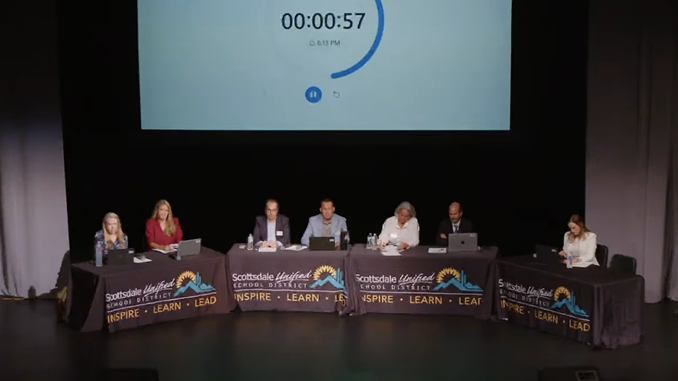
At what was the next meeting, held September 22, I was the only person to mention the OML violation. When I used that phrase, Dr. Lewis immediately interrupted and asked SUSD’s general counsel to stop the discussion, which she did. You can hear the exchange right here.
I understand why the Governing Board might hesitate to admit what it had done or try to assure parents that it never intended to exclude them and deny their rights.
At a December 2025 board meeting, the Board openly discussed how complying with the law, (i.e. posting an agenda in advance, keeping minutes, allowing public attendance, and enabling people to hear deliberations) would slow down the process, even if it was an acceptable alternative. Listen to the discussion here.
SUSD deserves a Governing Board that respects parents’ rights and will not sacrifice them for “flexibility and expediency” merely to allow the superintendent to be more “nimble.”
SUSD deserves a Governing Board that does not view a committee meeting behind closed doors as “much more interactive” than an open meeting where anyone who wishes to attend and listen to the deliberations can do so.
SUSD deserves a Governing Board that sees legal compliance not as a problem to solve, but as an opportunity to demonstrate they truly believe in the values of integrity, honesty, transparency, accountability, openness, and authenticity that SUSD espouses.
This is the kind of Governing Board SUSD parents should demand.
Unless the Governing Board fully understands and addresses the causes of SUSD’s declining enrollment and evaluates every viable option, it is unlikely to solve the problem. Closing schools under an ill-conceived plan, railroaded through behind closed doors, that fails to assess the full financial impact of the plan is irresponsible and will merely carry the district’s financial problems into the next budget cycle.
Parents, even if your child does not attend a school affected by this pending decision, do not assume you have nothing to fear. Menzel and his supporters on current and previous Governing Boards have repeatedly shown little regard for your rights. Without meaningful consequences, they will continue to ignore adverse legal findings and warnings and violate parents’ rights with impunity.
This Governing Board has failed the SUSD parents, and they must be held accountable.
Parents, will your school be next and your rights denied?
Attend the October 6 board meeting, voice your outrage, and urge the Governing Board to halt the school-closure process. Demand that it start over with a comprehensive plan that considers every option to deal with the declining enrollment.
Mike Bengert is a husband, father, grandfather, and Scottsdale resident advocating for quality education in SUSD for over 30 years.
by Staff Reporter | Sep 25, 2026 | Education, News
By Staff Reporter |
Scottsdale Unified School District (SUSD) violated the law with its school closure and consolidation committee, but the county attorney says it’s too late to stop them.
The complaint was filed originally with Attorney General Kris Mayes back in April, claiming that SUSD’s Phase II Design Advisory Team, an advisory committee responsible for coming up with school closure and consolidation options, violated Open Meeting Law because it prohibited the public from attending meetings.
Mayes waited nearly three months to refer the complaint to the Maricopa County Attorney’s Office (MCAO); she cited a conflict of interest as the basis for not taking on the investigation herself.
MCAO told AZ Free News that Mayes didn’t refer the complaint to their office until July 17.
By then, SUSD’s Phase II Design Advisory Team had held all five of its Phase A meetings and three out of five of its Phase B meetings. The final meeting for this illicit advisory committee occurred on August 17.
Since all of the meetings have already occurred, MCAO Deputy County Attorney Caitlyn Mitchell said in a disposition letter on Tuesday that nothing could be done beyond recommending to SUSD that they not recommit a similar Open Meeting Law violation in the future and acknowledge their wrongdoing at the special meeting scheduled to occur that day.
“[I]t is too late to require SUSD to take corrective action concerning future Phase II Team meetings,” stated Mitchell. “MCAO has informed SUSD of its findings and conclusions, recommended that SUSD revise its future use of superintendent appointed committees, and requested that the SUSD Governing Board acknowledge the results of this investigation publicly at the open meeting to discuss the Phase II Team’s recommendations.”
Arizona law requires any legal action taken in a meeting that violates Open Meeting Law to be rendered null and void, unless ratification occurs under certain parameters during a public meeting within 30 days of discovery of the violation.
Non-public advisory committees have been a recurring problem for SUSD. Mayes has previously found SUSD in violation of Open Meeting Law for its use of non-public advisory committees.
During the SUSD special meeting on Tuesday, the governing board didn’t advise the public of the MCAO letter or the fact that the advisory committee responsible for creating the school closure and consolidation options had been conducted in violation of the law. It also stopped the community from making any mention of the letter.
Mike Bengert, the community member who filed the complaint, attempted to speak about the disposition letter during public comment, but Governing Board President Donna Lewis interrupted him.
SUSD counsel Renee Osipov told Bengert that he could only talk about the proposed options for school closures and consolidations.
“We’re not talking about Open Meeting Law. That’s not what we’re agendized to do,” said Osipov.
Lewis had advised at the beginning of the special meeting that public comments not addressing school closure and consolidation options were only permitted for the next meeting scheduled for October 6 — the day that SUSD is anticipated to vote on school closures.
During Tuesday’s meeting, public comment on the school closure and consolidation options lasted more than three hours.
The Phase II Design Advisory Team operated as part of three phases to close, consolidate, and repurpose schools within the district. Phase III has another non-public advisory committee: the Coronado Learning Community committee.
Bengert told AZ Free News that he filed a new Open Meeting Law complaint over Tuesday’s special meeting.
AZ Free News is your #1 source for Arizona news and politics. You can send us news tips using this link.
by Mike Bengert | Sep 22, 2026 | Opinion
By Mike Bengert |
Dr. Jennifer Johnson is the union-backed, Menzel-aligned progressive candidate for the Scottsdale Unified School District (SUSD) Governing Board in the 2026 election. A career educator, she campaigns on the slogan “Experience Matters.” That is true, but parents’ experience with a public education system led by professional educators, like Dr. Johnson, also matters.
Americans’ satisfaction with K–12 education has fallen to 32%, the lowest level in Gallup’s 27-year trend, while dissatisfaction has reached a record 67%; only 8% are completely satisfied. These figures point to widespread concern about public education and growing demand for reform and alternatives. The survey is consistent with the results shown in the 2024 National Assessment of Education Progress.
Similar concerns are evident in SUSD: academic performance has continued to decline under Menzel, parents are withdrawing their children, and the district is closing schools. Yet Dr. Johnson’s website states, “SUSD is already recognized as a leader in academic achievement, and I am committed to ensuring that success continues for all students.”
A leader in academic achievement? In FY2025, fewer than half of SUSD eighth graders were proficient in math (49%) or science (47%). Among 11th graders, 55% were proficient in math and only 22% in science. Despite these low proficiency rates, SUSD advances or graduates 98% of its students. SUSD high school teachers say incoming freshmen are unprepared for high school course work, and college professors report the same. How does graduating academically unprepared students prepare them for life after school?
If Dr. Johnson, an experienced education professional, considers these results evidence of leadership, that’s a problem.
On top of that, Dr. Johnson’s only ties to SUSD are her relationships with Dr. Menzel and other district staff. She became a Scottsdale “resident” only recently and was recruited to run for the Governing Board to act as another rubber-stamp vote for Dr. Menzel’s agenda. Like current Board President Dr. Donna Lewis, also an education professional, Dr. Johnson has no prior history, experience, or connection with SUSD. She would further weaken meaningful board debate and again deny SUSD parents and the public the opportunity to hear opposing views on district policies and decisions.
In June, Dr. Pittinsky explained his vote to extend Menzel’s contract and approve a raise by citing surveys that described SUSD as well run. However, the Arizona Auditor General reported that district data showed SUSD moving toward the high-risk category because of declining enrollment and other financial pressures, including the transfer of more than 36% of capital funds to operations. Keep that in mind.
Yes, experience matters. And for decades Americans have experienced a steady decline in public education, a decline we have seen firsthand in SUSD under the influence of teachers’ unions and so-called education experts, like Dr. Menzel, Dr. Lewis, Dr. Pittinsky, and Dr. Johnson.
Scottsdale residents, SUSD students, and their families cannot afford another Governing Board mistake.
Mike Bengert is a husband, father, grandfather, and Scottsdale resident advocating for quality education in SUSD for over 30 years.
by Mike Bengert | Aug 31, 2026 | Opinion
By Mike Bengert |
At the June 23rd meeting, the three-member progressive majority of the Scottsdale Unified School District (SUDSD) Governing Board approved a $20,000 raise and contract extension for Dr. Menzel. His annual salary, not including stipends, bonuses, or other benefits, is now $245,000.
Member Amy Carney voted no. Explaining her vote, she said:
“My vote for extending the superintendent’s contract through 2029 is based on performance, accountability, and the financial realities facing our district. Scottsdale Unified School District continues to face significant challenges. Enrollments declined by approximately 6,000 students over the past decade, resulting in ongoing budget pressures and difficult decisions about closing and consolidating neighborhood schools. And at the same time, district academic performance indicators, including ACT scores, are still declining. This year, the superintendent received a lower evaluation score from the board than he received in previous years. Despite that decline, the board majority has approved both a salary increase and a three-year contract extension. I believe contract extensions should be earned through demonstrated results. When academic goals have not been met over a long span of time and a district is operating in a season of budget deficits, extending a contract is wrong. In most organizations, declining performance would not earn you additional compensation or a lengthened contract. Given those realities, I don’t believe giving our superintendent a raise or long-term contract extension is appropriate. My responsibility is to exercise sound stewardship of taxpayer dollars and hold district leadership accountable for results. So, for those reasons, my vote is a no.”
With this statement, Member Carney again showed the principled leadership she has brought to the Board throughout her four years serving SUSD students and parents.
For those who have been paying attention, this is not surprising.
Over the years, Member Carney has consistently challenged Menzel’s radical and destructive policies. For the past four years, she and outgoing Member Werner were the only voices of reason and common sense on the Board. Despite attacks and ridicule from progressive members who backed Menzel, they refused to serve as rubber stamps and would not be silenced.
Now let’s compare what the Menzel-aligned board members said about his new contract.
Menzel’s Followers on His Leadership
Explaining his vote to approve Menzel’s raise and contract extension, Member Pittinsky said in part:
“I think under Dr. Menzel’s leadership, we’re in the midst of several critical initiatives, all of which are multi-year, and he deserves the opportunity and we need his leadership and his expertise to see them through.”
According to Pittinsky, SUSD needs Menzel’s “leadership and expertise” to carry out “several critical initiatives,” including closing and consolidating schools. Yet those initiatives stem from actions Menzel took, with support from the Board majority, as part of his effort to disrupt and dismantle SUSD.
Then came comments from Governing Board President Dr. Lewis, another public education expert and former superintendent of the year.
Explaining her yes vote, Dr. Lewis said:
“Menzel’s asked frequently to serve and guide other superintendents around the state and that’s a compliment and a badge of honor for this district.”
She conveniently left out that Menzel is paid for his involvement in the Superintendents Collaborative Network with Grand Canyon University.
Dr. Lewis went on to say:
“I appreciate that he symbolizes who we are and what we’re about and is very in touch with some of the points of disagreement. And that takes a sophistication and complexity to weather while leaning in and taking the risk of leading.”
I’m not sure exactly what this means, especially the last sentence. But since Lewis and the other Menzel supporters on the Board routinely approve what Menzel wants, one interpretation is that, if Menzel “symbolizes who we are and what we’re about,” they also support his effort to “disrupt and dismantle” SUSD.
Menzel’s Followers on Enrollment
Pittinsky continued:
“I would point out that if you look at retention, which is the number of students who are in our schools that continue in our schools, every single year that Dr. Menzel has been superintendent, our enrollment has grown. We’ve had more than 100% of our students renew, which means we are attracting more students. Our enrollment trends are a function of starting kindergarten classes that are much smaller than graduating senior classes and that is largely a function of demographics. That is simple math.”
To try and understand Pittinskys’ statements about retention and enrollment trends, I went to the various presentations used by Menzel at the Board meetings.
Member Pittinsky’s statement that enrollment has grown under Menzel is proven wrong by Menzel’s own chart. Go to the 4/29/25 Enrollment Planning Study Session, slide #10, and see for yourself. From 2021 (21,455) to 2024 (20,930) enrollment has declined every year for a total of 525 (-2.4%) students. If you extend it to include 2025 (19,722) (from District Financial & Enrollment Overview 10/28/2025, slide #4) during period 2021-2025 the total drop in enrollment is 1,733, with 1,208 of that reduction happening between 2024 and 2025 alone. During Menzel’s tenure as superintendent the 1,733 enrollment reduction represents 29% of the total 6,032 between 2010 and 2025.
Again, using Menzel’s numbers, while SUSD enrollment was declining by 2.4% from 2021 to 2024, Great Hearts enrollment increased 5.6%. Must be demographics.
Pittinsky is arguing that Menzel should not be blamed for declining enrollment because kindergarten classes are smaller than graduation senior classes, due in large part to demographics. Yes, the math is simple, but it has followed the same pattern since 2010, with kindergarten enrollment lower than the number of graduating seniors every year by an average of over 500 students. But in the last five years under Menzel, we have graduated an average of over 700 more seniors than kindergarten students.
Explain again how we are attracting more students.
Menzel’s Followers on Capture Rate
During the February 11, 2025, board meeting, where the 2025-2026 budget was reviewed, Member Pittinsky commented that, due in part to demographics and the SUSD capture rate (currently 55%), the district would be “doing the same thing again in 12 months” without rethinking its expense structure.
At the February 2025 meeting, Pittinsky viewed the district low capture rate as a problem, but apparently now he views it as a positive while trying to defend his vote to give Menzel a raise and contract extension, he says:
“…if you look at our capture rate under Dr. Menzel, our capture rate has declined at the lowest rate of any of the recent superintendents.”
So, according to Pittinsky, while the SUSD capture rate under Menzel is bad and is declining, it is not as bad as other SUSD superintendents. This is the same logic Menzel uses when he says SUSD academic performance may be bad, but we still lead the state, a state where overall academic performance is a disaster.
I think this kind of logic is what they call spin.
Menzel’s Followers on Academic Goals
Pittinsky also notes that in this contract extension, the Board has set multi-year academic achievement goals for Menzel. But in his five years at SUSD, Menzel has not met a single academic goal. Why should this time be different? Goals may sound meaningful, but if they are repeatedly missed without consequences, they become little more than wasted time.
Menzel’s Followers on the State of the District
Pittinsky claims that according to surveys SUSD is a well-run district. Perhaps Pittinsky needs to review slides 30 and 31 from the 4/29/25 Enrollment Planning Study Session. Those exit surveys identified parents’ concerns about academic rigor, technology overuse, discipline and policy enforcement, bullying and safety, and dissatisfaction with school leadership.
According to Arizona Auditor General, a “review of the District’s data indicates that the District may be moving toward the highest-risk category.” The Auditor cites five areas at SUSD as high risk, including the change in weighted student count (-7.19% in 4 years), and four critical financial measures. You can review the details here Scottsdale Unified School District Approaching Highest Risk.
The Scottsdale Unified School District Spending Report shows that the District FY2025 instructional spending percentage of 54.0% is near the 25-year low of 53.6%
This story from March 2024 talks about the poor performance of 8th graders on the math testing with only 54% being proficient on the standardized math test. Look at the FY2025 8th grade math test scores on the Arizona Department of Education website here. You will see that only 49% of all 8th graders are proficient in math.
Does this sound like a well-run district?
Here is the bottom-line.
This November we have a choice. We need principled leadership on the SUSD Governing Board. We can’t afford to elect another member with no ties to the district other than being a Menzel supporter. Do your homework.
Mike Bengert is a husband, father, grandfather, and Scottsdale resident advocating for quality education in SUSD for over 30 years.
by Mike Bengert | Apr 21, 2026 | Opinion
By Mike Bengert |
During the most recent election for the Scottsdale Unified School District (SUSD) Governing Board, one slate of candidates campaigned on fiscal responsibility, academic excellence, parental rights, school safety, and a simple message: Just be honest.
That vision sounds appealing, but it doesn’t reflect where things stand today. For students and parents in SUSD, the reality has fallen short.
Unfortunately for the SUSD community, the three board members elected in the last election have lived up to their promise to “protect SUSD,” meaning protect Superintendent Scott Menzel.
Look at the records of Pittinsky, Sharkey and Lewis. What meaningful policy or solutions to any of the issues in SUSD have they offered? They haven’t. They only attack Member Carney and Member Werner when they make a proposal. Dr. Lewis is basically useless letting Menzel run the show. Pittinsky, Sharkey and Lewis don’t seem to understand that Menzel works for them, and they work for the SUSD community.
SUSD is close to reaching a point of no return. And it may not survive another year of Menzel and this governing board.
Elections have consequences.
A review of the past few months shows just how bad things have gotten in SUSD.
Despite repeated assurances about transparency, open communication, and a willingness to listen, Dr. Menzel has failed to consistently follow through. Keeping the community fully informed and being honest with the SUSD community when it matters most, has often been lacking during Dr. Menzel’s tenure as superintendent.
It’s also worth remembering that during his tenure at SUSD, Dr. Menzel has been cited by the Arizona Attorney General’s Office for multiple violations of the state’s Open Meeting Law. For those who want to review it themselves, see Az Attorney General Opinion I24-004.
As a recent example of Menzel struggling with the truth, during the SUSD Governing Board Regular Meeting 1/6/2026 (@1:23:53 – 1:24:13), explaining what he had said to parents at Copper Ridge and Cheyenne, Dr. Menzel said, “…it made sense to move quickly to get feedback… [Emphasis added]”
Fast forward to SUSD Governing Board Meeting 3/10/2026 (@1:32:20 -1:32:41), where Dr. Menzel told the board that at the meetings with the Phase II families, “…the surveys would go out after we identified the three options to get feedback on what’s possible. So that would likely be late May, early June after the committee gets the chance to do its work [Emphasis added].”
Not only did Menzel tell two different stories about what he told the parents, but he conveniently left out that once the committee completes its work on May 7th, the community will be surveyed, and that feedback will then be filtered and evaluated by District team members. (See slides 6 & 7 SUSD Phase II Design Advisory Team Meeting 1 March 26,2026.)
The results will then be presented to the Governing Board in October for a final decision. By that point, after the District staff has “vetted” the input, it’s hard not to expect recommendations that align with Menzel’s stated goal of “disrupting and dismantling” and reducing the footprint of SUSD.
The discussion at the board meeting on December 9, 2025, offers a revealing look at the kind of leadership guiding SUSD. The SUSD Governing Board Regular Meeting 12/9/2025 is particularly informative if you want to understand who sits on the board and how they approach transparency and community input. While I’ve highlighted a few key moments below, it’s worth listening to the full exchange on forming advisory committees, from the 1:12:36 mark to 1:32:26.
It’s also important to remember that the three newest board members were elected on the strength of their professional backgrounds and extensive experience in public education. The current board president has even been recognized as a superintendent of the year. Yet, based on this discussion, there are questions about their grasp of core aspects of Arizona law and parental rights in education.
Dr. Menzel, for his part, brings a long career in public education. He is clearly experienced in navigating these conversations, often speaking at length while offering few direct answers to the concerns raised by the community. Menzel is much more of a politician than a school superintendent.
The last time Dr. Menzel appears to have spoken most candidly about who he is may have been during his tenure as superintendent of Michigan’s Washtenaw Intermediate School District. On May 14, 2019, he participated in an interview with WISD employee David Spitzel titled, Public Schools and Social Justice: An Interview With Dr. Scott Menzel, which was published on June 7, 2019, about a year before the SUSD Governing Board hired him in 2020.
It’s worth reading that interview. It provides insight into his views on equity, inclusion, and social justice, and offers context for his stated goal of “disrupting and dismantling” SUSD.
That interview was available to the Board prior to his hiring. Either it wasn’t carefully reviewed, raising questions about the thoroughness of the vetting process, or it was reviewed and aligned with what the Board was seeking at the time. Based on the Board’s actions since Menzel’s hiring, the latter seems more likely.
As if his focus on gender identity, social emotional learning (SEL), DEI and the lack of attention to academics haven’t done enough damage to SUSD with its declining enrollment resulting in a $8M-$9M budget shortfall, now he is, with the full support of the progressives on the Board, closing schools.
Elections have consequences.
On April 29, 2025, SUSD staff presented to the Governing Board, reporting a continued decline in district enrollment, which they attributed to factors outside of the district’s control, while at the same time ignoring the feedback from parents who have left the district citing issues that are within the control of the district but are not being addressed (Strategic Enrollment Planning Study Session, slides 29 – 31).
Based on this trend, they projected a budget shortfall beginning in fiscal year 2026–2027. This meeting also marked the first time the Governing Board formally discussed the potential need to consider school closures.
Despite the commitments Dr. Menzel made in his message on the SUSD website titled School Repurposing and Enrollment Review, the process has not unfolded in that manner.
He stated:
“As we work through this process, it is important to remember that while district leadership may bring forward recommendations, the Governing Board makes the final decisions. We are committed to keeping you informed, listening to your input, and ensuring transparency every step of the way.”
— Dr. Scott A. Menzel, Superintendent
Follow the link to the site and note how, even after months, significant portions still read “coming soon.” The page continues to state that a Phase II Design Team is being developed, even though the team has already met multiple times. Under Community Engagement, the site highlights a “commitment to transparency and open communication,” which raises an important question: why were so many parents, and even Board members, surprised by the proposed closures of Echo Canyon and Pima schools?
Listening to comments from parents of those schools during fall Board meetings, it is difficult to reconcile their experiences with claims of transparency and meaningful engagement.
On October 7, 2025, the Board voted to schedule the legally required public hearing on school closures for November 13, 2025. Then, on December 9, 2025, the Board narrowly approved, by a 3–2 vote, the closure of Echo Canyon and Pima Schools as Phase I of the District’s plan to address the projected budget shortfall.
On November 18, 2025, after the public hearing and less than 30 days before the vote to close two schools, Dr. Menzel presented his vision for a “vibrant and thriving SUSD,” outlining a two-phase approach (and a potential Phase III) to addressing the deficit. Phases I and II are focused on reducing the SUSD footprint. Phase I included the closure of Echo Canyon and Pima. Phase II proposed additional closures, including Redfield and Laguna, along with boundary and school reconfiguration changes involving Cheyenne Traditional School, Copper Ridge, Desert Canyon ES and MS. The presentation, A Vibrant and Thriving SUSD: Reducing our footprint to increase our impact, is available for review.
During the Board meeting on December 9, 2025, (SUSD Governing Board Regular Meeting 12/9/2025), prior to the vote on school closures, Member Carney stated:
“So, on October 7th, I voted no to scheduling the public hearing regarding the potential closure repurposing of Echo and Pima because I believe that one of the things we should have done first before going down that road or this road of closures and repurposing was to create a board advisory oversight committee to gather data, have community input and weigh in on solutions.”
Her full comments can be heard from 1:12:36 to 1:15:25.
The Board then continued its discussion, with Member Sharkey asking at approximately 1:16:34 what Member Carney was requesting. He stated:
“It’s my understanding, and correct me if I’m wrong, if this is a board committee that really limits the communication, it’s subject to open meeting law the same as we are as opposed to a much more interactive committee, so I just want to make sure what I’m hearing [Emphasis added].”
This raises an important question: what does “much more interactive” mean? A board committee that operates under Arizona Open Meeting Law, where meetings are publicly noticed and open to attendance, or a superintendent-appointed committee operating outside that structure? Member Carney clarified her concerns at 1:16:58 –1:17:32:
“I’m asking for a board advisory committee. We’ve had superintendent committees that came to this conclusion tonight and we don’t even know who was on them or what work was done on them. I’m asking for a board advisory committee that the public is also asking for so that everyone can be involved, everyone has input and we can come to solutions together.”
Dr. Menzel then responded, explaining the distinction between committee types at 1:17:49–1:18:14:
“…that any committee established by the Board is subject to open meeting law, which means all of the agendas have to be posted 24 hours in advance, it’s got to follow all of those rules in terms of reporting of the minutes and that process. It is perfectly acceptable as an alternative, but it slows the process down in part, you can be more nimble with the superintendent-appointed committee [Emphasis added].”
When asked about transparency differences between the two models, he added at 1:18:50–1:19:17:
“So, all of the information that’s collected is still subject to public records request, so that would be available to the public.”
However, access through public records requests is not the same as attending meetings, hearing deliberations in real time, or participating in an open process.
Board President Dr. Lewis then suggested a possible “solution” to the problem. The problem she is trying to solve is whether or not to meet their legal obligations and responsibilities under the open meeting law or continue has they did in Phase I and hide what they are doing from the public. Listen to her comments at 1:19:20–1:19:38:
“So, in the name of flexibility and expediency, and being able to work as a superintendent’s committee keeping minutes and expressing those minutes more transparently might be the solution [Emphasis added].”
She continued at 1:20:58–1:21:17:
“…so, if committees are formed at our suggestion for the work to be vetted and we say it’s a superintendent’s committee, and there’s a posting of welcome … please try and get on this committee with us, we could help advocate for committee members without it blurring the lines.”
Later in the discussion, Member Werner noted at 1:24:26–1:25:35 that:
“Clearly, our community and families and staff have been blindsided, and this process has not been effective…”
Member Pittinsky also acknowledged confusion about the committee distinctions but stated:
“…do I believe that we should have more mechanisms for the community to be involved in the decisions that will follow tonight’s vote, whichever direction it goes as well as the decisions that are ahead? Absolutely.”
That comment can be heard at 1:26:00–1:26:39.
Pittinsky always talks but he does nothing to make anything happen. Rather than offering any kind of ideas to turn his words, (“more mechanisms for the community to be involved”) into action, he just pushes back on Member Carney.
Elections have consequences, and the current direction of SUSD reflects the outcome of those choices.
The governing board now operates with a progressive majority that has supported Superintendent Menzel’s approach to restructuring the district and closing schools. A Phase II Design Committee has already begun meeting outside of public view, with its findings expected to be reviewed by district staff before being presented to the Board in October.
Those recommendations are anticipated to align with the Phase II framework outlined in Menzel’s presentation, “A Vibrant and Thriving SUSD: Reducing our footprint to increase our impact.”
At the same time, recruitment is underway for a second committee, the Coronado Learning Community Design Team. Its stated purpose is:
“This team will guide the development of a comprehensive strategic plan designed to increase enrollment across all CLC schools and strengthen academic outcomes for all students. The work of the Design Team will help ensure that the Coronado Learning Community remains strong, sustainable, and focused on student success.”
This raises a broader question: if increasing enrollment and strengthening programs across CLC is a goal, why not make it a goal for the entire district? Why were proposals centered on school closures and consolidation prioritized before broader district-wide alternatives were fully explored?
Members Carney and Werner have argued that school closures should be a last resort and have advocated for earlier, more inclusive evaluation of alternatives, including district-wide strategies to increase enrollment and stabilize schools.
For many in the community, that contrast highlights a concern about process and priorities, particularly whether all viable options are being fully considered before decisions are made.
Elections have consequences, and those consequences are now playing out in how these decisions are being shaped and implemented.
SUSD needs a change in leadership.
Mike Bengert is a husband, father, grandfather, and Scottsdale resident advocating for quality education in SUSD for over 30 years.