

New Report: Faith-Based Groups Play ‘Integral Role’ In Serving The Needy

New Report: Faith-Based Groups Play ‘Integral Role’ In Serving The Needy

By Matthew Holloway |

A new report from the Center for American Institutions (CAI) at Arizona State University (ASU) has revealed that faith-based organizations are playing an “integral role” in addressing housing and food insecurity, addiction, at-risk youth, and more.

The report on “Religion, Charity and American Life,” is entitled A Thousand Points of Light Still Shine and was compiled with survey and research data from the CAI with feedback from faith leaders Raymond Leo Cardinal Burke, Dr. R. Albert Mohler, Jr., and Rabbi Pinchas Allouche.

In a press release, CAI wrote, “While often overlooked, volunteers from congregations of many faiths feed, clothe, and support our communities, according to the report. They collect and distribute food. They help with rent and utilities and point people to additional organizations that can assist. The authors of the study said it can be seen as a call to action and a reminder of the necessity to affirm the religious liberty necessary to make way for these institutions to do this life-sustaining support and outreach.”

The report noted that in the metro Phoenix area, Jewish Family and Children’s Services is known for providing treatment for illnesses, mental health problems, and drug abuse. It also assists people with food insecurity, offering nutritional assistance and even dental referrals. The Living Streams Church’s food pantry of Central Phoenix feeds approximately 5,000 people per year working Mondays through Thursdays. The Catholic St. Vincent de Paul conferences, small groups of volunteers within local parishes, conduct food deliveries to needy people within their parish boundaries.

A Jewish temple located in Phoenix doesn’t operate a food pantry but rather its members contribute their time and money to two nearby pre-existing food pantries. The CAI observed that other congregations, such as a Disciples of Christ Church in Phoenix, also contributed to nearby pantries.

Looking further, the report found that 86% of food pantries in Detroit, Michigan, that are found on findhelp.org are faith-based with many housed-on church property and run by volunteer staff. CAI also found that four of the seven “best” drug addiction treatment centers in the Detroit metro area, as reported by Addiction Resource, are also faith-based.

The report notes that the role played by faith-based groups in combating food insecurity is crucial.

“Since the COVID-19 pandemic, a growing number of Americans are caught in a squeeze. As food prices skyrocketed, along with other basic needs like transportation, housing, and energy, SNAP (Supplemental Nutrition Assistance Program, or food stamps) did not keep up. In a 2023 survey conducted by Feeding America, the largest American charity focused on food insecurity, 65 percent of food banks reported increasing demand. Food pantries, meanwhile, found that food inflation meant their contributions did not go as far as they did pre-pandemic, even as lines at their doors grew longer.”

The study also drew attention to the dangers of the heat to the homeless during Arizona summer finding, “Summer in Phoenix can be deadly without access to water and cooling. Alongside public hydration and cooling stations, faith-based groups go to homeless camps and distribute water and necessities. For example, St. Vincent de Paul has trucks that make the rounds to places where homeless people congregate to hand out water, food, and supplies. On a smaller scale, Sunnyslope Ministries of Hope distributes water in central Phoenix most every summer evening, along with personal care items and shoes. Also, in Phoenix, Young Single Adult groups from The Church of Jesus Christ of Latter-day Saints (LDS) congregations take part in distributing aid to the homeless.”

Rabbi Pinchas Allouche, Founding Rabbi of Congregation Beth Tefillah, also contributed to the report writing, “Faith-based organizations are the lifeblood of America’s moral fabric, calling each of us to fulfill our God-given responsibility to heal the world. Through acts of goodness and kindness, we can restore faith in humanity and remind the world that light can dispel even the thickest darkness. This call to action can propel readers to reflect on how they, too, can contribute to making the world more divine through small yet powerful acts of goodness and kindness. It will also highlight the importance of treating each other with respect, as God’s children who are all part of God’s human family.”

The commission made four key recommendations based upon the collected data:

  • Faith-based organizations need to do a better job of informing the general public of these programs. On a community level, faith-based organizations should consider creating a collective website to report on their activities.
  • Greater media attention needs to be driven by individual churches, synagogues, temples, and faith-based charities to newspapers, the media, and social media about the stories of individuals who have benefited from their programs. Americans love success stories.
  • Media itself should give more attention to the importance of faith-based charities and programs in their communities.
  • Americans need a better understanding of religious liberty, as embodied in the First Amendment. This should begin in the classroom. State legislators and school boards should require that time be given in the classroom to the foundational concept of religious liberty in American life.

Professor Donald Critchlow, Director of the Center for American Institutions at ASU, explained, “Religion is under unprecedented attack on multiple fronts, with growing secularization, declining attendance, and hate-filled attacks on people of faith. And yet, as this report illustrates in vivid detail, volunteers from various religious congregations are still showing up for those most in need in their local communities.”

He added, “The irony is that while faith-based organizations are more active in our communities today than at any time in modern American history, these good works coincide with a rise in hate crimes.”

Matthew Holloway is a senior reporter for AZ Free News. Follow him on X for his latest stories, or email tips to Matthew@azfreenews.com.
ASU Study Reveals ‘Vast DEI Bureaucracy’ In Department Of Defense

ASU Study Reveals ‘Vast DEI Bureaucracy’ In Department Of Defense

By Matthew Holloway |

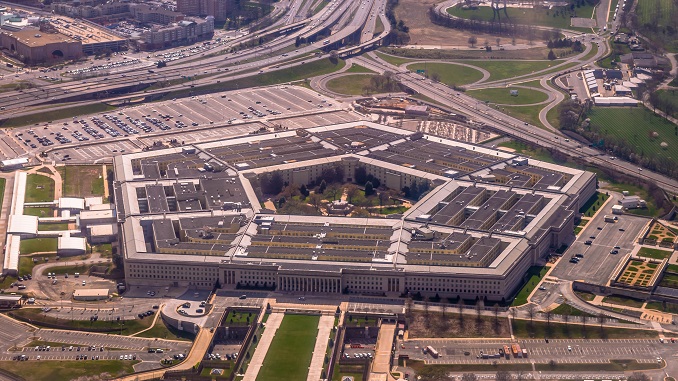
A year-long study by the Arizona State University Center for American Institutions examining the Department of Defense (DOD) has identified and soundly condemned what the authors refer to as the “Vast DEI Bureaucracy” that has pervaded the everyday operations of the Pentagon and the varied service academies of the U.S. Uniformed Services. Damningly, the report found that the DOD has spent millions in taxpayer dollars creating a culture of “race and sex-based scapegoating and stereotyping.” The study in and of itself is a brutal excoriation of the military under the Biden Administration and “calls for an immediate end to the Pentagon’s multimillion-dollar DEI bureaucracy.”

The study, “The National Commission on Civic Education in the Military,” was compiled by Commissioners Lt. Col. (ret.) Matthew Lohmeier, Karrin Taylor Robson, and John Cauthen, along with a team of ASU researchers who over the past year evaluated, “the history, evolution, and implementation of diversity and equity programs across all branches of the military and military academies.” The final report is titled, “Civic Education in the Military: Are Servicemembers More Prepared for Micro-Aggression or Macro-Aggression?”

Professor Donald Critchlow, Director of the Center for American Institutions, explained the findings in a release provided to AZ Free News, “Our research reviewed DEI policy in the military starting in the nineteen seventies to the modern day and concluded there are far more effective ways to promote unity and respect among military ranks than by spending millions annually to divide servicemembers by their gender or race.”

Critchlow added, “Just as private companies have abandoned the toxic advice of DEI consultants and programs, military leaders should end social engineering based on critical race theory and restore approaches that promote character and merit.”

The report opens with an Executive Introduction in which Critchlow definitively states, “Given its importance, the U.S. Armed Forces should not be a laboratory for social experimentation, especially one based on Critical Race Theory, a contentious and abstract social theory. Yet, as this Commission Report on Civic Education in the Military shows in great detail, Critical Race Theory is promoted within Diversity, Equity, and Inclusion (DEI) training throughout the military from the Pentagon through the ranks and in our service academies.”

A sampling of the most egregious findings includes:

  • “DEI themes dominate the training and education that members of the armed forces receive about their country. As ‘white supremacy’ and racism have become a central focus of DEI trainings, white supremacist racism is assumed to be the core problem of the nation and of the military.”
  • “DEI training focuses on rooting out ‘white supremacy’ even though there is little or no evidence that there is a problem of white supremacy in the military. The massive hunt during the stand-down in 2020 located roughly 100 out of a force of 2.1 million.”
  • “Spending on DEI programming is increasing. The DOD’s allocation for DEI projects jumped from $68 million in fiscal year 2022 to $86.5 million in fiscal year 2023. The Pentagon is requesting $114.7 million for fiscal year 2024.”
  • West Point Military Academy offers a minor in “Diversity and Inclusion Studies,” with courses such as “Social Inequality,” “The Politics of Race, Gender, and Sexuality,” and “Power and Difference.” In the course description, the report reveals the courses as “an introduction to the theoretical concepts of post-modernism. This will include a focus on Feminist Theory, Critical Race Theory, and Queer Theory.”
  • U.S. Navy training asserts that servicemembers who reject implicit racial bias are “potential problems” saying, “Participants who refuse to acknowledge how bias has affected their lives or the lives of others may invalidate the experience of those with marginalized identities in the room and cause them harm,” and instructs sailors to “Prioritize a continuing conversation, rather than attempting to shut the conversation down. One suggestion is to acknowledge the bias-denier’s comments and ask for other perspectives from the rest of the group.” A procedure which could be compared to a classic Maoist “struggle session.”

As reported by Task and Purpose, an Army directive has been aimed at rooting out “extremism” which includes “requirements set in the 2021 NDAA for service IGs to work with the Deputy Inspector General for Diversity and Inclusion and Extremism in the Military ‘to establish policies, processes, tracking mechanisms and reporting requirements for allegations of supremacist, extremist, and criminal gang activity in the Army,’” citing a statement from Sean Mackintosh of the Army Inspector General Agency.

As Lohmeier, a former Space Force commander who was removed from duty in 2021 after drawing public scrutiny to DEI training, summarized, “It’s no surprise that young people are turning away from military service in record numbers. As this comprehensive report illuminates, DEI indoctrination has become a core component of military training that begins for officers even at the service academies.” He continued, “How can we be prepared to confront our adversaries if our warfighters aren’t laser focused on the mission but instead are divided and distracted by ideology?”

The report makes several recommendations on how the DOD can remediate the situation and begin to undo the damage. It calls upon the Pentagon to:

  • “Immediately end the DEI bureaucracy or pursue alternative avenues to affect positive change despite existing policies.”
  • “Return to the military’s outstanding tradition of merit-based selections and promotions and nondiscriminatory equal opportunity.”
  • “Make the syllabi for all humanities and social sciences courses taught at our military service academies publicly available.”
  • “Provide educational training materials to enhance personnel understanding of American philosophy, politics, government, and the Constitution.”

Matthew Holloway is a senior reporter for AZ Free News. Follow him on X for his latest stories, or email tips to Matthew@azfreenews.com.