by Terri Jo Neff | Mar 25, 2021 | News
By Terri Jo Neff |
The attorney for more than 100 bars and saloons across Arizona is declaring victory in a decision issued Wednesday by the Arizona Supreme Court that a recent executive order by Gov. Doug Ducey resolved a dispute about restrictions placed on some liquor license holders which shuttered many businesses for months.
The March 24 order dismissed an appeal filed by attorney Ilan Wurman on behalf of his clients who own Series 6 and Series 7 liquor licenses who alleged Ducey’s executive orders, specifically EO 2020-43 were unlawful. The lawsuit had also challenged operational guidelines issued Aug. 10 by the Arizona Department of Health Service (ADHS).
Most Series 6 & 7 licenses are used to operate smaller, family owned bars which were disproportionally impacted by Ducey’s executive orders last year. EO 2020-43 kept many closed while other liquor-serving establishments were allowed to remain open.
The supreme court’s order notes Ducey issued a EO 2021-05 on March 5, rescinding capacity or occupancy limits in place under a previous executive order. However, EO 2021-05 did not come right out and say all other executive orders related to operation of liquor-related businesses, such as EO 2020-43, were obsolete.
The supreme court took care of that, Wurman says, in its order finding that the bar owners’ appeal of a legal challenge against Ducey is now moot because EO 2021-05 will govern in the event of conflict with other executive orders and removes any distinctions between how Series 6 & 7 licensees and other businesses can operate.
According to Wurman, the supreme court’s order is “a huge win” for his clients.
“A case is moot if the Plaintiffs have obtained all the relief they seek,” he said. “The Court’s ruling is that the new EO (2021-05) rescinds any contrary guidelines that limit capacity. Further, they interpret it to prohibit discrimination against series 6s. Therefore, bars can now open and operate on the same terms as anyone else.”
As a result, Wurman is advising his clients that they can “open up 100 percent.”
“That is the only interpretation of the Supreme Court’s order that would actually render this case moot,” he said, adding that if Ducey, ADHS, or the Arizona Department of Liquor Licenses & Control disagrees with how the Supreme Court evaluated EO 2021-05, “it is incumbent upon them promptly to issue new guidance clarifying what restrictions still apply specifically to bars.”
by Catherine Barrett | Mar 15, 2021 | Education, Opinion
By Catherine A. Barrett |
Continuous learning, hybrid learning, and blended learning are terms utilized in defining teachers’ return to school by March 15. Online learning occurred between the outbreak of the Covid-19 pandemic and this period where teachers are required to return to school, to their designated classrooms. However, students are granted the option to participate in remote learning.
The opinions regarding the return to classrooms proposals vary, with some vehemently opposing it. For instance, teachers disagree with each other, citing the overplaying their hand in letting students suffer through distance learning. There are also lingering questions concerning teachers’ silence over time, with reasons such as a fear of retaliation and isolation being cited. Teachers point to the fear of their contracts not being renewed and the subsequent “blow back” from not engaging in group think. In my opinion, this is quite unbelievable because this is a free world. Teachers should be heard, and after this, a return-to-work framework that favors them should be put in place.
Those supporting returning to classrooms, especially parents, argue that the right to accessing proper education was violated through remote education. Furthermore, individual learning strategies were not adequately addressed, resulting in the plans becoming ineffective over time. This resulted in substantial learning disparities between students. My opinion, based on the above, is that the option of remote learning should not be granted to students since the learning plans may not work.
In conclusion, I concur that teaching is a calling. Therefore, the debate concerning returning to classrooms should involve heavy consultation with teachers to formulate an appropriate return-to-work strategy. This will require cooperation from teachers and parents, and will be vital through the start of the healing process. However, I oppose the idea that those viewing the task as hard should quit their jobs because we need everyone’s input for an adequate return to class strategy. Therefore, instead of them quitting, they should offer ideas to facilitate learning in a post-Covid world.
Catherine Barrett is an Arizona Governor’s Master Teacher and currently Chair of citizens initiative petition, A Classroom Code of Ethics For Public Schools K-12. You can find her on Twitter @ReadersLeadPD, and on Facebook at Yes4Ethics
by Kathleen Winn | Mar 14, 2021 | Opinion
By Kathleen Winn, Maricopa Community College District Governing Board Member |
Arizona’s largest college system is experiencing the effects of Covid. Since last March when the college shut its doors to on campus learning and cancelled all athletic programs the enrollment numbers have significantly changed. Across the district enrollment is down almost 20%. This taxpayer enterprise continues to remain on-line and as we have learned this is not conducive for students who attend community college. At the same time GCU and ASU are getting the benefit as their enrollments are up by 7 to 10 percent.
Ironically, the college campus has allowed thousands of community members on campus to be tested for Covid and now to be vaccinated. One board member had suggested “we let people know they could benefit from taking classes” as they had a captive audience waiting in line. They were told this would be in poor taste. So, the numbers continue to decline.
The Interim Chancellor has made many personal changes and has many interim positions serving as college Presidents. After Maria Harper-Marinick was forced out, Leslie Cooper, and the recent resignations of Provost Karla Fisher and Dr. Larry Johnson from Phoenix College, one might question what all the volatility is about.
Many classes require hands on experience that cannot be accomplished virtually. The choice to stay closed has been a costly one for the district and may cost some their jobs. There have been no layoffs like University of Arizona or ASU. Unbelievably the board gave a COLA raise recently. If it were not for mismanagement, there would be no management at all. As college Presidents make hard decisions, the leadership has not committed to reopening the college.
This week the community college is asking to expand some of their programs to 4 years, a bill that was designed to help the rural colleges (HB2523). If Maricopa cannot serve the community by training a much-needed workforce, does adding more expensive 4-year programs make sense? Until this college is fully operational and can demonstrate stable leadership and better enrollment numbers we may want to wait before asking taxpayers for more money. But while they remain closed you can get a COVID vaccine and that is the only way you can get on a Maricopa Community College campus.
Ms. Winn has extensive experience in public service, devoting much her time to combating a variety of causes including senior abuse, human trafficking, crime, homelessness and substance abuse.
by AZ Free News | Mar 11, 2021 | News
PHOENIX – A group of Arizona legislators penned a letter to Governor Doug Ducey urging him to make people in the Arizona Long Term Care System a priority when it comes to to receiving the COVID-19 vaccine.
In the letter, the group of lawmakers came together in bipartisan fashion to praise Ducey and his team for their “demonstrated a willingness to learn and adapt during the vaccine distribution process.”
Dear Governor Ducey,
We want to start by thanking you for your leadership in getting the COVID-19 vaccine in the arms of Arizonans. While it has not been perfect, your team has demonstrated a willingness to learn and adapt during the vaccine distribution process to ensure Arizonans are vaccinated as quickly as possible. In fact, news reports recently stated that Arizona’s vaccine distribution grade went from a “C” last month to an “A” this month according to a report card by Harvard researchers. Under your leadership and in conjunction with our county partners, 1,442,915 Arizonans have received at least one dose of the COVID-19 vaccine and 828,315 Arizonans have been fully vaccinated against COVID-19.
Unfortunately, it has come to our attention that a recent change to the vaccine prioritization has resulted in further delaying one of the most vulnerable populations from receiving the vaccine. Now that the prioritization approach determines eligibility based on age or essential worker status, those who are part of the Arizona Long Term Care System (ALTCS) that reside at home who may not be eligible based on their age are forced to the end of the line. Considering these individuals are at a higher risk of contracting and getting sick from COVID-19, we respectfully ask you to consider strategies to get these individuals vaccinated as quickly as possible so they can resume their lives and reinstate social connectedness without fear of contracting the virus. These people, as we feel you understand have a high need for person to person contact as in one of your executive orders maintained that public school districts had to maintain an onsite educational opportunity for these individuals during the pandemic.
We understand there have been many challenges throughout this public health emergency, and yet you have demonstrated compassion for the most vulnerable. We also understand this issue is likely an oversight that can be easily addressed. This group of individuals were scheduled for 1C in vaccinations and right before there opportunity the change in eligibility by age moved them to the bottom. We ask you to please consider our request to address this and let us know how we can be of any assistance in doing so.
Respectfully,
Representative David Cook, Legislative District 8
Representative Brenda Barton, Legislative District 6
Representative Kevin Payne, Legislative District 21
Representative Mark Finchem, Legislative District 11
Representative Joel John, Representative, District 4
Representative Beverly Pingerelli, Legislative District 21
Representative Cesar Chavez, Legislative District 29
Representative Domingo DeGrazia, Legislative District 10
Representative Jennifer Longdon, Legislative District 24
Representative Quang Nguyen, Legislative District 1
Representative Justin Wilmeth, Legislative District 15
Representative Amish Shah, Legislative District 24
Representative Diego Rodriguez, Legislative District 27
by Corinne Murdock | Mar 4, 2021 | News
By Corinne Murdock |
Arizona businesses are one step closer to freedom from state and local governments requiring them to enforce mask mandates. On Wednesday, the House passed HB 2770 in a close vote of 31-28, with one representative abstaining. The decision was made along party lines – all Republicans voted in favor of it, all Democrats voted against it.
State representative Joseph Chaplik (R-23) introduced the bill; 11 Republican co-sponsors signed onto it. The only Republican representatives that didn’t sign on were Speaker Rusty Bowers (R-25), Joel John (R-4), John Kavanagh (R-23), Joanne Osborne (R-13), Bret Roberts (R-11), and Jeff Weninger (R-17).
In a press release following the vote, Chaplik commended the House members who voted in favor of the bill for deferring to their constituents’ judgment when it comes to enforcing mask-wearing in their businesses.
“Business owners are intelligent enough to make their own decisions with their private companies and this bill restores their rights,” stated Chaplik. “Employees should not be forced to police other citizens on private property and be in confrontational situations risking their safety when their job duties did not require this role.”
Although a majority of customers complied with business’ imposition of mask mandates last year, there also came to be a continued pattern of highly-publicized incidents of retaliation or protests. This occurred frequently enough for major retailers like Walmart to relax its requirement that employees enforce customer mask-wearing.
At present, Arizona doesn’t have a statewide mask mandate. However, the state does mandate that schools and businesses enforce mask-wearing. Certain counties and cities have enforced a mask mandate, such as Maricopa County.
The guidance on mask-wearing has changed frequently over the past year of this pandemic. Whereas before the CDC didn’t state initially that masks protected the wearer, they now claim that they do – and that practices such as wearing more than one mask (“double-masking”) and knotting the mask more tightly to the face further reduce the spread of COVID-19. Although experts don’t recommend storing masks in a ziplock bag between uses, which ADHS Director Dr. Cara Christ has claimed is a safe method of storage.
Following the lift of the stay-at-home order in mid-May, cases began to rise up until the beginning of July. Around mid-June, Governor Doug Ducey began to implement mitigation measures such as business closures, mask and social distancing requirements, and public event limitations. Cases reportedly began to decline around July. A subsequent report by the CDC issued in October didn’t connect mask wearing with the reduction in cases exclusively, but attributed all the mitigation factors imposed collectively.
Wednesday marked other advances made to move communities out of pandemic-imposed restrictions. Ducey announced that schools must offer in-person learning options for their students.
The legislature is also contemplating bills addressing Ducey’s emergency powers. The Senate passed SB 1084 to terminate a state of emergency after 90 days unless the legislature extends it. They also passed SCR 1003, a resolution to allow voters to decide whether a state of emergency should be terminated after 30 days unless the legislature extends it.
Other bills in the legislature inspired by the pandemic include several bills addressing vaccine exemptions, neither of which have advanced in the legislature since they were introduced.
Corinne Murdock is a contributing reporter for AZ Free News. In her free time, she works on her books and podcasts. Follow her on Twitter, @CorinneMurdock or email tips to corinnejournalist@gmail.com.



 Catherine Barrett is an Arizona Governor’s Master Teacher and currently Chair of citizens initiative petition, A Classroom Code of Ethics For Public Schools K-12. You can find her on Twitter @ReadersLeadPD, and on Facebook at Yes4Ethics
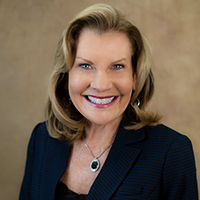 Ms. Winn has extensive experience in public service, devoting much her time to combating a variety of causes including senior abuse, human trafficking, crime, homelessness and substance abuse.