by Jonathan Eberle | Jul 12, 2025 | Economy, News
By Jonathan Eberle |
A new report from the Common Sense Institute (CSI) signals that Arizona’s housing market may be headed for deeper trouble, even as homebuyers enjoy a short-term dip in prices. The think tank’s second-quarter analysis shows that slowing permitting activity is threatening to exacerbate the state’s chronic housing shortage.
In Greater Phoenix, average home prices declined by 1.0% in the first quarter of 2025 and are now down nearly 7% from their July 2022 peak. However, experts warn the modest drop masks deeper affordability challenges. The average Arizona home is still more than 50% more expensive than it was in 2019, and monthly mortgage payments have more than doubled during that time.
“We’re seeing some surface-level relief in pricing, but the fundamentals of the market still point to serious long-term issues,” said Zachary Milne, Senior Economist and Research Analyst at CSI. “Without an increase in new housing supply, prices are likely to rebound—and affordability will remain out of reach for many.”
While the current increase in for-sale inventory is helping to cool the market slightly, CSI analysts caution that these effects may be fleeting. Without local reforms to streamline permitting or reduce regulatory burdens, housing supply will continue to lag demand—keeping pressure on prices and limiting options for would-be homeowners.
“The bottom line is that Arizona is not building fast enough to keep up,” Milne added. “Unless that changes, the state’s affordability problem will only get worse.”
As policymakers and local leaders grapple with how to address Arizona’s housing needs, the latest data underscores a growing consensus: the state’s structural housing shortage is not going away anytime soon—and relief for buyers may prove temporary.
Jonathan Eberle is a reporter for AZ Free News. You can send him news tips using this link.
by Matthew Holloway | Jul 8, 2025 | Economy, News
By Matthew Holloway |
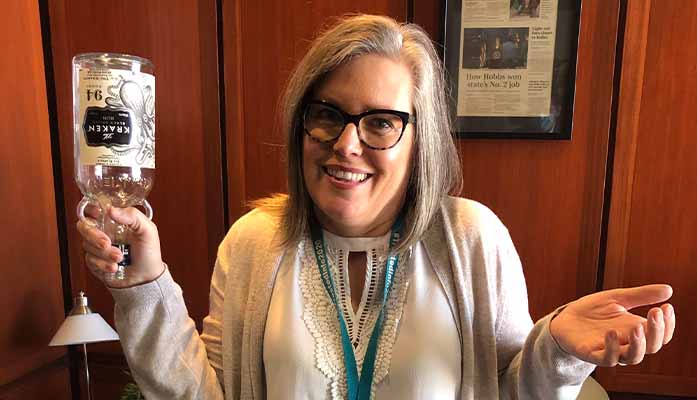
Although the causes are attributed to various factors by different sources, largely dependent on political leanings, one irrefutable fact emerged on Monday. During Governor Katie Hobbs’ tenure, Arizona has plunged from a ranking of 4th place in the nation in job growth, to 47th.
On Monday, Russ Wiles, writing for the Arizona Republic noted, “AZ no longer ranks near the top for job creation,” and asked rhetorically, “What went wrong?”
Citing figures from the U.S. Bureau of Labor Statistics, the Republic reported that Arizona now ranks in 47th place among the fifty states, just ahead of Massachusetts, West Virginia, and Iowa. The report cited a net loss of 1,900 jobs year-to-date in 2025.
In 2020, at the height of the first Trump Administration and under former Gov. Doug Ducey’s tenure, Arizona ranked third in the nation for economic momentum.
In 2019, the Phoenix Metro area even beat out the largest cities in California, Texas, and Florida to take the #1 slot for job growth.
More recently, in a March 2024 statement, Hobbs touted that Arizona ranked 4th in job growth, and tripled the national average in workforce growth. In the pronouncement, which has aged quite poorly, the governor even dubbed herself “Governor Katie Jobbs,” and credited the “81,800 jobs created,” to “investments in housing, healthcare, infrastructure, childcare, and education.”
Meanwhile, a Goldwater Institute op-ed in January, predicting an acrimonious budget battle that materialized over the next five months, pointed out Hobbs’ askew priorities. While the beleaguered Democrat focused on defeating Arizona’s popular Empowerment Scholarship Account program (ESA) and presided over a surge in crime, her failure to account for $800 million in statutorily required Medicaid spending and an affordable housing crisis represented “fiscal mismanagement at its worst.”
AZCentral’s Russ Wiles, in working to answer “What went wrong?” addressed one factor in the decline as “slowing migration, with fewer people moving here from other states,” which dovetails with the affordable housing issue and the Arizona Department of Water Resources (ADWR) rule cracking down on new developments.
Lee McPheters, director of the Economic Outlook Center for Arizona State University’s W. P. Carey School of Business, noted to the outlet, “With domestic migration trending down and international migration dropping off a cliff in 2025, the impetus for population growth has diminished and undoubtedly plays a role here.”
In May, Goldwater launched a legal battle against the Hobbs administration over the ADWR’s controversial new rule imposing the requirement of a 100-year “unmet demand” groundwater supply rule across wide swaths of the state, essentially choking out new housing development.
In addition, as Wiles notes, construction employment has been further weakened by rising material costs, with overall job growth stunted by tariff uncertainty and high interest rates.
Large scale layoffs, such as Nikola Corp.’s 855 jobs lost to its February bankruptcy and Joann Fabrics’ layoffs of 374 employees in January, also factored in heavily. While not directly attributable to Hobbs’ actions, the losses drew a spotlight to a lack of decisive action from Hobbs to attract new employers to Arizona in the short term.
Another factor, unmarked by AZCentral however, has been the $1.6 billion deficit under Hobbs which forced budget cuts, including Department of Economic Security layoffs that directly contributed to the 1,900 net job loss. As Common Sense Institute of Arizona (CSIAZ) explained in June, rather than being caused by Arizona’s flat tax, the shortfall was caused by a massive increase in spending under Hobbs.
“If spending had followed historical trends, Arizona would have had a $4.3 billion surplus rather than a $1.6 billion cash shortfall last year,” CSIAZ wrote.
Hobbs’ vetoes could present the most egregious contribution she’s made. By vetoing 178 total bills in 2025, 73 in 2024, and 143 in 2023, totaling 424 to date, or approximately a third of all bills sent to her desk, Hobbs has prevented the implementation of a comprehensive policy for economic growth from either her administration or Republican leaders in the state legislature from materializing.
Ultimately, Hobbs’ unwillingness to work productively with Republican lawmakers and her active obstruction of legislation to reduce tax burdens, ease regulation, and stimulate job growth may have proven to be as prominent in Arizona economics as it has been in politics. And as prominent Democratic President Harry Truman famously said, “The buck stops here.”
Matthew Holloway is a senior reporter for AZ Free News. Follow him on X for his latest stories, or email tips to Matthew@azfreenews.com.
by Matthew Holloway | Jun 23, 2025 | Education, News
By Matthew Holloway |
A new report from the Common Sense Institute (CSI) Arizona has shed light on the growing trend of homeschooling and the associated costs nationwide, using Utah as an example and revealing both the financial burden and opportunities for families opting out of in-person public education. The in-depth study, released Wednesday, explores the economic and educational landscape of home-based learning, particularly in light of Utah’s innovative Utah Fits All (UFA) scholarship program, a similar but far more limited program than Arizona’s Empowerment Scholarship Accounts (ESA).
According to the CSI report, nearly 30,000 Utah students applied for 10,000 UFA scholarships in 2024, with an estimated 80% of recipients using the funds for homeschooling. These $8,000-per-student scholarships have expanded access to educational resources, enabling families to afford formal programs, online classes, tutoring, and specialized instruction. Although a fraction of the Arizona ESA program’s more than 86,000 students, Utah’s UFA presents a reasonable sample size.
One Utah parent, homeschooling seven children, told CSI Arizona that the UFA scholarship allowed their youngest child to access structured online courses, a resource unavailable to their older siblings.
“Nearly all respondents who shared feedback cited UFA as enabling greater ‘access to opportunities,’” the report states, highlighting the program’s role in addressing parental demand for a greater diversity of educational options.
The report estimates homeschooling costs in Utah range widely, from $700 to $70,000 annually, depending on the services and resources families choose. Unlike traditional schools, homeschooling families are frequently left to absorb significant expenses, such as curriculum materials and facility costs, which are not covered by public funding outside of programs like UFA.
Homeschooling’s rise in Utah and Arizona both mirror national trends, with the report citing an increase to as much as 11% of U.S. students being homeschooled since 2020. In Utah, public school enrollment has declined by 0.3% since its 2021 peak, with district schools losing over 6,000 students between 2021 and 2024, largely driven by smaller kindergarten classes. A similar phenomenon was observed in Arizona by CSI. Meanwhile, charter school enrollment also grew by 1,500 students over the same period. The report seems to reinforce CSI’s earlier observations that dissatisfaction with traditional school environments or curricula is a key driver of homeschooling demand, predating the introduction of UFA and the Arizona ESA.
Despite Utah’s $10.2 billion investment in public education, only about $1 billion supports charter schools, and homeschooling families have historically relied heavily on personal funds to get by, putting added stress on families already suffering under inflation. The UFA program, launched in 2024, created a significant shift, offering financial relief and flexibility to homeschooling parents.
Programs such as UFA in Utah and ESA in Arizona are responding to growing parental demand for tailored learning experiences, and as homeschooling continues to expand, the study calls for greater transparency in tracking participation and costs to better tailor it and programs like it to the evolving needs of homeschooling students.
CSI Arizona concluded, “Over the past five years, the K-12 landscape in the United States has changed dramatically. Today, there are fewer kids in America’s traditional public schools than before the pandemic, and far more children are being homeschooled.
“At the same time, the nature and cost of homeschooling has changed as it has grown. Today’s homeschoolers often started out either enrolled in or considering the traditional school system, and are looking for a rigorous educational experience that includes diverse and formalized coursework, curriculum, and standards. Providing that is costly – comparable in costs to other traditional schools, or even more expensive per-pupil once all costs (direct and hidden) are accounted for.”
CSI added that state policymakers “should carefully consider the consequences of policies that continue treating students differently based on where they go to school – especially if those differences are based on assumptions that underestimate the cost of non-traditional options.”
Matthew Holloway is a senior reporter for AZ Free News. Follow him on X for his latest stories, or email tips to Matthew@azfreenews.com.
by Matthew Holloway | Jun 16, 2025 | Economy, News
By Matthew Holloway |
A new report from the Common Sense Institute of Arizona (CSIAZ) has laid to rest claims that Arizona’s budget deficit stems from the state’s adoption of a 2.5 percent flat tax. The report found that the deficit is attributable to increased spending by the state in the last year. The report also found that in defiance of detractors, the flat tax has actually led to an increase in state tax revenues, and Arizona is once again experiencing a budget surplus.
In a statement, CSIAZ Director of Policy & Research Glenn Farley said, “The facts tell a very different story than many of the headlines would lead us to believe. The data shows us that Arizona’s revenues are strong, local governments are collecting more than ever, and education spending is at an all-time high. The flat tax has not created a revenue crisis—but rapid and unsustainable spending growth has created real budget pressures. If we want to restore stability, we need to focus on the underlying drivers of the imbalance.”
The report from CSIAZ offers a direct refutation of a claim made by the far-leftist think tank Center on Budget and Policy Priorities (CBPP), which claimed in 2024 that the state would face a $1.6 billion deficit through fiscal year 2025 due to the flat income tax and universal private school vouchers. This assessment, however, leaves off a critical necessity in any conservative budget: spending cuts.
Farley and Senior Economist Thomas Young found unequivocally, “Since the flat tax passed, state revenues have grown by $3.3 billion. But the state budget is 25% larger than it was; at peak spending was up $3.7 billion, and even today it’s still up over $2.5 billion versus pre-flat Tax. If spending had followed historical trends, Arizona would have had a $4.3 billion surplus rather than a $1.6 billion cash shortfall last year.”
Farley and Young also debunked a claim from Dave Wells, Research Director at the Grand Canyon Institute (GCI) on “Arizona Horizon” who claimed in October 2024, “The flat tax’s $2 billion annual cost has had visible consequences and was a prime contributor to the budget deficits and cuts made during this legislative session.” They noted that despite forecasts that the budget would cost $4 billion over the next decade, updated estimates accounting “for dynamic effects and rapid growth in other tax types,” adjusts that to a more modest $1.4 billion impact while “revenue growth from a strong economy has more than offset the difference, meaning the state still collects more each year than before the tax cut.”
Much closer to home, claims that the tax reforms haven’t helped everyday Arizonans can be confidently cast aside with the fact that the average Arizonan saves about $400 per year from the flat tax while per-capita income has risen by 68% since 2015, with Arizona’s economic growth far outpacing the rest of the nation.
The report also addressed claims that the reforms hurt city budgets, despite the reforms increasing the share of state income tax filtered down to city and municipal governments by three percent from 15% to 18%, totaling an additional $250 million over two years. The report also refuted claims that education spending would be cut as a result of the flat tax with K-12 education spending up nearly 80% since 2010, growing by 14% since 2022.
Essentially, CSI Arizona has shown that arguments against a flat tax are definitively driven by politics and rhetoric, not facts.
Matthew Holloway is a senior reporter for AZ Free News. Follow him on X for his latest stories, or email tips to Matthew@azfreenews.com.
by Matthew Holloway | Jun 2, 2025 | Economy, News
By Matthew Holloway |
The State of Arizona led the United States in monthly job growth for the month of April according to a report released by the Common Sense Institute of Arizona (CSIAZ) following a three-month period of negative annual growth.
As reported by the CSIAZ, Arizona saw an increase of 14,200 non-farm jobs in the month of April for an increase of 0.44% or a year-over-year increase of 0.76%, ranking the state first in the nation for monthly job growth. Overall, the total job-growth in the U.S. was 0.11%, with eleven states losing jobs. However, despite the job growth, the CSIAZ reported that inflation-adjusted wages have decreased by 4.2% since 2020, and total employment remains over 212,000 jobs under the pre-pandemic trend.
In a posting to X, CSIAZ noted that in the last 12 months, the state gained 24,600 jobs for a 0.76% increase.
According to the report, the job gains haven’t been consistent across various industries, with clear winners and losers:
“The state’s fastest growing sector over the past twelve months was Education and Health Services, adding 22,600 jobs (+4.2%). Its slowest growing sector was Professional and Business Services, which lost -4,400 jobs (0.9%). The Education and Health Services sector has steadily grown since 2020 (losing only 48,000 jobs during the pandemic) and is now at its all-time highest level of employment. Professional and Business Services on the other hand peaked in January 2024 but has been declining since.”
Drilling into discrepancies in wages and time worked, Arizona workers experienced a decrease in non-seasonally adjusted wages of -$0.13 during the month of April, placing Arizona far behind the rest of the country’s steady, though anemic, wage growth rate of +$0.06 over the same month. But year-over-year Arizona is continuing to outperform the U.S. average with wage growth of $1.49, up 4.5% annually.
This wage growth, however, has failed to keep up with CPI Inflation as noted earlier, making Arizonans feel a pinch at the register, and as CSIAZ explained, real wages were only up “4.2% year-over-year and after CPI inflation, compared to the April nominal increase of 4.4%.”
Matthew Holloway is a senior reporter for AZ Free News. Follow him on X for his latest stories, or email tips to Matthew@azfreenews.com.
Page 5 of 10«12345678910»