by Matthew Holloway | Oct 8, 2025 | Education, News
By Matthew Holloway |
A new report on Arizona’s Empowerment Scholarship Account (ESA) from the Common Sense Institute (CSI) shows a robust jump in ESA enrollment of nearly 15,000 students since last year.
According to the detailed report, the school choice program has reached a milestone with 92,362 students enrolled as of September 15, 2025. Projections indicate that ESA numbers will reach 103,000 this fiscal year.
The report from CSI is released on a quarterly basis to address “a lack of reliable and consistent data about who is using the program and how.” CSI noted, “Applying scrutiny to hundreds of thousands of individual transactions on an almost real-time basis has made the program vulnerable to exaggeration, misinformation, and mischaracterization. No comparable program is subject to this kind of examination.”
The quarterly findings indicate the program is maturing from an initial stage of rapid growth to a more steady-state. Universal eligibility, rolled out in 2022, has fueled the fire, but the real story now is “switchers”—57% of new enrollees ditching public schools for tailored options like private academies, therapies, or homeschooling setups. The report underscores how shrinking school-age cohorts (down 20,241 since 2021) aren’t slowing the momentum.
Glenn Farley, Director of Policy & Research at CSI and the report’s author, explained, “Arizona’s ESA program is reaching a point of steady participation. The rapid expansion is behind us, and future growth will be shaped more by broader demographic trends and the choices families make across an increasingly competitive K–12 landscape.”
The key questions that CSI seeks to address include the ultimate cost of the program at full expansion, the steady-state count of how many people are using the ESA program, its ultimate extent, the demographic characteristics of its users, and the efficiency and good operation of the program.
CSI found that total ESA costs are on track to reach $1.0369 billion in FY 2026, with an average award of $10,349 per student. Notably, 88% of funds have already been spent, the highest percentage ever recorded. Administrative approval rates are at a peak of 88.8%, and reimbursements are processed in just 13 days on average, with a whopping 455,142 orders handled in the last quarter alone.
As far as budgetary impact is concerned, a common complaint from opponents like Governor Katie Hobbs, the CSI projects that “state K–12 Basic State Aid costs will exceed appropriations by $35 million in FY 2026, due largely to higher ESA participation and lower-than-expected district enrollment.”
The report also offers a firm, authoritative rebuke to allegations that the program is most used by “the wealthy.”
“Nearly 57% of ESA recipients live in ZIP Codes with a median family income of between $75,000 and $150,000 – up slightly since our last report. A quarter of ESA users may be lower-income, 13% reside in rural areas, and nearly 20% are estimated to be nonwhite,” the report states.
Farley concluded the CSI report’s findings, writing, “Administrative reform throughout 2025 by the Department of Education has improved various high-level metrics: the Department is approving purchases faster and at greater volume and embracing its statutory authority (risk-based auditing, Handbook language noting use-tests for technology purchases and not limiting the purchases directly, etc.). However, the ESA environment often remains narrative rather than fact driven. We remind users: ESA enrollment costs are offset by reduced enrollment in other K-12 programs; ESA misuse rates are lower than comparable programs; ESA growth is slowing and increasingly driven by students switching from traditional public options.”
Matthew Holloway is a senior reporter for AZ Free News. Follow him on X for his latest stories, or email tips to Matthew@azfreenews.com.
by Jonathan Eberle | Sep 29, 2025 | Economy, News
By Jonathan Eberle |
Arizona added 700 nonfarm jobs in August, a modest increase that ranked the state 31st nationally in monthly job growth, according to a new analysis by the Common Sense Institute (CSI). Nationally, the U.S. economy gained 22,000 jobs, while 18 states recorded employment losses.
On an annual basis, Arizona showed stronger momentum, adding 41,400 jobs over the past year, a 1.29% gain that placed it 15th in the nation. However, CSI noted that the state has shed 15,100 jobs since April 2025, marking the second-highest nominal job loss in the country during that period and the fifth worst relative decline at 0.46%. Arizona’s unemployment rate remained at 4.1% in August, unchanged for six straight months. Labor force participation also held steady at 61.4%, below its pre-pandemic level of 62.2%.
Manufacturing led the way in August with 1,100 new jobs, a 0.6% increase that ranked Arizona third nationwide for monthly manufacturing growth. Despite the improvement, the sector remains down 1,100 jobs compared to last year. Mining and Logging posted the strongest year-over-year growth, adding 1,500 jobs, or 10.2%. By contrast, Leisure and Hospitality lost 0.6% of its workforce last month, while the Information sector continues to lag behind with a 2.7% year-over-year decline.
Average hourly wages in Arizona rose to $34.91, up 4.1% from August 2024. Adjusted for inflation, real wages increased 2.7% over the past year—outpacing the national average of 0.7%. Still, CSI’s report highlighted longer-term challenges: since April 2020, real wages in the state have fallen 4.3%.
Overall, the report points to a mixed picture for Arizona’s labor market: modest gains in key industries and wage growth, offset by lingering job losses since the spring and participation rates that remain below pre-pandemic levels.
Jonathan Eberle is a reporter for AZ Free News. You can send him news tips using this link.
by Jonathan Eberle | Sep 26, 2025 | Economy, News
By Jonathan Eberle |
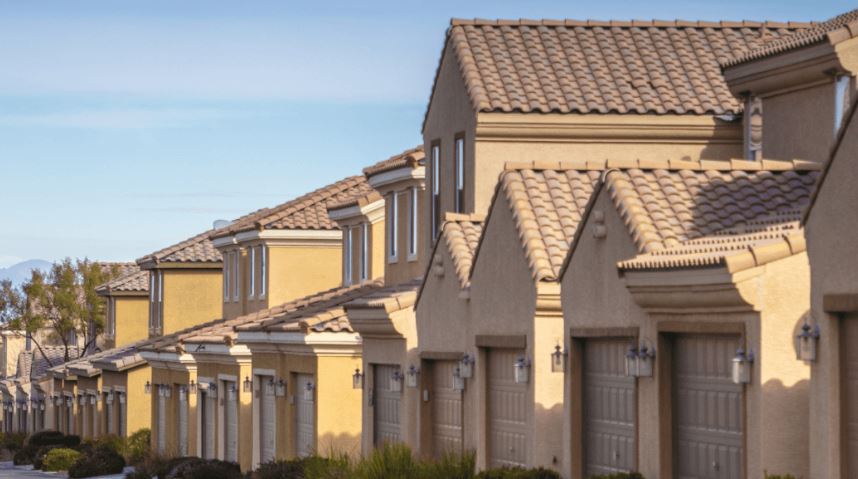
Arizona’s housing market showed signs of cooling in the second quarter of 2025, but affordability challenges persist, according to a new analysis from the Common Sense Institute (CSI).
CSI’s Q2 Housing Affordability Report highlights a combination of falling home prices, slowing residential permitting, and a continuing housing deficit as factors shaping the state’s housing outlook.
Key findings from the report indicate that Arizona currently faces a housing shortage of 52,846 units, a 6.9% decline from 2024. Analysts say the reduction stems more from weakened buyer demand than from an increase in housing supply.
The average home price in the state remains $426,164—roughly $53,400 (14.3%) above what prices would have been if they had followed pre-pandemic trends. Despite recent price declines, households still need to earn $95,808 annually—or work 64 hours per month at the average wage—to afford a mortgage on the typical home.
The CSI report assigns Arizona a “C-” grade for housing in Q2 2025, noting continued affordability concerns and low permitting levels. Maricopa County maintained its “D” rating, while Pima County improved to a “B.” Residential permitting in Arizona is projected to approve 51,877 units this year, a 12.5% decrease from 2024 and the slowest pace since 2019. Experts note that the state needs between 60,000 and 75,000 new units annually to close the housing gap.
“Arizona’s housing market is cooling, but the relief many hoped for has not materialized,” said Zachary Milne, CSI Senior Economist and Research Analyst. “Prices are still far above pre-pandemic levels, mortgage costs remain burdensome, and new homebuilding is slowing at a time when the state already faces a significant housing deficit. Without a sustained increase in supply, affordability will remain out of reach for too many Arizonans.”
The report concludes that Arizona’s long-term housing challenges are driven by both elevated prices and insufficient construction. While the recent moderation in demand has provided some short-term relief, the underlying supply gap continues to affect affordability across the state.
Jonathan Eberle is a reporter for AZ Free News. You can send him news tips using this link.
by Jonathan Eberle | Sep 16, 2025 | Economy, News
By Jonathan Eberle |
According to a new report from the Common Sense Institute (CSI), inflation in the Phoenix metro area rose 1.4% year-over-year in August, as measured by the Consumer Price Index (CPI). The increase marks a climb from June’s 0.8% reading and ends a four-month stretch where local inflation hovered below 1%.
As noted by the report, the uptick comes as Arizona’s economy shows signs of slowing, with weaker job growth and a cooling housing market. Still, compared with much of the nation, inflation in Phoenix remains subdued. Among the 23 metro areas tracked monthly, Phoenix ranked 20th in year-over-year price growth, continuing a dramatic reversal from 2022 and 2023, when the region routinely topped the list for fastest-rising prices.
Nationally, inflation picked up in August, rising 2.9% from a year earlier after holding steady at 2.7% in the prior two months. Prices across the country have now exceeded the Federal Reserve’s 2% target for more than two years.
Since August 2019, consumer prices in Phoenix have climbed 30.2%, adding about $1,525 in monthly costs for the average Arizona household. Nationally, prices are up 26.3% over the same period. Typically, inflation would run closer to 10% in a five-year span. On a two-month basis, Phoenix saw a 0.9% increase from June to August, tying January for the largest short-term jump of the year. Nationally, prices rose 0.6% over that period.
Housing costs remain a key driver of Phoenix’s relatively low inflation reading. Shelter prices fell 0.1% year-over-year in August, the fourth consecutive month of negative growth. Excluding shelter, inflation in the Valley was 2.3%—still below the national average, but nearly double the headline local figure. The Federal Reserve, which aims to balance price stability with job growth, faces a complicated outlook. While local inflation has hovered below target for nearly a year, national prices have not fallen under 2.3% since 2021.
Jonathan Eberle is a reporter for AZ Free News. You can send him news tips using this link.
by Matthew Holloway | Sep 5, 2025 | News
By Matthew Holloway |
Congressman Juan Ciscomani (R-AZ06) has joined with colleagues from seven western states to reconstitute the Colorado River Caucus, which he will co-chair with Democrat Rep. Joe Neguse of Colorado.
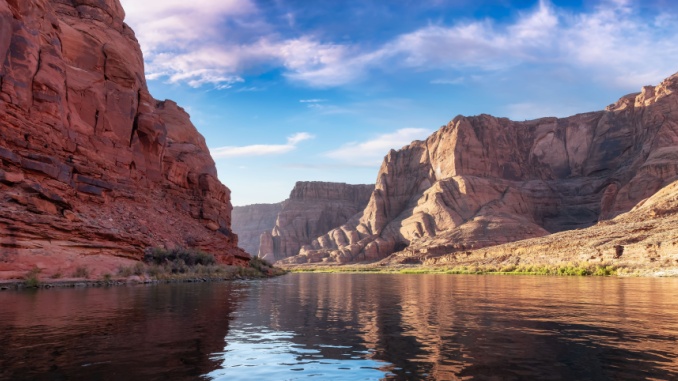
As Arizona is heavily dependent on water flowing from the Colorado River, with 2.85 million acre-feet allocated to the state annually, the state’s political representation in decisions that govern the river has always been critical.
Initially launched as a bipartisan effort by members of the 118th Congress in 2023, the 12-member Colorado River Caucus includes representation from Arizona, California, Utah, Nevada, New Mexico, Wyoming, and Colorado.
“The Colorado River is the beating heart of the American Southwest,” said Congressman Ciscomani. “Millions of people in Arizona and six other states depend on it as a source of water for our homes and businesses, our farms and ranches – our way of life. The Colorado River Caucus will help us understand and manage this precious resource as we deal with the impacts of a record-breaking drought that has lasted more than two decades. Collaboration is key and that’s the goal of this bipartisan caucus.”
In May 2023, Arizona Governor Katie Hobbs and the Colorado River Lower Basin States agreed to a new plan under the Biden administration “to conserve 3 million acre-feet over the next three years to protect the Colorado River system.”
However, in March of this year, Common Sense Institute (CSI) Arizona released a report that pointed to gaps in “infrastructure and ingenuity,” rather than supply scarcity as the state’s greatest water resource issue. CSI advised at the time, “If Arizona opts to address its water future by ending growth and limiting development, rather than investing in infrastructure and addressing water policies, the Grand Canyon state faces the potential of billions in lost economic activity and thousands of new jobs.“
The release from Ciscomani indicated that the Caucus will task itself with advocating for a seven-state solution that incorporates efficient conservation measures to preserve water rights across the board.
Secretary Karen Cesare of the Central Arizona Water Conservation District (CAWCD), representing Pima County, said in a statement, “The Colorado River has been and continues to be one of the most vital issues for the State of Arizona. Since the days of Senator Carl Hayden and Representative John Rhodes, our state has always had leaders in Congress that work on this important issue. I am very happy that Representative Ciscomani is returning as co-chair of the Colorado River Caucus and is continuing this legacy of leadership.”
Matthew Holloway is a senior reporter for AZ Free News. Follow him on X for his latest stories, or email tips to Matthew@azfreenews.com.
Page 3 of 10«12345678910»