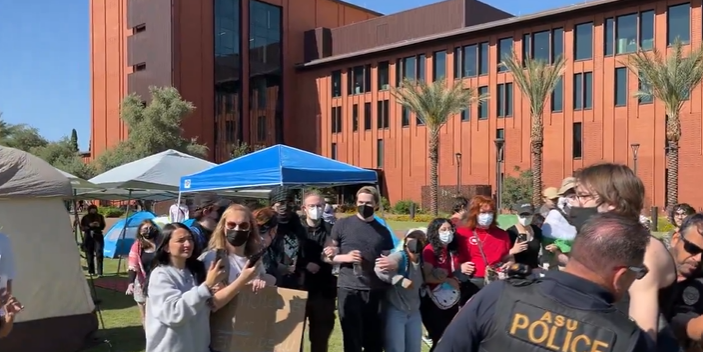
Arizona Senate Considers Bill Seeking To Ban Encampments On College Campuses
By Jonathan Eberle |
The Arizona State Senate is considering HB 2880, a bill that would prohibit individuals from establishing or occupying encampments on university and community college campuses. The bill, sponsored by State Representative Alma Hernandez (D-LD20), passed the Arizona House of Representatives with a 41-17-2 vote and outlines enforcement procedures and penalties for violators.
The legislation defines an encampment as a temporary shelter, including tents, set up on campus for overnight or prolonged stays. If an individual or group is found in violation, university or college administrators would be required to order the encampment dismantled and direct the individuals to vacate. Failure to comply would result in charges of criminal trespass and possible legal action, including removal by law enforcement.
Additionally, students who refuse to leave could face disciplinary action under their institution’s student code of conduct. Violators would also be held liable for any damages resulting from the encampment, including costs related to removal, campus restoration, and property repair.
The bill aligns with Arizona laws protecting free speech on college campuses, allowing restrictions only when expression violates laws, disrupts university operations, or falls outside First Amendment protections. While supporters argue that the bill upholds campus safety and prevents disruptions, critics contend it could limit protest activities and infringe on student rights.
The issue of campus encampments recently came to the forefront in Arizona following the arrests of protesters at Arizona State University (ASU). According to reports, multiple demonstrators were detained during an anti-Israel protest on campus, where students and activists had set up an encampment in defiance of university regulations. Law enforcement intervened after the protest was deemed disruptive to campus operations.
The incident at ASU has intensified discussions surrounding HB 2880, with supporters arguing that the bill is necessary to prevent similar disruptions, while critics claim it could be used to suppress student activism. The event highlights the broader national debate over the limits of protest on college campuses and the role of law enforcement in maintaining order. Several states have introduced similar legislation in response to high-profile protests that have disrupted campus operations.
If enacted, the bill would require enforcement by campus security and local law enforcement agencies. The Arizona Board of Regents (ABOR) and community college governing boards would ensure compliance with student conduct policies.
The bill now awaits further deliberation in the Senate. As the debate continues, lawmakers, university administrators, and students will likely weigh the balance between maintaining order on campuses and protecting the right to protest.
Jonathan Eberle is a reporter for AZ Free News. You can send him news tips using this link.