The Trump administration is gearing up to try to revoke one of the most overreaching, unscientific regulatory edifices ever erected: the EPA’s 2009 “endangerment finding.” News broke this week that the Environmental Protection Agency has drafted a plan to rescind this cornerstone of federal climate policy, which declared that greenhouse gases like carbon dioxide and methane pose a danger to human health and welfare.
If this move succeeds, it would limit the federal government’s ability to regulate carbon dioxide emissions from cars, power plants, and industries—a prospect that has the climate alarmist crowd clutching their pearls. And frankly, it’s about time someone challenged this rank absurdity.
Let’s take a walk down memory lane to 2009, when the Obama-era EPA, emboldened by the 2007 Supreme Court ruling in Massachusetts v. EPA, decided to anoint itself the arbiter of America’s energy future. The endangerment finding was born, asserting that CO2 – literally plant food, and the fundamental building block for all life on planet Earth – is actually a “pollutant” that “endangers public health” as defined under the Clean Air Act.
This vast expansion of the regulatory state wasn’t based on some groundbreaking scientific discovery but rather on a political agenda dressed up in green rhetoric. The finding has since provided the legal foundation for a slew of regulations, from tailpipe emissions standards to power plant rules, all designed to choke the fossil fuel industry and push the U.S. toward a so-called “clean energy” utopia that exists only in the fever dreams of climate activists.
Now, the Trump EPA, led by Administrator Lee Zeldin, appears poised to dismantle this house of cards. Zeldin’s draft proposal argues that the EPA overstepped its authority by issuing such a sweeping determination.
The plan focuses on a legal argument that the EPA’s administrator lacks the power to make broad proclamations about greenhouse gases without specific congressional authorization. This is a direct jab at the 2007 Supreme Court decision, a judicial overreach that gave unelected bureaucrats a blank check to regulate the economy. It is key to also remember that that decision came at a time when the Chevron Deference, which the Court did away with a year ago, was still in effect.
Adopted in 1984, the Chevron Deference held that courts must defer to the judgment of regulators when interpreting the congressional intent of federal statutes. But the Clean Air Act was never designed to regulate CO2, a point even the late Rep. John Dingell, a co-author of the law, made clear.
Of course, the climate alarm lobby will drag this fight into the courts, so overturning the finding will not be easy. The EPA must navigate a minefield of procedural requirements under the Administrative Procedure Act, and the alarmists will try to overwhelm the courts with claims that climate change has only grown since 2009, asserting that every extreme weather event somehow proves their case.
But the Trump administration isn’t denying climate change outright; it’s questioning whether the EPA has the legal authority to act as America’s climate czar. This is a fight worth having, because if the agency can regulate CO2 without clear congressional approval, what’s stopping it from declaring water vapor a pollutant next?
The bigger picture here illustrates the absurdity of the energy transition itself. The endangerment finding has been a cudgel to force a shift away from reliable, affordable fossil fuels toward a fantasy of windmills and solar panels that can’t power a modern economy. The U.S. is the second-largest emitter of greenhouse gases globally, but even if we zeroed out emissions tomorrow, global temperatures would barely budge without similar action from China and India.
Meanwhile, Americans bear the brunt of higher energy costs and a less reliable grid. Rescinding the endangerment finding could free up the economy to innovate without the EPA’s heavy hand, letting market forces—not bureaucrats—drive energy and climate solutions.
This move is a bold step toward dismantling the regulatory state’s stranglehold on American energy. It won’t be quick or easy, and the climate zealots will fight tooth and nail. But if the Trump administration can pull it off, it’ll be a victory for common sense over green dogma, a win for innovation over regulation. A long, hard fight lies ahead, but it is one worth having, and which is long overdue.
David Blackmon is a contributor to The Daily Caller News Foundation, an energy writer, and consultant based in Texas. He spent 40 years in the oil and gas business, where he specialized in public policy and communications.
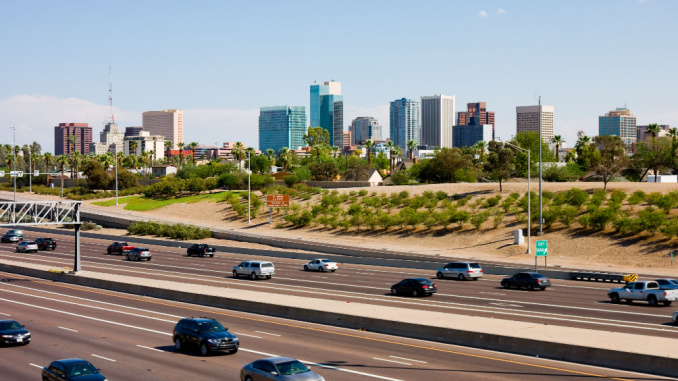
Ozone levels in Maricopa County are lower today than they were 20 years ago. And the reality is that most of the ozone currently in the region is either due to natural events or coming from China. But you won’t hear facts like that from the Left. Instead, they’d rather hatch a scheme to enforce their climate change agenda on the American people, and one of their biggest targets in the past year has been Arizona. Now, after failing to convince our state to ban gas cars and gas stoves, the Sierra Club is attempting to use the courts to force this agenda upon us.
An Impossible Standard
Much of this began in September 2022 when the United States Environmental Protection Agency (EPA) reclassified Maricopa County as a moderate nonattainment area of ozone limits under the Clean Air Act. This basically means that, according to the EPA, Maricopa County’s ozone levels are too high and therefore our state—including its citizens, motorists, and businesses—must be forced to adopt ozone control measures. Failure to comply with these measures could mean fines, penalties, or the withholding of federal transportation dollars for Arizona.
Of course, what they won’t tell you is that the main reason our ozone levels are too high isn’t because there are more cars on the road or Arizonans like trying new recipes on their gas stoves. The main reason our ozone levels are too high is because the federal government moved the goal posts back in 2015 when the EPA dropped its acceptable ozone levels from 75ppb to 70ppb…
An environmental watchdog organization is suing the Biden Administration to increase regulatory oversight of Arizona and other states.
Earlier this month, the Sierra Club filed a Complaint for Declaratory and Injunctive Relief in the United States District Court for the District of Columbia, alleging that the Administrator of the U.S. Environmental Protection Agency (EPA), Michael S. Regan, “has failed to perform his nondiscretionary duty under the Clean Air Act to issue a finding of failure by thirteen states…to submit complete revised nonattainment area state implementation plans and publish notice of that action in the Federal Register no later than six months after the January 1, 2023 deadline by which each of these states was required to submit a nonattainment SIP for the 2015 primary ozone national ambient air quality standard (NAAQS).”
The states targeted in the complaint by the Sierra Club were Arizona, California, Connecticut, Delaware, Illinois, Maryland, Michigan, Nevada, New Jersey, Pennsylvania, Texas, Utah, and Wisconsin.”
Sari Amiel, an Associate Attorney for the Sierra Club, released the following statement in conjunction with the legal filing: “More than 100 million people reside in counties receiving failing grades for smog pollution, with Black, Hispanic, and Asian Americans disproportionately exposed to all forms of air pollution. States’ refusal to comply with common-sense air pollution standards is already harmful, but EPA’s failure to hold them accountable adds insult to injury. EPA must fulfill its obligations under the Clean Air Act and take swift action to protect communities from the harmful effects of smog pollution.”
Scot Mussi, the President of the Arizona Free Enterprise Club, also weighed in on the challenge, telling AZ Free News, “This lawsuit is an attempt by the Sierra Club to force Arizona to adopt their radical environmental agenda. They know that ozone levels in Maricopa County are lower today than twenty years ago and that most of the ozone in the region is either naturally occurring or coming from China. But since they couldn’t convince us to ban gas cars and gas stoves, they hope the EPA or a friendly liberal judge will do it for them.”
The 2015 rule has been the focus of many lawsuits since it was initiated under the Obama-Biden Administration. In October 2015, then-Arizona Attorney General Mark Brnovich led a small coalition of states (Arkansas, the Environmental Department on behalf of New Mexico, North Dakota, and Oklahoma) in filing a lawsuit to challenge the Final Rule. At the time, Brnovich said, “We all want clean air, however, reducing the ozone standards to 70 parts per billion will be nearly impossible for Arizona to attain. The new Rule completely ignores Congress’ intent that the EPA set ozone levels for the states that are actually attainable. The financial stakes for this state are enormous if we are unable to comply and I am going to do everything within my power as attorney general to protect Arizona.”
During the Trump Administration, the EPA was not empowered to raise the standards set under the Obama-Biden Administration. After the decision in 2020, then-EPA Administrator Andrew Wheeler explained the reasoning, saying, “The EPA under the Trump Administration has continued America’s leadership in clean air, lowering our particulate matter levels to well below those of many of our global competitors. Maintaining these important standards will ensure Americans can continue to breathe some of the cleanest air on the planet.”
A change in administrations, however, had drastic consequences for this policy. President Joe Biden signed an executive order in 2021, ordering the environmental agency to review a number of actions initiated under the previous administration, including the NAAQS Decision in 2020. Not long after the executive order was signed, the EPA announced its intent to “reconsider the December 2020 decision because available scientific evidence and technical information indicate that the current standards may not be adequate to protect public health and welfare, as required by the Clean Air Act.” At the beginning of this year, the EPA released its proposed revision to the NAAQS, which increased standards from the Obama-Biden administration, prompting various reactions from a number of states around the country.
In March of this year, a group of Democrat attorneys general, led by the State of California, submitted a comment letter to the EPA, urging the Biden Administration to “adopt stringent standards under the Clean Air Act that protect public health against particulate matter pollution.” Attorney General Bonta stated, “High particulate matter pollution levels are a serious threat to public health, particularly for underserved and vulnerable populations. Today’s comment letter urges the EPA to set adequate standards to ensure that all Californians can breathe clean air. The adoption of stronger standards will aid all of California’s communities, but especially communities experiencing environmental injustices, that are disproportionately affected by air pollution. At the California Department of Justice, we will continue advocating for stronger pollution control measures for the wellbeing of all Californians.”
California was joined by the States of Connecticut, Delaware, Illinois, Maryland, Massachusetts, Michigan, Minnesota, New Jersey, New York, Oregon, Pennsylvania, Rhode Island, Vermont, Washington, Wisconsin, and the District of Columbia and the City of New York, in the letter.
On the other side of the political aisle, Republican attorneys general have pushed back this year against the EPA’s attempt to cement and expand the NAAQS. In March, Kentucky Attorney General Daniel Cameron spearheaded a 19-state coalition with a letter to the EPA to oppose its updated rule. Cameron said, “As Americans face record-high inflation, the Biden Administration is pushing extreme policies that would harm the economies of energy states like Kentucky. The United States has some of the cleanest air in the industrialized world, and this regulation prioritizes President Biden’s radical climate agenda ahead of the livelihoods of hard-working Americans.”
Joining Kentucky on this letter to the EPA were the States of Alabama, Arkansas, Florida, Idaho, Indiana, Iowa, Louisiana, Mississippi, Missouri, Montana, Nebraska, Ohio, Oklahoma, South Carolina, Texas, Utah, Virginia, and West Virginia.
Daniel Stefanski is a reporter for AZ Free News. You can send him news tips using this link.
If you enjoy losing your freedom for a goal that is impossible to achieve, the Maricopa Association of Governments (MAG) has you covered.
MAG recently released its proposed measures to bring Maricopa County into compliance with ozone standards set by the United States Environmental Protection Agency (EPA), and it’s a total disaster. Along with a whole host of regulations on various business activities, the proposed restrictions include banning the internal combustion engine and gas appliances. That’s right, just like in California, they are coming for your cars and your gas stoves. But that’s not all. This proposal would also put limits on things like lawn and garden equipment, motorized boating, and water heaters…
The Biden administration and radical environmentalists will do anything they can to enforce their climate change agenda on the American people. And now, they are using ozone control measures to do just that right here in the state of Arizona.
On September 16, 2022, the United States Environmental Protection Agency (EPA) reclassified Maricopa County as a moderate nonattainment area of ozone limits under the Clean Air Act. This basically means that, according to the EPA, Maricopa County’s ozone levels are too high and therefore our state—including its individual citizens, motorists, and businesses—will be forced to adopt ozone control measures.
So, what exactly caused Arizona’s rise in ozone levels? Was it more cars on the road? A dramatic increase in air travel to our state? Too many cows releasing methane into the air?