by Matthew Holloway | Feb 25, 2026 | News
By Matthew Holloway |
The U.S. Department of State is urging American citizens in multiple Mexican states to shelter in place due to ongoing security operations, road blockages, and related criminal activity, according to a February 23 advisory shared by Congressman Abe Hamadeh’s (R-AZ8) office.
According to the State Department’s “Security Alert – Update 4: Ongoing Security Operations – U.S. Mission Mexico,” U.S. citizens in specific locations are urged to seek shelter and minimize unnecessary movement.
The alert identifies the following affected areas:
- Jalisco State, including Puerto Vallarta, Chapala, and Guadalajara
- Baja California State, including Tijuana, Tecate, and Ensenada
- Nayarit State, including the Nuevo Nayarit/Nuevo Vallarta area near Puerto Vallarta
- Areas of Colima, Guanajuato, Guerrero, Estado de Mexico, Michoacan, Nuevo Leon, Oaxaca, Puebla, Queretaro, San Luis Potosi, Veracruz, and Zacatecas
The State Department said U.S. government staff in Guadalajara (Jalisco), Puerto Vallarta (Jalisco/Nayarit), Ciudad Guzman (Jalisco), Tijuana (Baja California), Chiapas, and Michoacan are sheltering in place “until all blockades are cleared,” and urged U.S. citizens in those locations to do the same.
The advisory noted that incidents were reported on February 22, but stated that conditions have returned to normal in:
- Quintana Roo State, including Cancun, Cozumel, Playa del Carmen, and Tulum
- Sinaloa
- Tamaulipas
The State Department directed travelers to consult the general Mexico Travel Advisory for additional information.
Flight Disruptions in Puerto Vallarta
The alert states that flights in Puerto Vallarta continue to experience disruptions due to the availability of flight crews. The U.S. Embassy said it is in close contact with airlines to monitor developments.
All other airports in Mexico are reported to be operating normally. The advisory indicates there are no known security-related flight disruptions at airports outside of Guadalajara and Puerto Vallarta. Travelers are advised to confirm flight status directly with their airline.
The alert also states that some, but not all, scheduled flights are departing from Guadalajara. Travelers whose flights to the United States are canceled may be able to book connecting flights through other Mexican cities.
Road Closures Reported
Mexican authorities have reportedly curtailed operations on some toll roads due to February 22 blockades. Areas cited include:
- Puebla
- Guerrero
- Tamaulipas
- Nayarit
- San Luis Potosi
- Tijuana
- Queretaro
- Veracruz
- Mazatlan
U.S. citizens are advised to check the Mexican toll road authority @CAPUFE on X for updates regarding road closures.
Actions Recommended
The State Department outlined the following actions for U.S. citizens in affected areas:
- Seek shelter and minimize unnecessary movements
- Avoid areas around law enforcement activity
- Monitor local media for updates
- Follow directions from local authorities
- In case of emergency, call 911
- Keep family and friends advised of location and well-being
Assistance Information
The alert provides contact information for U.S. Embassy and consular services in Mexico:
- From Mexico: (55) 2579-2000
- From the United States: 011-52-55-2579-2000 or +1-301-985-8843
- Department of State – Consular Affairs: +1-888-407-4747 or +1-202-501-4444
The advisory also directs U.S. citizens to review the Mexico International Travel Information page, enroll in the Smart Traveler Enrollment Program (STEP), and monitor official State Department channels for updates.
Congressman Hamadeh’s office stated that the information was provided directly by the U.S. Department of State.
In November 2025, Rep. Hamadeh said reports that the Trump administration was considering potential military operations against drug cartels in Mexico were “excellent news,” writing on X, “The narco-terrorists are the barbarians at the gates. Pushing poison and chaos into our country.”
“Arizona, in particular, has been a pipeline for their operations,” the Congressman said, concluding: “It’s time to wipe the Mexican Cartels off the face of the earth.”
Matthew Holloway is a senior reporter for AZ Free News. Follow him on X for his latest stories, or email tips to Matthew@azfreenews.com.
by Jonathan Eberle | Jul 10, 2025 | News
By Jonathan Eberle |
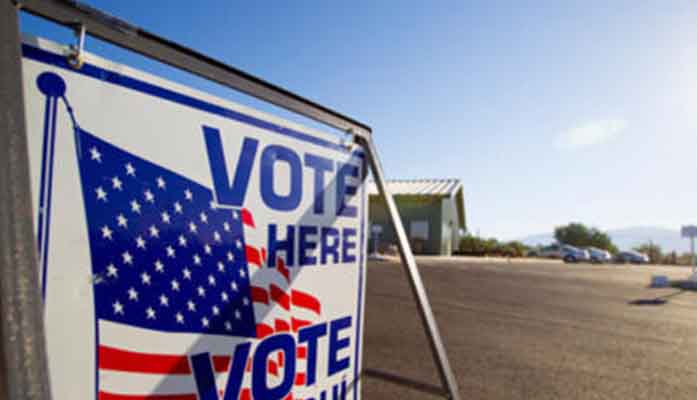
Sixteen months before the 2026 General Election, Arizona voters already know at least three ballot measures they’ll be weighing come November. Referred to the ballot by state lawmakers during the most recent legislative session, the proposals span issues of taxation, public safety, and individual privacy.
If passed, each measure would amend the Arizona Constitution — changes that can only be undone by future statewide votes. And these early additions may just be the beginning of what’s shaping up to be another crowded ballot.
In 2024, the number of voter questions was so high that some Arizona counties resorted to printing two-sheet ballots, prompting widespread voter complaints about ballot length. With dozens of potential referrals still under consideration, the 2026 ballot may once again test voters’ patience and attention spans.
Here’s a closer look at the three measures already set for the 2026 ballot:
1. Local Food Taxes Face New Restrictions
Sponsored by Rep. Leo Biasiucci (R–LD30), House Concurrent Resolution 2021 seeks to limit the ability of local governments to impose taxes on groceries.
If approved, the measure would require cities, towns, or counties to obtain voter approval before creating or increasing a tax on food. Currently, local governments can make that decision without direct input from the electorate.
The measure would also impose a temporary moratorium on any food tax hikes until June 30, 2027.
Proponents argue the change would make groceries more affordable during a time of rising costs. Local officials, however, warn it could impact critical revenue for municipal services.
The proposal passed with bipartisan support.
2. Ban on Mileage-Based Vehicle Taxes
Senate Concurrent Resolution 1004, sponsored by Sen. Jake Hoffman (R–LD15), would preemptively ban any tax or fee based on the number of miles a vehicle travels on Arizona roadways.
While Arizona does not currently impose such a tax, Hoffman and supporters argue the measure is necessary to protect personal freedom and prevent government overreach.
“There is nothing more insidious than the government trying to limit or control their citizens’ freedom,” Hoffman said earlier this year.
Mileage-based taxes have been explored in other states, like Oregon and Utah, as a way to replace declining fuel tax revenues and reduce pollution. Environmental advocates in Arizona, including the Sierra Club, support such measures as a means of curbing emissions and promoting sustainable transportation.
The resolution passed along party lines, with Republicans in favor and most Democrats opposed or absent.
3. Designating Cartels as Terrorist Organizations
In one of the final acts of the 2025 legislative session, lawmakers approved House Concurrent Resolution 2055, which seeks to classify drug cartels as terrorist organizations under Arizona law.
Introduced by House Speaker Steve Montenegro (R–LD29), the measure would direct the state’s Department of Homeland Security to take all possible actions within its authority to counteract cartel activity.
Supporters say it complements Proposition 314, a 2024 ballot measure that authorized Arizona to enforce its own border security measures — though that law remains on hold pending the outcome of a related Texas lawsuit.
These early measures may just scratch the surface. Dozens of proposed ballot referrals were introduced during this year’s session, and lawmakers still have the 2026 legislative calendar to revive stalled proposals or introduce new ones.
As Arizona continues its tradition of robust direct democracy, election officials may once again find themselves preparing for a complex and lengthy ballot — and voters will need to prepare for an equally complex decision-making process at the polls.
Jonathan Eberle is a reporter for AZ Free News. You can send him news tips using this link.
by Jonathan Eberle | Jul 5, 2025 | News
By Jonathan Eberle |
Arizonans will have the final say on whether drug cartels should be classified as terrorist organizations under state law, following the passage of House Concurrent Resolution 2055 by the Arizona Legislature. The measure, championed by House Speaker Steve Montenegro (R-LD29), will appear on the November 2026 general election ballot.
The resolution calls for the state of Arizona to formally recognize transnational cartels as terrorist organizations and directs the Arizona Department of Homeland Security to use every available tool to combat their operations. If approved by voters, the designation would not carry federal legal weight but would signal Arizona’s position on the issue and potentially influence state-level enforcement priorities.
“These cartels run brutal, organized operations that traffic women and children, flood our streets with fentanyl, and kill without consequence,” said Speaker Montenegro. “Arizona is on the frontlines of a war…By sending it to the ballot, we’re putting the decision where it belongs—with the people.”
Supporters of the measure say it reflects a growing public concern about border-related crime, fentanyl overdoses, and human trafficking. According to statistics cited by the resolution’s backers, U.S. Customs and Border Protection encountered 282 individuals on the terrorist watchlist at the southern border from 2021 to 2023—a sharp increase compared to previous years. Meanwhile, fentanyl seizures and related overdose deaths continue to climb.
The proposed ballot measure is part of the House Republican Majority Plan, which emphasizes border security and law enforcement. GOP lawmakers argue that Arizona must act independently to address what they see as federal inaction on border issues.
“House Republicans are taking action to protect Arizona,” Montenegro said. “We trust voters to make their voices heard and stand with us in this fight.”
Proponents insist that the measure would send a strong message and help marshal additional state resources to combat cross-border crime. Voters will weigh in on the measure during the 2026 election. If passed, Arizona would become one of the first states in the nation to define international cartels as terrorist groups under state law.
Jonathan Eberle is a reporter for AZ Free News. You can send him news tips using this link.
by Daniel Stefanski | Jan 11, 2025 | News
By Daniel Stefanksi |
A dangerous discovery was made in southern Arizona.
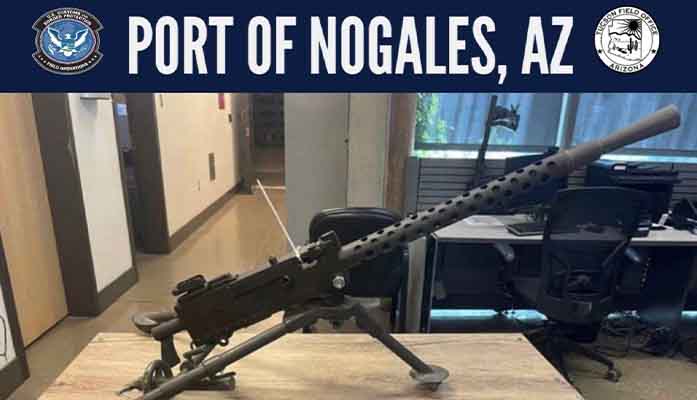
On Tuesday, Michael W. Humphries, the CBP Port Director of the Port of Nogales, alerted his followers on X that his team had uncovered a shocking load of weapons at the end of the previous year. He wrote, “CBP officers working outbound operations at the Nogales POE seized a rocket launcher and 2 rocket propelled grenades hidden in a car headed to Mexico. The cache was likely intended to protect the cartels and their fentanyl production labs in Mexico.”
Fox News journalist Bill Melugin noted the announcement from the CBP official, adding, “CBP seizes a RPG being smuggled into Mexico at the Nogales, AZ port of entry. Drugs go north, guns go south.”
In an exclusive comment to AZ Free News, Arizona Senate President Warren Petersen reacted to the news, saying, “This is a grim reminder of the dangers law enforcement officers are facing as a result of the Biden administration and our Governor not doing everything in their power to secure our southern border. Arizonans are eagerly awaiting when President Trump reinstates sanity and upholds the rule of law in our country, and Republicans at the Arizona Legislature will give him our full support in this important mission.”
One of Arizona’s top law enforcement officials, Cochise County Sheriff Mark Dannels, told AZ Free News that “the seizure of these military style weapons illustrates the networking between transnational-criminal cartels and those working on U.S. soil.”
The discovery in southern Arizona is another daily reminder of the dangers faced by the increasingly open and lawless border – especially over the past four years. While much attention is spent on the inbound traffic at and around the ports of entry at the border, there are too few resources and not enough attention to adequately identify the outbound traffic back into Mexico – like this shipment of seized weapons in Nogales. President-elect Donald J. Trump will be taking office in less than two weeks, and he and his team have vowed to crack down on the issues faced by Americans and law enforcement agents due to the porous border.
Daniel Stefanski is a reporter for AZ Free News. You can send him news tips using this link.
by Terri Jo Neff | Sep 27, 2022 | News
By Terri Jo Neff |
While the main focus along the southwest border is on who and what is coming into the United States, the director of one U.S. Port of Entry in Arizona is making the public aware of the strides his officers are having at keeping firearms from getting into the hands of cartel members in Mexico.
Michael Humphries has been the U.S. Customs and Border Protection’s Nogales Port Director since 2018. His responsibilities include two major border crossings—the Dennis DeConcini POE and the Mariposa POE—as well as the Morley pedestrian gate, the Nogales International Airport, and the Rio Rico railyard.
On Sunday, Humphries tweeted about a southbound vehicle that was preparing to leave the U.S. on Sept. 22 through the Nogales POE.
“As officers spoke to the driver, a K9 alerted to the trunk area of the vehicle and the driver fled,” Humphries wrote. “Officers were able to stop the car before it escaped into Mexico and found 3 AK style semi-auto rifles.”
Just days earlier, Humphries tweeted about a vehicle attempting to leave the U.S. with several firearms hidden in the cargo area.
Federal officials estimate more than 200,000 firearms were illegally trafficked last year from the U.S. into Mexico, particularly through Arizona and Texas crossings.
A tracing program operated by the U.S. Bureau of Alcohol, Tobacco, Firearms and Explosives (ATF) and the Mexican government shows more than 70 percent of guns used in criminal activity in Mexico came from the U.S.
One of Humphries’ tweets from June featured the seizure of a machine gun, 20,000 rounds of ammunition, and other firearms, all of which were headed into Mexico.
A few days before, CBP officers encountered two men attempting to walk into Mexico with assault weapons taped to their bodies.
And in May, Humphries tweeted about the seizure of 10 rifles concealed in one vehicle headed to Mexico.