by Jonathan Eberle | Mar 11, 2025 | News
By Jonathan Eberle |
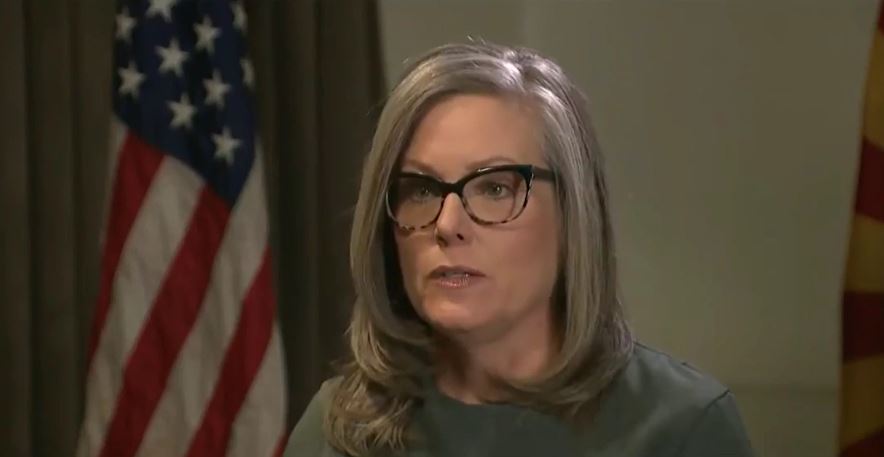
Arizona’s House Republican leadership has issued a strong condemnation of Governor Katie Hobbs’ handling of the state’s Developmental Disabilities (DDD) program, citing a $122 million budget shortfall and accusing the administration of gross mismanagement. The joint statement, released last week, criticized the governor for reckless spending decisions and a lack of consultation with the legislature, which they say has contributed to a financial crisis in the program.
House Speaker Steve Montenegro, Majority Leader Michael Carbone, Majority Whip Julie Willoughby, and Speaker Pro Tempore Neal Carter joined forces to decry what they called Hobbs’ failure to take responsibility for the growing issues facing the program. The DDD program, which serves Arizona’s most vulnerable citizens—those with developmental disabilities—has seen its financial situation worsen due to an unsustainable increase in costs.
The Arizona Developmental Disabilities program is a $4 billion initiative that provides essential services and care for individuals with developmental disabilities. According to the House Republicans, the program is on track to double in cost from fiscal year 2023 to fiscal year 2026, creating a serious budget shortfall that the governor’s office has failed to adequately address.
Republican leaders were especially vocal in their criticism of Governor Hobbs’ management of the program, accusing her of making “reckless spending decisions” that have led to the current crisis. The lawmakers pointed out that the governor’s administration had failed to work collaboratively with the legislature to develop solutions, instead opting for unilateral actions that have only exacerbated the problem.
“Governor Hobbs’ gross mismanagement puts Arizona’s most vulnerable citizens at risk,” the joint statement reads. “Her administration’s reckless spending decisions—made without consulting the Legislature—have bankrupted the DDD program, creating an avoidable crisis. Now, she’s demanding a taxpayer bailout without accountability or reforms.”
Adding fuel to the fire, the House Republicans also highlighted the recent shake-up within the governor’s administration. Governor Hobbs’ budget director resigned, she demoted the director of the Department of Economic Security (DES), and removed her health policy advisor—all actions that Republican lawmakers argue signal a lack of leadership and accountability within the administration.
Instead of collaborating with lawmakers to address the growing concerns, House Republicans claim that Governor Hobbs has deflected blame, choosing to focus on political tactics rather than on solving the issue at hand. They argue that these leadership changes are a direct result of the administration’s inability to manage the program effectively.
Jonathan Eberle is a reporter for AZ Free News. You can send him news tips using this link.
by Mike Bengert | Feb 19, 2025 | Opinion
By Mike Bengert |
The Scottsdale Unified School District (SUSD) Governing Board held its regular meeting on February 11th. And it was significant for several reasons.
Most notably, the District’s Fiscal Year 2025-2026 Maintenance & Operations and District Additional Assistance Projections were presented. (You can view the presentation and hear the discussion on the budget projections starting a little after the 1:08 mark of this video.)
From the budget presentation, it’s clear that the SUSD’s financial troubles are largely due to declining enrollment. The average daily membership (ADM), which tracks enrollment, is used to determine state funding, including Proposition 123. Under Dr. Menzel, enrollment has consistently dropped. As of February 2025, enrollment stands at 19,367, which is a decrease of 390 students from last year, which was down 355 from the previous year. Over the past seven years, enrollment has fallen by 13%, from 22,608. Dr. Menzel has been superintendent since July 2020, and despite receiving a bonus every year and a pay raise with a contract extension, he has failed to meet any of the academic performance goals set by the Board.
Could the decline in enrollment be due to the dismal academic performance under Dr. Menzel?
Last year, in SUSD, 8,100 students were not proficient in English-Language Arts (ELA), 9,400 were not proficient in math, and over 12,000 were not proficient in science. Yet over 98% are passed on to the next grade or graduate. Unfortunately, this is not an anomaly, but the continuation of a trend at SUSD.
Across all SUSD 5th graders, there are an average of 300 students who are highly proficient in either ELA, math, or science. That means over 1,100 5th graders are not highly proficient. And 600 of those are not even proficient in either ELA, math, or science, yet they will be passed on to middle school.
At Coronado High School, 74% of the students are not proficient in reading, and 83% are not proficient in math, but 89% will graduate in 4 years. How can that be? Is this what Dr. Menzel means when he says SUSD is providing a future-focused, world-class education? What kind of future is he focused on for those students?
The District’s CFO, Shannon Crosier, did offer a “silver lining” to the enrollment decline, noting that staff reductions could help cover part of the projected budget shortfall—$1.2 million of the anticipated $2.9 to $4.2 million deficit (depending on Proposition 123)—and maintain the ratios as established by the Board. I guess that was the good news. But if enrollment is down, doesn’t that mean lower class sizes and a better teacher-to-student ratio? Why is that a bad thing? Why lay off teachers? Answer, Dr. Menzel doesn’t want to make meaningful cuts to District staff.
Both Ms. Crosier and Dr. Menzel pointed out that 85% of funds are allocated to schools, leaving only 15% for district-level expenses. As a result, the budget proposal includes the elimination of only 12 district-level FTE positions. However, according to them, meaningful budget cuts will also require eliminating 20 FTE school-level positions and 3 assistant principal positions.
When Board Member Carney questioned the impact of these cuts, especially considering the 59 instructional positions cut in the 2024 Annual Comprehensive Financial Report, while adding 71 student support positions and 44 support and administration positions, Ms. Crosier promised to investigate the matter further. This trend of reducing instructional staff while maintaining student-teacher ratios amid declining enrollment seems to be continuing.
Member Pittinsky attributed the enrollment decline to changing demographics, a low capture rate (only about 50% of eligible students attend SUSD), and what he called systemic issues. He argued that without addressing these issues, the situation would remain unchanged. He added that without changes in the expense structure, 12 months from now we would be doing this again.
Changing the expense structure is one way to deal with the problem, but it doesn’t tackle the root cause of the declining enrollment.
Citing demographic changes and systemic issues as reasons for enrollment loss seems like a convenient excuse, especially when the key questions remain unanswered: Why are students leaving SUSD? Why is the capture rate so low? Perhaps Pittinsky, who chose Brophy over SUSD for his child, could shed some light on that.
It’s concerning that no one at the meeting seems willing to discuss the root cause of the declining enrollment. Could it be tied to the District’s poor academic performance, combined with the focus on social-emotional learning, gender identity, hiring social workers while laying off teachers, and Dr. Menzel’s broader efforts to disrupt and dismantle SUSD?
Why not address the expense structure right now? Cutting 12 staff positions for next year only represents 3% of the district’s staff, which doesn’t seem like a significant reduction. Why is no one questioning what district staff are doing? For instance, what purpose is served by the 13 FTE in Desegregation? Or the 13 FTE working on State and Federal Titles I, II, and V? How about the 10 working on Student Information? Do we need 7 FTE in the Communications Department and another 7 in Community Education?
Member Pittinsky also asked when the Board would be able to inject their values into the budgeting process. Dr. Menzel’s response, as usual, was long-winded and didn’t fully answer the question. But I’d ask Member Pittinsky: why not act now? You’ve acknowledged the need for an expense structure change. As a Board member, you have the power to ask tough questions about district staff activities and direct Ms. Crosier to prepare a budget based on substantial cuts to district-level staff. Again, do we need 13 FTE in Desegregation? Dr. Menzel claims they leave no stone unturned to tackle the problem, but I remain skeptical.
We should also be mindful of potential cuts to government funding, both state and federal, especially in light of President Trump’s executive orders on education. If these cuts materialize, the impact on the District could be significant.
This was just the first budget meeting, and more details will be presented on February 25th and March 4th. The proposed budget will be presented to the Governing Board on June 10th, with a public hearing and adoption scheduled for June 24th.
The June 10th meeting is a regular meeting, meaning public comments will be allowed with a two-minute time limit. A two-minute time limit will likely also be enforced during the public hearing on June 24th, with the Board voting to adopt the budget immediately after the hearing.
This is all by design. Dr. Menzel put together the budget with little to no input from the Board or the public. Then he presents it when there is very little time to make changes. Scheduling the public hearing just before the Board votes allows Dr. Menzel to say he is following the law, without getting public input in a meaningful way into the budget. He doesn’t care what the public thinks.
That’s why parents and anyone concerned about the direction of SUSD must speak up or ask questions directly to the District staff and Dr. Menzel. Inquire about what each department is doing and then ask yourself—and the Governing Board—whether we can afford to continue funding these activities. Then ask yourself if Dr. Menzel and his team have truly left no stone unturned.
If you care about the education of SUSD students, you need to speak up and let the Governing Board and Dr. Menzel know what your concerns and priorities are. Remember, they work for you!
Mike Bengert is a husband, father, grandfather, and Scottsdale resident advocating for quality education in SUSD for over 30 years.
by Daniel Stefanski | Jan 25, 2025 | News
By Daniel Stefanski |
Another Arizona lawmaker is pushing back against the governor’s budget for the upcoming fiscal year.
Earlier this week, Arizona State Representative Gail Griffin issued a scathing response to Governor Katie Hobbs’ recently released budget for Fiscal Year 2026. Griffin, the Chairman of the House Natural Resources, Energy & Water Committee, wrote, “As usual, the Governor talks a big game on water but does little to prioritize the solutions that matter.”
The all-important issue of “water” in Arizona has been a source of great contention over the past two years with the state’s current status of a divided government. In Hobbs’ State of the State address, she said, “As I said when I stood before you last year, we must act now to protect Arizona’s water. And when the Legislature did not, I did. I remain committed to true, bipartisan reform to protect our groundwater. But mark my words, if this Legislature fails to act. I will… Again. Further, any bills that attack our assured water supply program, undermine our water future, or are political cover for this Legislature’s lack of action on water security, will meet my veto pen.”
Hobbs proposed a $3 million investment to create a Colorado River Litigation Fund to “ensure that The Department of Water Resources (ADWR) has the resources to defend Arizona’s interests and water users who depend on the State’s precious Colorado River entitlement.” The governor also requested another six full-time employees for ADWR “to meet the demanding water policy challenges facing Arizona,” among other proposals from her team, including almost five million dollars for renovations to fish hatcheries across the state.
Representative Griffin also stated, “With Governor Hobbs’ latest proposal, it seems the Governor is more interested in building new homes for fish and birds than building new homes for hard-working Arizonans. Nothing in the Governor’s budget does anything to increase the critical supply of for-sale housing or support the American Dream of home ownership.”
Griffin added, “Arizona House Republicans are committed to advancing fiscally responsible solutions that address our critical housing and water supply issues, preserve the American Dream, and unleash economic prosperity in our state while protecting our individual rights and liberties. We will continue to put the interests of Arizona citizens first – and this will be reflected in our ongoing budget negotiations and proposals.”
The longtime Arizona Republican legislator’s comments about housing and water policies mirrored what two Senate lawmakers in her party had to say following the governor’s state of the state address earlier this month. In a video following the speech, Arizona Senate President Warren Petersen said, “We agree with the Governor that home ownership has become unaffordable for many Arizonans… but the Executive’s mandate halting home construction in two of the most booming areas of the valley was irresponsible, and first-time homebuyers are suffering the consequences of sky-high prices.”
Senate President Pro-Tempore T.J. Shope noted, “We must build. We have the water to support the growth. We use the same amount of water today that we did 70 years ago – and we have 6 million more people today! Arizona knows how to conserve water. Right now we have legislation to allow us to continue to grow and build homes while conserving water. Governor, sign our Ag-to-Urban bill. You vetoed it last year. Don’t make the same mistake twice.”
Daniel Stefanski is a reporter for AZ Free News. You can send him news tips using this link.
by Daniel Stefanski | Jan 24, 2025 | Economy, News
By Daniel Stefanski |
Arizona Democrats are standing behind a budget proposal from the state’s governor.
Late last week, Governor Katie Hobbs released her budget for Fiscal Year 2026 for the State of Arizona. Hobbs, a Democrat, championed her priorities of “opportunity, security, and freedom for Arizonans” in a statement that accompanied her budget proposal, which was the third of her first term in office as the state’s chief executive.
The top Democrat lawmakers in both chambers of the Arizona Legislature were quick to respond. House Democratic Leader Oscar De Los Santos said,“The Governor’s budget is tightly aligned with our Caucus priorities in several key ways —especially with its focus on affordability, affordability, and affordability. While greedy corporations try to fleece and price-gouge working families, we must do everything we can to slash costs. Thankfully, the Governor has put forward solid and workable plans to cut costs for childcare, housing, and more — which give us an excellent starting place for the bipartisan negotiations that it will take to pass a budget that works for every Arizonan. As the chaos and tariffs of the incoming Trump Administration threaten to drive up prices on basic necessities like food and healthcare, it’s more important than ever that here in Arizona we make much-needed investments to protect hard-working families and make life more affordable.”
Senate Democratic Leader Priya Sundareshan added,”I applaud the Governor and her team for their work and dedication to putting forward a fiscally responsible budget proposal. This proposal has a desperately needed focus on ensuring Arizona is an affordable place to live, raise a family, and build a business. It is my hope that Republicans choose to partner with the Governor to adopt the outlined common-sense constraints on the out-of-control universal ESA voucher scheme. The strain of this program paired with years of irresponsible Republican budgeting have left our state in critical need of the investments this proposal seeks to make in Tribal communities, working families, affordable housing, and responsible groundwater management.”
Arizona Democrat legislators will likely be on the outside looking in at another process of budget negotiations in a divided state government. Over the past two years, Republican legislative leaders have spearheaded negotiations for the fiscal packages with Hobbs and her team from the Ninth Floor of the Governor’s Office. Republicans have also been able to protect all their priorities from Democrats throughout those budget agreements, while managing to extract significant concessions from Hobbs and Democrats.
Daniel Stefanski is a reporter for AZ Free News. You can send him news tips using this link.
by Daniel Stefanski | Jan 20, 2025 | News
By Daniel Stefanski |
Arizona Republicans are pressing pause over the latest proposal from the state’s Democrat governor.
On Friday, Governor Katie Hobbs released her Executive Budget for Fiscal Year 2026. In a statement that accompanied her announcement, Hobbs said, “To realize the Arizona Promise, we must deliver opportunity, security, and freedom for Arizonans. My Executive Budget reflects my commitment to continuing our strong economic growth, lowering costs, keeping communities safe and securing the border, and protecting Arizonans’ fundamental freedoms. We are connecting Arizonans to good jobs, lowering the costs of housing, child care and groceries, and protecting our veterans. I’ll continue being a strong steward of taxpayer dollars, cutting waste, fraud, and abuse and investing in the critical services that improve life for everyday Arizonans in every corner of our state.”
While Republicans had limited time to review the governor’s proposal, they did have initial thoughts about Hobbs’ latest budget for the state. Newly minted Speaker of the Arizona House of Representatives Steve Montenegro said, “While we share a commitment to improving the lives of Arizonans, the Governor’s budget proposal as presented raises concerns about parental choice, fiscal responsibility, public safety, economic growth, and the undue burdens it places on the backs of taxpayers. Our House Republican Majority remains focused on policies that support hardworking families, encourage job creation, and strengthen Arizona’s future. I look forward to working together on a serious and responsible budget that addresses these goals, but it’s clear that there is a long way to go.”
A spokesperson for the Arizona Senate Republicans told AZ Free News, “We share the same concerns about some of the same issues the Governor has raised in her budget proposal. However, the Governor’s solutions are going to be a burden to the taxpayer and won’t deliver results. Senate Republicans have a fiscally responsible budget that will ensure the core functions of government are funded, will provide relief to the taxpayer, and will ensure our state is not creating unsustainable government programs.”
The FY 2026 budget proposal from Hobbs represents the third installment from the Democrat governor in a divided state government with legislative Republicans. Over the past two years, Arizona Senate President Warren Petersen and his counterpart in the House of Representatives have forced Hobbs to make major concessions and ensured that key Republican priorities and interests were protected in the final budgets. Republican lawmakers will be counted upon again to stand strong against Governor Hobbs’ continued attempts to enact elements of her radical agenda on Arizona.
Daniel Stefanski is a reporter for AZ Free News. You can send him news tips using this link.