People in states that have signed on to the EPA/ State Climate Action Plan program can no longer say, “it’s only happening in California” because California is the United Nations blueprint for the entire United States.
On September 20, 2023, the Biden administration met at the Sustainable Development Summit in New York with the goal of recommitting to the [United Nations] 2030 Agenda for Sustainable Development and the Sustainable Development Goals—SDGs. A White House fact sheet stated, “The United States is committed to the full implementation of 2030 Agenda and the SDGs, at home and abroad. At their core, the SDGs seek to:
Expand economic opportunity – This means public-private partnerships, which is crony capitalism. In this scheme there are winners and losers, where profits are privatized, and losses are socialized on the backs of middle-class Americans.
Advance social justice – This means placating and advancing people based on their skin color. At its core it is discriminatory.
Promote good governance – This skirts our elected form of government and injects unelected special interest initiatives into our lives, where no one gets to vote.
Ensure no one is left behind – This means catering to protected classes and minorities in order to create “capacity building” for initiatives and redistributive wealth schemes. Under Diversity and Inclusion (DEI), these classes are awarded “equity” and “inclusion” based on their skin color.
The Biden administration hired people from California and put them into positions in all federal agencies relating to climate change in order to fulfill his Green New Deal plan. Therefore, the plan mirrors what California has done at the national level.
The EPA/State Climate Action Plan program are through cooperative grants, (Climate Pollution Reduction Grants, CPRG) which have “take it or leave it” terms and conditions. These agreements bind states and local jurisdictions into creating GHG inventories to reduce GHG emissions, which eventually wind their way into administrative law, constraining property and individual rights. These grants force United Nations style Sustainable Communities Strategies (SCS) that addresses the U.N. 2030 Agenda for Sustainable Development Goals (SDGs), which the Biden administration has committed to.
The EPA pitches climate action plans as voluntary. This is not true. Once a state agrees to take grant money, they sign on to mandatory elements in the grant terms and conditions contract — They are now in the United Nations/California club.
The EPA/State Climate Action Plan program is between the federal EPA, a “Partner” and unelected state agencies, boards, bodies, or commissions. Therefore, the entire process is being implemented without the consent of citizens and oversight of state legislatures – no one gets to vote. In essence, most states, including so-called conservative states, are selling out for bribes, aka grant money.
According to the EPA, states submitted Priority Climate Action Plans (PCAPs) under President Biden’s Inflation Reduction Act. The EPA/State Climate Action Plan program was hurried into place because there was concern that there could be a Republican change in the November 2024 election, which could jeopardize the program; hence, the name “priority” climate action plan in the first phase of the plan.
In 2023, under the first phase of the $5 billion program, the EPA made a total of $250 million in grants available to states, the District of Columbia, Puerto Rico, 80 MSAs, four territories, and over 200 Tribes and Tribal consortia to develop ambitious climate action plans that address greenhouse gas emissions. 45 states are now covered by a climate action plan. 5 states: Florida, Iowa, Kentucky, South Dakota and Wyoming decided not to participate.
The program is a two-phase federal grant program that allows the state to develop and implement ongoing community-driven projects that reduce ambient air pollution.
Phase I provided $250 million for noncompetitive planning grants, of which states were eligible for $3 million each to support the development of a climate action plan.
Phase II includes $4.6 billion in competitive implementation grants to execute the projects identified in the climate action plan.
The deadlines for submission of PCAPs are:
Priority Climate Action Plan – Creates an inventory of the state’s primary GHG generators. Due March 1, 2024 (states and Metropolitan Statistical Areas (MSAs) and due April 1, 2024 (tribes, tribal consortia, and territories)
Comprehensive Climate Action Plan – A plan to cut that pollution statewide. Due two years after planning grant award, or approximately mid-2025 (states and MSAs) and due at the close of the grant period (tribes, tribal consortia, and territories)
The EPA/State Climate Action Plan program seeks to create arbitrary greenhouse gas (GHG) emission reductions in order to install unconstitutional hidden fees and taxes on hard working Americans. This is accomplished by doing a greenhouse gas inventory for carbon (CO2) and methane.
Once inventories for GHGs have been established, reduction goals can be set by States and local jurisdictions. Taxes and fees follow: GHG pricing mechanisms like cap and trade programs for energy producers; congestion pricing and vehicle mileage taxes for cars and trucks; mandatory retrofitting of commercial and existing residential homes to “green” building standards; zero emission vehicle requirements; increased gasoline, natural gas, and heating oil prices. For example, categories for emission controls include:
Transportation
Electricity Generation
Industry
Agriculture
Commercial and Residential Buildings
Waste and Materials Management
Wastewater
Land Use, Land Use Change, and Forestry
The EPA provided states with an outline template to follow in the development of their PCAPs called the, Priority Climate Action Plan Guidance: An Outline for States and MSAs. Therefore, the State PCAPs are very similar in their presentation. For example, PCAP lists required elements:
GHG Emissions Inventory,
Priority Measures and Reduction Estimates,
Benefits Analysis,
Low-Income and Disadvantaged Communities (LIDAC) Benefits Analysis,
Review of Authority to Implement,
Intersection with Other Funding Availability, and
Coordination and Engagement.
State legislatures did not pass PCAPs. It all happened through interagency coordination: EPA and state agencies, which are under the control of Governors.
Arizona State University and Northern Arizona University for the Arizona Governor’s Office of Resiliency were the lead players in The Clean Arizona Plan: Priority Climate Action Plan State of Arizona. They coordinated the obligatory public outreach required by EPA grants, which included feedback from numerous special interest stakeholders who directly benefit from environmental initiatives, while hard working residents are relegated to answering simple questions on outcome-based online surveys — All of this is at the detriment to Arizona’s residents.
People need to contact their state’s Governor and condemn them for signing on and creating commissions and task forces while utilizing faux stakeholder consensus to justify existing PCAPs and Comprehensive Climate Action Plans already in the works. They need to notify their state legislatures that this is happening and ask them if they know about this EPA program.
Also, people need to remind elected officials of their constitutional oaths to protect individual property rights, as evidenced in a Paramount Network’s “Yellowstone” season one episode: Patriarch John Dutton is confronted by a group of Communist Chinese tourists who are trespassing on his land. He demands that they leave and when he explains that he owns the land, one trespasser states, “It is wrong for one man to own all this.” Dutton responds, “This is America, we don’t share land here!”
People in states that have signed on to the EPA/State Climate Action Plan program can no longer say, “it’s only happening in California” because California is the United Nations blueprint for the entire United States.
Dan Titus is affiliated with the American Coalition for Sustainable Communities (ACSC). Their mission is sustaining representative government; not governance, by collectivist-oriented unelected agencies and commissions.
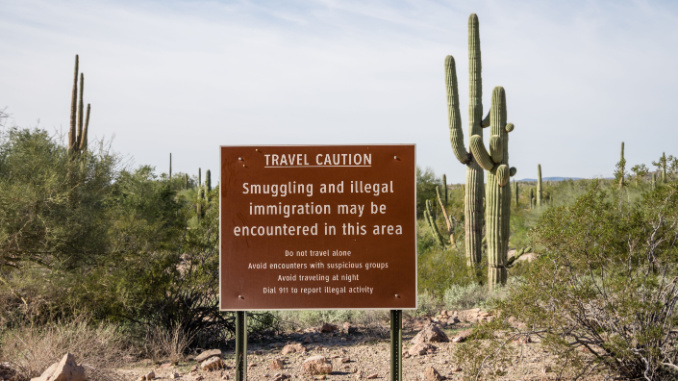
Illegal immigration is the number one issue heading into November’s election, and Democrats have no one to thank but themselves. Over the past three years, the left has single-handedly created an open-border disaster under the neglectful policies of a Biden administration that has completely abandoned its constitutional duty to protect each state from invasion. As ground zero for the current border crisis, the people of Arizona know this all too well.
A surge in illegal immigrants in the Tucson Border Sector along with a dramatic rise in the number of “gotaways” has left our state on edge. Meanwhile, cartel violence has increased near southern Arizona communities, and we’ve even seen a report revealing that thousands of “special interest aliens” from mostly Middle Eastern countries have been apprehended while crossing the border illegally in the past two years. And that’s just barely scratching the surface of the catastrophe that has become our border.
You would think that the governor of a state facing a daily invasion would do something, but Katie Hobbs has proven time and time again that she would rather ignore the problem and hope it goes away. So, after Hobbs vetoed the Arizona Border Invasion Act (SB 1231), which would have significantly enhanced our state’s border security, Republican legislators decided it was time to allow voters to take matters into their own hands through the Secure the Border Act (HCR 2060). And the response from Democrats has been telling…
Americans consistently voice their disapproval on the state of the economy in recent polls, largely because of the stratosphericcost of living. But apologists for the Biden administration point to the low unemployment rate of 3.9% in April as proof of the economy’s strength.
Yet this is a hollow talking point since the real unemployment rate is likely between 6.5 and 7.7%.
The unemployment rate is the percentage of people in the labor force who don’t have a job. That means the unemployment rate can change if either the number of people unemployed or the total size of the labor force changes.
The shocking reality is that somewhere between 4.7 million and 7 million people who aren’t working today are not included when calculating the unemployment rate. That artificially reduces the figure.
The reason these millions of Americans are uncounted began with the events of 2020.
When the government instituted draconian lockdowns across most of the economy in response to the COVID-19 outbreak, over 17 million people became unemployed, and another 8 million people immediately left the labor force.
As the economy slowly reopened across the country, millions of people began returning to work. That, of course, drove down the unemployment rate by reducing the number of unemployed people. Some of those who left the labor force also returned and eventually found jobs, further reducing the unemployment rate.
But there were also millions who left the labor market entirely and never returned. As such, they were no longer counted among the unemployed nor in the labor force. This pushed the unemployment rate down even more.
If those millions of people were to suddenly look for work again, it would greatly increase the labor force, but it would also increase the unemployment rate, at least until those job-seekers found work.
Official government data point to just how many workers are missing from the labor market today. Several metrics show a large gap between their current reading and their pre-pandemic trends. These include the employment level, the number of non-farm payrolls, the employment-to-population ratio and those not in the labor force.
The gap is between 4.7 million and 7 million people, all of whom are not working but are excluded from the unemployment rolls. If they were still counted as jobless members of the labor force, the unemployment rate would jump to between 6.5% and 7.7%.
The latter figure is almost twice the official unemployment rate. Even 6.5% would represent a significant spike.
Looking only at the unemployment rate can give a distorted view of the labor market. If unemployed people are looking for work and then get jobs, that causes the unemployment rate to fall. But, if those same people give up looking for work and leave the labor force, it has precisely the same effect on this metric.
Using additional data provides a better gauge of the labor market’s health and workers’ jobs satisfaction. Real, or inflation-adjusted, earnings are a good example—and they have plummeted.
While the average American worker’s weekly paycheck has increased $147 from January 2021 through April 2024, those earnings buy $47 less because prices have risen so much faster than incomes.
This has caused many Americans to work extra hours or pick up a second job. Among renters, more than one-fifth of them have taken on another job in order to pay their rent on time in the last few months.
That’s noteworthy because whenever someone is hired, whether it’s that person’s first or fourth job, it’s still counted as an additional payroll in the government’s monthly job statistics. With millions of Americans picking up additional work to try and make ends meet for their families, the number of jobs has risen much faster than the number of people employed.
Simply touting a low unemployment rate provides a view of the labor market that is at best incomplete and at worst deceptive. A comprehensive view of economic conditions for the working class shows why they are so unhappy: inflation has made it impossible for them to get ahead, no matter how many jobs they work.
E.J. Antoni is a contributor to the Daily Caller News Foundation, public finance economist and the Richard F. Aster Fellow at The Heritage Foundation, and a senior fellow at the Committee to Unleash Prosperity.
Everyone knows that political pundits, social media influencers, and the corporate media love a good narrative. And one of their favorites for years has been the claim that Arizona is trending blue—that a demographic shift toward Democrats is inevitable.
This ‘conventional wisdom’ is repeated so often that much of the Republican political class in the state has accepted it as fact. Some are even advising candidates that the only path forward for Republicans is to abandon their conservative principles, embrace center-left policy solutions, and settle for a future of divided government.
But a funny thing about narratives and conventional wisdom: numbers don’t lie, especially those showing party preference when people are registering to vote.
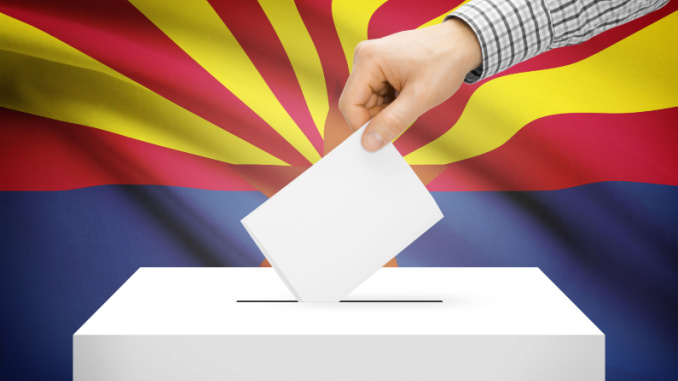
Last month, the Secretary of State updated the statewide voter registration data prior to the Presidential Preference Election. The latest figures show that Republicans are once again the largest voting bloc in Arizona, surpassing Independents by nearly 40,000. This is certainly an important development—especially given all the attention it received on social media when Independent registrations surpassed Republicans last year.
But that’s not the most significant voter registration trend…
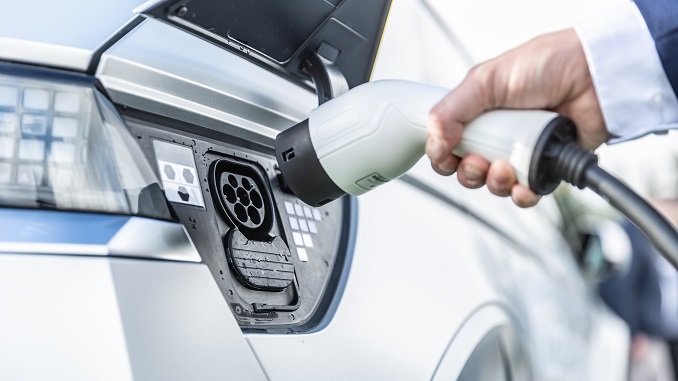
Reports show that the Biden administration plans to finalize its final tailpipe emissions rule for cars and trucks on Wednesday, a measure 61% of Arizonans oppose.
The possible rule could mean that nearly 70% of cars sold in 2032 would need to be electric vehicles, though this is not achievable with our current infrastructure and would make us more reliant on China, according to government relations firm AxAdvocacy.
Chet Thompson, American Fuel & Petrochemical Manufacturers (AFPM) president and CEO, said the EPA policy will feel like a ban for consumers.
“It will vastly restrict both their access to and ability to afford new gas cars, trucks, SUVs and traditional hybrids,” Thompson said. “And there are no offramps in the policy in the event our infrastructure isn’t ready or consumers simply don’t buy EVs at the rate EPA would like. This is exactly why 75% of registered voters solidly oppose any government efforts designed to ban gas, diesel and traditional hybrid cars.”
President Joe Biden has been clear since 2020 he intends to use his federal agencies and the state of California to eliminate sales of new gas cars.
“While multiple administration policies push us toward this end, the Environmental Protection Agency’s (EPA’s) passenger vehicle standards will do most of the damage on their own—requiring approximately 70% of new car sales to be electric in less than eight years,” he said. “This policy is bad for consumers, the economy and national security.”
“It will sacrifice our hard-won U.S. energy strength for even greater dependence on China and the EV battery and mineral supply chain China controls,” Thompson continued.
Only 16% of Arizonans support the rule, which would deprive Americans of the right to select the car best for them, their families, and their budgets.
In Wisconsin, 64% of residents oppose the measure, while 57% of Pennyslanvanians oppose, 61% of Nevadans oppose, and 66% of Ohioans oppose. Only 9% of Montana residents support the potential rule.
Elizabeth Troutman is a reporter for AZ Free News. You can send her news tips using this link.