Arizona will have just one personal income tax rate of 2.5 percent instead of four rates as of Jan. 1, Gov. Doug Ducey announced last week. That is an effective date one year sooner than was originally expected when the governor signed legislation in 2021 for what was designed as a three-year phase in.
“It’s time to deliver lasting tax relief to Arizona families and small businesses so they can keep more of their hard-earned money,” Ducey wrote to Arizona Department of Revenue Director Robert Woods on Sept. 29. “This tax relief keeps Arizona competitive and preserves our reputation as a jobs magnet and generator of opportunity.”
It is Arizona’s thriving economy and record revenues which allows for full implementation of the flat tax now instead of January 2024, according to Ducey. The Joint Legislative Budget Committee and the Governor’s Office of Strategic Planning and Budgeting jointly informed the governor last week that Arizona’s General Fund revenues, excluding the beginning balance for Fiscal Year 2022, were at $16.7 billion.
This exceeded the statutory economic condition phase-in triggers written into the flat tax law in 2021. In addition, Arizona’s Rainy Day Fund is at its highest level ($1.4 billion) in state history and economists are forecasting Arizona will report at least a $4 billion budget surplus through 2024.
“It’s no secret that Arizona’s economy is booming,” Ducey added in his letter to Woods. “Over the last eight years, we’ve made responsible decisions to live within our means, reduce burdensome government regulations, lower taxes every year and ensure our state remains a great place to live.”
Arizona House Majority Leader Ben Toma was instrumental in getting personal income tax reform passed during the 2021 legislative session to eventually replace the state’s four-rate system of 2.59 to 4.5 percent with the 2.5 percent flat rate.
“I am happy to report that revenue thresholds have been exceeded one full year in advance, enabling the implementation of a single flat rate of 2.5% a year earlier, providing Arizonans with significant economic relief when they need it most,” he said in response to the governor’s announcement.
Several business groups and economic development organizations lauded the news, which will give Arizona the lowest flat tax in the country when it takes effect Jan. 1.
Americans For Prosperity – Arizona:
“This is a historic win for Arizona that couldn’t come at a better time,” said State Director Stephen Shadegg of AFP-Arizona. “Over time, Arizonans will continue to reap the benefits of more tax relief and the state will become even more attractive to businesses and investors, growing the state’s economy while letting hardworking taxpayers keep more of their paychecks.”
Common Sense Institute Arizona, a non-partisan research organization dedicated to the protection and promotion of Arizona’s economy:
Gov. @DougDucey on Day 1 of his campaign promised to reduce the state income tax to as close to zero as possible. Now, 8 years later – and a year ahead of schedule – Arizona will officially have the lowest flat tax in the nation when we ring in 2023. https://t.co/0Ri6vYUhgA
On Wednesday, the Department of Education (ED) announced the distribution of over $20.8 million to increase mental health oversight in Arizona schools.
The funds may be applied to a variety of mental, social, and emotional initiatives within schools. This includes school counseling, mentorships, and bullying and harassment prevention.
During a press call on Wednesday, the ED featured insight from Dr. Marty Pollio, the Jefferson County Public Schools superintendent in Louisville, Kentucky. Pollio said that the SCG funds allowed for three means of school improvement:
Identify students in need and in crisis who need mental health support like counseling;
Reduce the counselor-to-student ratio;
Train teachers on how to identify troubled students and support school personnel.
Pollio suggested that mental health professionals, such as board-certified behavioral analysts, should be deployed to classrooms to identify problematic students.
“Educators have to do more than ever,” said Pollio.
AZ Free News asked the Biden administration whether they would be providing guidelines for behavior analysis enabled by SCG funds, such as what students would be deemed problematic as Pollio suggested. The ED said they weren’t providing guidelines. Rather, the ED said that level of management would be up to the states and districts.
“[The SCG] allows states and districts to tailor their funds to each district and school,” said one of the officials.
The funds come from the Strong Connections Grant (SCG) within the Bipartisan Safer Communities Act (BSCA). Nationwide, grant funds totaled over $971 million.
Today, ED announced nearly $1 billion in Stronger Connections grants through the Bipartisan Safer Communities Act (BSCA) to support students’ physical, emotional, & mental well-being – real benefits for students across the country. https://t.co/WwxaZ4tQGZ
ED Secretary Miguel Cardona asserted that teachers have been handling student behaviors on limited funding and resources, and that students behaved better with reduced disciplinary action and increased promotion of positive behavior. Cardona noted that in all, investments to improve mental health in schools through SCG total $1 billion.
“We must broaden our focus beyond physically safe learning environments,” said Cardona. “If we’re serious about equity and opportunity, we must expand our definitions of learning and growth to include mental and emotional health.”
President Joe Biden’s special assistant for education policy, Maureen Tracey-Mooney, said that the SCG funds are designed for “high impact strategies” that would ultimately impact home life, such as counseling, tutoring, mentoring, and summer learning.
Earlier this month, Cardona sent a letter to the Arizona Department of Education (ADE) notifying them of this recent investment. Cardona’s letter provides educators with suggestions and guidelines on how to implement the SCG funding.
The ADE will decide which school districts will receive the SCG funds and oversee their expenditure. However, the ED retains the authority to audit and investigate schools’ use of the SCG funds.
Corinne Murdock is a reporter for AZ Free News. Follow her latest on Twitter, or email tips to corinne@azfreenews.com.
On Monday, Arizona Attorney General Mark Brnovich petitioned Congress to reject legislation reducing states’ land-use and energy rights in order to federalize the energy grid.
The letter warned that the legislation would empower private companies to wield the authority of eminent domain against state land, enable the Federal Energy Regulatory Commission (FERC) to construct whenever and wherever it desires regardless of state input, and authorize private companies to pass on the construction costs of new facilities from one state to another.
“These provisions eviscerate state sovereign authority, commandeer companies to carry out the will of a three-vote majority of FERC Commissioners, undermine the power of each citizen’s vote to decide policies at the state level, and inevitably force the citizens of our states to subsidize the costs of expensive and unreliable energy policy preferences of California and New York,” stated the letter.
The letter also noted that Congress was rushing the legislation through without the transparency of committee hearings, markups, or debate.
Brnovich warned in a press release that the proposed legislation, the Energy Independence and Security Act of 2022, would burden Arizonans with other states’ problems.
“The Act is unfair and takes power from states to decide policies for their own people,” said Brnovich. “Arizona and Louisiana should not be forced to pay for California and New York’s expensive energy preferences.”
Senate Majority Leader Chuck Schumer (D-NY) and Senator Joe Manchin (D-WV) introduced the legislation under the promise of creating energy independence, citing the ongoing Russian war abroad.
THREAD: If the United States wants to remain the superpower of the world, we must have energy independence. The Energy Independence and Security Act of 2022 will make necessary permitting reforms to ensure we can produce the cleanest possible energy for ourselves & our allies. pic.twitter.com/ehJ045mgSz
Some renewable energy analysts say that the legislation would help fast-track the country’s adoption of “clean” energy.
The Energy Independence and Security Act of 2022 is out! @SenSchumer , @Sen_JoeManchin led. We think it can drive a very large amount of clean energy, because transmission is renewable energy's biggest barrier. Importantly, NEPA is preserved, including public participation.🧵
Brnovich joined a coalition of 18 states led by Louisiana Attorney General Jeff Landry to request the rejection of the legislation: Alabama, Alaska, Arkansas, Georgia, Indiana, Kansas, Kentucky, Mississippi, Missouri, Montana, Nebraska, South Carolina, Tennessee, Texas, Utah, and Virginia.
Louisiana Attorney General Jeff Landry is leading a coalition of 18 states in vocal opposition to the Energy Independence and Security Act of 2022.
On Monday, Planned Parenthood Arizona (PPAZ) filed a motion to stay a court ruling reinstating Arizona’s total abortion ban.
Last Thursday, Pima County Superior Court Judge Kellie Johnson lifted an injunction on the 1901 total abortion ban in Planned Parenthood Center of Tucson, et al. v. Gary Nelson, et al. The court case is a continuation of the 1970s case that enjoined the total abortion ban as unconstitutional based on the Supreme Court (SCOTUS) ruling in Roe v. Wade.
Johnson ruled that SCOTUS overturning Roe v. Wade earlier this year nullified the Pima County Superior Court’s injunction against Arizona’s total abortion ban. Johnson added that she wouldn’t be addressing the legality of Arizona’s abortion statutes.
“The Court finds that because the legal basis for the judgment entered in 1973 has now been overruled, it must vacate the judgment in its entirety,” stated Johnson. “The Court finds an attempt to reconcile fifty years of legislative activity procedurally improper in the context of the motion and record before it. While there may be legal questions the parties seek to resolve regarding Arizona statutes on abortions, those questions are not for this Court to decide here.”
The 1901 ban, which predated Arizona’s statehood, resembles the most recent abortion law enacted by Governor Doug Ducey in March. While the former institutes a total abortion ban, the latter limits abortions to 15 weeks. However, the latter law stipulates that it doesn’t supersede the 1901 ban.
In a press release, PPAZ President and CEO Brittany Fonteno had a different view of the two laws’ relationship. Fonteno contended that Johnson’s ruling enabled conflicting laws to exist in the state, therefore forcing their facilities to continue suspension of abortions.
“This confusion has forced Planned Parenthood Arizona to pause abortion services and cancel appointments scheduled this week — meaning that members of the community once again have been and will continue to be denied medical care that they deserve and need while this decision is in effect,” said Fonteno. “This is unacceptable.”
BREAKING: Planned Parenthood Arizona Seeks Immediate Stay of Pima County Superior Court Ruling pic.twitter.com/MAE46nwS2P
— Planned Parenthood Advocates of Arizona (@ppazaction) September 26, 2022
The few abortion clinics that continued to provide certain services while awaiting the court ruling, such as Camelback Family Clinic, have suspended their services due to this latest ruling.
Arizona’s abortion fund providers — Abortion Fund of Arizona (AFAZ) and the Tucson Abortion Support Collective (TASC), as well as a national network that serves Native American women only in Arizona, Indigenous Women Rising (IWR) — continue to collect funds to provide abortions and all associated costs, such as transportation and time off work.
The fundraising page for the three abortion fund providers, launched through the Democratic fundraising platform ActBlue, has raised nearly $47,800 with a goal of $100,000 as of press time.
“Funding abortion care is a radical act of compassion and you, too, can be a part of this work!” reads the fundraiser page.
A cruel, pre-statehood, 1864 abortion ban has gone into effect in AZ that bans nearly all abortions.
It's time to stand up//fight back & show some love to the AZ abortion funds, incl @abortionfundAZ, @IWRising & Tucson Abortion Support Collective.
Arizona Attorney General Mark Brnovich, who argued for the court to lift the 1973 injunction on the state’s total abortion ban, commended Johnson for issuing proper legal recourse.
“We applaud the court for upholding the will of the legislature and providing clarity and uniformity on this important issue. I have and will continue to protect the most vulnerable Arizonans,” stated Brnovich.
A Pima County judge lifted an injunction that was placed on AZ’s abortion statute. We applaud the court for upholding the will of the legislature and providing clarity and uniformity on this important issue. I have and will continue to protect the most vulnerable Arizonans.
In addition to Arizona, 14 other states have total abortion bans: Idaho, Texas, Oklahoma, Missouri, Arkansas, Louisiana, Mississippi, Alabama, Tennessee, Kentucky, and West Virginia. 9 more states are fighting to restore or have total abortion bans on the books in addition to current abortion restrictions: Utah, Wyoming, North Dakota, Nebraska, Iowa, Wisconsin, Michigan, Indiana, and North Carolina.
Corinne Murdock is a reporter for AZ Free News. Follow her latest on Twitter, or email tips to corinne@azfreenews.com.
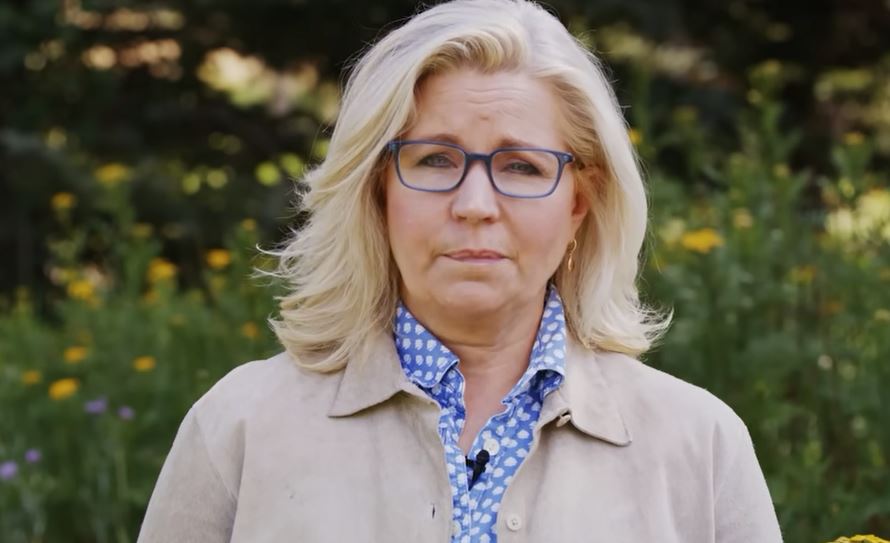
Republican gubernatorial candidate Kari Lake said she’s glad to hear that ousted congresswoman Liz Cheney launched a $15 million political action committee (PAC) to defeat her and other Trump-backed candidates. Lake called Cheney’s plan “a gift.”
Lake made those remarks during an interview with Fox News pundit Maria Bartiromo on “Sunday Morning Futures.” Cheney first promised to defeat Lake about a month ago through her newly-launched “The Great Task” PAC, shortly after she lost her own re-election.
“That might be the biggest, best gift I’ve ever received,” said Lake. “The new Republican Party is the party of ‘we the people,’ it is no longer the party of warmongers. Liz Cheney probably should change her voter registration — turns out she really is a Democrat after all.”
As AZ Free News reported last month, one of the top donors to Cheney’s PAC was James (Jim) Kennedy, chairman of Arizona’s top communications services provider, Cox Enterprises, who gave $10,800.
Other principal donors included Jeffrey Katzenberg: former Walt Disney Studios chairman, co-founder and CEO of DreamWorks Animation, and one of the Democratic Party’s top fundraisers dubbed “Hollywood’s political kingmaker.”
Since last month, Cheney has embarked on a press tour to discuss her plan to defeat Trump-endorsed candidates like Lake.
Last weekend, Cheney told The Texas Tribune that she would do everything necessary to ensure Lake’s defeat, such as campaigning for Democrats like Lake’s opponent Katie Hobbs.
.@Liz_Cheney: “I’m going to do everything I can to make sure Kari Lake is not elected.”
Cheney also told the outlet that she would no longer be a Republican if former President Donald Trump became the 2024 presidential nominee.
In addition to her engagements with the press, Cheney recently worked with Congresswoman Zoe Lofgren (D-CA-19) on legislation to limit objections to electors.
Other Trump-endorsed candidates in Arizona are Blake Masters (U.S. Senate), Mark Finchem (Secretary of State), Abraham Hamadeh (Attorney General), David Farnsworth (State House), Anthony Kern (State Senate), Wendy Rogers (State Senate), Robert Scantlebury (State Senate), and Janae Shamp (State Senate).