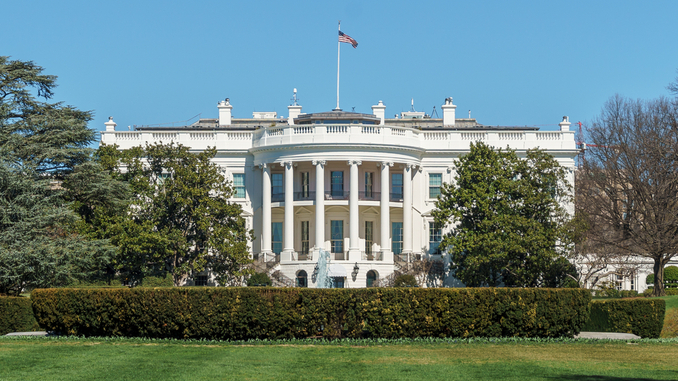
Arizona Senate Republicans attended a White House State Leadership Conference in Washington, D.C., where they met with senior Trump administration officials and Cabinet leaders. Discussions focused on key issues impacting Arizona, including border security, economic development, healthcare accountability, energy independence, and government reform.
The conference, hosted by the White House Office of Intergovernmental Affairs, brought together state leaders and federal officials for discussions on national and state policy priorities.
Arizona lawmakers spent approximately 42 hours in the nation’s capital engaging directly with administration leaders on issues impacting Arizona families, businesses, and communities.
🇺🇸The people making decisions in Washington heard directly from Arizona.🌵🏔️🚜
Border security. Public safety. Water. Energy. Healthcare accountability.
Here's a quick look at what Arizona Senate Republicans discussed with White House and Cabinet leaders this week. ⬇️… pic.twitter.com/lcjgXIYUEu
Among the federal officials participating in the conference were Department of Homeland Security Secretary Markwayne Mullin, Environmental Protection Agency Administrator Lee Zeldin, Centers for Medicare & Medicaid Services administrator Dr. Mehmet Oz, National Cyber Director Sean Cairncross, Interior Secretary Doug Burgum, Energy Secretary Chris Wright, White House Faith Director Jennifer Korn, Council of Economic Advisor representative Aaron Hedlund, and White House Office of Intergovernmental Affairs Director Ashely Walukevich.
The trip comes as Arizona lawmakers continue implementing several policy initiatives aligned with President Donald Trump’s federal agenda.
Republican legislative leaders noted that Arizona is currently the only state implementing the full package of tax relief provisions included in the One Big Beautiful Bill, including eliminating taxes on tips and overtime pay while expanding tax relief for families, seniors, and small businesses.
During the conference, Arizona lawmakers also received a letter from the White House Office of Intergovernmental Affairs expressing support for Arizona’s Fiscal Year 2027 budget.
✅ The White House is applauding the conservative budget delivered by Arizona Republicans.
— Arizona House Republicans (@AZHouseGOP) June 17, 2026
“The White House Office of Intergovernmental Affairs strongly supports Arizona’s Fiscal Year 2027 Budget and commends Speaker Steve Montenegro and Senate President Warren Petersen for Arizona’s republican leadership in advancing a fiscally responsible budget that strengthens government accountability while implementing key reforms enacted through the Working Families Tax Cuts Act,” wrote Walukevich in the June 15, letter.
The White House specifically highlighted provisions aimed at strengthening oversight of public assistance programs. According to the letter, the FY 2027 budget includes measures requiring the Arizona Health Care Cost Containment System (AHCCCS) and the Arizona Department of Economic Security (DES) to enhance eligibility verification, improve income validation procedures, reduce reliance on self-attestation, and strengthen program oversight for Medicaid and Supplemental Nutrition Assistance Program (SNAP) benefits.
The administration stated that the reforms are intended to ensure taxpayer-funded benefits are directed to eligible recipients while reducing waste, fraud, and abuse.
“Arizona’s inclusion of these reforms reflects a commitment not only to complying with federal law, but to delivering better outcomes for taxpayers and beneficiaries alike,” added Walukevich. “These measures will improve program integrity, reduce error rates, and help preserve resources for the individuals and families these programs are intended to serve.”
Senate President Warren Petersen (R-LD14) said the conference provided an opportunity for Arizona Lawmakers to strengthen relationships with federal officials while ensuring Arizona’s priorities are represented in federal policymaking discussions.
🚨FOR IMMEDIATE RELEASE: Arizona Senate Republicans Advance Arizona Priorities at White House State Leadership Conference with Trump Cabinet Leaders
“Arizona families are best served when leaders focus on solutions instead of political theater,” stated Petersen. “This conference provided a valuable opportunity to strengthen relationships with White House officials and Cabinet leaders who understand that states are often closest to the people and the challenges they face. They were genuinely interested in hearing Arizona’s perspective and incorporating feedback from state leaders as federal policies are developed and implemented.”
According to Arizona Senate Republicans, discussions throughout the conference covered a wide variety of issues, including border security, fentanyl and human trafficking, law enforcement cooperation, regulatory reform, fuel affordability, Medicaid integrity, hospice fraud, mental health, homelessness, cybersecurity, artificial intelligence, domestic mineral production, religious liberty, economic growth, grid reliability, nuclear energy, and Arizona’s long-term energy needs.
Lawmakers also highlighted state priorities including water security and Colorado River management, transportation infrastructure, support for veterans and first responders, election administration, public safety, healthcare accountability, financial crimes targeting seniors, and energy infrastructure development.
Arizona Senators attending the conference included Senate President Warren Petersen (LD14), President Pro Tempore T.J. Shope (LD16), Majority Leader John Kavanagh (LD3), Majority Whip Frank Carroll (LD28), Tim Dunn (LD25), Wendy Rogers (LD7), David Gowan (LD19), Carine Werner (LD4), Hildy Angius (LD30), David Farnsworth (LD10), and Mark Finchem (LD1).
“Arizona has become a model for the nation on issues ranging from economic growth and tax relief to public safety and government accountability,” concluded Petersen. “Maintaining those open lines of communication helps ensure Arizona remains a strong voice in shaping policies that benefit both our state and the country.”
Ethan Faverino is a reporter for AZ Free News. You can send him news tips using this link.
Arizona Senate Republicans announced on Monday that they passed a $17.9 billion budget for fiscal year 2027 that includes $1.45 billion in tax relief over four years and spends approximately $800 million less than Governor Katie Hobbs’ proposal.
The budget, approved by the Legislature and sent to Hobbs, is based on updated April revenue projections that showed a $200 million decrease in available resources.
According to Senate Republicans, the plan includes a series of tax changes intended to provide cost-of-living relief, including eliminating state taxes on tips and overtime pay, increasing the standard deduction, allowing full deductions for child-care expenses, increasing the dependent tax credit by $25, and creating a $6,000 deduction for seniors age 60 and older with retirement or pension income.
🚨FOR IMMEDIATE RELEASE: Senate Republicans Pass Historic $1.45 Billion Tax Relief Budget- Delivering Permanent Affordability for Families, Workers and Seniors While Protecting Core Services
The proposal also includes conformity with federal tax policy changes associated with Donald Trump’s tax cuts, which the Senate said would ensure Arizona taxpayers do not need to refile their 2025 state tax returns.
“This is a serious, disciplined budget that puts Arizona families first,” Senate President Warren Petersen (R-LD14) said in a statement. “We cut taxes, protect essential services, and base every decision on real April revenue projections — not wishful thinking.”
He added, “In divided government, we faced the math, eliminated waste through targeted reforms, and delivered real results without raising taxes or growing government.”
The budget maintains current funding levels for K-12 education and public safety, preserves the voter-protected K-12 State Land Trust, and limits overall spending growth to 1.9 percent.
To address the projected shortfall, Senate Republicans said the plan includes policy changes aimed at reducing spending, including enhanced eligibility verification in public assistance programs such as the Arizona Health Care Cost Containment System (AHCCCS) and the Supplemental Nutrition Assistance Program (SNAP), a 5% reduction in agency operating budgets excluding public safety and child welfare agencies, and the repeal of certain tax credits and subsidies, including solar incentives.
The budget does not reduce base pay for Arizona Department of Public Safety troopers or firefighters and does not modify existing data center incentives previously signed into law.
The plan also includes $4.75 million in emergency funding for the Department of Public Safety, which Senate Republicans said the agency had requested and that the governor had previously vetoed as a standalone bill.
The Arizona Senate Republican Caucus said the budget reflects the constraints of divided government and relies on no new taxes or fees.
“This budget reflects the reality of divided government,” Petersen said. “While Democrats were on the floor today saying we need to raise taxes, we are instead delivering historic tax relief without burdening taxpayers. Your business and your wallet are on the ballot this fall. Vote wisely.”
The proposal now awaits Hobbs’ action.
House Speaker Steve Montenegro (R-LD29), Petersen, and other legislative Republican leaders are scheduled to hold a press conference on Tuesday at 1 p.m., according to a media advisory, to highlight the budget and urge Hobbs to sign the legislation.
For years, Arizona was governed by Republican majorities in the state legislature—with Republicans also holding the Governor’s and Attorney General’s offices. During that time, we transformed Arizona into one of the most enviable and prosperous states in the nation: a booming economy, a hot jobs market, a flat income tax, strong support for law and order, and universal school choice.
That all changed in 2023 when Katie Hobbs and Kris Mayes—both Democrats—took over the Governor’s and Attorney General’s offices. Since then, they’ve worked to impose a radical agenda and remake Arizona in the image of California. If not for the slim Republican majorities in both chambers of the Arizona Legislature, Hobbs and Mayes would have quickly succeeded.
As the leader of the Senate Republicans, it has been my honor to work with my colleagues to defend Arizona values and push forward conservative priorities. Despite divided government, we’ve used every tool in our toolbox to not only stop the radical left’s agendas, but to also lead. In doing so, we have set the standard for other states dealing with divided government. Here are just a few of the top victories we’ve secured on behalf of Arizonans.
Fully Funded and Protected Universal School Choice
Over the past two decades, Arizona has led the nation in enacting school choice, giving all families the freedom to choose the education that best fits their children. We dramatically increased K-12 funding (now approximately $13,000 per student) during this time, investing heavily in and safeguarding all forms of education across the state—district, charter, home school, online, and empowerment scholarship accounts. The left only wants to give you one choice to educate your child. Both Hobbs and Mayes have prioritized the dismantling of the apparatuses that let parents decide where their children go to school.
I believe educational freedom is a foundation of the American Dream. Families shouldn’t be trapped in failing schools based on their zip code; rather, they should have the right to choose the educational institutions that work best for their sons and daughters. Unfortunately, Hobbs and Mayes have repeatedly rejected this belief to the detriment of our state’s future.
Under my leadership at the legislature, we stopped them. School choice remains fully funded and protected—even in this divided government. Fighting for parental empowerment and school choice has been one of the most consequential and rewarding endeavors of my time as Senate President. I believe that we are rescuing an entire generation of Arizonans from the grip of a broken education system.
Tax Cuts for Arizonans
One of our top priorities has been to return money to Arizona taxpayers. Despite repeated attempts by Hobbs to block us, we’ve delivered real tax relief. We eliminated the rental tax in Arizona, saving families and renters hundreds of millions of dollars each year. Charging a rental tax is bad policy, and now these revenues will stay in the pockets of the people who need them the most.
Republican lawmakers forced the governor to sign additional bills that cut taxes for hard-working Arizonans. We raised the state’s business personal property tax exemption, reducing burdens on small business owners. We banned municipal excise taxes on residential leases, relieving tenants of additional tax liability and helping lower housing costs. And we passed the Arizona Families Tax Rebate to return funds directly to eligible families.
At a time when families are feeling squeezed, we’re doing what government should—getting out of the way and letting our hardworking taxpayers keep more of what they earn. These tax cuts are the result of smart, conservative leadership that puts everyday Arizonans first. This is the same pro-growth, American First approach that President Trump is delivering for our nation, and we’re proud to carry that torch here in the Grand Canyon State.
Fully Vetted Agency Directors
One of the most consequential powers of any governor is the ability to nominate and install agency directors, who do the bidding of their chief executive. These individuals wield enormous influence over how state government functions, and under Hobbs, many of her nominees have been extreme, unqualified, or relatively unknown to the public. That’s why one of my first actions as Senate President was to create accountability through a formal vetting process for the governor’s nominees. The purpose was to ensure the individuals chosen to lead integral government agencies were competent and aligned with Arizona values. Despite resistance from the governor, we succeeded. We held her nominees to high standards and protected Arizona from the consequences of unchecked political appointments.
End of DOJ Investigation into Phoenix Police Department
Over the past several years, the Phoenix Police Department was the target of a blatantly politicized witch hunt by President Biden’s Department of Justice. They twisted facts and law in a backhanded attempt to hijack another police department and bring it under the control of the federal government. After I contacted the Trump administration and met with several of the President’s top officials, the White House and DOJ ended this rampage against the men and women in blue from the Phoenix Police Department. The announcement from the Trump administration was complete vindication, and it removed the handcuffs off our law enforcement so that they may do their jobs to keep the City of Phoenix and our citizens safe from criminals seeking to cause harm.
Divided government is messy. The path forward isn’t always easy or clear. But through consensus building, unity, discipline, determination, and bold conservative leadership, we’ve proven in Arizona that progress is possible—even in the toughest of times. The rewards of this hard work are immense for those entrusted with leaving our state and nation in a better place for future generations of Americans. I hope that our efforts in Arizona have not only preserved our rich heritage of conservative values, but inspired other warriors around the country to follow in our footsteps.
Warren Petersen is the President of the Arizona State Senate and represents Legislative District 14.
Arizona Senate Republicans released their 2026 Majority Plan on Monday, outlining policy priorities aimed at reducing the cost of living, strengthening public safety, supporting economic growth, and increasing oversight of state government.
The plan follows several years of divided government at the Capitol and builds on what Republicans describe as recent legislative accomplishments, including balanced budgets and multiple tax cuts passed without raising overall taxes. Caucus leaders say the 2026 agenda is intended to address challenges facing Arizona families, particularly rising housing costs, inflation, and concerns about government accountability.
“Arizonans want affordable living, safe neighborhoods, and a government that strengthens — not weakens — our economy,” Senate President Warren Petersen said in a statement. “While the Governor’s vetoes stall progress, Senate Republicans remain focused on protecting taxpayers, upholding Arizona’s freedoms, and preventing the radical left from turning our state into California.”
A central component of the plan is a proposed tax and budget framework aimed at providing relief from rising prices. Senate Republicans say they are pursuing reductions in state taxes on tips and overtime, expanded deductions for seniors, and policies to support small businesses. Caucus leaders estimate the proposals would return more than $1 billion to taxpayers over three years while pairing tax relief with restrained government spending.
Housing affordability is another major focus. The plan cites regulatory barriers, slow permitting processes, and executive-level actions as factors contributing to Arizona’s housing shortage. Republicans say they support reforms to speed up construction, reduce fees, and limit local restrictions on new housing, while aligning development decisions with water availability data.
“Arizonans can’t afford policies that stall development, inflate housing prices, or jeopardize our water security,” Senate President Pro Tempore T.J. Shope said. “Senate Republicans are advancing practical, data-driven solutions that support responsible growth and keep Arizona livable for the next generation.”
Water policy is addressed alongside housing, particularly as negotiations over the Colorado River continue. The plan emphasizes the Legislature’s statutory role in those talks and calls for shared conservation efforts among basin states to avoid placing disproportionate burdens on Arizona.
Public safety proposals include addressing staffing shortages in correctional facilities, increasing oversight of state agencies, and strengthening accountability for violent offenders and probation violators. The plan also reiterates support for Second Amendment protections and public safety pension stability.
Senate Majority Leader John Kavanagh criticized the current administration’s record, saying, “Arizonans deserve leadership that solves problems, not a wolf in sheep’s clothing who blocks solutions and hopes voters won’t notice.”
Additional priorities outlined in the plan include border security enforcement, election integrity measures, education policy, transportation and infrastructure investment, emergency preparedness, artificial intelligence safeguards, family court reform, veterans’ services, and oversight of agencies such as AHCCCS and the Department of Child Safety. Opening day of the second regular session of the 57th Legislature is scheduled for January 12, when many of the proposals are expected to be introduced.
Jonathan Eberle is a reporter for AZ Free News. You can send him news tips using this link.
A new Arizona law banning the use of privately funded employees in state agencies is drawing national attention as lawmakers seek to curb outside influence in public institutions.
Signed into law last month under Senate Bill 1735, the new law prohibits any state agency from employing officers or staff whose salaries are paid with private funds. The legislation aims to increase transparency and reduce what supporters call “lawfare for hire” — the practice of embedding privately paid attorneys or staff within government offices to influence public policy.
“This is about drawing a clear line between public service and private influence,” said Senate President Warren Petersen. “Arizona will not tolerate lawfare for hire, where outside billionaires fund shadow attorneys to quietly steer public policy behind closed doors.”
The law defines “private monies” as any funding not appropriated by a federal, state, or local government — including funds from nonprofit organizations, foundations, universities, individual donors, or advocacy groups. Limited exceptions are made for law enforcement, environmental quality staff, and public universities, where oversight frameworks are already in place.
The law comes amid broader national scrutiny of efforts such as the NYU Environmental Fellowship, which places attorneys funded by Bloomberg Philanthropies in state attorneys general offices to work on climate-related litigation. Critics argue these “Special Assistant Attorneys General” blur the lines between public and private interests, especially when pursuing legal strategies aligned with specific political ideologies.
Supporters of the new Arizona law say the measure enhances legislative oversight and keeps public servants accountable to the taxpayers who fund their salaries — not to out-of-state advocacy groups or wealthy individuals.
“Taxpayers deserve to know who’s working on their behalf, and who’s really pulling the strings,” Petersen said.
States like New York, Washington, and Illinois have welcomed privately funded legal fellows into public agencies, particularly in areas related to environmental enforcement. But Arizona’s move places it among a smaller group of states seeking to restrict such arrangements in the name of governmental independence.
Jonathan Eberle is a reporter for AZ Free News. You can send him news tips using this link.