by Staff Reporter | Dec 11, 2024 | Education, News
By Staff Reporter |
The Maricopa Superior Court dismissed a challenge to a school district’s dual language program, citing lack of standing.
The plaintiff, Patricia Pellett, is a Scottsdale Unified School District parent, and not part of the district she challenged, Creighton Elementary School District (CESD). Arizona Department of Education (ADE) Superintendent Tom Horne’s wife, Carmen Chenal Horne, represented Pellett in the case.
Back in August, Horne said that it was irrelevant that Pellett didn’t have a child in CESD schools.
“Under a provision in the initiative that said that a student of any parent in the state could bring an action against any school district in the state that violates this initiative,” said Horne.
The challenge to CESD arose from Horne’s crusade against dual language programs. Horne’s aim is to have all schools teach only through immersion programs. Dual language models teach students subjects in languages other than English for part of their education, whereas immersion has students taught their subject matter entirely in English.
State law enacted through a voter initiative (Proposition 203 passed in 2000) requires that public schools teach the English language through English-spoken courses and English language classrooms, unless parents are eligible to provide prior written informed consent for bilingual education techniques or those educational methodologies permitted by law.
“[A]ll children in Arizona public schools shall be taught English by being taught in English and all children shall be placed in English language classrooms,” states the law.
Eligible circumstances include parents with children who already know English, older children, and children with special needs.
The Arizona State Board of Education has determined that parental waivers for immersion aren’t required, a finding affirmed by Attorney General Kris Mayes last year. Mayes published that opinion in response to a request on legal clarity from state representatives as to whether the language models used by seven school districts — Glendale Elementary, Kyrene Elementary, Phoenix Elementary, Mesa Public Schools, Laveen Elementary, Creighton Elementary, and Mexicayotl Academy — warranted corrective action by ADE.
Horne dismissed Mayes’ opinion as “ideologically driven” and not based in law.
Horne turned to Pellett to challenge schools’ dual language programs after Maricopa County Superior Court ordered Horne to pay over $120,000 in legal fees earlier this year.
The judge, Katherine Cooper, ruled that state law didn’t authorize Horne to ask the courts to rule on school district compliance with Proposition 203. Cooper ruled that only the State Board of Education possessed authority over dual language programs, citing the board’s responsibility for developing and approving immersion models. Cooper further declared that Horne had no justiciable claim, either, and ruled that parents and guardians had the power to file lawsuits to enforce the proposition.
“The school districts, like all public and charter schools, are required to follow a model as approved by the State Board,” ruled Cooper.
Horne’s response was to accuse the ruling as avoidant of the merits of the case. He reiterated that the voter-approved initiative (Proposition 203) required children to be taught in English.
With Horne’s continued challenges to the existence of dual language programs and advocacy for immersion programs, the Arizona School Boards Association says it will advocate for greater reliance on 50-50 models.
AZ Free News is your #1 source for Arizona news and politics. You can send us news tips using this link.
by Tamra Farah | Aug 22, 2024 | Opinion
By Tamra Farah |
The author of this opinion piece would like to clarify that the title refers to individuals like Aaron Dunton and does not apply to any other individuals named in this article. In addition, the reference to sexually grooming kids concerns encouraging LGBTQIA gender identity considerations. Further, the mention of sexualizing kids refers specifically to encouraging kids to access the specific library books indicated and not to anything else.
Concerns over sexual grooming in Arizona schools and inappropriate educational agendas have intensified. The use of grooming materials and activities by teachers, the Arizona Education Association (AEA) agenda, and the damning Department of Education’s Enforcement Action report on sexual misconduct in schools are telling.
Not in Our Schools recently outlined concerns over reported misconduct and the promotion of LGBTQ and social justice agendas in Arizona schools. There are also concerns about the growing influence of LGBTQ and social justice agendas in Mesa Public Schools (MPS) through the actions of teachers and organizations like GLSEN (Gay, Lesbian & Straight Education Network).
Some Mesa teachers reportedly use their roles to promote LGBTQ-related content and activities in the face of new district policies restricting teacher involvement in non-academic clubs. Activities cited by Not in Our Schools also reveal that Mrs. Tami Staas engages in “grooming” students for sexual behaviors and gender transitioning without parental knowledge, using platforms like Synergy to hide information from parents. Mrs. Staas is said to introduce pronouns and LGBTQ+ symbols in her classroom, causing concern among parents.
Not in Our Schools also reports that the AEA prioritizes social agendas over academic achievement and influences school board elections to further these goals. Allegations are made about the AEA’s involvement in supporting abortion access and pushing for laws that promote gender transitioning in schools. Parents must be cautious about the school system and the influence of organizations like the AEA, and should thoroughly research candidates before voting in the upcoming school board elections.
Another concern involves the social-emotional learning (SEL) framework, which is used to push LGBTQ agendas. Programs like “Everybody Matters” indoctrinate students into LGBTQ lifestyles, further eroding parents’ influence in the education system. Additionally, the involvement of organizations like GLSEN and the Arizona School Board Association (ASBA) promotes LGBTQ content and obscures it from parents. Finally, the Mesa Public Schools Governing Board has been called out for supporting programs that weaken family structures and increase LGBTQ influence in schools.
Not only are teachers identified as using sexualizing materials in school, but just a few years ago a flurry of news called out Aaron Dunton, a former teacher at Higley High School in Gilbert, Arizona, who was arrested after a months-long investigation revealed his alleged inappropriate relationship with a 14-year-old student. Dunton resigned after the allegations surfaced, having taught at the school since July 2021. During the investigation, another victim accused Dunton of inappropriate incidents in 2019 when he was a teacher at Power Ranch Elementary. The second victim was 11 years old at the time. Dunton was facing multiple charges, including aggravated assault, witness tampering, and contributing to delinquency and dependency, until the Maricopa County District Attorney dropped the charges. Speculation is that there was no law to convict Dunton at the time. Now, there is hope that the anti-grooming law will be implemented soon.
Dunton is just one teacher among many seeking to mistreat students sexually. The Arizona Department of Education 2023 Enforcement Action Report indicates an 184% increase in sexual teacher discipline-related cases from 2012 to 2023. Those are cases that were recognized and resulted in the discipline of perpetrators. Imagine how many more teachers, coaches, and other school officials may go unrecognized as sexual predators of students.
Some consider HB2310, referred to as the Child Enticement Bill or the anti-grooming bill introduced by Representative Travis Grantham, as a tool to prosecute sexual predators like Dunton. HB2310, which will go into effect next month, strengthens protections for children against enticement and grooming. Going into effect next month, the bill makes it a fourth or fifth-degree felony to intentionally lure, solicit, or entice a minor into committing illegal sexual acts or actions that could lead to sexual exploitation or abuse. It also includes provisions for offenses committed through electronic communications. The legislation increases penalties for these crimes, providing better legal protection for children in Arizona.
Beyond respect for this prosecutorial law, the governing boards in Arizona school districts and the Arizona Department of Education are responsible for ensuring guardrails and accountability in schools to protect children. But it doesn’t stop there. Parents are vital in guiding their children to make safe and responsible decisions at school and online. Parents can encourage their children to protect themselves and others, understand harmful behaviors, and report incidents to parents and school officials immediately.
Here are suggested steps parents can advise their kids to take at school:
1. Understand Consent and Boundaries: Encourage your child to be aware of the power they have not to consent and the legal consequences of inappropriate sexual conduct by an adult. Ensure your kids understand that boundaries matter in physical and digital communication. Reinforce this by having regular conversations about consent and why respecting their personal space and boundaries is essential.
2. Be Mindful of Online Behavior: Advise your child to think critically about how they interact online, particularly with social media or text messaging. Teach them never to share personal or explicit content with others and to be cautious when interacting with people they do not know well. They should also understand that even consensual acts, such as sharing inappropriate images, can have severe legal consequences. Parents can support this by discussing the real risks of digital communication and the importance of privacy.
3. Report Suspicious Behavior: Make sure your child knows that if they encounter inappropriate behavior, such as an adult or peer asking them to send inappropriate images or engage in risky sexual acts, they should report it immediately to a trusted adult at school, such as a counselor or teacher, or use an anonymous reporting tool if available. Reinforce that reporting these incidents is crucial for their safety and protecting others from potential harm.
4. Stay Informed About Friendships and Relationships: Parents should encourage their children to surround themselves with friends who respect boundaries and engage in safe, responsible behavior. Advise them to avoid risky situations or peer pressure and to feel confident in saying “no” to uncomfortable requests, whether in person or online. By fostering open communication with your child, you can help them navigate complex social situations and ensure they understand their rights and responsibilities in relationships.
5. Learn About the Law: Encourage your child to become familiar with the legal consequences outlined in the amended Arizona statutes, particularly regarding age differences in relationships and digital safety. Understanding the law can empower them to make responsible choices. Parents can help by discussing the specific legal consequences of child enticement, age proximity laws, and what qualifies as inappropriate behavior.
6. Practice Digital Safety: Advise your child never to share personal passwords, account details, or private information online. Reinforce that they should never engage with unknown people online, especially if the conversation turns inappropriate or uncomfortable.
By teaching children about consent, online safety, reporting suspicious behavior, and advocating for themselves, parents can help them align their actions with appropriate behavior and relationships and create a secure school environment that is in accordance with Arizona’s laws to protect minors.
Tamra Farah has twenty years of experience in public policy and politics, focusing on protecting individual liberty and promoting limited government. She has worked at the senior director and advisor level for Americans for Prosperity, FreedomWorks, Moms for America, and pregnancy centers. Tamra currently directs SMART Families Network at Arizona Women of Action.
by Daniel Stefanski | Apr 25, 2024 | News
By Daniel Stefanski |
A Republican State Senator is speaking out against the Arizona governor’s decision to veto one of his education-related bills.
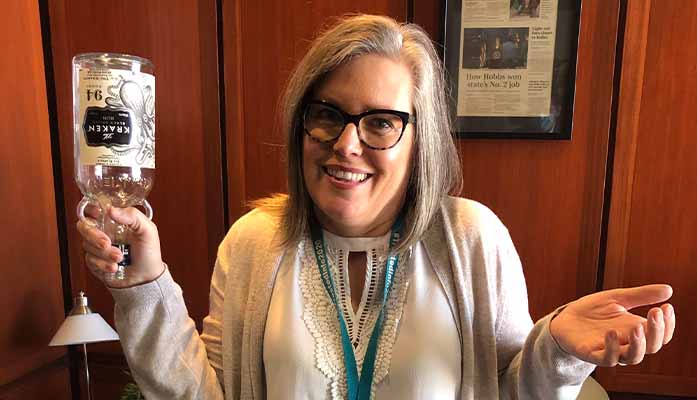
Last week, Governor Katie Hobbs vetoed SB 1151, which would have allowed state teachers or administrators in all schools to “read or post copies or excerpts of the Ten Commandments.”
Hobbs, in a veto letter to Senate President Warren Petersen, explained that she had “serious concerns about the constitutionality of this legislation,” adding that she also felt it “is also unnecessary.”
The sponsor of the bill, Senator Anthony Kern, expressed his outrage over the governor’s action, writing, “I’m appalled the state’s top elected official is abandoning God and the very foundation our country was built upon by not allowing teachers to expose their students to the morals and ethics outlined in the Ten Commandments. When you look at some of the garbage being forced on our children in the classroom, it’s no wonder rates of depression, anxiety, and suicide among youth are at their highest levels ever recorded. When children are exposed to good, noble, honest, and righteous ideas, they are more prone to being better human beings with sound character, able to navigate life’s problems with grace, and have a greater chance of treating each other with respect and dignity throughout life. Sadly, Katie Hobbs’ veto is a prime example of Democrats’ efforts to push state-sponsored atheism while robbing Arizona’s children of the opportunity to flourish with a healthy moral compass.”
On the Arizona Legislature’s Request to Speak system, the proposal drew a significant amount of opposition, including representatives from the Arizona Association of County School Superintendents, Arizona Education Association, American Civil Liberties Union of Arizona, Save Our Schools Arizona, Arizona School Boards Association, and Americans United for Separation of Church and State.
SB 1151 had first passed the State Senate in February with a 16-12 vote (with two members not voting), before being approved in the State House earlier this month with a 31-28 tally (with one member not voting).
Daniel Stefanski is a reporter for AZ Free News. You can send him news tips using this link.
by Ed Steele | Jan 30, 2023 | Opinion
By Ed Steele |
On January 24th, the Mesa Public School Board chose to maintain a relationship with and send district funds to the National School Board Association (NSBA). They might as well have also given parents the middle finger.
In September 2021, the NSBA sent a letter to the Biden administration requesting that it deploy the force of the federal government to put down angry parents speaking out at school board meetings. The letter called on the administration to use resources from the U.S. Department of Justice (DOJ), FBI, U.S. Department of Homeland Security, U.S. Secret Service, National Threat Assessment Center, FBI National Security Branch, and FBI Counterterrorism Division. The letter equates parents speaking out at school board meetings with domestic terrorists! Immediately and dutifully, the DOJ responded by sending out a directive to FBI field offices to create a partnership with federal, state, local, tribal, and territorial law enforcement to address the problem.
A full 5 months later, the Arizona School Board Association (ASBA) came to the correct conclusion—that the NSBA does not represent the values it believes are necessary to advance education in the state. As a result, they sent a letter to the NSBA severing all relations with them.
Yet, one month later in March 2022, the Mesa Public School Board voted unanimously to send board member Kiana Sears to the 2022 NSBA Annual Conference. Then in September, the board again voted unanimously to send board member Sears to two additional NSBA sponsored training sessions: the Counsel of Urban Board Educators in Miami, FL and the NSBA Advocacy Institute in Washington, D.C. And at its latest meeting on January 24th, the board voted to approve sending board member Sears to the 2023 NSBA Annual Conference in Orlando, FL.
As a concerned Mesa taxpayer, I asked at that meeting that the vote on this item be pulled from the consent agenda. I was hoping that the board would do so to send a clear message to parents that their voice is valued and appreciated. Instead, the board voted 3-1 in favor of sending district money and board member Sears to the NSBA.
The one shining exception to this insult to parents was board member Rachel Walden. Mrs. Walden boldly voted no, keeping her campaign promise to be the voice for parents on the school board.
Mrs. Walden is one of many newly elected school board members across the state who ran for office after the COVID shutdowns—when “distance learning” gave parents a glimpse into the classroom and exposed the failures of school boards. Walden correctly stated what should be obvious, “I feel we do have an obligation to build a sense of trust with our parents. They are stakeholders in this. When we have an entity working with the government to put down the First Amendment rights of parents, then I think we would want to disassociate ourselves with that entity as much as possible.”
But Board President Marcie Hutchinson disagreed, stating, “The NSBA probably mis-stepped.” PROBABLY!?
She continued, “But anytime we make a decision, we have to weigh costs versus benefits, and I believe that the benefits that we as board members can receive, and therefore transmit to our district, far exceed the cost of an association with a group that supports public education.”
President Hutchinson seems to have completely misunderstood the “cost.” The actual cost is not “association with a group that supports education.” The cost is choosing to associate with the group that thinks concerned parents speaking out at school board meetings should be treated, by the full force of federal law enforcement, like domestic terrorists.
The Mesa Public School Board doesn’t get it, but that doesn’t mean we should stop trying. Across the country, parents are speaking out against the questionable decisions of school boards and the resulting abysmal academic performance. And while, it is becoming increasingly obvious that governing boards are not inclined to hold themselves accountable, you can make a difference. You can have your voice heard by showing up and speaking up at board meetings. You can email board members with your concerns. And you can get involved with the election of our school board members. The future of our schools—and our children—depends on it.
Ed Steele is a husband, father, grandfather, and Mesa resident with a passion for helping the younger generation succeed in education.
by Loretta Hunnicutt | Nov 16, 2022 | Education, News
By Loretta Hunnicutt |
From the Office of Superintendent of Public Instruction (SPI) to local school board positions, several conservatives are currently leading or have already won key races on the education front in the 2022 General Election.
As of press time, Republican candidate for Superintendent of Public Instruction (SPI), Tom Horne, had increased his lead in his challenge of incumbent Kathy Hoffman. Horne previously served as SPI from 2003 to 2011, prior to successfully running for the Arizona Attorney General’s Office. If the results hold up, Horne says his focus as SPI will be on improving student performance and eradicating Critical Race Theory-based curriculum from Arizona’s public schools.
In the Peoria Unified School District race, Heather Rooks won a hard-fought and challenging race. Her efforts to expose the Social Emotional Learning-based policies and practices in the district eventually led her to request an injunction against an activist parent. As reported by the Arizona Daily Independent, Rooks, a mother of four school-aged children, obtained the injunction based on threats from Democrat activist, Josh Gray.
Two other conservative candidates, Amy Carney and Carine Werner, secured seats on the Scottsdale Unified School District (SUSD) Governing Board. Their victories serve as a powerful repudiation of out-going Governing Board Member Jann-Michael Greenburg. Greenburg was sued by parents who accused him of trying to silence them after they exposed his secret Google Drive dossier on them. As AZ Free News reported in April, that dossier included a trove of political opposition research on parents, who opposed the district’s adoption of Social Emotional Learning and Critical Race Theory.
In the race for Flowing Wells School District Governing Board—an area known for being blue—conservative Brianna Hernandez Hamilton is currently holding on to one of two open spots. A mother of three very young children, Hernandez Hamilton ran with the slogan: “Parents + Teachers = Quality Education.”
Kurt Rohrs, a long-time education activist and frequent contributor to AZ Free News, won a spot on the Chandler Unified School District Governing Board. Rohrs, like Horne, focused on improving student performance and eliminating the divisive Critical Race Theory from the district’s curriculum. Many see Rohrs’ presence on the board as an opportunity to restore calm to the district which had become the center of controversy thanks to out-going board member Lindsay Love.
In the race for Dysart Unified School District Governing Board, conservative Dawn Densmore was retained by voters. As current president of the board, Densmore successfully led the fight to end the district’s relationship with the Arizona School Board Association (ASBA). Jennifer Drake also won a seat on the board.
Sandra Christensen is set to win a seat on the Paradise Valley Unified School District Governing Board. Libby Settle and Madicyn Reid are in the lead for spots in Fountain Hills. Paul Carver should take a win in Deer Valley. Jackie Ulmer appears to have been successful in Cave Creek as well as Rachel Walden in Mesa and Chad Thompson in Gilbert. In the Higley Unified School District, conservative Anna Van Hoek also won a seat on the board.
In a tweet from earlier this week, former Secretary of Education Betsy DeVos summed up what many parents have been feeling over the past few years – left out. In response to the National Education Association’s claim that teachers “know better than anyone” what students need in the classroom, DeVos responded, “You misspelled parents.”