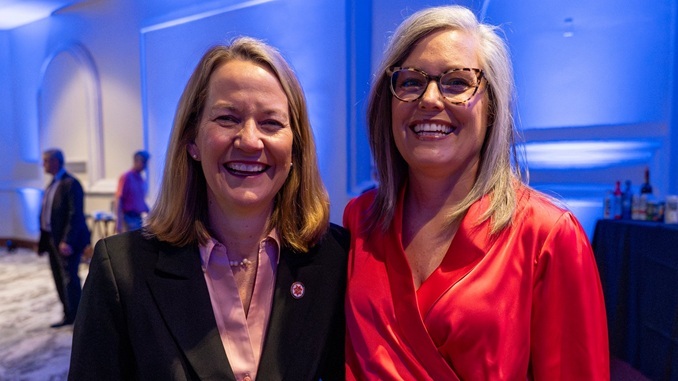
A new complaint filed this week alleges that Arizona’s governor, secretary of state, and attorney general may have participated in a straw donor scheme.
The complainant, San Tan Valley resident Gary DeBerge, has asked Arizona District Attorney Timothy Courchaine and Maricopa County Attorney Rachel Mitchell to look into what he says are “mysterious and unexplained” irregularities in the campaigns of Gov. Katie Hobbs, Secretary of State Adrian Fontes, and Attorney General Kris Mayes.
A copy of the complaint obtained by AZ Free News alleges that recent filings by one of the campaigns reflect “repeatedly altered reported receipts by millions of dollars” due to alleged eliminations of prior reported contributions.
Elect Katie Hobbs, the governor’s reelection campaign account, issued 10 amended reports for the 2026 Quarter 2 report, several of which varied by millions of dollars.
Exempt small contributions amounting to less than $100 totaled more than $1.4 million in the original filing and the first amended report, dropped to $0 in the second and third amended reports, then rose to nearly $400,000 in subsequent amended reports.
Total receipts amounted to more than $2.6 million in the original filing, but jumped to $3.1 million in the first amended report, then dropped below $1.7 million in the second amended report, then rose again to more than $2.2 million in the third amended report, and then rose again, back to more than $2.6 million in subsequent amended reports.
Donations under $100 are considered eligible for aggregate rather than individual reporting.
The complaint petitioned investigators to determine whether the millions moved around in amended filings reflected “a calculated attempt to obscure the true source and disposition” of the funds.
As noted by the complaint, Hobbs’ campaign reported much smaller totals of exempt small contributions throughout 2025 and the first quarter of 2026. Exempt small contributions across five quarters amounted to $600,000 in total. Then, in the second quarter of this year, the campaign reported a surge in exempt small contributions that amounted to more than double what the campaign pulled for an entire year and a quarter.
“Elect Katie Hobbs has reported approximately $1.4 million in exempt contributions and then later reported that those same contributions never existed,” stated the complaint. “This should immediately raise questions regarding the accuracy of one, if not all, of the recent filings made by this committee.”
The Trump administration and Republican leaders in Congress have initiated investigatory efforts into straw donor schemes by online fundraising platforms.
An example of this was illustrated prominently in the media earlier this year, when investigative reporters discovered that ActBlue, the primary fundraising platform for Democrats, allegedly misattributed around $100,000 in donations across thousands of individual political contributions over five years to one Elizabeth Waffle, an 88-year-old woman in Michigan living in a trailer with limited income. ActBlue allegedly misattributed more than 13,000 donations that occurred once or multiple times on a daily basis.
The complaint also questioned the number of contributors listed as “not employed” across the three campaigns’ 2026 filings to date.
Below are the total number of instances in which individual contributors were listed as “not employed” for the three report filings due so far this year and the four report filings made in 2025. These instances exclude retirees and may include individuals who contributed more than once.
Candidate
“Not Employed” or “Unemployed” in 2026 Filings
“Not Employed” or “Unemployed” in 2025 Filings
Katie Hobbs
46,335
26,643
Andy Biggs
26
21
Kris Mayes
17,530
13,162
Warren Petersen
0
0
Adrian Fontes
12,640
3,294
Alexander Kolodin
2
1
AZ Free News is your #1 source for Arizona news and politics. You can send us news tips using this link.
Attorney General Kris Mayes wouldn’t confirm whether Gov. Katie Hobbs will be questioned as part of the investigation into the governor’s alleged pay-to-play scandal, which has been ongoing for more than two years.
Mayes was asked during a press conference announcing her lawsuit against the Trump administration’s tariffs on Monday whether it was possible that Hobbs would never sit for questioning.
“I’m going to decline to answer that question right now,” said Mayes.
Mayes’ office has asked Hobbs publicly to sit for questioning for months.
Despite needing a sit-down interview to proceed with the investigation, Mayes did promise to release the results of the investigation sometime before the general election in November. Left unsaid was the possibility that voters may not have those results until their ballots have already been cast in the highly competitive governor’s race between incumbent Hobbs and Republican Andy Biggs.
Mayes disagreed that Hobbs was shirking questioning and denied that the prolonged lack of communication between her and the governor on the matter had to do with Hobbs leaning on her power and status as the state’s chief executive, and their shared party affiliation.
“You cannot blow off the attorney general’s office. Full stop. No one can, regardless of who they are,” said Mayes. “When we have a result in this investigation, we will make an announcement. And we are near the end of the investigation.”
The investigation concerns an allegation that Hobbs directed a unique rate increase of 30% for Sunshine Residential Homes, a group home operator, as thanks for the company’s sizable 2024 election cycle donations totaling more than $400,000 to Hobbs and the Arizona Democratic Party. Hobbs was the only candidate to receive contributions from Simon Kottoor, founder and CEO of Sunshine Residential Homes.
While Sunshine Residential Homes received a rate increase, the Arizona Department of Child Safety (DCS) denied rate increases for other home operators and dropped more than a dozen providers. DCS has since stated that the rate increase occurred because Sunshine Residential Homes threatened to prioritize intake of migrant children over Arizona’s foster children.
Mayes began her investigation more than two years ago, in the summer of 2024, after others began investigating following reporting by the Arizona Republic that broke the pay-to-play scandal.
Certain officials had begun to investigate the allegations, but Mayes stepped in to stop them. Mayes sent letters to Maricopa County Attorney Rachel Mitchell and Auditor General Lindsey Perry, ordering both officials to stop seeking answers.
“It would not be appropriate or in the best interest of the state to conduct parallel investigations into the same matter,” said Mayes in the letter to Mitchell. “[A] separate process conducted by the MCAO could jeopardize the integrity of the criminal investigation that my office will now proceed with.”
Mitchell’s response urged Mayes to reconsider her position on being the sole investigator into the allegations.
“I want to be clear: This is not an accusation against you or the many fine employees in your office,” said Mitchell. “We are in a time when people are increasingly distrustful of government. Your insistence on being the sole investigator in this matter will greatly contribute to people’s […] belief that nothing can change.”
Leadership within the Republican-led legislature announced their own investigatory efforts earlier this year. The House advisory team obtained outside counsel to investigate the alleged pay-to-play scandal. No findings have been made public as a result of that effort to date.
Earlier this summer, the governor vetoed legislation establishing financial transparency requirements tied to the alleged pay-to-play scandal.
Hobbs has denied any wrongdoing throughout the years-long investigation.
AZ Free News is your #1 source for Arizona news and politics. You can send us news tips using this link.
Arizona Republicans selected their nominees for several of the state’s highest-profile offices on Tuesday, with several races called later in the evening. Additional ballot counting continued Wednesday in closely divided legislative, congressional, and county races.
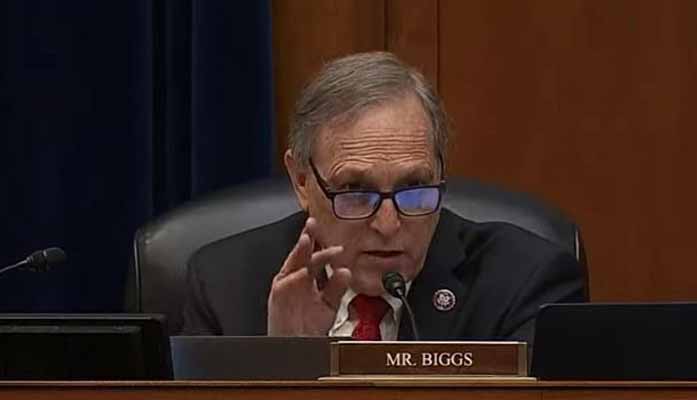
The Associated Press called Rep. Andy Biggs (R-AZ05) the winner of the four-way Republican primary for governor, setting up a November contest against Democrat Gov. Katie Hobbs. The AP also called the Republican secretary of state primary for state Rep. Alexander Kolodin.
The attorney general primary race was subsequently called for State Senate President Warren Petersen shortly before midnight in Arizona. Petersen led attorney Rodney Glassman by 56.4 percent to 43.6 percent as of publication.
WASHINGTON (AP) — Warren Petersen wins Republican nomination for attorney general in Arizona. #APRaceCall at 2:58 a.m. EDT. https://t.co/TS3eIpQI5W
Republican Elijah Norton defeated Katherine Haley for the state treasurer nomination, leading 56.1 percent to 43.9 percent at the time of publication. Norton will now face Democrat nominee Nick Mansour.
Decision Desk HQ called State Treasurer Kimberly Yee the winner of the Republican primary for superintendent of public instruction. Yee led incumbent Superintendent Tom Horne 53.2 percent to 46.8 percent with approximately 89 percent of the expected vote counted in the highly competitive race. Former state lawmaker, Democrat Teresa Leyba Ruiz, had nearly 80 percent of the vote against Brett Newby and will advance to the general election.
Decision Desk HQ projects Kimberly Yee wins the AZ Superintendent of Public Instruction Republican Primary#DecisionMade: 8:18 AM EDT pic.twitter.com/hCr78WcgTt
Commissioner Kevin Thompson secured one Republican nomination for the Arizona Corporation Commission, while former lawmaker Ralph Heap appeared set to secure the second after Commissioner Nick Myers conceded the race in a statement posted to X. Thompson led with 291,934 votes, or 35.89 percent. Heap followed with 267,085 votes, or 32.84 percent, while Myers had 254,321 votes, or 31.27 percent, leaving Heap ahead by 12,764 votes at the time of publication.
Congressional Primaries
Former state Rep. Amish Shah has won the Democratic nomination for U.S. House in Arizona’s 1st Congressional District against former television journalist Marlene Galán-Woods, 39.8 percent to 34.1 percent, according to the AP. Jonathan Treble held 17.62 percent, and Rick McCartney had 8.51 percent. Shah will face Thomas “Jay” Feely in one of Arizona’s most competitive congressional districts.
WASHINGTON (AP) — Amish Shah wins Democratic nomination for U.S. House in Arizona's 1st Congressional District. #APRaceCall at 10:07 p.m. EDT. https://t.co/TS3eIpQI5W
Rep. Greg Stanton held a commanding lead over progressive challenger Kai Newkirk in the Democratic primary for the Fourth Congressional District, 63.5 percent to 36.5 percent.
Former Pinal County Sheriff Mark Lamb won the Republican primary for Biggs’ open Fifth Congressional District seat, defeating Daniel Keenan 58.3 percent to 41.7 percent. The Associated Press also called the Democrat primary for Elizabeth Lee, who received 65.5 percent. Chris James received 21.2 percent, and Brian Hualde received 13.28 percent.
WASHINGTON (AP) — Elizabeth Lee wins Democratic nomination for U.S. House in Arizona's 5th Congressional District. #APRaceCall at 11:18 p.m. EDT. https://t.co/TS3eIpQI5W
Bernadette Greene-Placentia defeated Raymond Keeler approximately 65 percent to 35 percent in the Democratic primary for the Eighth Congressional District. She will challenge Republican Rep. Abe Hamadeh in November.
WASHINGTON (AP) — Bernadette Greene-Placentia wins Democratic nomination for U.S. House in Arizona's 8th Congressional District. #APRaceCall at 11:20 p.m. EDT. https://t.co/TS3eIpQI5W
Republicans currently hold narrow majorities in both chambers of the Arizona Legislature, giving several down-ballot primaries consequences extending well beyond the individual districts.
In Legislative District 2, Republican Sen. Shawnna Bolick led Timothy Ferrara 71.4 percent to 28.6 percent. Democrat Amelia Gallitano led Daniel Toporek 77.3 percent to 22.7 percent in the same district.
Republican Sen. John Kavanagh led Robert Wallace 85.2 percent to 14.8 percent in Legislative District 3.
In the Democratic primary for Legislative District 6, former Sen. Jamescita Peshlakai led Rep. Myron Tsosie 54.8 percent to 45.2 percent.
Sen. Lauren Kuby, a former Tempe city councilwoman, led Deborah Nardozzi 76 percent to 24 percent in the Legislative District 8 Democratic primary.
Christopher King led Anthony Dunham 63.2 percent to 36.8 percent in the Republican primary for Legislative District 17.
Rep. Alma Hernandez led Rocque Perez 53.8 percent to 46.2 percent in the Democratic primary for Legislative District 20.
The closest contested Senate primary was in Legislative District 27, where Republican Sen. Kevin Payne led former Sen. Anthony Kern with 8,368 votes to 8,096, a margin of only 272 votes.
State House Primaries
Arizona House districts elect two representatives, meaning the two leading candidates in each party primary generally advance to November.
In Legislative District 1, Republican Reps. Selina Bliss and Quang Nguyen held the two qualifying positions. Bliss led with 42.45 percent, Nguyen followed with 42.04 percent, and Shawn Wildman trailed with 15.51 percent.
George Khalaf led the four-candidate Republican contest in Legislative District 3 with 33.69 percent. Cody Reim held the second nomination position with 27.12 percent, only 612 votes ahead of Jay Schlum, who received 26.21 percent. Thomas Walsh held 12.8 percent.
Republican Rep. Matt Gress led Legislative District 4 with 45.28 percent, while Pamela Carter held the second position with 33.67 percent. Sandra Christensen trailed with 21.05 percent.
In Legislative District 6, Democratic Rep. Mae Peshlakai led with 42.5 percent. Ian Teller held the second qualifying position with 29.76 percent, followed by Angela Maloney with 27.73 percent.
Rep. Walt Blackman led the Legislative District 7 Republican primary with 34.73 percent. Rep. David Cook held second with 27.25 percent, followed by Andrew Costanzo with 21.34 percent and Barby Ingle with 16.67 percent.
Brian Garcia and Janeen Connolly held the two Democratic nomination positions in Legislative District 8 with 42 percent and 32 percent, respectively. Claudia Kline trailed with 26 percent.
Rep. Justin Olson, a former corporation commissioner, led the Republican primary in Legislative District 10 with 43.82 percent. James Rogers held second with 34.41 percent, followed by Ciara Anderson with 21.77 percent.
Chandler Mayor Kevin Hartke led the Legislative District 13 Republican primary with 43.31 percent. Janet Weninger held the second nomination position with 34.62 percent, while Debra Schinke trailed with 22.07 percent.
In Legislative District 14, Tyler Farnsworth led with 41.63 percent, and Rep. Laurin Hendrix followed with 38.29 percent. Jed Lyons received 20.08 percent.
Sen. David Gowan, a former Senate president, led the Legislative District 19 Republican House primary with 43.98 percent. Rep. Lupe Diaz held the second position with 32.09 percent, followed by Cheryl Caswell with 23.93 percent.
On the Democrat side, Rep. Sally Ann Gonzales led the Legislative District 20 House primary with 33.37 percent. Rep. Betty Villegas, a former Pima County supervisor, held second with 31.81 percent, followed by Genoveva Diaz with 19.41 percent and Ben Koehler with 15.42 percent.
Rep. Consuelo Hernandez led the four-way Democrat primary in Legislative District 21 with 30.21 percent. Miranda Lopez held the second nomination position with 24.92 percent, ahead of Rep. Stephanie Stahl Hamilton at 24.24 percent. Maritza Higuera held 20.63 percent.
Rep. Elda Luna-Nájera led the five-candidate Democratic primary in Legislative District 22 with 29.36 percent. Betsy Munoz held second with 27.60 percent, followed by Veronica Bejarano-Malone with 24.78 percent, Steve Chapman with 9.86 percent, and Gwen Johnston with 8.4 percent.
Rep. Mariana Sandoval led the Legislative District 23 Democratic primary with 38.35 percent. Emilia Cortez held the second nomination position with 25.49 percent, followed by Juan Manuel Guerrero at 18.3 percent and Naomi Miguel at 18.19 percent.
In Legislative District 24, Alberto Flores and Lisbeth Arescurenaga held the two qualifying positions with 39.87 percent and 37.02 percent. Democratic Rep. Lydia Hernandez trailed with 14.34 percent, followed by Rosa Cantu with 8.77 percent.
Republican Reps. Beverly Pingerelli and David Livingston led the Legislative District 28 contest with 41.72 percent and 38.98 percent, respectively. Heather Rooks received 19.30 percent.
Mike Gannuscio led the five-candidate Republican primary in Legislative District 30 with 33.97 percent. David Rose held the second nomination position with 29.16 percent, followed by Grace Hecht with 19.89 percent, Catherine Lopez-Rajaniemi with 10.68 percent, and Caroline Strecker with 6.29 percent.
County Races
Most countywide offices on Tuesday’s ballot had only one candidate seeking each party’s nomination. Contested county and local races included the Apache County clerk of the Superior Court primary, the Santa Cruz County school superintendent primary, the Yavapai County Board of Supervisors District 2 primary, and the Yuma County clerk of the Superior Court primary.
In Apache County, Samceita Begay led Wendy Shepherd in the Democratic primary for clerk of the Superior Court. Begay received 5,653 votes to Shepherd’s 4,195 at the time of publication.
In Santa Cruz County, incumbent County School Superintendent Maya Donnelly led Sonia Sanchez by 2,545 votes to 2,222 in the Democratic primary. Miguel López also led Adriana Olaiz by 2,754 votes to 2,066 in the Democratic primary for justice of the peace at the time of publication.
Camp Verde Mayor Marie Moore led Wiley Cline in the Republican primary for the Yavapai County Board of Supervisors District 2 seat. Moore received 3,633 votes, approximately 57 percent, while Cline received 2,746 votes or approximately 43 percent.
In Yuma County, Chief Deputy Clerk Bobbie Jo Daily led Malba Alvarez by 6,801 votes to 2,530, or 72.9 percent to 27.1 percent, in the Republican primary for clerk of the Superior Court. The Arizona Secretary of State’s county-results portal continued to list Yuma County’s results as pending Wednesday afternoon, although the county had opened its separate online results system.
Additional Ballots Remain
The results remained unofficial on Wednesday as county election officials continued processing ballots. The Arizona Secretary of State’s Office estimated that voters deposited 93,368 early ballots at polling locations on Election Day. That figure represents Election Day ballot drop-offs and does not represent the number of ballots remaining to be counted. The Secretary of State’s Office reports outstanding ballots separately through its ballot-progress reports.
The early results demonstrated President Donald Trump’s continued influence in Arizona’s Republican statewide and congressional primaries. The legislative contests followed a more localized pattern, with incumbency, district organizations, and candidate-specific disputes producing several close races beneath a decisive statewide result.
Margins of only a few hundred votes in several legislative primaries could shape the composition of Arizona’s Republican and Democrat legislative caucuses as the parties prepare for the larger fight over control of the House and Senate in November. The statewide canvass is scheduled for Aug. 6.
Vote totals and percentages are current as of 8 p.m. MST on July 22.
The prediction markets say Katie Hobbs is a heavy favorite. The pundits agree. I’ve heard long odds before — I heard them in combat, and I heard them in January when I ran for Party Chair. Here’s what the gamblers and pundits are missing.
This election comes down to one thing: who shows up. And I like our side of that math.
Republicans are the largest voting bloc in Arizona — 1.54 million strong, per the Secretary of State, a 321,000-voter lead over the Democrats. That lead has grown by more than 170,000 voters since 2022: we’ve added nearly 110,000 registrants while Democrats have lost more than 60,000. Their own DNC chair admits Democrats have “been getting our butts kicked” on registration — his words — shedding 2.1 million voters nationwide from 2020 to 2024. He’s right.
Republicans are the most reliable midterm voters in this state — we show up, every cycle, like clockwork. Independents don’t, not in midterms, and 2026 has no presidential race and no Senate race. Governor is the top of the ballot. Hobbs’s entire polling lead is parked with the voters least likely to vote. Ours is built on the voters most likely to show. Monster Republican turnout, uninspiring veto queen, low-turnout independent voters — and her lead evaporates.
And this time, no one has to guess whether their vote counts. The days of Republicans sitting home because they don’t trust the process are over. The RNC and AZGOP already have boots on the ground — Arizona is a priority state in the RNC’s multimillion-dollar election integrity operation, with a state director in place and thousands of trained poll workers, poll watchers, and observers being recruited right now. Eyes and ears on every vote cast and every vote counted. And because we’ve learned the Left doesn’t just campaign — they litigate — our attorneys are on offense: the RNC’s legal team is waging more than 130 election integrity lawsuits across the country, including here at home, where we’ve gone to court to defend Arizona’s early-ballot list maintenance laws and hold Secretary Fontes accountable. Leftist lawfare doesn’t get a free shot at this election. Not on my watch.
Trust the process, bank your ballot early, bring your neighbor. That’s the whole playbook.
Meanwhile, look at the incumbent. Hobbs’s disapproval has climbed to 43% and rising. Most Arizonans have never once said the state is on the right track under her. She squeaked by in 2022 by 17,117 votes. And she’ll spend this fall dodging questions about four separate pay-to-play inquiries — including a criminal probe by her own Party’s attorney general, whose investigators have asked to interview her as they close out a two-year investigation. Hobbs is uncomfortable talking about it. She’s nervous. She vetoed transparency legislation. Twice. Arizonans notice.
Andy Biggs doesn’t have her problems. He has a united party standing fully behind its nominee, the biggest voter bloc in Arizona, and a turnout machine that’s already running.
The gambling markets say Katie Hobbs. I’m the chairman of 1.5 million people who’d like to say otherwise. A lot of people are about to learn that they shouldn’t gamble against Arizona voters.
Sergio Arellano serves as Chairman of the Arizona Republican Party.
Congressman Andy Biggs is projected to win the Republican nomination for Arizona governor. The Associated Press also called several of the state’s closely watched primary races, including the Republican secretary of state contest for Rep. Alexander Kolodin.
Biggs led Rep. David Schweikert and businessmen Ken Miceli and Scott Neely when the AP called the four-way Republican primary in his favor. He will face Democratic Gov. Katie Hobbs, who ran unopposed for her party’s nomination, in the Nov. 3 general election.
The AP declares a winner when its decision team determines that trailing candidates no longer have a path to victory. The election results remain unofficial, pending the official statewide canvass on August 6.
Biggs has represented Arizona’s Fifth Congressional District since January 2017 and previously served as president of the Arizona Senate. He chaired the House Freedom Caucus from 2019 to 2022 and entered the gubernatorial primary with endorsements from Turning Point USA and President Donald Trump.
Schweikert has represented Arizona in Congress since 2011 and currently holds the First Congressional District seat. He remained in Washington during Tuesday’s election as the House considered a government funding bill.
In the secretary of state race, Republican state Rep. Alexander Kolodin defeated former Arizona Republican Party Chair Gina Swoboda for the GOP nomination. Kolodin will face Democratic Secretary of State Adrian Fontes, who ran unopposed in his party’s primary, in the Nov. 3 general election. The secretary of state serves as Arizona’s chief election officer and oversees statewide election administration, business filings, and state records and archives.
WASHINGTON (AP) — Alexander Kolodin wins Republican nomination for secretary of state in Arizona. #APRaceCall at 11:17 p.m. EDT. https://t.co/TS3eIpQI5W
The AP also called the Republican primary for Schweikert’s open First Congressional District seat for former Arizona Cardinals kicker and sportscaster Thomas “Jay” Feely IV.
Feely defeated former state Rep. Joseph Chaplik and technology and telecommunications executive John Trobough. President Trump endorsed Feely after he moved from the Fifth District race into the contest to succeed Schweikert.
WASHINGTON (AP) — Thomas Feely wins Republican nomination for U.S. House in Arizona's 1st Congressional District. #APRaceCall at 11:13 p.m. EDT. https://t.co/TS3eIpQI5W
The First District includes northeast Phoenix, Scottsdale, Fountain Hills and Paradise Valley. Republicans hold a voter-registration advantage in the district, although the seat has become increasingly competitive in recent elections. Schweikert defeated Democratic nominee Amish Shah with 51.9 percent of the vote in 2024.
Former television journalist Marlene Galán-Woods led the initial Democratic First District results against Shah, publisher Rick McCartney, and entrepreneur Jonathan Treble. The Associated Press had not called the Democratic contest Tuesday night.
The Democratic Congressional Campaign Committee supported Galán-Woods in the primary. Shah won the party’s nomination for the district in 2024 before narrowly losing the general election to Schweikert.
Former Pinal County Sheriff Mark Lamb won the Republican nomination to succeed Biggs in the Fifth Congressional District. Lamb defeated construction company owner Daniel Keenan.
WASHINGTON (AP) — Mark Lamb wins Republican nomination for U.S. House in Arizona's 5th Congressional District. #APRaceCall at 11:11 p.m. EDT. https://t.co/TS3eIpQI5W
President Trump endorsed Lamb, who previously sought the Republican nomination for U.S. Senate in 2024. The Associated Press described the Fifth District as a safely Republican seat.
The Democratic Fifth District primary included Elizabeth Lee, Chris James and Brian Hualde. The Associated Press had not called that contest at the time of publication.
Republican Rep. Juan Ciscomani and Democratic challenger JoAnna Mendoza advanced without primary opposition in the Sixth Congressional District, establishing the general-election matchup in one of Arizona’s most competitive congressional seats.
The results remain unofficial while Arizona counties continue processing ballots and complete their required canvasses. County boards of supervisors face an Aug. 3 deadline to canvass the primary results, followed by the official statewide canvass on Aug. 6.
Several races, including the GOP nominations for Attorney General, Treasurer, Corporation Commission, and Superintendent of Public Instruction, remained too close to call as of 10 PM Tuesday.