Arizona Republican Legislators continue to share their concerns about the progression of the latest Election Procedure Manual (EPM).
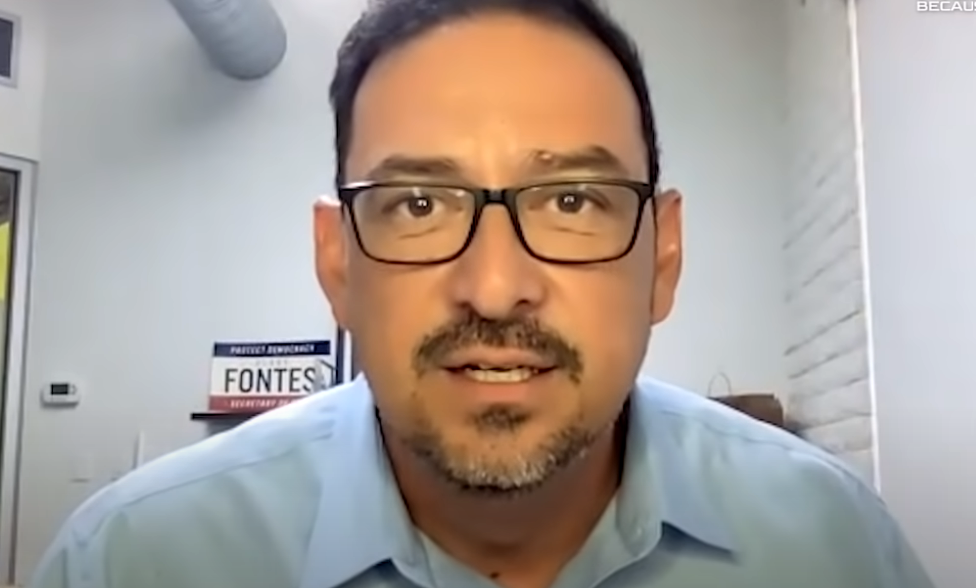
On Friday, Arizona State Representatives Michael Carbone and Steve Montenegro issued a press release, “criticizing an extremely short public comment period set by Secretary of State Adrian Fontes for his 2023 EPM.” They demanded that Fontes “extend the deadline for public comment” after the state’s election chief set the deadline for August 15.
✅FOR IMMEDIATE RELEASE✅ State Representatives @SteveMontenegro & @MichaelCarbone Urge Secretary Fontes to Extend Public Comment Period for 2023 Elections Procedures Manual.
— Arizona House Republicans (@AZHouseGOP) August 4, 2023
In a statement, Carbone said, “Requiring public comments to be submitted by August 15th is simply too restrictive and does not provide adequate time for interested stakeholders to review the draft 2023 EPM for compliance with state law. It is our understanding that several provisions have already been identified that appear to run afoul of state law. We urge Secretary Fontes to extend the public comment deadline to at least September 1, 2023, to give the public an adequate opportunity to review and provide input on the most important elections manual that will guide county officials in administering their duties in the 2024 elections.”
Montenegro added, “The Elections Procedures Manual is of paramount importance to ensuring the integrity and security of election administration in Arizona. Secretary Fontes should have given the public more than 15 days to review his extensive 259-page draft of the EPM and submit comments. A longer comment period is particularly necessary and reasonable this year because Arizona has not had a legally compliant EPM since 2019.”
Carbone and Montenegro encouraged “Arizona voters to participate in the process to keep both elected and unelected election officers transparent and accountable” by submitting public comments to the draft EPM.
On Tuesday, August 1, Secretary Fontes commenced the 15-day public comment period for the 2023 EPM. Fontes wrote, “As a former County Recorder, I understand how important this manual is for the dedicated Arizonans who are entrusted with one of the toughest and most important jobs in our democracy. In an atmosphere of heightened scrutiny of our elections, local and county officials need clear guidance based on law. Now that we are at the start of our public comment period, I look forward to continuing this important conversation about a document that is essential to the running of safe, secure, and accurate elections in every corner of our state.”
For public comment, please use the web form at the same link before Aug 15. Happy reading!https://t.co/Td57qaHjD3
Fontes emphasized the input that had already gone into the drafting of the EPM, assuring readers “It is important that the people who administer Arizona’s elections – the statutorily required stakeholders – be given the first opportunity to suggest changes. He revealed that his office had initiated “a series of monthly meetings with local and county election officials to suggest changes and garner feedback.”
The warning from Carbone and Montenegro follows a recent letter that was transmitted to Secretary Fontes by Representatives Jacqueline Parker and Alexander Kolodin, who highlighted certain issues with the initial copy of the EPM that they had seen from his office. That letter from the two legislators, written just days before Fontes allowed the public to view the document, identified eight possible violations of Arizona statutes in four chapters of the draft EPM. The legislators commented that they “are looking forward to seeing these provisions addressed prior to the EPM’s submittal to the Governor and the Attorney General on October 1, 2023.”
Daniel Stefanski is a reporter for AZ Free News. You can send him news tips using this link.
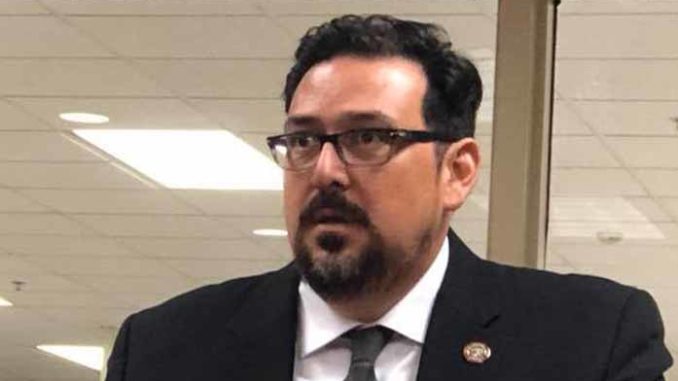
Two Arizona Republican legislators are raising concerns over a draft of the new Elections Procedures Manual (EPM) from Secretary of State Adrian Fontes.
On July 18, Representatives Jacqueline Parker, the Chairwoman of the Arizona House Committee on Municipal Oversight & Elections, and Alexander Kolodin, the Committee’s Vice Chair, transmitted a letter to Secretary Fontes, highlighting certain issues with the initial copy of the EPM that they had seen from his office.
MOE Committee is also pouring through the EPM with a fine toothed comb. There are many violations of statute so far. pic.twitter.com/ktD9F9mSNe
— Rep. Jacqueline Parker (@electjacqparker) July 19, 2023
The lawmakers were grateful that Fontes allowed them to see his draft, and they expressed optimism that “with legislative guidance, the 2023 EPM will not meet the same fate as the 2021 EPM, and that Arizonans will be assured that all drafts, including the final draft presented to the Governor and Attorney General, are legally consistent with Arizona election law.” They called the 2021 saga “both unprecedented and unacceptable,” writing, “Your predecessor’s failure to issue a lawful EPM ultimately led a court to decide that the 2019 EPM was in effect for Arizona’s 2022 elections, rather than an updated, legally compliant 2021 EPM.”
— Rep. Alexander Kolodin (@realAlexKolodin) July 19, 2023
In their letter to Secretary Fontes, Parker and Kolodin identified eight possible violations of Arizona statutes in four chapters of the draft EPM:
– Chapter 1: Early Voting
o “Part I, page 5 moves ‘date of birth’ from required information to additional information that may be provided by a voter to receive an early ballot.”
o “Part I, page 3 allows the County Recorder to send a requested early ballot ‘after 5:00pm the 11th day preceding the election if the County Recorder has sufficient time to do so.”
o “Part I, page 16 requires the County Recorder or officer in charge of elections to supply printed instructions that ‘provide the voter instructions on how to make their intent clear if they inadvertently mark the target area for a candidate or ballot measure.’”
o “Part I, page 18 includes the exclusion of an established Ballot Replacement Center.”
– Chapter 2: Ballot-by-Mail Elections
o “Part I, page 31 refers to ‘precinct with 300 or less registered voters.’”
– Chapter 7: Pre-Election Procedures
o “Part II, page 34 allows the officer in charge of elections to allocate specified duties to any board member as deemed appropriate, including ‘taking appropriate measures to preserve order, prevent voter intimidation, and manage voter lines.’”
– Chapter 8: Election Day Operations
o “Part III, page 8 adds additional examples ‘potentially intimidating conduct’ that supersedes statutory law.”
o “Part III, page 19 adds language that prohibits a challenger from speaking to a challenged voter to ‘prevent harassment and intimidation of the challenger voter.’”
The two Representatives also requested that “future drafts of the EPM contain statutory references for each provision to provide county officials with the statutory source of each EPM provision.” Parker and Kolodin pointed out two sections in the draft EPM where there were no statutory references – as examples to illustrate their issue.
As they concluded their letter to the state’s elections chief, the legislators commented that they “are looking forward to seeing these provisions addressed prior to the EPM’s submittal to the Governor and the Attorney General on October 1, 2023.” They promised to communicate in a timely manner with the Secretary’s Office “about any other concerns that might arise,” and they asked for a written response to their letter by July 25.
Daniel Stefanski is a reporter for AZ Free News. You can send him news tips using this link.
One Arizona legislator’s relentless efforts to deliver water to families in the Rio Verde Foothills appear to have paid off.
On Tuesday, the Arizona Senate passed SB 1432, which included Representative Alexander Kolodin’s HB 2561 as an amendment, sending it to the Governor’s Office for her decision.
Governor Hobbs is expected to sign the bill.
Twenty Senators voted to approve the measure, eight members opposed, and two did not vote.
Kolodin had several people to thank for the bill’s progress, which he did so in a press release, saying, “It took a team effort by an unlikely coalition to defeat the establishment’s army of lobbyists and solve what should have been a simple problem. A few people deserve special mention. My seatmate, John Kavanagh, put in yeoman’s work shepherding this legislation through the Senate. Senator Wadsack worked with us to integrate our bill with her own significant water reform legislation. She and my other colleagues in the Arizona Freedom Caucus withstood tremendous pressure to stand firm and help me to complete the people’s work. I also want to thank Representative Cook for his consistent efforts to help the people of Rio Verde as well as Representative Terech, the chief negotiator for the Democrats, for her months of effort to arrive at a bipartisan solution to a problem that no other part of government has been able or willing to resolve. This is not the first water crisis Arizona has faced and it will not be the last. But, today, we proved that the era of kicking the can down the road is over. This legislature is ready, willing, and able to roll up its sleeves and solve the problem – together.”
The state representative urged Hobbs to sign his bill and give the people of Rio Verde Foothills the relief that they have been seeking for months, stating, “We should not have had to fight so hard just to get Arizonans water, but our work is now complete thanks to the efforts of these and countless others. Katie Hobbs should immediately sign this bill and restore water to the people. Rio Verde Foothills – we applaud your fight and community spirit! Hold on tight, relief is on the way!”
After HB 2561 passed the Arizona House last month, freshman representative Justin Heap shared insight on how hard his colleague had worked to get his proposal to where it stood at that moment, tweeting:
“Politics is a profession defined by indolence & self-aggrandizement. Because of this, truly remarkable efforts by leaders to help the people they represent often go unnoticed & unrewarded. For this reason, I would like to acclaim my colleague @realAlexKolodin of District 3. No bill has been more fiercely contested or required more effort this year then the task of getting water to the 900 residents of Rio Verde Foothills who’ve been without reliable access to water since 2022. As their House Rep Alex made it his mission to get them water. It was a herculean task for a freshman legislator, against opposition from cities, the county BofS, the Governor’s Office, even his own party. Alex was undaunted.”
Daniel Stefanski is a reporter for AZ Free News. You can send him news tips using this link.
Arizona’s recently passed budget continues to divide Democrats as they bemoan Governor Katie Hobbs’ failure to negotiate more progressive additions.
Before the new budget was approved by the Arizona Legislature and signed into law, Democrat Secretary of State Adrian Fontes tweeted, “The present form of the budget proposal fails to fulfill the requirements we’ve conveyed to the Governor and the Legislature. This is because relying on one-time funds cannot address our urgent need for a larger number of SOS staff to boost IT security and offer technical support to the counties. As elections are critical infrastructure, the current budget proposal neglects the significance of maintaining the security and quality of our elections over time.”
The present form of the budget proposal fails to fulfill the requirements we've conveyed to the Governor and the Legislature. 1/3
— Arizona Secretary of State (@AZSecretary) May 9, 2023
After the budget was signed by Governor Hobbs, a Republican lawmaker alleged more discontentment from Fontes. Freshman Representative Austin Smith wrote, “During a House Elections Committee meeting this year @Adrian_Fontes came to testify for the ballot images bill to @electjacqparker, @realAlexKolodin, @azjustinheap, @RJ4arizonaand me. Fontes was storming through the State House yesterday cussing because he didn’t get what he wanted in the state budget for his left-wing pet projects. You CAN question ANYTHING in this country including elections. Only actual fascists and democracy frauds like Adrian Fontes hate it. Pound sand, @Adrian_Fontes.”
A few other individuals added some insight to this revelation by Smith, including Representative Jacqueline Parker, who stated: “Maybe if he stopped calling us fascists & working against us, & did his job better we would care about funding his department more… if I was in charge, A LOT more government agencies would have received much less funding. I thought he was treated too generously, considering…”
Maybe if he stopped calling us fascists & working against us, & did his job better we would care about funding his department more… 🤔 if I was in charge, A LOT more government agencies would have received much less funding. I thought he was treated too generously, considering… https://t.co/Tw4V2t16Qs
— Rep. Jacqueline Parker (@electjacqparker) May 11, 2023
Representative Justin Heap said, “Uh oh. SofS Adrian Fontes is fuming about the Budget! He just discovered that the House Elections Committee made sure we stripped his control over millions of HAVA dollars he planned to use to “fortify” our elections. Tough break, Man. Seeya at the Joint Oversight Committee!”
Uh oh. SofS Adrian Fontes is fuming about the Budget! He just discovered that the House Elections Committee made sure we stripped his control over millions of HAVA dollars he planned to use to "fortify" our elections. Tough break, Man. Seeya at the Joint Oversight Committee! https://t.co/gF7JYSfsNC
— Az State Rep. Justin Heap (@azjustinheap) May 13, 2023
Jen Wright, a former top attorney in Attorney General Mark Brnovich’s administration, tweeted, “Why would Sec. Fontes storm thru the AZ State House upset about the budget? Maybe because @realAlexKolodin & the @AZHouseGOP, & @AZSenateGOP refused to give him unfettered access to the MILLIONS in HAVA money that he had requested? #ElectionIntegrityHeroes #ThankALegislator”
Why would Sec. Fontes storm thru the AZ State House upset about the budget?
Another freshman representative, Alexander Kolodin, responded to Wright’s post, saying, “Oh Gina Swaboda and I went through his budget MOST carefully. A little legislative oversight never hurt, right?”
Oh Gina Swaboda and I went through his budget MOST carefully. A little legislative oversight never hurt, right? https://t.co/VU4lYg3GZS
— Rep. Alexander Kolodin (@realAlexKolodin) May 12, 2023
Senator Wendy Rogers also chimed in to praise Kolodin for his contributions to the budget: “@repalexkolodin applies THE finest-toothed comb of anybody I know on planet earth… seriously. Picayune. Wonkish. But freakin’ sharp. I’m glad he’s on our side, is all I can say.”
@repalexkolodin applies THE finest-toothed comb of anybody I know on planet earth… seriously. Picayune. Wonkish. But freakin’ sharp. I’m glad he’s on our side, is all I can say. https://t.co/YX7buABIpg
Fontes’ issues with the budget follow the high-profile pushback from Democrat Attorney General Kris Mayes, which occurred before the budget was passed and signed into law. Mayes previously sent a letter to Hobbs and members of the Legislature, writing, “The Legislature and Governor need to go back to work and produce a budget that is in the best interest of all Arizonans. We need a budget that funds essential state services that protect the well-being and safety of all Arizonans. I will continue to fight, especially for our most vulnerable residents, as well as the dedicated, hard-working public servants in the Attorney General’s Office.”
Mayes also threatened legal action if the Legislature swept “the authority of the Attorney General to direct funds received through consent judgments against several pharmaceutical companies for their roles in the opioid crisis.” Republican Representative David Livingston fired back against those statements, tweeting, “Attorney General Mayes should learn the facts first, and accurately convey those facts in committee hearings, before making demands and threats to sue the Legislature and the Governor over the budget.”
Attorney General Mayes should learn the facts first, and accurately convey those facts in committee hearings, before making demands and threats to sue the Legislature and the Governor over the budget. @AZHouseGOPpic.twitter.com/SFnElYhUtv
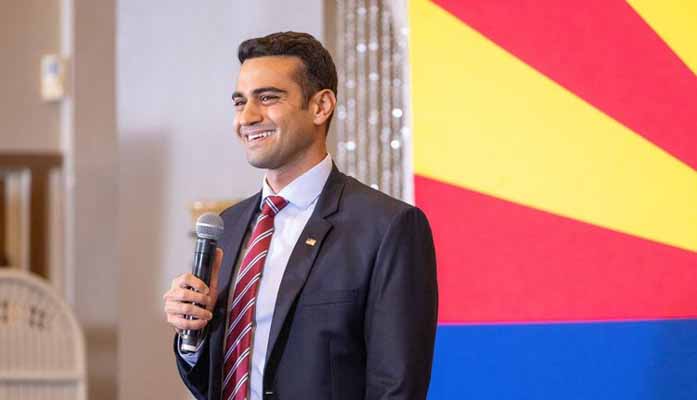
Abe Hamadeh argued for a new trial on Tuesday before the Mohave County Superior Court.
The judge, Lee Jantzen, seemed interested in sampling the evidence presented by Hamadeh’s team in the case, Boyd v. Mayes, despite multiple objections from opposition. Arguments presented by the opposition — the attorney general, secretary of state, and Maricopa and Pima counties — mainly focused on the amount of time that’s transpired since the election and Hamadeh’s December trial. Arguments presented by Hamadeh’s team focused on evidence of allegedly disenfranchised voters, claiming that hundreds of “lost” (uncounted) votes from undervotes and provisional ballots proved that Hamadeh won the race.
Lawyers present for the oral arguments included former assistant attorney general Jen Wright, State Rep. Alex Kolodin (R-LD03), and James Sabalos for Hamadeh; Alexis Danneman and Paul Eckstein for Attorney General Kris Mayes; Craig Morgan for Secretary of State Adrian Fontes; Daniel Jurkowitz for Pima County; and Joseph La Rue for Maricopa County.
Sabalos opened up the oral arguments, quoting Thomas Jefferson and summarizing general discoveries in the course of their months-long review of voter data as a precursor to Wright’s arguments.
“We do not have a government by the majority; we have a government by the majority who vote,” quoted Sabalos.
Sabalos insisted their case wasn’t about fraud, but about the evidence and facts supporting the reality of Hamadeh as the winner of last November’s election contest. He claimed that Gov. Katie Hobbs, in her former capacity as secretary of state, was aware of and neglected to immediately publicize 63 Pinal County undervotes that lent to Hamadeh’s claims last December of lost votes.
Sabalos said this intentional concealment of facts served to handicap their team’s due diligence of reviewing election data for the courts. Sabalos further claimed that there were 76,339 votes counted as undervotes in the attorney general’s contest. Of the approximately 2,000 ballots they inspected, 14 were misread (.61 percent). With that percentage applied to the larger total of undervotes statewide, Sabalos said that amounted to 466 or more votes — more than the 288-vote lead Mayes holds over Hamadeh.
Sabalos then claimed that there were uncounted provisional ballots that constituted legal votes, and that the majority of those would’ve turned in favor of Hamadeh.
“We don’t come today with hyperbole or speculation. We come with some reasonably solid evidence, and we need a heck of a lot more for this judge and this court to get its hands around,” said Sabalos.
Wright followed up Sabalos’ arguments by first focusing on Hobbs. She said that Hobbs didn’t fulfill her duty of being a neutral, nominal party, since Hobbs argued heavily that Hamadeh had no evidence to support his claims, while allegedly knowing of the dozens of undervotes recovered during the recount, and pushed for his case to be dismissed. Wright further noted that Maricopa County Elections Director Scott Jarrett admitted during the December trial that he wasn’t sure why certain votes weren’t counted, and instead counted as undervotes.
Wright expanded on Sabalos’ claim of the 63 undervotes, noting that they were counted as valid during the recount. Wright asserted that Hobbs knew of this fact, which she said rendered Hamadeh’s claims during the December trial valid. Wright also dismissed Hobbs’ claim that she was under an order preventing her from disclosing the undervotes, since the order only applied to counties discussing the recount results from vote totals. Wright claimed that the judge would’ve permitted Hamadeh a review of the evidence had Hobbs been forthright all those months ago.
“I find it questionable that a government agent would take support of or opposition to a candidate in an election contest,” said Wright.
Wright further noted that Hamadeh was unable to obtain the provisional ballot data from Maricopa County until days after the trial occurred, further hindering his ability to meet statutory deadlines.
When Wright attempted to discuss the evidentiary numbers on undervotes, both Mayes and Fontes’ legal teams raised objections. The judge overruled their objections, however.
Wright claimed that their team interviewed hundreds of high-propensity voters affected by statewide computer system changes, which allegedly altered their registration address without their consent and therefore deprived them of the right to vote. She claimed that over 1,100 Election Day provisional voters were disenfranchised.
Election Day votes went overwhelmingly for Hamadeh: over 69 percent to nearly 29 percent for Mayes. Wright said that this would mean about 760 of provisional ballots would be for Hamadeh, and 316 for Mayes. By Wright’s math, Hamadeh would prevail on the provisional ballot issue alone by 165 votes.
Wright further noted that their team had collected sworn affidavits of hundreds of voters claiming disenfranchisement due to bureaucratic failures. When she attempted to read the account of one allegedly disenfranchised voter, Mayes’ team raised an objection. The judge promptly overruled.
The allegedly disenfranchised Maricopa County voter, Marlena, attempted to vote on Election Day but was denied. Marlena had reportedly experienced issues with the county’s registration system for months: earlier that year, she discovered that her registration had changed without her knowledge and consent. Wright presented evidence that on October 10, 2022, Marlena attempted to correct her voter registration before the deadline. Wright also presented evidence from Maricopa County confirming Marlena’s registration. Yet, she was denied on Election Day.
Danneman, Mayes’ lawyer, said Hamadeh’s claims were speculative and based on unsworn opinions. She emphasized repeatedly the timeliness of his contest, noting that it has been over five months since the December trial and that their team could only present an argument that they needed more time to look for votes.
Danneman further rejected the argument that Hamadeh should be granted a new trial to undertake further investigation. She said that evidence must be material, in existence at the time of trial, and not be discovered with reasonable diligence.
She added that Hamadeh’s request for a more complete ballot inspection proved there wasn’t any newly-discovered evidence warranting a new trial.
The provisional voters list didn’t hold much weight in Danneman’s view. She claimed Hamadeh was undertaking a “fishing expedition” for evidence, which she pointed out was prohibited by court precedent.
“This list of names proves nothing,” said Danneman. “The plaintiffs had their day in court.”
Morgan, with Fontes, added that it was “long past time” for this election contest to end. He said that Hamadeh’s challenge impugns the validity of election processes as well as the integrity of election officials.
La Rue with Maricopa County concurred. Jurkowitz with Pima County argued further that statute time bars any further contest.
Following the hearing, Hamadeh expressed optimism that the oral arguments ultimately were in his favor.