by Jonathan Eberle | Aug 11, 2025 | Economy, News
By Jonathan Eberle |
The Greater Phoenix housing market continued its gradual reset in June 2025, signaling a clear shift in momentum from sellers to buyers according to a report from The Ravenscroft Group. Home prices dipped modestly, builders ramped up incentives, and buyers found themselves in the strongest negotiating position in years—marking a pivotal moment for one of the nation’s hottest real estate regions.
While not a repeat of the 2008 housing crash, market data shows a softening across key indicators, as elevated mortgage rates, seasonal slowdowns, and affordability pressures weigh on demand.
According to the group, the median sales price in Phoenix edged down to $449,500, a 0.3% dip from May’s $451,000. Phoenix’s Market Index—a measure of supply vs. demand—fell to 71, further cementing the area’s tilt toward a buyer’s market.
With 30-year fixed mortgage rates hovering around 6.89%, homebuilders are stepping in to maintain momentum. Many are offering interest rate buydowns into the mid-3% range, along with generous closing cost credits, appliance packages, and landscaping perks. This reality has made new construction homes particularly appealing to buyers, many of whom are priced out of the resale market due to borrowing costs.
Real estate trends varied across the Valley in June. Buckeye saw the steepest price shift at -8% while Fountain Hills and Phoenix proper each declined by -6%. Cave Creek transitioned into buyer’s market territory, and Avondale moved from a seller’s to a balanced market.
As of June, the groups says 2 cities are in seller’s markets, 7 cities are considered balanced, and 9 cities have shifted into buyer’s market territory. Outlying cities like Arizona City, Casa Grande, and Gold Canyon lean even more heavily toward buyers.
High recurring costs—such as HOA dues and special assessments—are driving buyers away from attached housing. The listing success rate for condos and townhomes dropped to 58% in May, the lowest since 2011. Manufactured homes fared worse, with fewer than half of listings resulting in a sale.
The Phoenix housing market isn’t collapsing—it’s correcting. Buyers are better positioned than they’ve been in years, and sellers are being forced to recalibrate.
This moment offers unique opportunities for those ready to act—especially in a region still driven by long-term population growth and economic expansion. But navigating it successfully will take strategy, patience, and flexibility on both sides of the deal.
Jonathan Eberle is a reporter for AZ Free News. You can send him news tips using this link.
by Matthew Holloway | Aug 7, 2024 | News
By Matthew Holloway |
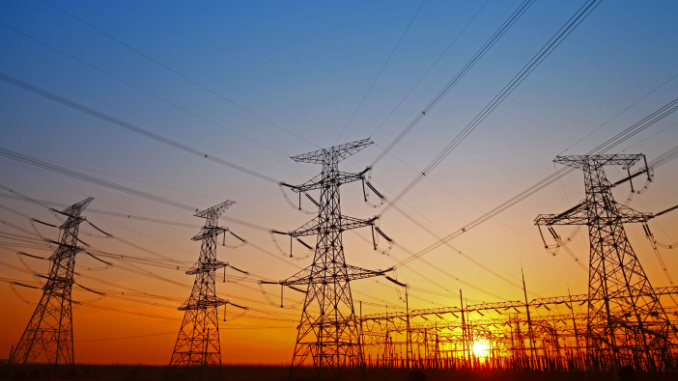
Arizona Corporation Commissioner Nick Myers hammered home the necessity of reliability and affordability to Arizona energy providers including Arizona Public Service Company (APS), Tucson Electric Power Company (TEP), UNS Electric, and Arizona Electric Power Cooperative during a workshop for the development of an Integrated Resource Plan or ‘IRP.’
The IRP is required by the commission every three years.
According to the Commission, the providers represented at the workshop gave presentations that highlighted the projected load growth in the state and analyzed their resource portfolios and their estimated revenue requirements.
Both APS and TEP discussed plans to decommission their coal-fired power plants, APS’ at Four corners in 2031 and TEP at various locations by 2032. Both of the utilities told the commission they intend to replace the coal-fired plants with natural gas generation “that can ramp up quickly during the day when customers need electricity the most and make use of existing infrastructure to maintain customer affordability as they transition to renewable energy, battery storage and potentially new technology.”
Myers reportedly pressed the utilities represented on whether they had completed their analysis based on the lowest cost and most technologically neutral means without imposing their politically-driven mandates to reduce emissions on the state as required by Commission rules. He pointedly questioned if their differing goals “may have resulted in the selection of a more costly or less reliable resource portfolio,” per the commission.
Myers said, “IRP planning is a complicated process that involves the analysis of various scenarios, multiple iterations, and complex projections. It is critical that the Commission understands what a utility’s plan is going forward and addresses any possible discrepancies or inconsistencies so that Arizonans can feel comfortable that their air conditioning will remain on and at an affordable rate.”
The commission reported that it is now reviewing the IRPs from the utilities and should bring a memorandum and proposal for review by the end of the month. In closing, Myers told the workshop, “Reliability and affordability will continue to be my highest priorities. We absolutely cannot afford to have blackout and brownouts in Arizona.”
In a July press release reported by KTAR, Chairman Jim O’Connor expressed similar concerns saying, “Hotter temperatures and monsoon winds put even more pressure on our electric grid, as we demand increasing amounts of power each year from our utilities. Thankfully, Arizona has top notch utilities with dedicated employees that coordinate to keep our power reliable across our state.”
O’Connor and the utilities at that time called upon Arizonans to reduce electrical usage by adjusting home thermostats and pushing heavy appliance usage and EV charging later into the evening.
Matthew Holloway is a senior reporter for AZ Free News. Follow him on X for his latest stories, or email tips to Matthew@azfreenews.com.