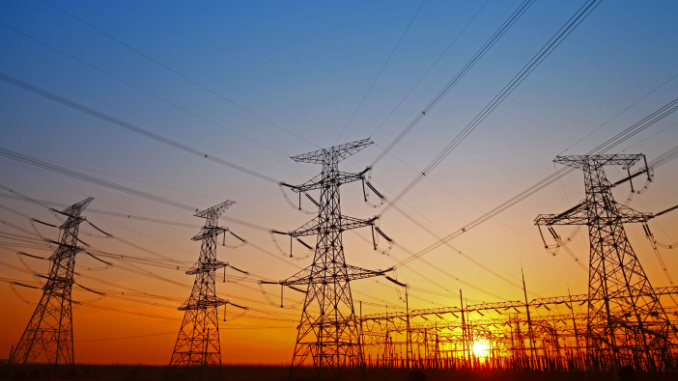
Energy Secretary Chris Wright says high electricity costs are a political choice in the United States today. The evidence at hand indicates the Secretary isn’t wrong.
“If you have expensive energy in your state…it’s because politicians and regulators chose to do that,” Wright said in a recent interview with the Wall Street Journal. “It is not bad luck, it is not marketplace…there is no reason to have these rapid increases in electricity prices – no reason, but politics.”
This is correct, and the disparity that exists in electricity bills in red states and blue states can be easily seen in a national map published by the U.S. Energy Information Agency (EIA), along with its supporting data.
EIA’s data shows the states with the highest rates include Democratic strongholds like California, New York, Hawaii, and the New England states. Meanwhile, the states with the lowest utility bills include the reddest of red states like Louisiana, Arkansas, Oklahoma, Texas, Nebraska, Wyoming, Idaho, North Dakota, and Iowa. This all ties directly in with the findings in a recent study by the Institute for Energy Research that I wrote about in January.
There is no real mystery here: Democrats seek to exploit the “affordability” issue in the upcoming midterm elections, but the truth is their policies created that issue to begin with. In his interview, Wright provides the proof points:
Electricity prices were up 6.7% year over year in December, nearly 40% since 2020. That is due to the United States adopting “UK-style” energy policies under the Biden and Obama presidencies, like forcing coal plant closures and wind/solar mandates.
Utility rates rose two times the rate of inflation in Democrat-governed states over the last five years, in GOP states, only half the inflation rate.
States with Renewable Portfolio Standards (RPS) have 50% higher prices than those without; 28 states enforce them, driving costs up.
Biden’s $5 trillion stimulus (for a $1.5T GDP gap) fueled inflation across the board but is now fixable via policy reversals like the ones Wright and other Trump officials are now pursuing.
“We’ve had a tailwind of these things to drive up our own energy prices,” Wright says, “And so that’s a battleship we’re stopping and turning back.”
Turning a policy battleship in the middle of an ocean takes time, but Wright’s efforts produced results during the recent major winter storm. In several regions, coal-fired power plants for which Wright acted to delay scheduled premature retirements generated needed baseload power to avoid blackout conditions as wind and solar failed to perform. Keeping many of those coal plants – and natural gas plants also scheduled for premature retirements under absurd RPS mandates – running will be crucial to maintaining integrity and reliability on grids from coast to coast in the years to come.
The good news for Americans is that this country enjoys an incredible abundance of all the natural resources and raw materials needed to restore sanity and reliability to our power grid. All that’s really needed is the political will to get it done while keeping electricity bills affordable.
Wright and the red states on EIA’s map have shown us the way. That’s true even in Texas, one of the few red states that maintains an RPS of its own. There, policymakers fell asleep at the wheel about the need to maintain a needed fleet of dispatchable reserve capacity, a mistake for which Texans dearly paid during 2021’s Winter Storm Uri.
But, in contrast to their peers in many blue states, Texas policymakers showed a capacity to learn from their mistakes, enacting a series of effective reforms over the last five years that vastly improved grid reliability.
In the recent Winter Storm Fern, the ERCOT-managed Texas grid, which proved to be the national poster child for grid failure in 2021, came through as a shining object lesson on how to fix past mistakes while remaining one of the 10 states with the lowest utility rates.
If you live in a state where power bills are too high, that is a choice your political leaders have made for you to endure. You should factor that reality into your thinking next time those politicians are up for re-election.
David Blackmon is a contributor to The Daily Caller News Foundation, an energy writer, and consultant based in Texas. He spent 40 years in the oil and gas business, where he specialized in public policy and communications.
Arizona State Representative Chris Lopez (R-LD16) introduced House Bill 2826, which would exempt materials such as concrete, used in the improvement and maintenance of agricultural irrigation canals, from Arizona’s transaction privilege tax on prime contracting.
The “No Tax on Concrete” bill aims to reduce costs for farmers, strengthen water conservation efforts, support food affordability, and boost irrigation efficiency by conserving water resources critical to Arizona’s agricultural sector as the state faces ongoing water security challenges.
Specifically, HB 2826 would establish a targeted exemption under the prime contracting classification in ARS § 42-5075 for materials and supplies used to improve and maintain ditches, irrigation lines, and canals on agricultural lands.
Concrete-lined canals offer significant benefits over traditional unlined earthen canals. Unlined systems can lose 30%-50% or more of conveyed water volume to seepage into permeable soils.
By contrast, concrete lining reduces these losses dramatically, increases flow velocity, minimizes erosion and weed growth, and lowers long-term maintenance needs. Such projects can save thousands of acre-feet of water annually, providing a highly cost-effective approach to water conservation.
Projects funded by the Water Infrastructure Finance Authority of Arizona (WIFA) and awarded to irrigation districts—Buckeye Water Conservation & Drainage District, San Carlos Irrigation & Drainage District, and Roosevelt Irrigation District—are anticipated to conserve between 135,000 and 368,864 acre-feet over their lifetimes, at only an estimated cost of $2 to $3 per acre-foot.
“The House Republican Majority Plan is focused on affordability, and that starts with food on the table and the cost of water to produce that food,” stated Rep. Lopez. “Converting dirt canals to concrete-lined canals saves thousands of gallons of water, which reduces pumping costs, energy, and other expenses that go into the price of food. Eliminating the tax on concrete and other contracting costs to convert these canals to concrete lining not only helps to reduce the costs even further but also helps to conserve water at a time when water conservation has never been more critical for our state.”
Ethan Faverino is a reporter for AZ Free News. You can send him news tips using this link.
At a time when Arizonans are still struggling to recover from years of Biden-era inflation, Republican lawmakers acted swiftly to deliver on their Affordable Arizona agenda. On just the fourth day of the legislative session, they passed SB1106, a tax conformity package that delivered the full benefits of the One Big Beautiful Bill (OBBB) to Arizona taxpayers, families, and businesses. The legislation provided $1.1 billion in tax relief and, just as importantly, immediate certainty for millions of Arizonans heading into tax season.
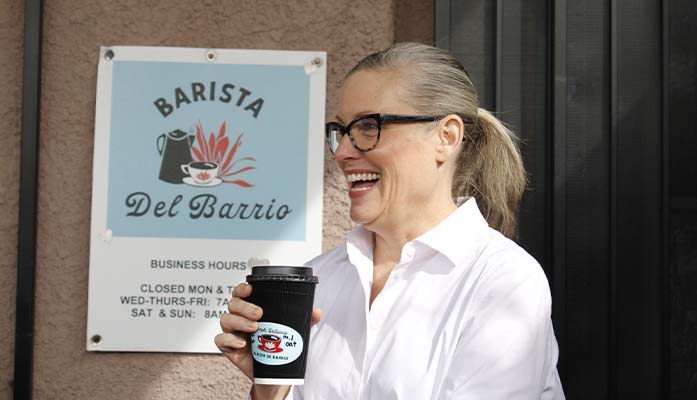
The very next day, Governor Katie Hobbs vetoed it.
That veto leaves taxpayers facing a potential $1.1 billion tax hike and widespread chaos as filing season begins. This isn’t simply the typical tax policy fight between Democrat and Republican ideologies. But a full display of Katie Hobbs’ failure to lead.
From the outset, she has mishandled this critical issue of federal tax conformity with conflicting messages, unauthorized executive actions, and zero coordination with the Legislature or even apparently her own agencies. The result has been a self-inflicted mess, and Arizona taxpayers will be the ones to suffer the price.
Arizona has hardly had an opportunity to recover from the aftershocks of Biden-omics. The trillions of dollars injected into the economy through the so-called Inflation Reduction Act continue to work their way through the system in the form of higher prices and eroded purchasing power. Open-border policies that expanded the labor supply at the lower and middle ends of the wage scale have depressed wages. And the Biden Administration’s unprecedented regulatory burden on industry, a nearly $2 trillion drag on the economy, will take far longer than a year to unwind and correct.
Unfortunately for Arizona, efforts to fix these problems at the federal level cannot be fully realized here at home because Katie Hobbs remains our Governor.
Hobbs has harmed Arizona’s recovery, overseeing a massive fall from 4th in the nation in job growth to 47th. She inherited a booming local economy after a Republican legislature and Governor ushered in a 2.5 percent income tax, incentivized entrepreneurs and small businesses, prioritized deregulation, and expanded choice and freedom in education. Yet Hobbs has managed to squander that opportunity. In fact, it takes a special skill set to be perfectly set up for success and then drive a working model into the ground.
And Hobbs knows she’s to blame. That’s why she’s now desperately trying to reinvent herself by pushing Trump-esque tax cut rhetoric while clinging to the same big-spending, high-tax policies that caused the damage in the first place. At her core, she remains a California-style Democrat who would rather govern Newsom-style than embrace the Republican solutions that actually work. That’s why, despite a Republican legislature that has delivered tax relief bills, more disciplined budgets, and common-sense deregulation, she has earned a reputation as the veto queen.
As a result, Arizonans are dealing with real affordability woes, and they best not hinge their hopes on Hobbs.
Despite responsible budgeting and repeated tax relief efforts by Republican lawmakers, affordability pressures continue to mount. Taxes are creeping higher at every level of government. Utility bills have surged. Housing costs are outpacing wage growth. And programs intended to help struggling families are losing billions to fraud, waste, and mismanagement.
That is why the 2026 legislative session must focus on Affordable Arizona…
Arizona Senate Republicans released their 2026 Majority Plan on Monday, outlining policy priorities aimed at reducing the cost of living, strengthening public safety, supporting economic growth, and increasing oversight of state government.
The plan follows several years of divided government at the Capitol and builds on what Republicans describe as recent legislative accomplishments, including balanced budgets and multiple tax cuts passed without raising overall taxes. Caucus leaders say the 2026 agenda is intended to address challenges facing Arizona families, particularly rising housing costs, inflation, and concerns about government accountability.
“Arizonans want affordable living, safe neighborhoods, and a government that strengthens — not weakens — our economy,” Senate President Warren Petersen said in a statement. “While the Governor’s vetoes stall progress, Senate Republicans remain focused on protecting taxpayers, upholding Arizona’s freedoms, and preventing the radical left from turning our state into California.”
A central component of the plan is a proposed tax and budget framework aimed at providing relief from rising prices. Senate Republicans say they are pursuing reductions in state taxes on tips and overtime, expanded deductions for seniors, and policies to support small businesses. Caucus leaders estimate the proposals would return more than $1 billion to taxpayers over three years while pairing tax relief with restrained government spending.
Housing affordability is another major focus. The plan cites regulatory barriers, slow permitting processes, and executive-level actions as factors contributing to Arizona’s housing shortage. Republicans say they support reforms to speed up construction, reduce fees, and limit local restrictions on new housing, while aligning development decisions with water availability data.
“Arizonans can’t afford policies that stall development, inflate housing prices, or jeopardize our water security,” Senate President Pro Tempore T.J. Shope said. “Senate Republicans are advancing practical, data-driven solutions that support responsible growth and keep Arizona livable for the next generation.”
Water policy is addressed alongside housing, particularly as negotiations over the Colorado River continue. The plan emphasizes the Legislature’s statutory role in those talks and calls for shared conservation efforts among basin states to avoid placing disproportionate burdens on Arizona.
Public safety proposals include addressing staffing shortages in correctional facilities, increasing oversight of state agencies, and strengthening accountability for violent offenders and probation violators. The plan also reiterates support for Second Amendment protections and public safety pension stability.
Senate Majority Leader John Kavanagh criticized the current administration’s record, saying, “Arizonans deserve leadership that solves problems, not a wolf in sheep’s clothing who blocks solutions and hopes voters won’t notice.”
Additional priorities outlined in the plan include border security enforcement, election integrity measures, education policy, transportation and infrastructure investment, emergency preparedness, artificial intelligence safeguards, family court reform, veterans’ services, and oversight of agencies such as AHCCCS and the Department of Child Safety. Opening day of the second regular session of the 57th Legislature is scheduled for January 12, when many of the proposals are expected to be introduced.
Jonathan Eberle is a reporter for AZ Free News. You can send him news tips using this link.