by Terri Jo Neff | Jul 6, 2021 | News
By Terri Jo Neff |
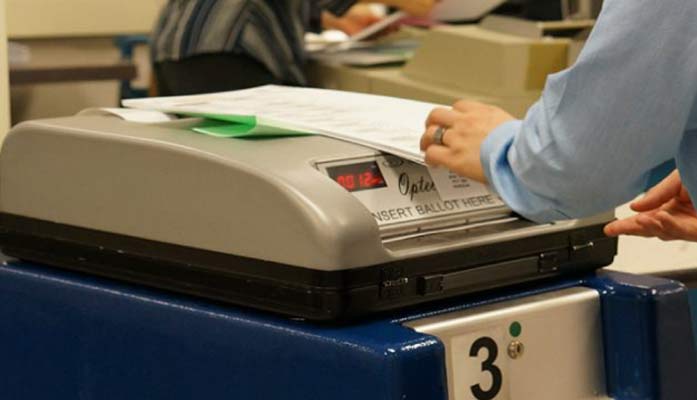
A new committee tasked with reviewing Cyber Ninjas’ findings of the Senate’s ongoing audit of Maricopa County’s 2020 general election is one of the provisions signed into law last week when Gov. Doug Ducey put his signature on the Fiscal Year 2022 budget bills.
Formation of the Special Committee on the Election Audit was included by Senate President Karen Fann in an amendment to SB1819, one of the 11 budget bills. The committee will run through Jan. 1, 2022 and be made up of Democrats and Republicans who are members of the current Senate Government Committee.
The purpose of the committee, according to the new state law, is to recommend to the senate president “the appropriate legislative action based on the findings of the audit, including a call for a special session of the legislature to implement the special committee’s recommendations.”
The Fann amendment also provides leverage for pressuring Ducey to call a special session if it appears new election-related legislation is needed which cannot wait until next January’s regular session. Without an assured two-thirds vote margin in either chamber, the governor is the only option for calling lawmakers back into session to pass laws to take effect before the 2022 primary in August.
Ducey, however, has been reticent on the subject, leaving it to a spokesman to comment.
“We will wait and see what the committee recommends,” C.J. Karamargin said last month about the possibility of an election-related special session.
One reason a special session to address the election audit is so important to Republicans is that the majority of the election reform and election integrity bills introduced by GOP lawmakers during the regular session were either watered down or did not pass. And the main reason for that was the ongoing feud between Sens. Michelle Ugenti-Rita (R-LD23) and Kelly Townsend (R-LD16).
Ugenti-Rita chaired the influential Senate Committee on Government. She and Townsend butted heads throughout the session, often over the fact Ugenti-Rita refused to allow the committee to consider some of Townsend’s bills.
Then during the last week of the session, the women took turns voting against each other’s election bills, both of which contained reforms many Republican voters supported.

by Terri Jo Neff | Jul 5, 2021 | News
By Terri Jo Neff |
Gov. Doug Ducey grew frustrated in May with the legislature’s slow pace of action on the Fiscal Year 2022 budget packet. So Ducey thought he would send the state’s 90 lawmakers a message by vetoing 22 bills, several which had passed with bipartisan support.
The vetoes did little to motivate either chamber to action and it would take more than one month before all 11 budget bills finally passed, and even then several bills were amended from what Ducey’s staff and legislative budget negotiators wanted.
But Ducey’s vetoes were not forgotten by many legislators. The Senate passed reintroduced versions of the 22 vetoed bills but was motivated enough to symbolically override one of the governor’s 22 snubs, something no other Arizona governor had faced in nearly 30 years.
The House did not follow the Senate’s suit, choosing instead to pass 20 of the Senate’s reintroduced bills. As of July 2, the governor had signed 10 of the reintroduced bills and the other 10 were transmitted to Ducey by the Senate prior to Sine Die on June 30.
Under current legislative rules, Ducey must act on the bills on his desk within 10 days after Sine Die of the bills automatically become law. The remaining two bills passed by the Senate died in the House.
The 10 bills Ducey has already signed:
SB1830 authorizes the creation of an individual and corporate state tax credit for the donation of real property to a school district of charter school. It passed with bipartisan support
SB1841 requires the Department of Law (the Arizona Attorney General’s Office) to review a federal executive order for constitutionality if requested by any member of the Legislature
SB1833 addresses proficiency testing by the Arizona Department of Health Services (DHS) of third-party marijuana laboratories and marijuana testing facilities
SB1834 allows DHS to conduct unannounced inspections of a medical marijuana dispensary
SB1835 requires that an election challenger or party representative must be a resident of Arizona and a registered voter of the state
SB1831 mandates that the State Registrar provide a person a copy of his or her original birth certificate sealed due to adoption if the person was born before June 20, 1968
SB1832 modifies Arizona’s DUI laws and requires traffic survival instruction courses to include information about aggressive driving. Such instruction is to be completed in person unless the Governor declares a state of emergency
SB1838 replaces the term “product of human conception” with “unborn child”
SB1839 outlines changes to Arizona Psychiatric Security Review Board
SB1843 changes the classifications of excessive speed and the statute related to waste of finite resources
The bills on Ducey’s desk:
SB1844 modifies the maximum Arizona adjusted gross income subtraction for college savings plan contributions authorized by section 529 of the Internal Revenue Code and allows subtraction of Achieving a Better Life Experience (ABLE) account contributions
SB1848 requires the Arizona Department of Housing to provide emergency shelter beds in western Maricopa County for homeless persons who are at least 55 years old
SB1846 exempts containers of spirituous liquor from prescribed labeling requirements under specified delivery conditions
SB1849 makes some changes to health and medical services offered to female inmates and allows a prisoner is to receive a certificate upon successful completion of training programs to work in a specific field or trade
SB1847 mandates DHS to provide grant monies from the Medical Marijuana Fund for research on the correlation of marijuana use and mental illness and requires DHS to develop a warning label to be affixed to the packaging of marijuana
SB1842 addresses the security, packaging, and labeling of marijuana and marijuana products
SB1845 requires the Department of Economic Security to implement a Produce Incentive Program
SB1850 contains technical corrections relating to multiple, defective, and conflicting statutory text
SB1851 outlines data required for the Arizona State Hospital financial and programmatic report, and establishes the Joint Legislative Psychiatric Hospital Review Council
SB1836 modifies sex offender registration requirements
HB2905 specifies that a county recorder or other election officer may not deliver or mail an early ballot to a person who has not requested an early ballot for that election.
HB2906 requires the certified public accountant (CPA) or auditor to present audit results to certain members within 90 days after a statutory audit and outlines requirements for training of certain employees (prohibits Critical Race Theory-based material/curriculum).
The other vetoed bills:
SB1837 would have banned a county recorder or other election officer from delivering or mailing an early ballot for an election to a person who did not requested an early ballot for that election
SB1840 would have required in certain instances that a certified public accountant or auditor present audit results within 90 days after a statutory audit, and it outlined requirements for employee training
by Terri Jo Neff | Jul 5, 2021 | News
By Terri Jo Neff |
One thing is certain about the landscape of Arizona politics – it will look much different after the 2022 general election due to a guaranteed change of governor, secretary of state, attorney general, and state treasurer.
There will also be several changes in the state legislature in 2022 as more lawmakers announce runs for state office, including Sen. David Livingston (R-LD22) who announced his candidacy last week for treasurer; Rep. Aaron Lieberman (D-LD27) who announced he is running for governor; and Rep. Shawnna Bolick (R-LD20) who has kicked off her campaign for secretary of state.
Bolick is seeking the Republican nomination against Sen. Michelle Ugenti-Rita (R-LD23) and Rep. Mark Finchem (R-LD11) who previously kicked off campaigns for secretary of state to serve as Arizona’s top elections official and the first in line to succeed the governor in the event of death, resignation, or removal from office.
Other announced Republican candidates for secretary of state include Beau Lane, Remo Paul, and Wade Wilson. The Republican primary winner will likely take on either Rep. Reginald Bolding (D-LD27) or former Maricopa County Recorder Adrian Fontes, both of whom publicly announced their candidacies in June. One other Democrat, Dennis Florian, is also running.
Lieberman hopes to move on from his seat in the House to become Arizona’s next governor. He will go up against current Secretary of State Katie Hobbs and former Nogales Mayor Marco Lopez Jr. in the primary, along with fellow Democrats Peggy Betzer, Steven Noon Jr., and Trista DiGenova-Chang.
The winner of the Democrats’ primary will take on the Republican nominee from a growing candidate list which now includes Steven Gaynor and former Rep. Matt Salmon, both of whom recently threw their hats in the ring.
Previously announced Republican candidates for governor include current State Treasurer Kimberly Yee, Board of Regents Secretary Karrin Taylor Robson, and former Phoenix-area news anchor Kari Lake. They are joined by Ameer El Bey, Kelly Garett, David Hoffman, Bryan Masche, Callie Morgan, Michael Pavlock Jr., Julian Tatka, and Paola Tulliani.
Four Libertarians -Robert Baxter, Barry Hess, Bill Moritzky, and Steve Remus- have also filed a statement of interest for the governorship.
With Yee not running again for state treasurer, Livingston is currently the only candidate who has filed a Statement of Interest for the office with the secretary of state.
But it is not only state races that are garnering lots of attention. Many eyes are on the U.S. Senate seat currently held by Mark Kelly, a Democrat.
Kelly is expected retain his party’s nomination but whose name appears on the ballot for the Republican Party will be heavily contested, not only by Brnovich but also corporate executive Jim Lamon and retired Arizona Adjutant General Michael McGuire. In addition, Blake Masters -president of the Thiel Foundation- is rumored to be announcing his candidacy to challenge Kelly later this week.
Other Republicans already vying for the nomination are Wendy Acuna, Craig Brittain, David Buechel, Dan Butierez Sr., Ronald Coale, Eric Corbett, Mark Fisher, Kelly Garett, Vlad Hermann, Josh McElroy, Rob Paveza, Thomas Tripp, and Chad Yosick.
With Brnovich running for Congress, Andrew Gould recently resigned his seat on the Arizona Supreme Court to seek the Republican nomination. Gould will likely face Lacy Cooper and Tiffany Shedd in their party’s primary.
For the Democrat Party, former Arizona Corporation Commissioner Kris Mayes announced her candidacy for attorney general last month. She is expected to be joined in the primary by January Contreras and Diego Rodriguez. One Libertarian, Michael Kielsky, is also running for attorney general.
There are also several current state representatives who will be leaving the legislature to make runs for Congress in 2022. They include Walt Blackman (R-LD6) who is running for CD1 and Sen. Kirsten Engel (D-LD10) who is running against Rep. Randy Friese (D-LD9) for CD2.
by Terri Jo Neff | Jul 4, 2021 | News
By Terri Jo Neff |
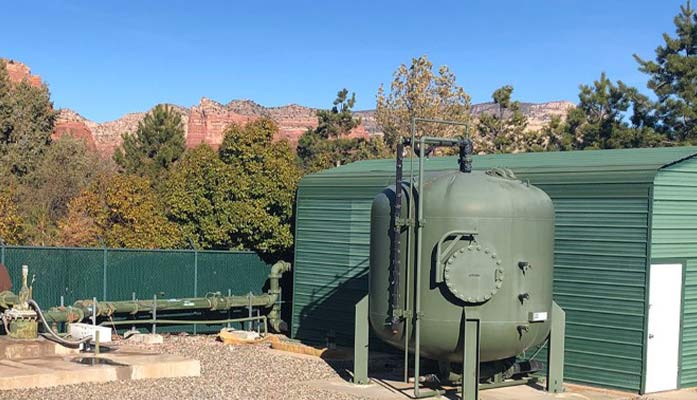
Tucked here and there among the $12.8 billion budget package signed into law last week by Gov. Doug Ducey are numerous water-related funding opportunities for rural counties across Arizona.
Among the budget items in SB1823, the general appropriations bill, are allocations of $3 million for water project assistance grants to cities and towns that provide water in Navajo and Apache counties. Another $2 million of water project assistance grants are available to irrigation districts in Cochise and Graham counties.
Those funds are in addition to $160 million moved from the state’s general fund on June 30 to the Drought Mitigation Revolving Fund. Of that, up to $10 million may be used for grants which facilitate the forbearance of water deliveries by June 30, 2025, while another $10 million may be used for Arizona State Land Department grants related to water use.
Ducey also signed into law changes to Arizona’s tax code which allow water utilities regulated by the Arizona Corporation Commission (ACC) to deduct contributions toward construction from their Arizona gross annual income. This can be particularly beneficial for companies which serve smaller communities where it can be difficult to spread out the cost of construction projects.
In addition, the Legislature passed a bill sponsored by Rep. Gail Griffin (R-LD14) to provide $40 million for the Water Supply Development Fund for assistance to water providers for improvements to water infrastructure and projects located in rural communities.
The ACC is encouraging owners and operators of small water utility companies which are regulated by the Commission to take advantage of the funding, which can go as high as $1 million per project, to improve their water systems and benefit customers. There is also an option of a $100,000 grant which does not require repayment.
Eligible water utility companies must serve at least 15 customers or at least 25 people for at least 60 days of the year, be located outside of an active management area, and be within a county with a population of less than 1.5 million people. The funding can be used for myriad purposes, including acquiring water or water rights; purchasing or refinancing debt related to water supply development projects; conveying, storing, or recovering water; reclaiming or reusing water; capturing or controlling stormwater; and replenishing groundwater.
Utilities can apply for the WSD Fund loans or grants to the Arizona Water Finance Authority.
“I encourage every regulated water utility that qualifies for these funds to take advantage of them as expediently as possible for the benefit of their customers,” ACC chair Lea Marquez Peterson said last week.
House Speaker Rusty Bowers (R-LD25) acknowledged the importance of the water funding allocations in a post-budget signing statement, calling the funding for infrastructure projects a “key to securing Arizona’s future, and one of our highest priorities.”
by AZ Free News | Jul 3, 2021 | News
This week, the Department of the Air Force announced much anticipated plans to move Close Air Support (CAS) and rescue missions, including A-10 Thunderbolt II and HH-60 Pave Hawk weapons schools and test squadrons, to Davis-Monthan Air Force Base beginning in fiscal year 2022.
The proposed plan would transfer rescue and attack missions, aircraft and personnel to Davis-Monthan AFB as part of the Air Force’s vision of making the base the Center of Excellence for CAS and rescue missions.
Moving the A-10 and HH-60 aircraft squadrons, one maintenance squadron and all the supporting personnel from Nellis AFB, Nevada will result in a small personnel increase at Davis-Monthan AFB.
The first phase of the proposed plan, released as part of the Department of the Air Force’s fiscal year 2022 budget request , is contingent on congressional approval of the retirement of 42 A-10 aircraft, 35 of which are at Davis-Monthan AFB. Retiring these aircraft will create the fiscal and manpower flexibility required to design and field the future force needed to meet combatant commander requirements. Retiring the older A-10s in 2022 would allow Davis-Monthan AFB to receive the new missions.
The A-10 Weapons Instructor Course and Test and Evaluation operations will transition in 2022. The HH-60 WIC, Test and combat-coded units to include the 88th Test and Evaluation Squadron, 66th Rescue Squadron, 58th Rescue Squadron, the 34th Weapons Squadron, and the 855th Aircraft Maintenance Squadron will move beginning in 2024.
The Air Force will complete the required environmental analysis before the moves.
The A-10 Thunderbolt Advanced Continuation Kitting wing replacement contract, which was awarded in August 2019, included the purchase of wings for 218 aircraft. The Air Force has invested $880 million in A-10 re-winging and avionics modernization efforts, enabling the fleet to fly well into the 2030s.
by AZ Free News | Jul 3, 2021 | News
On Friday, Gov. Doug Ducey rescinded a series of executive orders issued during the coronavirus pandemic. The governor said the orders were no longer needed because the Legislature put them into law.
The governor said some of the orders would remain in place until legislation takes effect in 90 days. Those include orders preventing cities, towns and counties from issuing orders for businesses that are more stringent than those Ducey issues. Other orders ending after new legislation takes effect are ones barring universities from requiring COVID-19 vaccines or masks for unvaccinated students.
The governor ordered:
Effective July 1, 2021, the following Executive Orders related to the public health emergency will be rescinded:
- Executive Order 2020-17 deferred requirements to renew state agency and board licenses that had an expiration date between March 1, 2020 and September 1, 2020 by six months from the expiration date, unless those requirements could be completed online. The timeframe for the deferrals lapsed on March 1, 2021.
- Executive Order 2020-28 was enacted to address critical demand for nursing home and long-term care facility staff, allowing caregiver trainees to utilize on-the-job training to meet a certification program. This policy was codified through legislation in 2020.
- Executive Order 2020-58 ensured cost-sharing requirements, such as co-pays and co-insurance, for the COVID-19 vaccine are waived. This policy was codified by congress through the CARES Act.
- Executive Order 2021-04 required schools to return in-person, teacher-led instruction by March 15, 2020. In-person, teacher led instruction will continue to be required beyond the March 15, 2020 deadline.
Effective July 9, 2021, the following Executive Orders related to the public health emergency will be rescinded:
- Executive Orders 2020-08 & 2020-53 extended standard driver licenses that originally expired between March 1, 2020 and December 31, 2020, in an effort to limit visits to the state Motor Vehicle division. An expiration deferral issued as a result of this order remains valid and in effect.
- Executive Order 2020-20 allowed pharmacists to dispense emergency refills of maintenance medications for up to 180 days, minimizing unnecessary trips to the doctor. With legislation expanding availability of telemedicine, obtaining refills is now more accessible.
- Executive Order 2020-25 allowed struggling Arizona restaurants to repackage and sell grocery items they have on hand, including items not normally packaged and labeled for resale. Arizona restaurants can now fully resume operations.
Effective September 29, 2021, the following Executive Orders related to the public health emergency will be rescinded upon enactment of legislation to codify the policies:
- Executive Order 2020-12 was a proactive and administrative measure to ensure consistent mitigation guidance across the state, and prohibited any county, city or town to issue an order, rule or regulation that restricts or prohibits any essential service.
- Executive Order 2021-05 lifted occupancy limits that were implemented due to COVID-19.
- Executive Order 2021-06 transitioned COVID-19 mitigation requirements for businesses to recommendations.
- Executive Order 2021-09 banned “vaccine passports” and prevented state and local governments from requiring Arizonans to provide their COVID-19 vaccination status to receive service or enter an area.
- Executive Order 2021-10 rescinded orders related to K-12 health guidance.
- Executive Order 2021-15 ensured students of public higher education institutions cannot be mandated to take the COVID-19 vaccine or submit COVID-19 vaccination documents, and prohibited mandatory testing and mask usage for students.
The following will be repealed on a date determined by the Arizona Department of Health Services:
- Executive Orders 2020-13, 2020-23, 2020-30, 2020-37, 2020-48, 2020-54, 2020-56, 2020-57, 2021-01, 2021-07, 2021-14, identified as Enhanced Surveillance Advisory Orders. The State Legislature provided authority to the Arizona Department of Health Services to continue requiring hospitals, testing laboratories and other health facilities to provide detailed information and data related to COVID-19.