by Corinne Murdock | Aug 17, 2021 | Education, News
By Corinne Murdock |
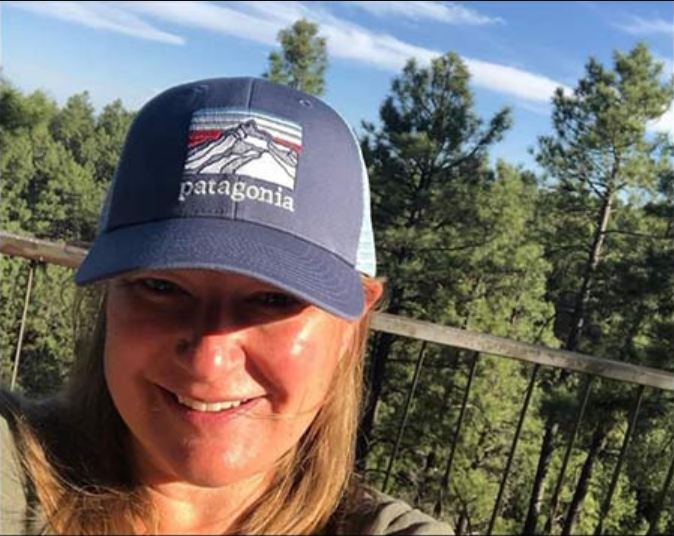
The board president of Northland Preparatory Academy (NPA), a Flagstaff charter school, called parents and students who disagree with mask mandates “the worst of humanity who can’t STFU [shut the f*** up]” about their freedom. Governing Board President Cristy Schaefer Zeller leveled these criticisms in a Facebook post late Friday night. Zeller’s complaints followed the first day of NPA’s reinstated mask mandate, during which three students reportedly refused to wear masks.
“We are so angry that we now have to spend our time dealing with the worst of humanity who can’t STFU about their freedom to choose about a piece of fabric on their face,” wrote Zeller.
Zeller called Arizona, Florida, and Texas “banana republics.” She claimed all of Flagstaff’s systems were “falling apart.” Zeller also suggested they treat those expressing opposing beliefs as “a**hole[s]” and “bullies.”
“Don’t be crazy and cause a police situation but show support. We know what to do with bullies. Do it,” wrote Zeller.
Zeller’s social media posts generally depict Republicans in a negative light, calling them “a**holes” and intellectually inferior.
In response to a tweet from Stop the Steal founder Ali Alexander saying that he would give his life to fight for the truth about the election, retweeted by the Arizona Republican Party, Zeller called Trump supporters “idiot a**holes.”
“Apparently these idiot a**holes are ready to die for @realDonaldTrump,” wrote Zeller.
In reference to the October 7 debate between then-Vice President Mike Pence and current Vice President Kamala Harris, Zeller insinuated that Pence had the mental acuity of a toddler.
“Maybe @vp touched his butt hole and then touched his eyes and got pink eye. Like a toddler,” wrote Zeller.
As of press time, Zeller’s post criticizing those opposed to masks was public. The entirety of Zeller’s post is reproduced below:
“What’s on my mind Facebook? A whole crap ton of anxiety. That’s what is on my mind.
I am deeply worried about our educators and health care workers. I have seen and heard things this week that are frankly shocking. Things that are unacceptable in the wealthiest country in the world.
Maybe it’s better in states that aren’t devolved banana republics like Arizona (I see you TX and FL). Here, in Flagstaff, AZ, our systems are falling apart in very frightening ways. I am not being dramatic. I have spoken with dozens of people in education and healthcare that are about to break, if they are not already broken. They are angry, sad, and defeated. They love their professions, but despise their jobs right now.
The anger and frustration is electric. It did not have to be this way. We are so angry dealing with the worst of humanity who can’t STFU about their freedom to choose about a piece of fabric on their face.
So what do we do? We know we can’t change minds of a portion of the population. I can’t waste my time on them anymore. My like-minded people, here is what we can do:
*If you see someone being an a**hole (picketing your child’s school, accosting a school administrator, demanding unreasonable things from a health care provider)… step in. Be brave. Be a helper. Don’t be crazy and cause a police situation but show support. We know what to do with bullies. Do it.
*Write a thank you note, send an email to the educators and healthcare workers in your life. The small things make all the difference.
*Become an activist. Write your lawmakers, submit public comment and demand better.
*Be kind and patient. If things are imperfect or inconvenient at the school or the hospital, know that the front line person you are talking to is not to blame. They showed up for work. It’s a systemic problem resulting from lack of staffing, general a**holery from the highest levels, messed up politics, lack of funding, and things beyond their control.
Finally.. Us liberals tend to want to be fixers and empathetic and all the rainbows and unicorns. No more. As MTV taught us… it’s time to stop being polite and start being real. Get busy.”
Corinne Murdock is a reporter for AZ Free News. Follow her latest on Twitter, or email tips to corinne@azfreenews.com.
by Terri Jo Neff | Aug 17, 2021 | Economy, News
By Terri Jo Neff |
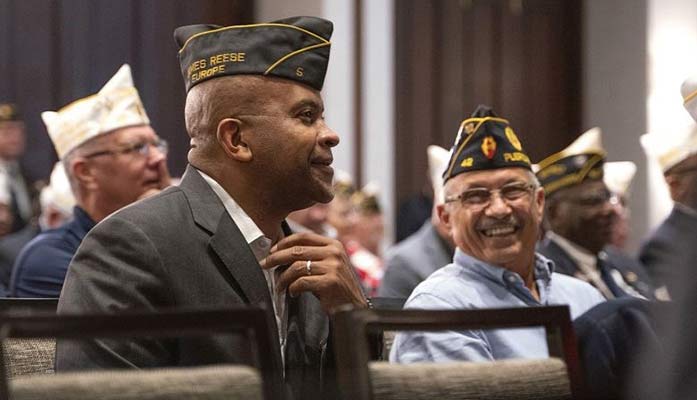
More than 7,500 members of the American Legion family are expected to converge at the Phoenix Convention Center later this month for the 102nd National Convention of the American Legion and the 100th Convention of the American Legion Auxiliary.
The event runs from Aug. 27 through Sept. 2, and estimates show Convention will contribute $10 to $15 million to the Phoenix economy through shopping, dining, and tourism expenditures. Attendees will utilize about 15,000 hotel room-nights.
Michael E. Walton, chairman of the American Legion National Convention Commission, says it is the third time in 20 years that Convention will be held in Phoenix.
“We are delighted to come back to Phoenix,” Walton said. “Many Legionnaires have fond memories of our previous conventions held there in 1991 and 2008.”
Walton noted Arizona is home to seven active military bases and about one-half million veterans. “The state is unquestionably patriotic,” Walton said, adding that organizers believe the event can be conducted safely despite COVID-19 concerns.
For the last several weeks, top American Legion officials have promoted a video about public health “ground rules” which will be in place at Convention. Those rules -which include face masks and social distancing- will be mandatory because the event is being held at a city-owned building. There is also the possibility of temperature checks to enter the building or meeting rooms.
“I know everyone in the American Legion family is familiar with the precautions we have taken during the pandemic, but different communities have different levels and stages,” according to James W. “Bill” Oxford, national commander of the American Legion. “Ahead of Convention, regardless of your state or community’s guidance and rules, we need to follow the rules of Phoenix, Arizona and remember the ground rules we’ve shared with you.”
The video also highlights Clint Bolt, national commander for the 367,000-member Sons of the American Legion, discussing greeting options at Convention.
“But instead of hugs, kisses, and handshakes, we need to choose greetings that don’t spread germs,” Bolt said. Some of the acceptable methods of greetings are elbow bumps, salutes, waves, and “nods – not to include nodding off,” he added.
“I want to thank our American Legion family for following guidance from the local, state, and federal healthcare authorities during the pandemic,” Bolt said. “We need to continue doing that in Phoenix.”
Nicole Clapp, president of the American Legion Auxiliary, warns in the video that protocols could change in advance of, or even, during Convention.
“We need to be flexible as conditions may change in Phoenix, hopefully for the better,” Clapp warns. “We need to follow and abide by all official guidance, precautions, and rules from our host city.”
The American Legion has a current membership of nearly 2 million wartime veterans. Membership -and admission to Convention- is open to veterans of all six armed forces branches who served in uniform anytime since Dec. 7, 1941 or who are currently serving.
Among the activities planned at this year’s Convention is a Salute to Servicewomen, presentation of the Legion’s Distinguished Service Medal, recognition of the 2021 National Law Enforcement Officer of the Year and National Firefighter of the Year awards, and presentation of the Auxiliary’s prestigious Public Spirit Award.
Special guests include racing champions Jimmie Johnson and Tony Kanaan, as well as country singer Craig Morgan, who is an Army Veteran.
by Terri Jo Neff | Aug 16, 2021 | News
By Terri Jo Neff |
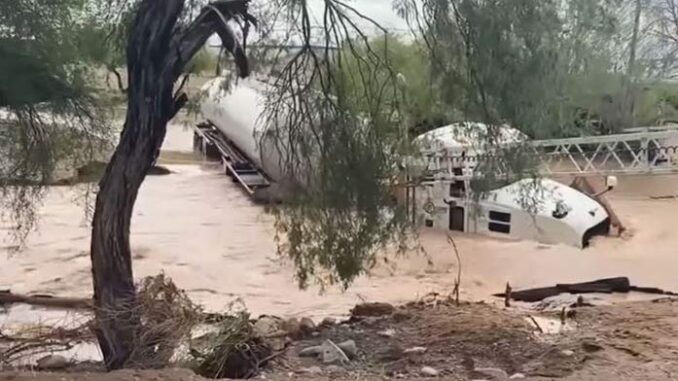
The deaths of at least two residents, along with a costly cleanup and the potential for even more devastation due to the forecast for more rain faces the residents of Gila Bend, a rural area in Maricopa County which suffered horrific flooding early Saturday morning after hours of heavy rain the night before.
A state of emergency was declared Saturday by Mayor Chris Riggs as well as the Maricopa County Board of Supervisors. The same is forthcoming from the State, according to Gov. Doug Ducey.
“Arizona is actively working with local emergency officials to assist in the response to the recent flooding in Gila Bend,” Ducey tweeted after learning of the devastation. “We are in contact with local first responders to provide resources and prepare a state declaration of emergency.”
Gila Bend is a town of about 1,800 located 70 miles southwest of Phoenix. Authorities say rescue efforts were hampered by the fact the area of flooding started in the dark and was widespread across the town. In addition, the monsoon rains were accompanied by a lot of lightening and a main roadway, State Route 238, was impassable in spots between Maricopa and Gila Bend.
About 30 people were pulled to safety from atop their homes by helicopters and roughly 100 residents had to find alternative housing due to the damage. Unfortunately, the mayor confirmed that two people died as a result of the flooding.
County officials activated an Emergency Operations Center near the town to help with coordination of rescue and relocation activities, while members of the Arizona Rangers aided with security and transportation. By Saturday afternoon the water had subsided enough that search and rescue workers were leaving the area, but earlier in the day there were about 90 first responders on scene.
Efforts were still underway Sunday night to account for all residents and visitors in the area.
Meanwhile, county employees were joined by Arizona Department of Transportation (ADOT) workers throughout the weekend to clear roads. The Maricopa County Flood Control District and state officials are expected to be in Gila Bend in the coming days to monitor water quality issues.
Emergency responders are also preparing for the potential for further flooding into Tuesday evening as more rain is forecast to hit the area.
by Corinne Murdock | Aug 16, 2021 | News
By Corinne Murdock |
Northland Preparatory Academy (NPA), a Flagstaff charter school, segregated maskless students last week after suddenly reinstating its mask mandate the night before. NPA called the area for segregated students an “alternative placement classroom.” The three students weren’t given direct teaching and were tasked with homework.
12 year old Olivia Oravitz was one of the students placed in the alternative placement classroom. Olivia recounted to AZ Free News how she was taken into the nurse’s office for not wearing a mask. Soon after, Olivia said that she was joined by several other maskless students – a 9th grader and a 12th grader.
According to Olivia, they spent their entire first period sitting in the nurse’s office. They were instructed to have their parents pick them up.
Olivia’s father, Jeff Oravits, recorded his encounter with NPA officials. When he arrived at the school maskless, NPA staff wanted him to wait outside but he refused. Staff allowed him to remain inside, and Jeff requested a meeting with the principal or superintendent.
The audio recording reflects that NPA Principal Jay Litwicki did meet with Jeff. The principal concurred with Jeff’s assessment that they were “isolating” maskless students. However, Litwicki informed Jeff that they wouldn’t be sending maskless students home after all because there were so few students that NPA would be singling them out. Instead, Litwicki explained that they were setting up an alternative classroom.
Litwicki noted that school staff didn’t anticipate students to be maskless.
The principal explained to the Oravitses that maskless students wouldn’t receive direct instruction until further notice. Rather, the segregated students would remain in the alternative placement classroom and receive visits from some of their teachers during preparatory periods.
Photos provided by the Oravits family show that the alternative placement room was bordered by computers and empty in the center.
At no point throughout the whole day did NPA require the segregated students to mask up.
Olivia described to AZ Free News how they didn’t have any regular teaching. Instead, the segregated students were monitored by several staff members while they did homework, and visited by some of their teachers periodically to review assignments.
Olivia added that the three segregated students were given permission to leave the classroom, and weren’t required to wear masks as they did so.
The NPA Governing Board reinstated its mask mandate during a special meeting last Thursday, voting 9-0 in favor of it. The board patterned its rationale for doing so after other school districts reinstating their mask mandates – they argued that laws don’t go into effect until 90 days after the legislative session ends, regardless of any retroactivity clauses. In the case of the mask mandate ban, that would be September 29.
In an interview with her father’s radio show, the Jeff Oravits Show, Olivia said she was disgusted by the board’s decision. At first, she planned on wearing a mask with “9/29” written on it, to signify the day the board promised to rescind the mandate. Olivia encouraged her peers to do the same.
The day after the board’s decision, however, Olivia said she’d changed her mind. She said she wondered why NPA decided to reinstate masks at all, after all this time.
“I’m just tired of them taking away my freedom to decide what’s best for me,” said Olivia. “If it hasn’t worked, it’s probably not going to work by now.”
Olivia told AZ Free News that she would’ve been fine with being removed from school, because she didn’t want to attend somewhere that removed students based on that mandate.
“I kind of went into it with nothing to lose – if I got kicked out for not wearing a mask, I didn’t want to be in a school that did that to me,” said Olivia.
Corinne Murdock is a reporter for AZ Free News. Follow her latest on Twitter, or email tips to corinne@azfreenews.com.
by Terri Jo Neff | Aug 15, 2021 | Education, News
By Terri Jo Neff |
Whether a new state law concerning mask mandates is effective now, or doesn’t go into force until Sept. 29 is the question a Maricopa County judge must answer, but even he admits the final decision will be made by someone else.
Judge Randall Warner held oral arguments Friday morning in a petition for a temporary restraining order (TRO) requested by Douglas Hester against his employer, Phoenix Union High School District, which recently announced a mandatory mask policy for its students, parents, and staff when on school property, including buses.
The Centers for Disease Control and Prevention (CDC) currently recommend K-12 students, parents, and staff wear masks when indoors even if vaccinated for COVID-19. Phoenix Union and at least nine other districts across the state have announced or implemented mask mandate.
Hester contends the new state law barring cities, towns, charter and public schools, community colleges, and public universities from ordering or enforcing any such mandated mask usage became effective June 30.
One or both the sides in the case could appeal Warner’s decision on the effective date of the no-mask mandate statute, depending on how he rules and the reasoning behind his decision. Warner acknowledged as such Friday when he said his ultimate duty in the case is to “tee it up for the Supreme Court” and let the justices make the final ruling
Hester, a science teacher for the district, contends HB2898, the K-12 Education Budget Reconciliation Bill which created the new law, is already in effect due to a retroactive clause. Therefore, he wants Warner to issue a TRO to block enforcement of Phoenix Union’s new policy.
Phoenix Union, through its attorney Mary O’Grady, opposes any TRO. O’Grady also filed a motion on the district’s behalf asking Warner to dismiss the case. It is the district’s position that the effective date of the new statute is not until Sept. 29, the ninety-first day after the legislative session ended.
The district also questioned why legislators would include a retroactive effective date if the new law took effect on the schedule Hester’s attorney Alex Kolodin contends is in place.
According to Kolodin, the 90-day provision does not apply to HB2898m the K-12 Budget reconciliation bill. He argued Friday that is one reason appropriations bills are not subject to voter referendums.
“The retroactivity clause, the governor, and members of the Legislature have all expressed their intent was for schools to not be able to do this after June 30 by putting in that retroactivity clause,” he argued.
Hester named the Phoenix Union District and its eight board members as defendants. Warner’s decision is expected next week.
by Corinne Murdock | Aug 15, 2021 | News
By Corinne Murdock |
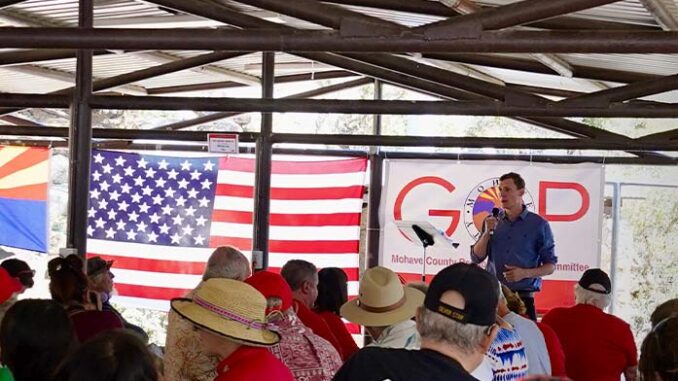
Blake Masters reported that he’s managed to outraise his opponents entire first quarter showings – in one single month. The COO of the tech investment firm Thiel Capital and president of the Thiel Foundation made the announcement in a press release Friday.
Masters reported receiving over $507,000 in contributions, though the Federal Election Commission (FEC) doesn’t have his numbers published yet. Others vying for the Republican slot – Arizona’s current Attorney General Mark Brnovich, solar power businessman Jim Lamon, and former Arizona National Guard Adjutant General Michael McGuire – raised about $70,000 to over $250,000 less in their entire first quarter according to the FEC. In his first quarter, Brnovich raised $438,000.
The Senate hopeful credited his bulk of supporters – namely, first-time donors – for making this surge in campaign contributions possible.
Masters acknowledged that money shouldn’t be everything, but asserted that incumbent Senator Mark Kelly (D-AZ) would raise hundreds of millions to win this race. He noted further that he must be doing something right because “the Left” is attacking him primarily.
“Money isn’t the only thing in politics, but unfortunately, without it, you’re toast,” said Masters. “Mark Kelly and the Democrats are going to raise more than $100 million to try to keep this seat. Republicans need a nominee who can bring new energy, new voters, and new donors to the fight.”
Masters asserted that this pattern of donations is proof that constituents are tired of “cookie-cutter politicians.” He says their money is proof of where their vote lies.
“I raised more $ in my first month than my opponents did in their entire first quarter,” said Masters. “More proof that people are tired of cookie-cutter politicians. We need new energy in order to take this country back!
https://twitter.com/bgmasters/status/1426202818860355589
The latest polls don’t reflect where Masters lies with voters; he entered the race almost one month ago to date.
Former President Donald Trump hasn’t endorsed any candidate for this race.
Masters has the backing of fellow Thiel Capital higher-up, founder and tech billionaire Peter Thiel, who is currently backing GOP candidates in other states such as Ohio’s Senate hopeful and bestselling author of “Hillbilly Elegy,” J.D. Vance.
Corinne Murdock is a reporter for AZ Free News. Follow her latest on Twitter, or email tips to corinne@azfreenews.com.