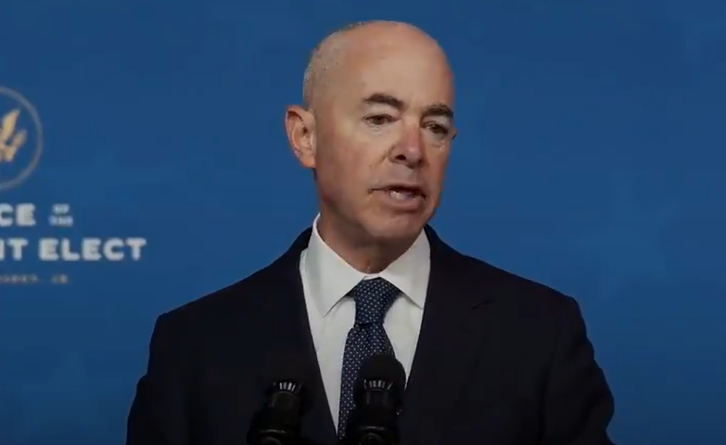
On Tuesday, Department of Homeland Security (DHS) Secretary Alejandro Mayorkas was impeached under an effort initiated and led in part by Rep. Andy Biggs (R-AZ-05).
The resolution to impeach Mayorkas for high crimes and misdemeanors passed 214-213, with three Republicans voting against it: Ken Buck (CO), Mike Gallagher (WI), and Tom McClintock (CA). Biggs has been proposing legislation to impeach Mayorkas since 2021.
In remarks preceding the impeachment vote, Biggs said the Founding Fathers were supportive of impeachment as a means of addressing serious offenses to the nation.
“It’s hard for me to conceive of any bigger offense against the nation than opening up the border and actually willingly and intentionally inviting in 10 million-plus illegal aliens to cross into the country,” said Biggs. “Secretary Mayorkas opened up our border and encouraged people to come in.”
Biggs cited Mayorkas’ inability to confirm during his sworn testimony that the border was operationally under control as defined by the Secure Fence Act of 2006. Mayorkas implied that the standard was impossible to meet, and that DHS had created its own standard to meet.
“That is a violation of separation of powers, and it is also a violation of his oath of office and duties,” said Biggs.
Additionally, Biggs cited DHS implementing a catch and release policy by abusing the policy allowing parole passes for certain immigrants on a case-by-case basis for humanitarian purposes. Those passes granted temporary legal status to the migrants that received them. Over the course of several decades, only an average of several dozen migrants annually received parole passes. Under Mayorkas, over a million have been issued to illegal immigrants over the last three years.
The congressman also cited Mayorkas testimony that his administration wasn’t deporting illegal immigrants even if they had removal orders from a court.
Biggs said it was imperative to impeach Mayorkas to prevent the unrelenting, ever-worsening tide of illegal immigrants constituting the border crisis.
“It isn’t a matter of a policy difference; it isn’t a matter of incompetence or maladministration. This is somebody who is a public official who has breached the public trust, and if we keep him in office for another 12 months, we shall surely see several million more people in this country,” said Biggs.
The impeachment resolution now heads to the Senate.
Tuesday’s vote was the second attempt against Mayorkas. House Republicans failed to gain enough votes to pass the impeachment resolution last week.
Rep. Eli Crane (R-AZ-02) said that the impeachment was warranted and claimed the border crisis was a deliberate effort by Mayorkas.
“The crisis at the border was deliberate, which more than warrants this historic action,” said Crane.
The crisis at the border was deliberate, which more than warrants this historic action. https://t.co/labBRJir0r
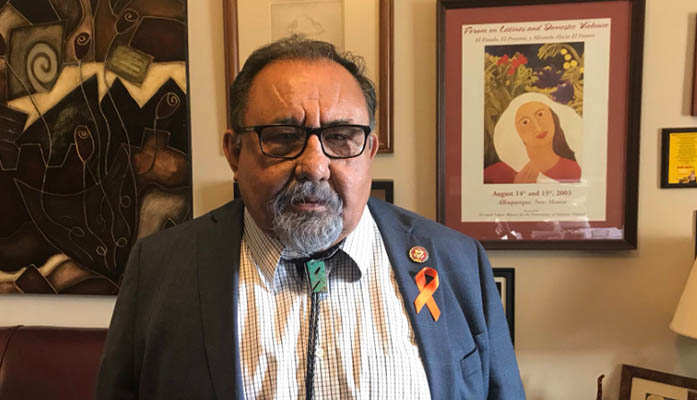
Rep. Raúl Grijalva (D-AZ-07) condemned the impeachment as “baseless” and that there was “no evidence” of wrongdoing by Mayorkas. Grijalva claimed that the border crisis was now Republicans’ fault, not the Biden administration.
“[H]e has lawfully carried out the policies of President Biden and still requires significant help from Congress to manage the issues we face at the border,” said Grijalva. “[House GOP] now bear full responsibility for the situation at our southern border.”
Instead of passing real immigration reform to fix our broken system or giving the necessary resources for Secretary Mayorkas and border communities to manage the humanitarian crisis, the House Republican majority moved forward with a baseless impeachment resolution. https://t.co/nppoLt51h2
Rep. Raúl Grijalva (D-AZ-07) skipped out on a subcommittee field hearing addressing the border crisis in his district last Thursday, though the meeting occurred in his district and he serves as a ranking member in the parent committee. Rep. Juan Ciscomani (R-AZ-06) was in attendance, though he doesn’t sit on the subcommittee.
The House Natural Resources Subcommittee on Federal Lands held the hearing in Sierra Vista.
Grijalva dismissed the hearing as nothing more than an excuse to “bash the border and scapegoat immigrants,” and claimed that last week’s failed $118 billion bill setting aside 16 percent of funds for the border would have solved the border crisis. Senate Republicans blocked the bill, largely due to a majority of its funding going to Ukraine and other foreign aid initiatives.
REMINDER: A mere 24 hours ago, Republicans killed any chance for a bipartisan border solution.
But today, they're holding a GOP-only hearing in Sierra Vista, AZ to bash the border and scapegoat immigrants.
Comparatively, Ciscomani said during his opening remarks in last Thursday’s hearing that those who had true concern for the border crisis were the ones who showed up. The subcommittee heard testimony from representatives of impacted community members and leaders.
Ciscomani blamed the crisis on the Biden administration’s “lack of desire” to enforce immigration laws. Ciscomani said that the neglect has resulted in the southern border coming under the control of foreign enemies.
“[T]hey have more control over the area than anyone else,” said Ciscomani.
Art Del Cueto with the National Border Patrol Council affirmed Ciscomani’s assessment, noting specifically that it is the drug cartels who have control.
Ciscomani added that the border crisis numbers have only gone up: in this fiscal year, 2024, illegal immigrant encounters there in the Tucson sector have increased over 140 percent. Since President Joe Biden took office, there have been over 6.2 million illegal immigrants apprehended along the southern border; Arizona’s population is at around 7 million. The congressman said that the unrelenting torrent of illegal migration has had a negative impact on border agents’ morale.
Other data that was shared included that over 35,000 of last year’s illegal immigrant apprehensions had prior criminal convictions or outstanding warrants for arrest, of which 170 were on the terrorist watch list. Gotaways amounted to about 1.7 million: those are the illegal immigrants observed entering the country but not apprehended.
Further testimony shed light on the illicit drug trade aspect of the border crisis. 99 percent of illegal narcotics make it through the border without seizure. A vast majority of the fentanyl in the country comes through the southern border, with about 51 percent of all seizures occurring in Arizona. About 70,000 Americans die from fentanyl overdoses every year and now the leading cause of death for Americans aged 18 to 45.
Sierra Vista Mayor Clea McCaa testified his town has been plagued by “extremely dangerous situations,” including constant cases of “low car drivers,” mainly teenagers, speeding and crashing at over 90 miles an hour in residential and school zones to evade police, which have resulted in at least one fatality. “Low car drivers” are individuals recruited by Mexican cartels, usually over social media, to traffic illegal immigrants, called “lows,” over the border.
“[F]or the past three years, the trend of young people being recruited as so-called ‘low car drivers’ does pose a real threat to our residents and visitors, which fuels the narratives about the violence near the border,” said McCaa.
McCaa supported a proposal to require social media companies to monitor for illegal solicitations of migrant trafficking.
Additionally, McCaa reported that the Cochise County Attorney’s Office has undergone a marked increase in felony case submissions: from over 300 in 2020 to nearly 600 in 2022, and over 500 last year.
Sierra Vista is about 20 miles from the border and has a population of just over 40,000.
Cochise County Sheriff Mark Dannels testified that bookings in his jail on border-related state crimes in 2022 and 2023 amounted to nearly 3,000 for murder, nearly 600 for smuggling, over 400 for high-risk pursuits. The bookings came at a cost of about $9.4 million: a cost borne by the locals.
“We get zero money from the federal government,” said Dannels.
Arizona Farm Bureau’s first vice president, John Boelts, said that the Biden administration has failed to protect the farmers and ranchers near the border. Boelts noted that illegal immigrant trespassers were trashing, defecating and urinating, and trampling their produce.
Boelts said that he and his fellow farmers have paid up to nearly a million dollars mitigating the damage done by the illegal immigrants. He said that the immigrants who work on the farms have been upset by the illegal migration, since they spent years and tens of thousands of dollars to migrate here legally.
“The worst part about it is, most of the folks that I mentioned in my testimony, that legally work in agricultural fields in my community, the first and second generation immigrants ask them what they think about what’s going on today – they’re appalled,” said Boelts. “They worked hard to become a part of this country, a legal part of this country.”
Jim Chilton, an elderly rancher out of Aravaca whose family has operated a ranch for nearly 140 years, provided a sampling of the 10 years worth of video evidence of illegal immigrants crossing his land, specifically 14 miles of border territory. Chilton testified that all crossers he’s witnessed have been adult males wearing uniforms of camouflage, carpet shoes, and identical plain backpacks. Chilton said that there have never been any women or children captured on his cameras over the past decade.
“Not knowing who’s crossing is a national security matter,” said Chilton. “We’ve got to secure the border at the border.”
Chilton said the crossers increased fivefold under the Biden administration compared with the Obama and Trump administrations. He said he hasn’t witnessed any border patrol agents patrolling the known border entrance trails near him in the past four months.
Chilton reported that he personally spends at least $60,000 a year now to mitigate the damage by illegal immigrants. He also expressed concern that his cowboys and family were at risk of violence from illegal immigrants evading law enforcement.
Corinne Murdock is a reporter for AZ Free News. Follow her latest on Twitter, or email tips to corinne@azfreenews.com.
A nonprofit program receiving taxpayer funds to house illegal immigrants called police on two congressmen who attempted to visit the facility last week.
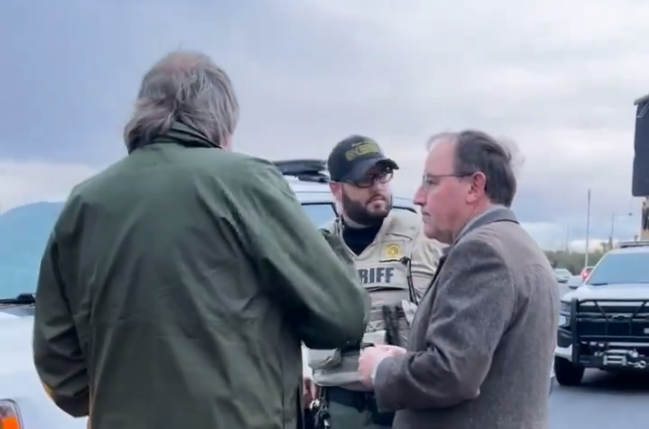
A manager with Casa Alitas called the sheriff on Republican Reps. Tom Tiffany (WI) and Doug LaMalfa (CA), both members of the Natural Resources subcommittee, when they attempted to visit a Casa Alitas location housing illegal immigrants: a repurposed Ramada Inn in Tucson. In a video of the interaction, the pair are invited to speak to an unidentified, masked woman referred to as the “manager” of the location; upon hearing them introduce themselves as members of Congress, the woman turned and yelled at her colleague to “call 911.”
Tiffany urged a public congressional hearing on NGO expenditures for illegal immigrant aid.
“These NGOs aiding illegals are receiving federal dollars, and it’s Congress’ duty to provide oversight,” said Tiffany. “This needs investigating ASAP, and Congress must hold public hearings with these groups testifying to give the American people transparency on how their tax dollars are being spent.”
After @JamesOKeefeIII exposed that the Casa Alitas Ramada Hotel in Tucson was housing illegals, I made a stop to see how American taxpayer dollars are being spent.
These NGOs aiding illegals are receiving federal dollars, and it’s Congress’ duty to provided oversight.
Casa Alitas is a program of the Catholic Community Services of Southern Arizona. The program takes in illegal immigrants from ICE and Border Patrol detention, and gives them housing, food, clothing, laundry, toiletries, and travel assistance.
The parent organization spent over $3 million in the 2022 fiscal year to operate Casa Alitas, assisting nearly 47,700 illegal immigrants that year. As of their latest data in 2023, the program has assisted over 180,000 illegal immigrants since launching in 2014.
In December, illegal immigrants overwhelmed Phoenix Sky Harbor airport with transport and travel assistance supplied by Catholic Community Services of Southern Arizona. Multiple individuals reported witnessing the illegal immigrants receiving priority boarding and expedited security checks.
The cost to house and transport illegal immigrants has come at a high cost to taxpayers. In October, AZ Free News reported on the city of Tucson having spent $5 million in under a year to provide housing and busing to illegal immigrants through a reimbursement arrangement with the county and federal government. The city entered into an agreement last April to have Pima County reimburse them for incurred expenses providing services to illegal immigrants.
In a meeting last week, the Tucson City Council agreed to be reimbursed for up to another $6 million under this arrangement through the summer.
Current Casa Alitas program leadership include Diego Peña Lopez, agency director; Susana Selig-Gastelum, associate agency director; Daniel Diochea, operations manager; Kyle Haynes, operations manager; and Caleb Milford, operations manager.
“This a prime example of a critical lack of transparency,” said Backer. “If public dollars are being used to run this facility, it requires oversight by public servants who will be transparent and can be trusted to look out for the taxpayers interests.”
Tiffany visited the Casa Alitas location after O’Keefe Media Group (OMG) went undercover to report the location’s inner workings. One migrant informed an OMG journalist that he witnessed gang members taking advantage of the lax border policy.
Corinne Murdock is a reporter for AZ Free News. Follow her latest on Twitter, or email tips to corinne@azfreenews.com.
Mesa Public Schools (MPS) faces a lawsuit for policies resulting in the secret transitioning of children’s genders and tracking their gender transition journeys while restricting parental knowledge or consent.
The amended lawsuit, filed on Tuesday by America First Legal (AFL) on behalf of MPS Governing Board member Rachel Walden and the mother of one alleged victim, accused MPS of unlawfully hiding policy and evidence of their transitioning of children from parents. Arizona’s Constitution and Parents’ Bill of Rights acknowledge that it is the fundamental right of parents to direct the upbringing and education of their children.
The amended complaint contained new information revealing that at least one MPS school maintained a “parent concealment cheat sheet”: a spreadsheet tracking the gender journeys of over a dozen students as well as information on which of their parents were supportive or needed to be kept in the dark.
/1 🚨BREAKING – America First Legal Sues Mesa Public Schools in Amended Lawsuit, Adding Mother Whose Daughter’s Gender Was Transitioned Without Parental Knowledge or Consent, and After Obtaining New Evidence Proving Scale of Deception
MPS policy of transitioning children without parental knowledge or consent, the Transgender Support Plan (TSP), dates back to 2015, according to the lawsuit. The policy asks the children for permission to notify their parents of their gender transition: should the child decline, MPS requires its employees to keep the transition hidden from parents.
MPS has long denied the allegations that TSP occurs without parental notification. Last June, MPS Superintendent Andi Fourlis dismissed the allegations in a public letter.
According to a once-public document students were made to fill out to initiate a TSP, the Support Plan for Transgender and Gender Nonconforming Students, students were given the option to deny permission of disclosure of their gender transitions to their parents. MPS removed that support plan from public view following community outcry in 2022. The district then issued an updated version of the support plan with a loophole to parental disclosure: name and gender changes were to be requested through Synergy — the district’s online database — in order for parents to be notified. Should Synergy not be updated, parents would not be notified.
AFL noted that this loophole contradicted Fourlis’ claim, which ultimately resulted in the gender transition of the eighth-grade girl at the heart of AFL’s lawsuit, Megan Doe, to a male by school staff without the knowledge or consent of Doe’s mother, Jane.
“[S]chool employees encouraged Megan to lie to her parents and helped her to do so, which harmed the parent-child relationship and delayed Megan from receiving needed mental health counseling,” stated AFL.
Per the lawsuit, Jane’s attempts to learn of what had happened to her daughter were rebuffed by school staff and leadership in 2022. The principal at her daughter’s school refused to disclose further records or information about the conversations school staff had with her daughter, and refused to comply with Jane’s demand to cease referring to her daughter as a boy and by a boy’s name.
“The principal admitted that school personnel intentionally had not changed Megan’s name in the [Synergy] system to avoid any notification being sent to Jane and that there were no plans to change Megan’s name in the system,” stated the lawsuit. “The principal told Jane that even if Jane had asked to be notified about any name changes, pronoun changes, or other choices related to a transgender identity by her child, it was official MPS policy not to tell parents and that school personnel would not notify Jane about any further developments related to these issues.”
It was only after this ordeal that Jane discovered Megan’s struggles and, reportedly, was able to resolve them through conversations with her mother and a psychotherapist. The lawsuit stated that this maternal intervention resulted in Megan’s issues being “completely resolved” within a month.
“[Megan] is now very comfortable presenting herself as a female and using her given name and is thriving in high school,” stated AFL.
AFL claimed to also have discovered, upon information and belief, that MPS employees regularly ignored the requirement to notify parents after students began transitioning genders in school.
AFL further issued evidence of a school counselor, Emily Wulff at Kino Junior High, instructing school staff in an email last March to not disclose gender transitions to anyone outside those allowed within the support plan. Wulff’s email made no mention of parental notification.
In a follow-up email, Wulff clarified that the purpose of the nondisclosure policy was to “protect outing students who are not ready to come out to peers or family members.” Wulff specified that the support plan was designed to keep gender transitions a secret from certain families.
“The main takeaways would be to make sure when contacting home to use their preferred name home,” wrote Wulff. “For example, if I have a student that goes by Emily and she/her pronouns that I need to call home for, and in their plan it says to use their birth name and biological pronouns home, [be] sure you do not out the student by using their preferred name and pronouns they use at school.”
Last March, Wulff also directed school employees to keep up a spreadsheet tracking the gender transition journeys of 17 students, titled “Pronoun Preference,” with notes declaring whether a student’s parents and family were aware of their transition.
For three students whose parents were documented as “unaware,” Wulff’s spreadsheet directed school employees to hide their preferred names and pronouns. For another seven students whose parents were documented as somewhat aware or partially supportive, the spreadsheet instructed staff to use the students’ birth names and gender to mask the extent of their transition.
Corinne Murdock is a reporter for AZ Free News. Follow her latest on Twitter, or email tips to corinne@azfreenews.com.
The Arizona Free Enterprise Club (AFEC) is suing Democrat Secretary of State Adrian Fontes due to certain rules in the latest Elections Procedures Manual (EPM) from December 2023, which the group believes are unlawful. The pro-free market nonprofit filed the legal challenge in the Superior Court of the State of Arizona for the County of Maricopa late last week.
AFEC is asking the court to strike down the provisions challenged by the lawsuit which are believed to contradict or exceed statutory authority.
“Secretary Fontes has produced one of the most radical elections procedures manuals in our state’s history,” said Scot Mussi, president of AFEC. “If the illegal provisions of this manual are allowed to stand, the integrity and transparency of state elections would continue to dissipate at the hands of leftwing ideologues.”
The complaint alleges that the 2023 EPM improperly places protected political speech at risk of criminal prosecution and has an unconstitutional chilling effect on protected political speech.
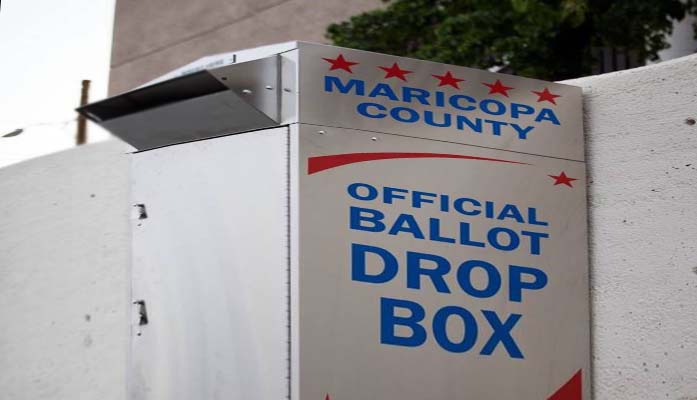
The provisions of the EPM that AFEC contends are unconstitutional include rules that: restrict observation of drop boxes and polling places, ban photography at election sites, and regulate speaking to people at election sites.
“These activities — watching drop boxes, speaking to people at election sites, and photographing activity at election sites — all constitute forms of speech,’’ the lawsuit says.
In addition to these claims, the lawsuit is challenging the 2023 EPM’s rules requiring political parties to open their primaries to federal only voters.
“The 2023 EPM also contradicts statutory requirements and exceeds statutory authority by opening the Presidential Preference Election to federal only voters, in essence, creating a new law out of whole cloth,” AFEC said in a news release.
The Free Enterprise Club details three counts for causes of action regarding the EPM, including speech, free association, and vagueness.
“We hope the court agrees with our arguments and forces the Secretary to adhere to state law,” Mussi said.
This isn’t the first lawsuit that’s been filed over the 2023 EPM. In January, Arizona’s leading legislative Republicans sued Fontes over the EPM. The Arizona Republican Party, Republican National Committee, and Yavapai County GOP filed their own lawsuit late last week.
Elizabeth Troutman is a reporter for AZ Free News. You can send her news tips using this link.
A bipartisan effort to pass election reforms in Arizona succeeded last week.
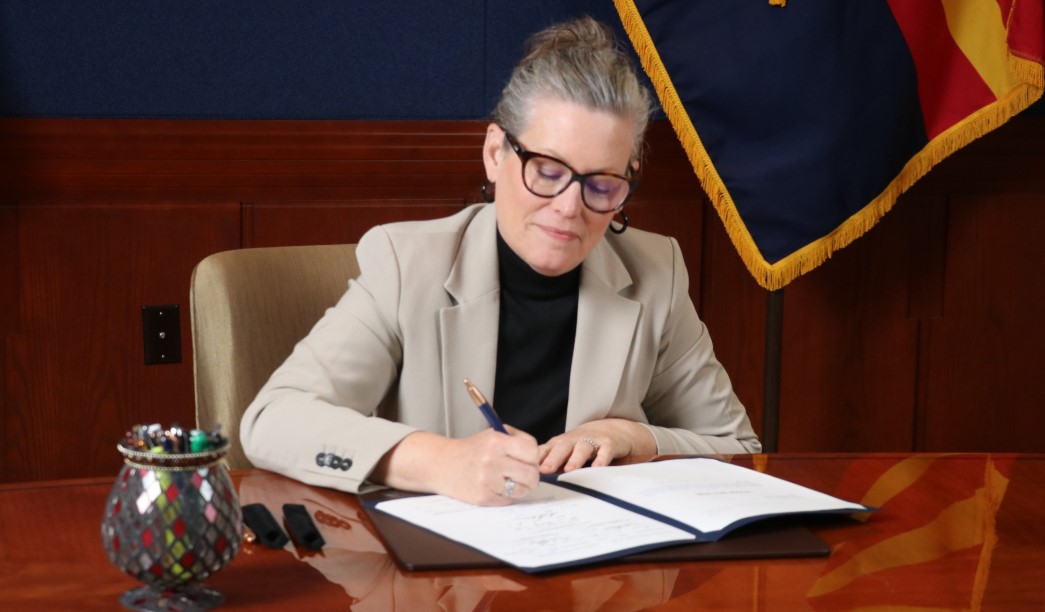
After many failed times of attempting to approve election reform measures in Arizona under a divided government since the start of 2023, the Republican-led legislature and Democrat Governor Katie Hobbs came to an agreement on a crucial package. Late last week, the state house and senate passed HB 2785, and then the governor signed the legislation.
According to an overview provided by the Arizona House of Representatives, the bill is “an emergency measure that modifies certain procedures and deadlines related to the conduct of elections.” The significant provisions of the legislation, per the press release from the Arizona House, are as follows:
Robust legally binding signature verification standards in law for first time in Arizona.
Puts political parties on an equal playing field when curing ballots.
Promotes greater use of ID when voting early.
Ensures that Arizona’s overseas military will be able to vote, and Arizona’s electors will be delivered on time.
With the bipartisan agreement, Arizona’s primary election date will be moved up to July 30.
“Politics is the art of the possible, and when Republicans stick together, we can achieve the impossible, like getting Katie Hobbs to sign real election reforms into law,” said Representative Alexander Kolodin, sponsor of HB 2785. “Arizona’s voters can rest assured that the 2024 election will be more secure, free, and fair than those that have gone before.”
The Senate Elections Committee Chair, Senator Wendy Rogers, added, “”This legislation is a major win for Arizona voters and important in restoring voter confidence in election Integrity. After months of painstaking discussions among lawmakers, election experts, administrators, county officials, and the executive branch, I’m proud we were able to craft a commonsense solution that all 15 Arizona counties support. It will ensure our service members abroad will have their votes counted on election day, and moreover, it will enable us to accurately determine the winner sooner rather than later.”
Governor Hobbs also struck a triumphant tone in her statement when she signed the bill, saying, “With this bill, we are making sure every eligible Arizonan can have their voice heard at the ballot box. We protected voters’ rights, we kept the partisan priorities out, and we demonstrated to the country that democracy in our state is strong. Thank you to Republicans and Democrats in the legislature who put partisan politics aside to deliver this important victory for the people of Arizona.”
I'm proud to sign our bipartisan deal to keep our elections free and fair.
With this bill, we're making sure Arizonans will have their voices heard at the ballot box. pic.twitter.com/GQNOfoyXXl
Arizona Secretary of State Adrian Fontes, also a Democrat, chimed in with his support of the package. Fontes said, “I am pleased to see Arizona’s bipartisan effort to pass House Bill 2785, keeping on-time ballot delivery for military and overseas voters and securing the state’s electoral votes for the 2024 presidential election. This legislation received overwhelming support across party lines and demonstrates Arizona’s commitment to fair and secure elections.”
The bill passed the state house with a 56-2 vote (with two vacant seats), and the senate with a 24-2 vote (with four members not voting).
Ironically, the consensus on these election reforms between legislative Republicans and statewide Democrats comes as both parties prepare to wage a legal fight in the courts over the Elections Procedures Manual that was produced by Secretary Fontes and greenlighted by Governor Hobbs and Attorney General Kris Mayes.
Daniel Stefanski is a reporter for AZ Free News. You can send him news tips using this link.