by Daniel Stefanski | Aug 17, 2024 | News
By Daniel Stefanski |
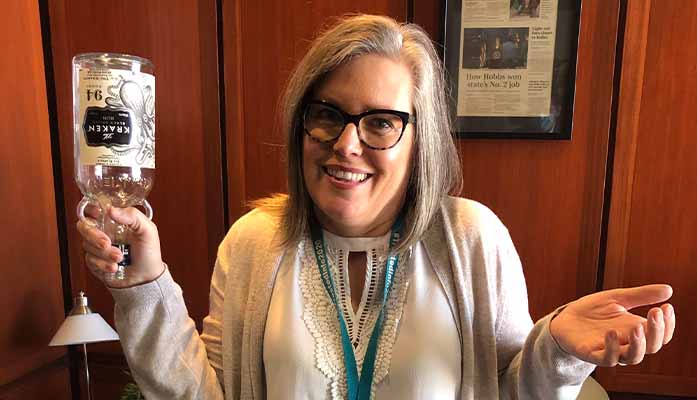
Arizona Legislative Republicans put the finishing touches on one of their signature legal victories over the state’s Democrat governor in court.
Earlier this week, Arizona Senate Republicans announced that “Governor Katie Hobbs admit[ted] she violated state law through her scheme to circumvent the Senate confirmation process for director nominations and has agreed to submit new candidates for consideration, as required by law.”
“We continue to see a disturbing trend unfolding, where Democrats are weaponizing the government in an attempt to force unlawful and extreme agendas upon our citizens,” said Senate President Warren Petersen. “No elected official is above the law, and the Governor’s manipulative scheme to circumvent Senate confirmation demonstrates the crucial role the Legislature serves in holding the executive accountable against abuses of power. I’m grateful we can move forward from the insanity and chaos our state agencies and our citizens have been experiencing due to the Governor’s actions, and I look forward to reinstating the confirmation process so that we can properly vet director nominations in an effort to ensure only the most qualified candidates are serving in these critical roles.”
According to the press release issued by the Senate Republicans, “Senate President Warren Petersen spent the last several months working to hold the Governor accountable in Arizona State Senate v. Katie Hobbs. In September of 2023, after a Senate committee recommended a nominee accused of plagiarism not be confirmed, Hobbs sent a letter to President Petersen notifying him that she was going to evade the senate-confirmation process for agency directors, mandated by A.R.S. § 38-211. Under her ill-advised plan, blessed by Attorney General Mayes, Hobbs withdrew 13 director nominations still pending before the Senate. She then re-installed these same individuals with a fake title of ‘Executive Deputy Directors.’ Based on flimsy legal reasoning, which Hobbs’ own attorney later described as ‘strange,’ Hobbs claimed these fake directors had the same power and authority as Senate-confirmed directors. After months of discussions, she continued to insist she was above the law.”
Republican Senator Sine Kerr reacted to the news, posting, “A big win for the rule of law in AZ!! The people of AZ deserve legitimate, qualified, lawful agency Directors confirmed by the Senate!”
On the other side of the aisle, Democrat Senate Leader Mitzi Epstein said, “I applaud Governor Hobbs for consistently taking the high road and working diligently to protect the interests of hard-working Arizonans. Governor Hobbs was elected fair and square in 2022 and it is time Republicans get out of the way and let her govern for all Arizonans. It’s 2024, the games need to end and that starts now with ensuring we get every director across the finish line in the Senate.”
Epstein added, “Republicans have repeatedly rejected bipartisanship, and the burden falls squarely on Arizona taxpayers every time. Democrats will continue to act in good faith and do everything possible to ensure government runs smoothly in the upcoming legislature.”
In their press release, the Senate Republicans argued that it was their constitutional duty (and obligation by law) to stand in Hobbs’ way on certain matters, writing, “Consistent with the United States Constitution and the laws of states across this nation, Arizona law requires its agencies to be led by Senate-confirmed directors, under A.R.S. § 38-211. This requirement exists to preserve the liberties of Arizona’s citizens. Just as the Governor’s veto serves as a check on legislative power, Senate confirmation of agency directors serves as a necessary check on the Governor’s power.”
Daniel Stefanski is a reporter for AZ Free News. You can send him news tips using this link.
by Matthew Holloway | Aug 17, 2024 | Economy, News
By Matthew Holloway |
Arizona Rep. David Schweikert shared the shocking July Consumer Price Index (CPI) report of the U.S. Bureau of Labor Statistics that utterly shatters any narrative suggesting that the economy has recovered and inflation is abating. Citing the Bureau, Schweikert’s office noted that consumer prices are up 0.2% month-over-month and 2.9% compared to 2023. This requires the average family to spend $13,138 more per year to maintain the same lifestyle they enjoyed in 2021, while real average weekly earnings dropped 3.9%.
Most damningly, per the report, Cumulative CPI inflation (not seasonally adjusted) is up a devastating 20.2% with the American people effectively losing one-fifth of their buying power since President Joe Biden and Vice President Kamala Harris took power in 2021.
In several states, the cumulative inflation is significantly higher still. In the states of Arizona, Utah, Colorado, and Nevada, all key states in the 2024 Presidential election, cumulative inflation stands at 21.8%, and cumulative additional costs are the highest in the nation with Colorado’s the worst at $36,703 per average household. Colorado is exceeded only by Washington, D.C. where the cost increase is a staggering $41,313 per household. Arizonans have spent $32,625 more due to cumulative inflation.
Schweikert said in the statement:
“Though hardworking Americans received positive news this morning that inflation continued to slow in July, overall prices are still up more than 20% and real average weekly earnings are down 3.9% since the beginning of the Biden-Harris administration.
From Day One, this administration’s radical agenda has been a rubber stamp for growth-slowing tax hikes and runaway inflationary spending that have dramatically reduced Americans’ purchasing power and standard of living. It’s no wonder that consumers have declining confidence in President Biden and Vice President Harris to improve their financial standing after three-and-a-half years of economic calamity.”
The congressman’s office summarized the lengthy report, finding that food prices have increased 22% since January and energy costs have skyrocketed over 40%.
According to the JEC State Inflation Tracker, the average U.S. household was forced to spend $1,095 more in July, or $13,138 more per year, to maintain the same consumption basket they had in January 2021.
Headline CPI-U inflation increased 0.2% m/m and 2.9% y/y.
Core CPI-U inflation increased 0.2% m/m and 3.2% y/y.
Since January 2021:
- Headline CPI-U inflation has increased 20.2%.
- Core CPI-U inflation has increased 18.3%.
- The food price index has increased 22%.
- The energy price index has increased 40.2%.
Real average weekly earnings for all employees have decreased by 3.9%.
On the national inflation tracker, measuring the additional monthly cost for the average U.S. household since January 2021, Arizona placed 11th, well above the national average. The five states that enjoyed the smallest cost increases due to inflation were Arkansas, Oklahoma, Maine, West Virginia, and Louisiana.
On August 2, the Joint Economic Committee Republicans also reported that per the July jobs report, only 114,000 new jobs were added to the economy, well short of the 175,000 projected, and unemployment has increased to 4.3%, further indicating a weakening economy. A week prior, in a fiery speech to a largely empty House, Schweikert sarcastically congratulated Congress for the gross national debt passing $35 trillion.
He admonished his colleagues arguing to protect Social Security, saying they should “know the math and know how it actually works.”
Matthew Holloway is a senior reporter for AZ Free News. Follow him on X for his latest stories, or email tips to Matthew@azfreenews.com.
by Staff Reporter | Aug 16, 2024 | News
By Staff Reporter |
On Wednesday the Arizona Supreme Court reversed a lower court ruling, validating the use of the phrase “unborn human being” as an impartial descriptor for Proposition 139, the ballot measure to legalize abortion totally.
The court’s 5-2 decision was a mere three pages long. In it, the Arizona Supreme Court ruled that the Arizona legislature’s choice to use the phrase “unborn human being” rather than “fetus” meets the standard of substantial compliance required by law for drafting an impartial analysis of ballot measures.
That phrase, “unborn human being,” resides in existing state law as well, something the Arizona Supreme Court did note in its order.
Vice Chief Justice John Lopez didn’t elaborate on his analysis in this ruling, just that the phrase complied with the standards of the law. Lopez promised that the court would issue an opinion in the future to more fully explain the decision.
The Maricopa County Superior Court’s slightly longer ruling had determined that “unborn human being” couldn’t qualify as an impartial analysis of the ballot proposal making abortion a constitutional right because the phrase carried an “emotional and partisan meaning” for both supporters and opponents of abortion.
Contrary to the Arizona Supreme Court’s view, the superior court had determined that the existence of the phrase “unborn human being” in state law was irrelevant to the question of neutrality.
The offending phrase at the heart of this legal battle was part of the Arizona Legislative Council’s nonpartisan descriptor intended for the informational pamphlets given to voters about the Arizona Abortion Access Act and other ballot measures:
“Current state law prohibits a physician from performing an abortion if the probable gestational age of the unborn human being is more than 15 weeks, except when a pregnant woman’s medical condition necessitates an immediate abortion to avert the pregnant woman’s death or for which a delay creates a serious risk of substantial and irreversible impairment of a major bodily function.”
An abortion does occur through the intentional killing and removal of an unborn human being from the womb of his or her mother.
The Arizona Abortion Access Act would create a fundamental, constitutional right to abortion up until birth, should a health care professional deem the abortion to be necessary to protect the mother’s life or health. The act would also impose a preemptive ban on any legislation seeking to punish those who assist mothers in obtaining abortions.
The group behind the proposal, Arizona for Abortion Access, said in a statement that describing an unborn child as an “unborn human being” was a manipulative ploy by anti-abortion advocates lacking “basis in medicine or science” or expert approval.
“This means that Arizona voters won’t get to learn about the questions on their ballot in a fair, neutral, and accurate way but will instead be subjected to biased, politically-charged words developed not by experts but by anti-abortion special interests to manipulate voters and spread misinformation,” said the group.
The group went on to urge voter support for the proposal; they didn’t indicate whether they planned on challenging the ruling.
Justice Clint Bolick recused himself from the case due to his wife, State Senator Shawnna Bolick, serving on the legislative council and crafting the contested language. Retired Justice John Pelander was selected by Chief Justice Ann Timmer to assume Bolick’s place; Pelander sided with the majority.
AZ Free News is your #1 source for Arizona news and politics. You can send us news tips using this link.
by Matthew Holloway | Aug 16, 2024 | News
By Matthew Holloway |
Republican Myron Lizer, a former Vice President of the Navajo Nation, announced his endorsement of Arizona GOP Senate Nominee Kari Lake in a statement released Wednesday.
In the statement provided to AZ Free News, Lizer wrote, “Having Kari Lake’s support for our community as a senator is invaluable and incredibly encouraging to see this as an opportunity for increased congressional engagement with the Navajo Nation. Her presence here is not just symbolic; it reflects her genuine commitment to our people and our issues. Kari Lake has unfinished business, and I wholeheartedly welcome her continued presence and efforts on behalf of the Navajo Nation as she runs for Senate.”
Lake responded in a post to X thanking Vice President Lizer. She wrote, “I am honored to be endorsed by small business owner and the 10th Vice President of the Navajo Nation, Myron Lizer.
For far too long, our native community has been ignored by congressmen and senators who delivered them NOTHING but broken promises. Under the America First policies of President Trump, our tribes flourished. They can and will have that peace and prosperity again.
Myron supports me because he knows I will be a strong voice for ALL Arizonans, including our native community, in Washington DC.”
Lizer and other Navajo Nation leaders met with Lake, Congressman Eli Crane (R-AZ02), and campaign officials for President Donald Trump at St. Michaels, Arizona, on Tuesday, describing the event on X as “a great night… on the Great Navajo Nation!” He tagged Crane and Lake saying, “you all have tremendous support up here in northeastern AZ!!”
Lizer shared photos of the event and a post from the Trump campaign’s Kally Rael who wrote, “@TeamTrump, @KariLake and @EliCraneAZ met with Navajo Nation leaders from around the tribe for an intimate discussion on Navajo history, conservative values and the negative impacts caused by the incompetency of the Biden/Harris administration. A special thank you to Mr Tom Ranger and @NN_MyronLizer such a wonderful evening. Yéigo Trump!”
Lizer, served as Vice President of the Navajo tribal government from 2018-2023 under former Navajo President and Democrat Jonathan Nez. He is a well-known supporter of President Donald Trump and launched the Native Americans for Trump coalition in Williams, Arizona, with Donald Trump, Jr. in 2020. Nez is currently running to unseat Congressman Eli Crane (R-AZ) in the second district. Lizer launched a primary campaign against Crane but did not gather enough signatures to appear on the ballot.
Matthew Holloway is a senior reporter for AZ Free News. Follow him on X for his latest stories, or email tips to Matthew@azfreenews.com.
by Staff Reporter | Aug 15, 2024 | News
By Staff Reporter |
A state senator instrumental to protecting vulnerable children is also key to Republican control of the Arizona Legislature.
State Senator Shawnna Bolick is hoping her constituents give her the green light to return for her first full term in the Arizona Legislature after returning from a brief hiatus. Bolick was appointed by the Maricopa County Board of Supervisors in July 2023, when then-State Senator Steve Kaiser surprisingly resigned from his office. The Phoenix-area mother of two had previously served for two terms in the Arizona House of Representatives (2019-2023).
Earlier this year, Bolick authored SB 1372, which “proscribes a court from ordering family reunification treatment that requires certain conditions for participation unless both parents consent,” according to the overview from the Arizona House of Representatives. The bill overwhelmingly passed the state senate with a 19-9 vote (with two members not voting), and it cleared the House with a 32-27 result (with one member not voting).
Governor Katie Hobbs, a Democrat, signed the bill in April.
In a statement after the bill’s signing, Bolick said, “A number of families reached out to me with their horror stories surrounding reunification camps, and I was compelled to take action. Unqualified individuals have been profiting off of the disfunction being forced upon countless kids, and the judicial system seems to be none the wiser to this scheme. Many times, these kids are taken in the middle of the night, sent to seedy locations like motels, sometimes out of state, and are basically brainwashed into agreeing to spend time with a parent that is either mentally, emotionally, or physically harming the child, while having no contact with the parent that the child actually feels safe with.”
Bolick added, “I’m thrilled this bill was signed into law, but I’m utterly appalled nine out of 14 Senate Democrats and nearly all House Democrats voted ‘no’ on protecting our children from this heinous victimization. Their vote against this legislation shows their true colors. Democrats are more concerned with partisan games than following their conscience and doing what’s right for the safety and well-being of these vulnerable kids.”
Hobbs said, “I was glad to sign this bill to codify current best practices of the courts and prevent vulnerable children from being in potentially unwelcome and unhelpful situations.”
On the Arizona Legislature’s Request to Speak system, a representative from Arizona National Organization for Women, usually a champion for progressive candidates and causes, endorsed the bill, showing its broad appeal.
The effort on this family reunification legislation follows another from Bolick at the end of her first tenure in office. In 2022, Bolick sponsored HB 2134 to appropriate $150,000 for the award of school safety grants from the Arizona Department of Education, which was approved in that year’s budget. Bolick said, “As a mom of a teenager, I know how much our kids rely heavily on technology. This school safety grant is a small investment in addressing bullying and student safety in our schools. According to a November 2021 Arizona Child Fatality Review Annual Report, bullying is a top reason for children taking their own lives. Teens have told me they have tried to report an incident on their school campus with a trusted adult but were never taken seriously. It is my hope that the responsible use of this technology will lead to safer school campuses for our students.”
Bolick has also championed school choice proposals to protect children who are being bullied in their places of education. In 2019, Bolick wrote an opinion piece for the Arizona Republic about the unfortunate instances of her daughter being bullied and assaulted, leading to her parents looking to relocate schools “because we no longer felt the school would protect her.” She stated that her daughter “is just one of the thousands of children across our country who are victims of a crime on a K-12 public school campus.”
These episodes with her daughter, coupled with her vast experience in the New York City public school system, led Bolick to introduce the Lifeline for Student Crime Victims Act “to expand Empowerment Scholarship Account eligibility to include public school students who have been victims of battery, harassment, hazing, kidnapping, physical attack, robbery, sexual harassment, sexual assault, rape, threatening, intimidation, fighting, sex trafficking or human trafficking.”
The first-term lawmaker (at that time) closed her piece, writing, “As a freshman legislator, I had the choice to be a wallflower or jump into the fray solving problems facing our state. At the end of the day, I side with victims’ rights over the establishment.”
Judy Schwiebert signed in on the legislature’s Request to Speak system to oppose the bill – along with a representative from Save Our Schools Arizona.
If Bolick is given the chance to continue in the legislature for the next term, she is already looking at more opportunities to protect vulnerable children across the state. In an exclusive interview with AZ Free News earlier this summer, she said that she is looking at options to “deal with the bullying in our schools” and to “get to the root of the problem because bullying continues to get worse leading to kids missing weeks of school.”
Arizona Legislative District 2 is one of the most competitive in the state, with a 3.8% vote spread in the past nine statewide elections. It is very winnable for Republicans, however, as the party has emerged victorious in six out of those nine elections.
Senator Bolick will face off against Judy Schwiebert in the November General Election, who is running unopposed in the Democrat primary election.
AZ Free News is your #1 source for Arizona news and politics. You can send us news tips using this link.
by Matthew Holloway | Aug 15, 2024 | News
By Matthew Holloway |
Former Governor of Arizona Doug Ducey announced Tuesday that he has officially endorsed both President Donald Trump and Republican Senate nominee Kari Lake. Ducey, also a Republican, had previously placed himself at odds with Trump and Lake supporters after his certification of the state’s Electoral College slate in 2020 and has been relatively quiet on the political stage since leaving office in 2023 due to term limits.
Ducey wrote in a post to X, “Much is on the line this election year & I’m encouraging all eligible Arizonans to vote & prioritize the issues that most affect our state & nation. I will be voting for Republicans up & down the ballot in November — and both Donald Trump and Kari Lake have my endorsement.”
In a thread following the initial post, the former Governor gave several reasons for his endorsement. He wrote, “The border must be secured,” sharing reporting from Fox’s Bill Melugin that new DHS data showed 99 illegal aliens on the FBI terror watchlist were released into the US.
He added, “Inflation must be tamed,” and shared an RNC Research post showing Biden Press Secretary Karinne Jean-Pierre claiming that Biden “inherited” an “economy that was on the downturn.”
Turning to foreign affairs, Ducey wrote, “America must be respected around the globe and World War III must be avoided,” and presented a Republican Jewish Coalition report stating, “Kamala Harris is open to an ARMS EMBARGO against Israel as the Jewish state fights a war for its very survival against Iran and its terrorist proxies.”
Pointing to Democrats’ proposals to modify the Supreme Court to meet its political needs Ducey said, “The Supreme Court should not be restructured by Chuck Schumer.”
Moving back to more domestic affairs such as the economy and education, he added that the Tax Cuts and Jobs Act, a landmark piece of GOP legislation which Sen. Pat Toomey called “the most successful tax reform in at least 30 years,” “must be extended and made permanent.” And sharing a Trump campaign video from a Columbia, SC, rally in which Trump vowed, “I will fight for universal SCHOOL CHOICE,” he added, “School choice must be supported.”
Finally, Ducey concluded, “Differences aside, there is too much on the line and only a Republican in the White House and a majority in the House and US Senate can ensure it.”
The group Republicans Against Trump, who may have hoped that Ducey would either sit out the 2024 campaign or oppose Trump, replied to the former Governor with scorn writing, “Have you no shame?”
Trump and Ducey have long been at odds after the then-Governor infamously ignored a phone call from the President during his televised certification of Arizona’s Electoral College slate. Trump blasted the decision in a tweet saying, “Why is he rushing to put a Democrat in office, especially when so many horrible things concerning voter fraud are being revealed at the hearing going on right now. @OANN What is going on with @dougducey? Republicans will long remember!”
As of this report, Trump has not made a public statement regarding Ducey’s endorsement.
Ducey also opposed Lake at a critical juncture after the 2022 gubernatorial campaign when he refuted Lake’s allegations on the integrity of the election. He had supported Lake’s opponent Karrin Taylor Robson and told CNN’s “State of the Union,” “Kari Lake is misleading voters with no evidence. She’s been tagged by her opponents with a nickname, Fake Lake, which seems to be sticking and actually doing some damage,” per Politico.
Lake however, officially acknowledged Ducey’s endorsement and even praised his administration in a post to X writing, “For eight years, Governor @DougDucey transformed our economy and our education system. He made Arizona a destination again. But radical Democrats like Ruben Gallego want to take that away. Doug Ducey supports me because he knows it’s never been more important to unite all Arizonans and win big in November. Thank you, Governor!”
Lake’s gracious acceptance was met with some trepidation by her followers on the platform though, with some commenting, “Is that a good thing?” “That’s not an endorsement to be proud of,” and “I would shy away from that endorsement.”
Matthew Holloway is a senior reporter for AZ Free News. Follow him on X for his latest stories, or email tips to Matthew@azfreenews.com.