
A Reckoning Is Coming For The Failing Energy Transition

A Reckoning Is Coming For The Failing Energy Transition

By David Blackmon |

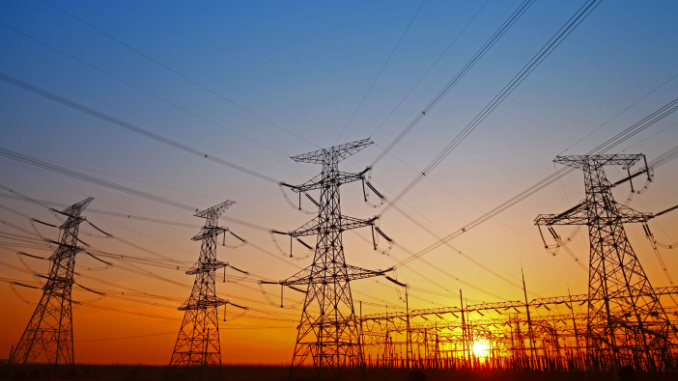
It didn’t make a ton of news in the United States media, but a new study published by the International Energy Agency in mid-October emphasizes the enormous potential roadblock to a successful energy transition posed by a projected need to refurbish and double capacity on global electricity grids.

The study, titled, “Electricity Grids and Secure Energy Transitions,” advises governments that investments in expanding and refurbishing power grids must “nearly double by 2030 to over USD 600 billion per year after over a decade of stagnation at the global level, with emphasis on digitalising and modernising distribution grids.” That level of new investment in just this single piece of the overarching plans for a complete re-tooling of the global energy system is not currently a part of existing policies around the world. Given that most developed countries are already saddled with overwhelming public debt and the lack of means in developing countries, the prospect for a doubling of current grid investments seems dubious at best.

But, if anything, the goals laid out in this IEA missive only become more implausible as one reads through the list. Perhaps the most extraordinary among them is the agency’s estimate that reaching the UN’s goal of net-zero greenhouse gas emissions by 2050 would require the refurbishment, upgrading and build-out of 80 million kilometers of new transmission lines by 2040. For those who struggle with conversion factors, 80 million km is roughly the equivalent of 50 million miles, or 2,000 times the Earth’s circumference.

That is the equivalent of all the transmission capacity built by mankind in history, and the IEA says it must be accomplished in just 17 years for this energy transition to succeed. IEA notes that achieving this extraordinary goal – among other improbable propositions laid out in the report – will require “secure supply chains and a skilled workforce,” neither of which currently exists.

How will this massive expansion in necessary skilled workers be achieved? The report doesn’t really say.

How will those supply chains – almost all of which are currently dominated by a single country, China – be secured? The report says only “Governments can support the expansion of supply chains by creating firm and transparent project pipelines and by standardising procurement and technical installations.” Sounds easy, right? But the U.S. congress has a hard time just agreeing what day of the week it is: The thought that it will suddenly develop the ability to engage in that sort of complex thinking and legislating in a constructive way is absurdly unlikely.

The report then somewhat hilariously points to another elephant residing in the energy transition’s living room, noting that governments all over the world need to streamline their energy permitting processes to accommodate this massive grid expansion. Again, using the U.S. congress as an example, West Virginia Senator Joe Manchin has spent the last 19 months trying to put together enough votes to approve legislation that would address just a small portion of what is really needed in this realm and had no success, with no real prospects of that changing until, at best, 2025, when the next congress will be sworn into office.

Think about this in the context of a story I wrote in June about the TransWest Express transmission project, which had finally received its final permits from the federal government. This is a line that is about 1300 miles long, designed to carry electricity generated by Wyoming wind farms to customers on the West coast. The punch line on this single transmission project is that the permitting process took 17 years to achieve. Assuming no new litigation arises, it will now take about another 3 years to complete and place into service.

Like so many of the work products published by the IEA in recent years, this report’s findings seem to be motivated mostly to help achieve political goals based mainly on wishful thinking, with little consideration given to long-ingrained dynamics at play in the real world. Even if overwhelming debt burdens and resource and supply chain challenges could be just wished away, the political impediments to achieving these unrealistic goals seem destined to force a day of reckoning for the entire energy transition plan.

Daily Caller News Foundation logo

Originally published by the Daily Caller News Foundation.

David Blackmon is a contributor to The Daily Caller News Foundation, an energy writer, and consultant based in Texas. He spent 40 years in the oil and gas business, where he specialized in public policy and communications.
Is The Green Energy Transition Falling Off The Rails?

Is The Green Energy Transition Falling Off The Rails?

By David Blackmon |

Is the much-hyped “energy transition” starting to crumble at its foundations now? In recent weeks we have seen the following:

  • Ford Motor Company warns investors its electric vehicle division will lose $4.5 billion in 2023;
  • Reports that China has commissioned another 50 GW of new coal-fired electricity generation capacity;
  • The British government led by Prime Minister Rishi Sunak beginning to back away from absurdly aggressive transition timelines amid public outcry over rising energy bills and other deprivations;
  • The German government continuing to reactivate mothballed coal plants and facilitating new mining for coal;
  • The Scottish government forced to admit it has facilitated the felling of 16 million trees in this century to make way for new wind farms;
  • The Japanese government moving to reinvigorate its own coal-fired power sector;
  • Global demand for crude oil rapidly growing and outpacing supply growth, surprising all the supposed experts;
  • The U.S. Department of Energy forced to admit its initial estimate of consumer “savings” from converting from gas stoves to more expensive electric models was grossly overstated.

This list could go on and on, but the macro view is clear: Everywhere one looks, the aggressive timelines and heavily subsidized plans for a rapid transition are falling apart. Nowhere is the dynamic becoming clearer than in the wind industry.

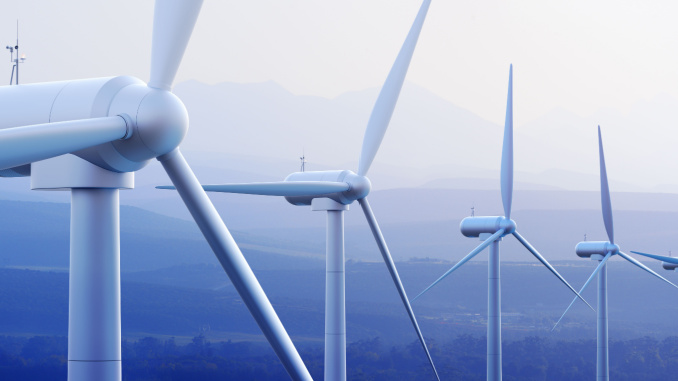
In an Aug. 7 report titled “Wind Industry in Crisis as Problems Mount,” the Wall Street Journal catalogues $30 billion in planned investments in new wind projects in the U.S. and elsewhere that have now been delayed due to an expanding variety of factors. “After months of warnings about rising prices and logistical hiccups, developers and would-be buyers of wind power are scrapping contracts, putting off projects and postponing investment decisions,” the story says, emphasizing that the problems are becoming especially severe in the offshore wind business that has been so heavily promoted by the Biden administration.

I wrote a story in July detailing the fact that some of the so-called “Big Oil” companies have recently made big inroads into the offshore wind business, winning bids in the U.S. and Germany for licenses to develop large projects.  But the Journal’s story quotes Anders Opedal, CEO of Norwegian oil giant Equinor, saying, “At the moment, we are seeing the industry’s first crisis.”

Along with British oil major BP, Equinor has plans in place to develop three wind farms off the Atlantic coast of New York, but recently warned state officials they would need to renegotiate power prices or the projects would not be able to obtain the needed financing. This demand by the two oil companies echoed a call by traditional wind developer Orsted in June for more subsidies from the U.K. government if its planned projects in the North Sea are to remain viable.

Make no mistake about it: Developing these offshore wind projects doesn’t come cheap. Orsted pulled out of a competitive bidding auction in Germany last month for government licenses to develop 7 GW of new offshore wind capacity when BP and French oil major TotalEnergies ran the final bids up to almost $14 billion.

“Orsted very deliberately chose not to pay record high concession prices for new offshore projects in Germany,” Orsted CEO Mads Nipper said in a post on LinkedIn. Orsted objected to the process that awarded the licenses based on the willingness of developers to pay the government for the right to develop — the same process used in oil and gas leasing all over the world — rather than the government offering more and more subsidies to incentivize development.

Therein lies the central conundrum for this subsidized transition: At some point, wind, like solar, electric vehicles and all the other rent-seeking solutions being promoted in this energy transition will have to become viable without an expectation of permanently rising subsidies, since governments already seeing their credit ratings downgraded due to overwhelming debt won’t be able to just keep printing money forever.

But, at the present moment, the business models in play do not appear to be headed for that outcome. And that’s why this energy transition seems to be falling off the rails.

Daily Caller News Foundation logo

Originally published by the Daily Caller News Foundation.

David Blackmon is a contributor to The Daily Caller News Foundation, an energy writer, and consultant based in Texas. He spent 40 years in the oil and gas business, where he specialized in public policy and communications.