by Daniel Stefanski | Jul 1, 2024 | News
By Daniel Stefanski |
Arizona Republicans won a significant victory over the state’s Democrat attorney general in state court over a funding dispute for the recently approved budget.
Earlier this week, a Maricopa County Superior Court Judge ruled in favor of Republicans’ arguments after Attorney General Kris Mayes sued over a funding mechanism set in motion by the new budget that was negotiated by the state legislature and Governor Katie Hobbs.
Attorney General Mayes had filed suit after officials transferred $115 million in opioid settlement dollars to close funding shortfalls in the state’s appropriations.
“This was a frivolous case brought by the Attorney General,” said Arizona Senate President Warren Petersen. “Facts matter. Laws matter. And our taxpayers are best served when our elected officials uphold the rule of law. Once again, I’m grateful we have checks and balances in place to ensure this principle is followed.”
House Speaker Ben Toma said, “I’m pleased with the judge’s decision to dissolve the temporary restraining order, which AG Mayes wrongly sought. Now the funds will be lawfully spent by the Department of Corrections, as intended in the budget and to help individuals impacted by opioids.”
Previously, Petersen and Toma submitted a brief to the court, where they wrote, “Plaintiff Kris Mayes has no constitutional or statutory authority to unilaterally deploy attorneys to disrupt Arizona’s constitutionally mandated budgetary and legislative process – pursuant to which the Legislature and Governor develop public policy and institute a fiscal scheme to ensure those policies are carried out. Yet here, the Attorney General improperly seeks to use the judiciary as a tool to effectuate her unilateral dissatisfaction with the public policy decision made by the Legislature and Governor in the most recent general appropriations act, HB 2897 and the carrying out of other statutorily authorized duties.”
The Republicans explained that the opioid funds under dispute “are only to be transferred from one governmental account to another,” and that “the bill expressly limits the appropriated funds to Approved Purposes.”
The ruling from Judge Hannah overturned a temporary victory for Mayes last week, when a court commissioner had granted her office a temporary restraining order over the actions from the legislature and governor. In reacting to the previous decision, Mayes said, “The decision by the Governor and the Legislature to sweep opioid settlement funds to backfill budget deficits is illegal, and today I asked the court for an injunction to stop the transfer of these funds. In their rush to end the session, GOP leaders and the Governor ignored other viable options to balance the budget, such as utilizing the rainy-day fund, which has now reached approximately $1.4 billion. This is outrageous.”
Mayes added, “Every Arizonan should ask why the opioid funds were not protected and used to support our communities and prevent opioid use as intended. This decision violates the settlement agreements, and I am determined to stop it. That’s why I made the difficult decision to sue over this issue. This is too important, with too many lives at risk, to get wrong.”
This is the second year in a row that Mayes has been on the losing end of the state’s budget process. Last year, the second-year attorney general sent a letter to Governor Hobbs and the Arizona Legislature, expressing her alarm for the “Legislature sweeping the authority of the Attorney General to direct funds received through consent judgments against several pharmaceutical companies for their roles in the opioid crisis.”
She warned, “Sweeping this authority from the Attorney General would be a breach of the consent judgments, and as Attorney General I will not stand by and allow this to happen. I fully intend to consult with the Legislature as the judgments dictate. Any proposal that contradicts this provision by having the Legislature instead direct how the state funds will be used is not acceptable, and I am prepared to go to court to ensure that the State is able to obtain and properly direct those funds for opioid treatment, prevention and education if warranted.”
Republican State Representative David Livingston sent Mayes a letter in response to her 2023 threat, pointing out that the Legislature does, in fact, have a say in how the funds are used. He wrote, “Attorney General Mayes should learn the facts first, and accurately convey those facts in committee hearings, before making demands and threats to sue the Legislature and the Governor over the budget.”
Both the governor and Republicans in the Arizona Legislature have additional history with Mayes than at the point of last year’s episode, that may lend more toxicity to actions by all the parties involved in this political battle. Earlier this spring, Mayes secured indictments of two Republican State Senators over certain efforts undertaken in the aftermath of the 2020 General Election. Also, Mayes has been extremely vocal in attempting to lead an investigation of the Governor’s Office over allegations of impropriety and / or unlawful behavior from one of her state agencies.
Daniel Stefanski is a reporter for AZ Free News. You can send him news tips using this link.
by Daniel Stefanski | Jun 18, 2024 | News
By Daniel Stefanski |
Arizona Republicans again got the better of Governor Katie Hobbs with their second installment of a state budget amid a tenuous divided government.
On Saturday night, the Republican-led Arizona Legislature passed the 2024-2025 state budget and adjourned for the year after finishing its tasks. This latest budget was negotiated between Senate President Warren Petersen, House Speaker Ben Toma, and Democrat Governor Katie Hobbs.
“Following last year’s state budget, where Republican lawmakers provided inflationary relief to everyday Arizonans through $274 million in tax rebates distributed to struggling families, as well as a ban on the tenant-paid rental tax taking effect this January, Republicans are again successfully supporting our hardworking citizens while simultaneously reining in spending,” said Senate President Warren Petersen. “In this year’s budget, we defended more than $520 million allocated last year for much-needed transportation projects statewide. We also cut fees for Maricopa County drivers on emissions testing by 5%, and we banned fee increases on Arizonans from state boards for the next two years.”
House Speaker Ben Toma added, “At a time when Arizonans are having to tighten their financial belts, so is state government. The Arizona House of Representatives has passed a fiscally conservative, structurally balanced state budget that solves the nearly $1.5 billion deficit, without touching the rainy-day fund or using budget gimmickry. The budget trims government and protects conservative priorities. It increases funding for local border support operations and assists fentanyl interdiction efforts by law enforcement. It funds transportation and infrastructure and maintains our state’s commitment to water security.”
According to a press release from the Arizona Senate Republicans Caucus, some of the highlights from the agreed-upon budget included the following:
- Reduction of state spending by $1.7 billion below the 2023-2024 budget (10%);
- Reduction of ongoing spending by $330 million; and
- Addition of $5 million for local border security support and $4 million for fentanyl interdiction and law enforcement response.
The Senate Republicans also noted that their efforts this year produced a budget that did not add any new taxes, tax increases, or debt. Additionally, the budget did not pull dollars from the rainy-day fund, ensuring that the state would have sufficient funds to draw upon should it experience more stormy weather in future years.
“We tightened the state’s belt by trimming fat from state agencies, and we reallocated unspent tax dollars to the general fund to eliminate the deficit, without irresponsibly tapping into our rainy-day fund,” said Senate Appropriations Chairman John Kavanagh. “Most government operations within the state received a healthy and manageable 3.5% reduction in spending, with a few exceptions. Safe communities free of crime and a secure border are the biggest priorities to Arizonans and Republicans alike, and we want to ensure our budget reflects that. As a result, funding for the Department of Public Safety, the Department of Corrections, and the Arizona Auditor General remains intact, while we’re also investing millions in border security, all without raising taxes or creating new debt.”
“Our budget also reflects our support for our citizens’ Second Amendment rights,” said Senator David Gowan, Chairman of the Senate Committee on Military Affairs, Public Safety & Border Security. “We’re funding two full time positions at the Department of Public Safety to address a backlog of concealed carry permit applications and renewals, with a requirement to prioritize Arizona residents first. This move can have a positive impact in our state by ultimately strengthening the safety and security of our communities as our citizens seek avenues to protect themselves, their families, and their private property. Additionally in this budget, we’re infusing crucial dollars into the Critical Access Hospitals (CAH) located in our rural communities, so these residents have convenient access to emergency care.”
Not every Republican was on board with this budget, however. State Representative Matt Gress explained his “no” vote on the most-recent edition, writing, “This year’s [budget] seems more focused on just ‘getting it done’ than ‘doing it right.’ There’s a reason there is bipartisan opposition. This is not a budget that reflects the shared priorities of Arizonans.”
Gress’ fellow Republican colleague in the chamber, Representative Jacqueline Parker, opined, “Literally the ONLY ones saying good things about this budget are Democrats…”
Senator Wendy Rogers weighed in after the vote in her chamber, posting, “This was a solid Republican budget and I voted for it.”
State Representative John Gillette agreed with Rogers’ sentiments, saying, “After a hard fight and two days of voting, we finally passed the 2024-2025 budget with tax cuts and NO new debt. Fiscal responsibility and conservative values prevailed.”
Regardless of their stance on the budget agreement, many Republicans seemed to be excited about the end of another legislative session.
Republicans will now have to make the case to Arizona voters in the all-important November General Election about why they should return to power in the state legislature for another two years in a divided government with Governor Hobbs. Throughout the past two years, Republicans have been mostly united and focused on protecting several of their priorities from the clutches of Democrats eager to dismantle values and principles. That balance of power, though, hangs on a knife’s edge as fall awaits.
Daniel Stefanski is a reporter for AZ Free News. You can send him news tips using this link.
by Daniel Stefanski | Jun 12, 2024 | News
By Daniel Stefanski |
Arizona’s Republican Senate President is confident that a recently passed measure dealing with border security will survive legal scrutiny if passed by state voters in November.
Over the weekend, State Senate President Warren Petersen issued a statement after the Arizona House of Representatives put the finishing touches on a ballot referral, HCR 2060, to help law enforcement better protect citizens from the dangerous effects of the porous border.
Petersen said, “After Biden, our Governor, and Democrat lawmakers blocked all efforts to safeguard our citizens against the rampant crime from the border crisis, we’re relieved to announce the Secure the Border Act officially passed out of the Arizona Legislature this week and will head directly to the November ballot, bypassing the Governor. During the 12 years I’ve served in state office, never has this crisis been as dangerously severe as it is now, costing Arizona taxpayers more than $3 billion in 2023 alone.
The Senate President added, “Soon, Arizona voters will have an opportunity to take matters into their own hands in response to our federal government refusing to do its job. It’s unfortunate radical special interest groups are suing to try to stop our citizens from voting on an issue they consider a top priority.”
The suit that Petersen referenced was filed by Living United for Change in Arizona, which is a nonprofit corporation in the state. Victory PAC and two other qualified electors joined as plaintiffs in the state.
Democrat State Representative Oscar De Los Santos was one of the plaintiffs in the suit. He posted on his “X” account that he had “joined a lawsuit filed by LUCHA AZ challenging the constitutionality of HCR 2060, one of the most racially discriminatory, anti-immigrant pieces of legislation in Arizona history.
Explaining more about the legal challenge, De Los Santos wrote, “We allege that HCR 2060 – which embraces a hodgepodge of numerous and varied policies – violates Arizona’s single-subject rule, a provision of our state’s Constitution which stipulates that any one act must deal with only one issue.”
One of De Los Santos’ colleagues on the other side of the aisle, State Representative Quang Nguyen, countered the Democrats’ perspective, stating, “I’m an immigrant; elected and re-elected as a rep of a rural county; not caucasian; chair of jud; twice selected as an emerging leader nationally. NO, HCR 2060 is not an immigration bill and it is NOT anti-immigrants. It is anti-criminals.”
President Petersen projected confidence in the success of his side’s proposal going before Arizona voters to deal with the border crisis. He said, “We’re confident the Secure the Border Act will survive any scrutiny in court and will be approved by voters.”
Daniel Stefanski is a reporter for AZ Free News. You can send him news tips using this link.
by Daniel Stefanski | Jun 6, 2024 | News
By Daniel Stefanski |
Arizona Republican legislators continue to stand up in defense of the rule of law in the absence of the Democrat attorney general.
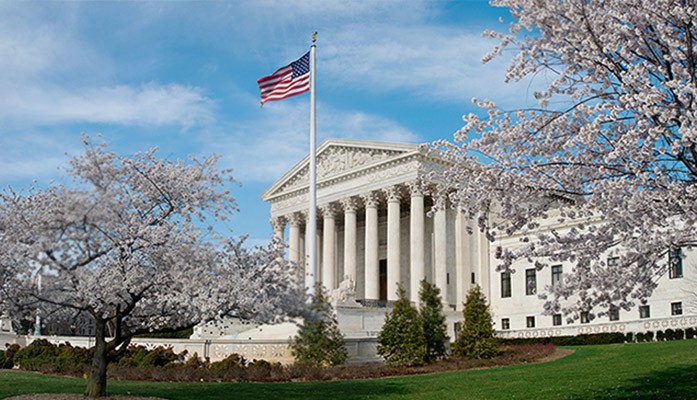
Late last month, the Arizona Legislature, led by Senate President Warren Petersen and House Speaker Ben Toma, signed onto a petition to the U.S. Supreme Court in Smith & Wesson Brand, Inc. v. Mexico. The Second Amendment-related petition was led by the State of Montana and joined by a number of other states from around the country.
In a statement for the Arizona Senate Republicans weekly newsletter, Senator Frank Carroll addressed the latest action in federal court for state legislators, writing, “In a federal lawsuit, Mexico is trying to blame American gun manufacturers for cartel violence, instead of their own government’s negligent policies. California and other blue states, along with anti-gun activists, are working to support Mexico’s efforts in an attempt to put gun manufacturers out of business. We recently joined 26 states to urge the U.S. Supreme Court to weigh in on this case.
Carroll added, “A foreign nation has no business using our court system to try to limit the rights of our citizens, yet that’s exactly what’s occurring with this $10 billion lawsuit. The bipartisan Protection of Lawful Commerce in Arms Act (PLCAA) prohibits civil liability actions from being brought against manufacturers for damages resulting from the misuse of their products. It was enacted nearly a decade ago for a reason. The fact that this case was revived after being previously dismissed is a threat to our Second Amendment rights, and has the potential to set a dangerous precedent moving forward, which is why we’re fighting for the highest court to weigh in.”
The coalition of states argue in the brief that the “PLCAA is part of a carefully calibrated regulatory scheme in which Congress – not just the judiciary – regulates the firearms industry, [that] the Court should grant the petition to enforce PLCAA and definitely address the scope of its exceptions, [and that] Mexico’s sovereign power undercuts any claim of proximate causation.”
This action from the Petersen and Toma-led Arizona Legislature is one of a growing number of instances where the Republican lawmakers have led their own challenges or joined other attorneys general in legal filings in federal court. Both the Arizona Senate and House have prioritized these actions over the past year with Democrats in the Governor’s and Attorney General’s Offices.
Daniel Stefanski is a reporter for AZ Free News. You can send him news tips using this link.
by Daniel Stefanski | Jun 5, 2024 | News
By Daniel Stefanski |
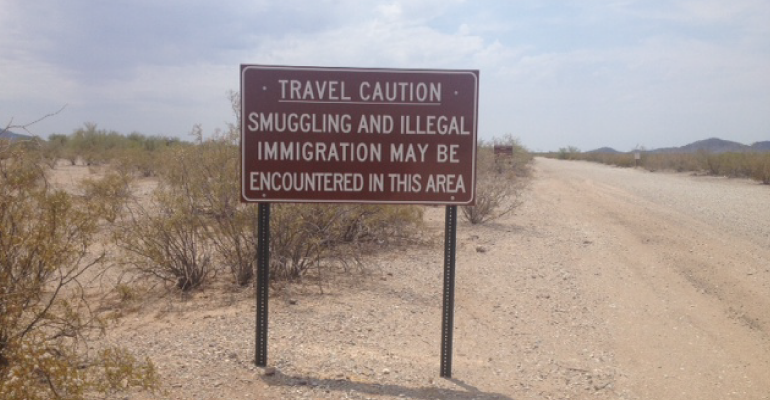
Arizona voters will have the opportunity to empower local law enforcement to better secure their communities after the state legislature sent a measure to the November ballot.
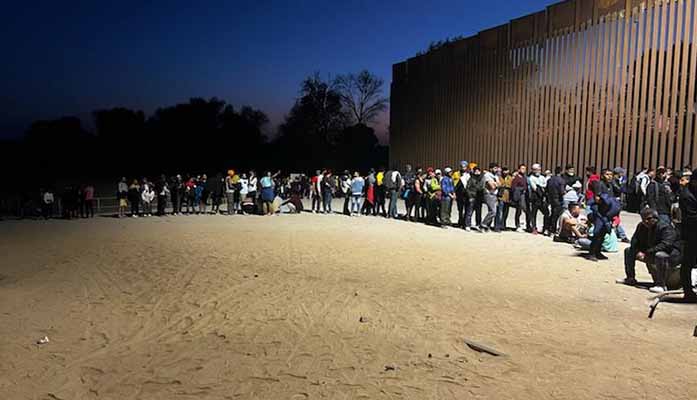
On Tuesday, the Arizona House of Representatives passed HCR 2060, the Secure the Border Act, sending the proposal to the November General Election ballot. The vote was entirely along party lines.
House Speaker Ben Toma, who sponsored the original version of the ballot referral earlier this year, lauded the progress of the measure. Toma said, “Arizonans have had enough and want change. They want safe communities and a secure border. House Republicans do too. That’s why we crafted HCR 2060, the Secure the Border Act, a ballot referral with meaningful reforms to protect the integrity of Arizona’s workforce, strengthen criminal laws, and reinforce the rule of law in this state. Today’s final passage sends this Act to the ballot this November, so the will of Arizona voters is heard.”
The state House gallery was closed during the debate and subsequent vote for the bill, and Democrats made sure their displeasure was known. State Representative Alma Hernandez said, “Shameful. This is the people’s house. The public should have the right to be there. I don’t remember the last time I was here in the past six years when the gallery was closed to the public. They do not want the public watching. If they were so proud of the bill we are going to vote on today, there would be no reason to close down the gallery.”
The Arizona House Republicans Caucus “X” account responded to the accusations, writing, “Due to security concerns prompted by the shameful and illegally disruptive conduct by Democrats and their leftist allies, the House gallery is not open today. However, anyone who wants to come down to the House of Representatives and watch democracy live in action is welcome and the lights are on.”
During final consideration of HCR 2060 in the Arizona Senate last month, a group of protestors disrupted the legislative process with their shouting against the measure, forcing security to remove them from the gallery.
Arizona Senate Republicans also cheered on their colleagues in the other chamber for approving of this border-related ballot measure. After the vote, Senate President Warren Petersen and other Senators issued statements of support for the House’s action to send HCR 2060 to Arizona voters in November. Petersen said, “In the 12 years I’ve served here at the Arizona Legislature, never has the border crisis been as dangerously severe as it is now, costing Arizona taxpayers more than $3 billion in 2023 alone. As soon as Joe Biden took office, he rolled out the welcome mat for illegal crossings and criminal activity. Now, just months away from an election, he issues yet another executive order so that we’ll all of a sudden believe he cares about the chaos he’s constructed. The citizens of this state aren’t buying it, and they will take border security matters into their own hands this November.”
Democrat Governor Katie Hobbs, however, was not pleased with the result. In a series of posts on her official “X” account, Hobbs said, “As I’ve said time and time again: HCR 2060 will hurt Arizona businesses, send jobs out of state, make it more difficult for law enforcement to do their jobs, and bust the state’s budget. It will not secure our border. I have listened to the needs of border law enforcement and have done everything in my power to support their efforts to maintain a safe, secure, and humane border. What’s clear from my conversations with law enforcement on the ground is that HCR 2060 is not the answer.”
Attorney General Kris Mayes, also a Democrat, echoed Hobbs’ sentiments about the measure, stating, “Further straining law enforcement resources while implementing a measure that could lead to racial profiling is not the answer to creating safer communities. HCR 2060 is a political distraction that will sow seeds of bias and fear without fixing the issues it claims to address.”
The top political party organizations in Arizona also took opposing sides on HCR 2060. The Republican Party of Arizona posted, “It’s long past time to protect our communities, secure our borders, and give Arizonans a voice.”
The Arizona Democratic Party countered with their own reaction to the passage of the measure, writing, “Today, Republicans again voted to bring back SB 1070 era immigration politics by introducing a ballot referral that mirrors a Texas Law allowing local law enforcement to racially profile people.”
The efforts from Arizona legislators to send this referral to state voters comes months after Governor Katie Hobbs vetoed SB 1231, the Arizona Border Invasion Act, which would have “ma[de] it unlawful for a person who is an alien (unlawful immigrant) to enter Arizona from a foreign nation at any location other than a lawful port of entry and outline[d] penalties for violations of illegally entering Arizona and provide[d] immunity from civil liability and indemnification for state and local government officials, employees and contractors who enforce this prohibition” – according to the purpose from the state Senate.
Senator Janae Shamp, the sponsor of SB 1231, had vowed in the aftermath of the governor’s veto that members of her party would continue to push forward solutions to combat the border crisis. This week, Shamp took a victory lap after the state House gave the green light to HCR 2060, stating, “The time has come to empower Arizonans to fight back against the tyranny. I wholeheartedly believe the Secure the Border Act will save countless lives, save billions in taxpayer dollars, and strengthen our national security. We must stop the invasion now, otherwise, our beloved Arizona as we know it will be no more.”
Daniel Stefanski is a reporter for AZ Free News. You can send him news tips using this link.