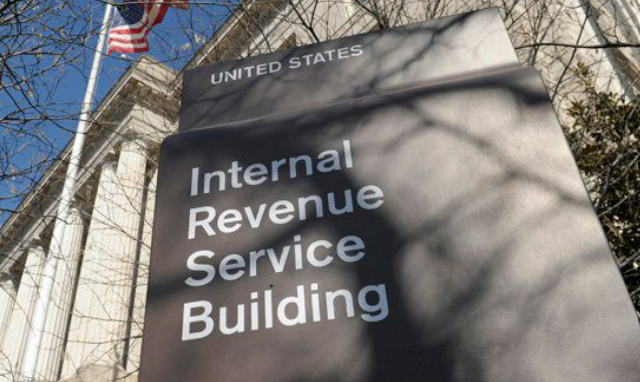
President Donald Trump has done an admirable job at defanging the IRS, which was converted into a weaponized agency targeting their political enemies.
Chief Justice John Marshall famously pronounced early in our nation’s history that “the power to tax is the power to destroy.”
The Democrats inside the Biden IRS took that to heart. They hired thousands of new IRS agents to harass businesses, rich people, and, in some cases, Republican donors. Some of the lieutenants to the infamous IRS enforcer Lois Lerner, the woman who aimed her agency’s auditing guns at conservative groups, are still active at the tax agency.
One of the most noxious of Biden’s left-over regulatory rules applies to partnerships – an increasingly common form of business organization and expansion. Microsoft’s revenues/profits flow down through its business partners.
Business partnerships are vital contributors to the U.S. economy. A 2024 study by Ernst and Young for the Small Business Entrepreneur Council found that 10 million Americans work for these partnerships, and they generate $1.3 trillion in GDP.
The IRS evidently thinks they are TOO successful.
A gang of holdovers from the Biden administration and the ranking Democrat on the Senate Finance Committee, Ron Wyden of Oregon, are trying to administratively change the taxation of pass-throughs and partnerships and subject these entities to “guilty until proven innocent” audits. The changes would alter the “economic substance doctrine” which determines how the taxes on a business’s profits are applied to the partners. If the entities are found liable for increased tax assessments, they could face a giant tax bill AND a confiscatory 60% strict liability penalty.
These partnership rules are admittedly murky and may need updated protections against potential tax evasion abuses. But this rewrite of the tax laws would be applied WITHOUT CONGRESSIONAL APPROVAL. The Trump admin promised to end this illegal rewrite of the tax laws, but because of the turmoil at the IRS – with a revolving door of IRS Commissioners – the Biden-era rules still stand.
Meanwhile, Wyden has introduced legislation to codify these new rules into law. Get this: the Joint Committee on Taxation scores these IRS “reforms” as a potential $730 billion business tax increase over the next decade.
If the IRS isn’t told to cease and desist, they could be the perpetrators of the largest non-congressionally approved tax increase in American history.
The Trump administration is supposed to be easing the tax burden on our businesses and employers to make them more globally competitive, not handing them a three-quarter trillion-dollar tax INCREASE.
Trump or Treasury Secretary Scott Bessent should fix this tax raid on business before it reverses some of the job-creating benefits of Trump’s Big Beautiful Bill.
Stephen Moore is a contributor to The Daily Caller News Foundation, a visiting senior fellow at the Heritage Foundation, and a co-founder of Unleash Prosperity.
As Arizona counties finalize their budgets for Fiscal Year 2026, the majority are preparing to raise property taxes, with 11 of the state’s 15 counties proposing increases totaling nearly $54.8 million, according to the Arizona Tax Research Association’s (ATRA) July 2025 newsletter. The moves come amid population growth, infrastructure demands, and rising costs, but they have also triggered requirements under Arizona’s Truth in Taxation (TNT) law aimed at ensuring transparency.
ATRA’s analysis reveals that under state law, primary property taxes — which fund the general operations of county governments — are subject to TNT provisions. These rules require counties to notify taxpayers if their proposed tax levy exceeds the previous year’s amount, excluding new construction. Notifications must be published in newspapers of general circulation, and a public hearing must be held before any vote to approve the increase.
TNT also applies to some countywide special taxing districts, including those for libraries, flood control, and public health. While counties are allowed to raise taxes up to a constitutional limit — 2% above the previous year’s levy, plus new construction — only Apache and Coconino counties currently tax at that maximum level.
According to ATRA, of the counties planning tax hikes, Pima County stands out with the largest proposed increase: $33 million. This includes a nearly 25-cent hike in the primary property tax rate above TNT limits. Pima is also planning to exceed TNT thresholds for both its flood control and library districts.
Maricopa County, Arizona’s most populous, is proposing its first primary property tax increase in five years — not by changing the rate, but by holding it steady. Due to growth in the tax base, this would still result in a $12.5 million increase, exclusive of new construction.
In Coconino County, library district taxes are slated to rise 11.5% over TNT, generating approximately $780,000 in additional revenue. The county also plans to levy the maximum amounts for its primary property tax, as well as for its flood control and public health districts. Altogether, Coconino’s tax increase would total around $1.8 million.
Mohave County is eyeing a 7% increase in primary property taxes, which would raise about $3.2 million. Four counties — Graham, Greenlee, La Paz, and Pinal — have opted not to increase property taxes this fiscal year, bucking the statewide trend.
County officials say the proposed increases are necessary to sustain essential public services amid rising costs and growing populations. Still, the hikes are expected to generate scrutiny from taxpayers, especially in counties proposing large percentage increases or exceeding TNT thresholds.
Jonathan Eberle is a reporter for AZ Free News. You can send him news tips using this link.
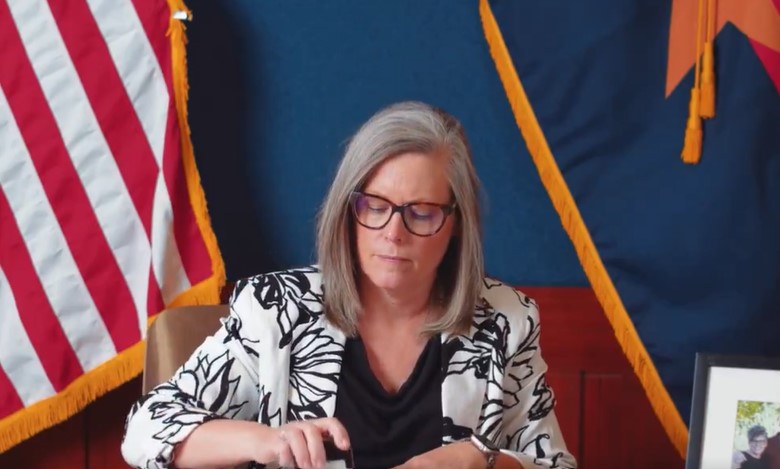
Arizona Governor Katie Hobbs has set a new record for vetoes in a single legislative session, rejecting 178 bills passed by the Republican-controlled Legislature, surpassing her previous record of 143 in 2023. While Hobbs wielded her veto pen often, she also signed 264 bills into law.
The legislative session, which ended in June, underscored the deep ideological divide between the Democratic governor and Republican lawmakers, with repeated clashes over immigration, election integrity, and social policy. Still, some bipartisan efforts did make it to the governor’s desk and gained her approval.
National Security and Border Policy
Hobbs approved Senate Bill 1082, a measure barring foreign adversaries—including China, Russia, Iran, and North Korea—from purchasing land in Arizona. The governor said the law would help protect military bases and infrastructure amid rising global tensions.
Yet, she vetoed a similar proposal, SB 1109, that targeted only China, along with a string of more aggressive border enforcement bills. Notably, SB 1164, known as the Arizona ICE Act, and HB 2099, both aimed to expand cooperation between state and federal authorities on immigration. Hobbs argued that decisions about immigration policy should remain in the hands of Arizonans, not Washington politicians.
Election Integrity Measures
Election security was another flashpoint. Hobbs rejected several Republican-sponsored bills she claimed would restrict voting access. Among them were:
HB 2017, which would have capped voting precincts and eliminated on-site voting centers.
HB 2046, a proposed change to audit procedures that Hobbs called inefficient.
HB 2050, requiring daily updates on signature mismatches and enabling political party access to provisional ballots.
She also vetoed HB 2703, which sought to speed up election result reporting by cutting off ballot drop-offs on Election Day, calling it a form of voter suppression.
Education Policy
On education, Hobbs opposed efforts she viewed as punitive or politically motivated. She rejected:
SB 1694, which would have barred state funding for higher ed institutions offering diversity, equity, and inclusion (DEI) courses.
HB 2610, which would have allowed for the removal of school boards in financially mismanaged districts.
Conversely, she signed HB 2880, prohibiting unauthorized encampments on college campuses, and HB 2164, banning public schools from offering foods with synthetic chemicals like red dye 3 and potassium bromate.
Economic Legislation
Hobbs approved a slate of bills aimed at bolstering the state’s economy:
HB 2704 greenlights renovations to Chase Field, home of the Arizona Diamondbacks, without raising taxes.
SB 1182 ensures that construction crews can work early morning hours during Arizona’s scorching summers.
HB 2119 increases transparency by requiring municipalities to give the public at least 60 days’ notice before voting on tax hikes.
This year’s record-setting number of vetoes highlights the persistent friction between Hobbs and the Legislature. While Republicans argue their legislation reflects the will of Arizona voters, Hobbs maintains that many of the bills would have restricted personal freedoms, hurt vulnerable communities, or created unnecessary bureaucracy.
With more sessions ahead and no signs of a political truce, Arizona’s divided government is likely to remain locked in debate.
Jonathan Eberle is a reporter for AZ Free News. You can send him news tips using this link.
Despite recent claims of financial strain, Arizona cities are experiencing robust revenue growth, according to the Arizona Tax Research Association’s (ATRA) April 2025 newsletter. The report highlights that municipalities have accumulated substantial cash reserves, even as some city officials advocate for tax increases.
ATRA’s analysis reveals that for Fiscal Year (FY) 2025, Arizona cities collectively budgeted $9.1 billion for their general funds, with nearly $4.2 billion—approximately 47%—allocated to cash reserves. This financial strength is attributed to consistent growth in sales and income tax revenues, bolstered by legislative changes and economic factors.
A significant contributor to this revenue surge is the 2019 Wayfair legislation, which enabled Arizona to tax remote sales. This change led to a substantial increase in sales tax collections, with shared revenues to cities rising over 55% from $589 million in FY 2020 to $915.5 million in FY 2025. Projections indicate this figure will reach $918 million in FY 2026.
In addition to sales taxes, cities benefit from Urban Revenue Sharing (URS), which distributes a portion of state income taxes based on collections from two years prior. In FY 2025, URS allocations amounted to over $1.26 billion. However, this represents a 19% decrease from the previous year, primarily due to the implementation of a 2.5% flat income tax rate in FY 2024. To mitigate the impact on municipalities, the state increased the shared percentage from 15% to 18%.
Despite these strong revenue streams, some city leaders cite recent state tax reforms—such as the 2021 personal income tax cut and the elimination of taxes on residential rents—as reasons to consider raising local taxes. ATRA cautions against this approach, emphasizing the importance of prudent fiscal management and the existing financial cushion that many cities possess.
The association’s findings suggest that while state-level tax policy changes have influenced revenue dynamics, Arizona cities continue to enjoy a favorable financial position. As discussions around taxation and budgeting persist, ATRA advocates for transparency and accountability in municipal fiscal practices.
Jonathan Eberle is a reporter for AZ Free News. You can send him news tips using this link.
A bill to keep unwelcome tax increases away from unsuspecting Arizona taxpayers cleared its first body of the state legislature.
On Monday, the Arizona Senate passed SB 1013 with a 17-12 vote. One Democrat member of the chamber, Senator Burch, did not vote. All Senate Republicans voted to approve the legislation, while all Democrats in attendance voted in opposition.
🚨FOR IMMEDIATE RELEASE: Legislation to Protect Arizonans from Unpopular Tax Hikes Passes the Senate
If passed by the Arizona Legislature and signed into law, the bill would “prohibit the common council of a municipality or the board of supervisors of a county from increasing an assessment, tax or fee without a two-thirds vote of the governing body.”
In a statement accompanying the news of the Senate vote, President Warren Petersen, the sponsor of the bill, said, “I’ve received a number of concerns and complaints from Arizonans who are frustrated with recent hikes on taxes and fees, especially in this era of inflation. We want government to be more efficient with taxpayer dollars, and this is a step in the right direction. This commonsense taxpayer protection requires the same threshold from local governments as the Legislature when raising or imposing fees. We want to make sure government fully funds its obligations, but we also want to protect our citizens from unnecessary taxation.”
Last month, the proposal cleared the Senate Government Committee with a 4-3 vote. All Republicans voted in favor of the bill, while all Democrats registered votes in opposition in committee.
On the Arizona Legislature’s Request to Speak system, representatives from the Republican Liberty Caucus of Arizona, Barry Goldwater Institute for Public Policy Research, Arizona Free Enterprise Club, Arizona Chamber of Commerce, National Federation of Independent Business, Republican Liberty Caucus of Arizona, and Home Builders Association of Central Arizona, signed in to support the bill. Representatives from the Arizona Municipal Water Users Association, City of Casa Grande, Sierra Club – Grand Canyon Chapter, City of Bisbee, Coconino County, the Arizona Center for Economic Progress, League of Arizona Cities and Towns, City of Tucson, signed in to oppose the legislation.
SB 1013 now makes its way to the Arizona House of Representatives for consideration. If passed by the state House, it would then make its way to the Governor’s Office for its fate. Governor Katie Hobbs, a Democrat, would likely veto the bill.
Daniel Stefanski is a reporter for AZ Free News. You can send him news tips using this link.