
Republicans Offer Families Relief From Taxes
By Daniel Stefanski |
Over the past two years, Arizonans have experienced higher inflation than other parts of the country, and their state legislators are working on a solution to combat these higher prices.
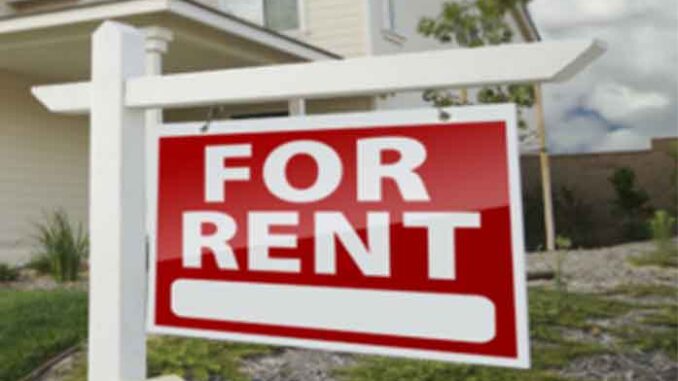
This week, Republican legislators held a press conference at the Arizona State Capitol Rose Garden in Phoenix, promoting their efforts to eliminate the rental tax to help constituents struggling with high inflation.
Representative Neal Carter introduced HB 2067 in the House, and Senator Steve Kaiser introduced SB 1184 in the Senate. The bills would prohibit “municipalities from levying municipal tax on the business of renting or leasing real property for residential purposes effective January 1, 2024,” according to the overview provided by the Arizona House of Representatives.
SB 1184 was co-sponsored by six Senators (Ken Bennett, Jake Hoffman, Warren Petersen, Wendy Rogers, Janae Shamp, and Justine Wadsack). HB 2067 was co-sponsored by twenty Representatives (Leo Biasiucci, Selina Bliss, Joseph Chaplik, John Gillette, Travis Grantham, Gail Griffin, Liz Harris, Justin Heap, Rachel Jones, David Livingston, David Marshall, Cory McGarr, Quang Nquyen, Barbara Parker, Jacqueline Parker, Michele Peña, Beverly Pingerelli, Austin Smith, Ben Toma, and Justin Wilmeth.
In an exclusive interview with AZ Free News, House bill sponsor Neal Carter shared his thoughts on why he led this legislation in his chamber: “A tax on a citizen’s rent is terrible tax policy because it’s unfair. It’s anti-progressive, it inordinately affects lower-income Arizonans, and at a time of unprecedented rising inflation, taxing rents further exacerbates the affordability crisis that we are facing. Consider the neighborhood that I live in: about one-third of the houses are rentals, so about one-third of the people I see at the community center, or pass on the sidewalk walking our dogs are paying a tax that I don’t pay to live there, just because they pay rent but I pay a mortgage? It’s unfair.”
Legislative Republicans are serious about sending these bills to Governor Hobbs’ desk without delay. SB 1184 passed the Arizona Senate on February 9 with a party-line 16-14 vote. On Wednesday, February 14, the House passed SB 1184 with a 32-28 vote.
After the House vote on Wednesday, Representative Matt Gress tweeted, “NEW: I just voted to eliminate rental taxes in the state of Arizona #CommonSense”
Following the conclusion of the press conference, the Arizona Senate Republicans released a statement on Twitter, writing, “Your Senate and House Republicans are calling on @GovernorHobbs to support inflation relief for the hard-working citizens of our state, who are struggling to make ends meet in the face of historic inflation. SB1184 would eliminate the rental tax tenants are paying. This tax ranges from $20 to a couple-hundred bucks each month. That extra cash could help with a medical bill, gas, groceries, or other necessities. Governments are FLUSH with cash. It’s time to give back to families that are hurting right now. We are urging the Governor to sign SB1184.”
According to analysis from the Joint Legislative Budget Committee (JLBC), it is estimated that “municipalities will collect a total of $200.9 million in sales tax revenue from residential leases in FY 2023,” and “the municipal revenue loss is an estimated $(230.2) million” in FY 2025 – the first full-year impact of the legislation if signed into law.
When asked by AZ Free News about his support for this historic bill, House Speaker Pro Tempore Travis Grantham replied, “There is nothing more evil than taxing people’s food or the roof over their head. It’s time to get rid of this immoral residential lease tax and bring some needed relief to renters in our state.”
Democrats are not supporting their Republican colleagues’ attempt to give Arizonans a break from the rental tax. All committee action in both the House and Senate – as well as the vote from the entire Senate and House – has featured party-line votes, which may give a strong indication on what the Ninth Floor will do with the bill after it clears both chambers. Governor Hobbs has already set her sights on eliminating another tax, though – the state sales tax on feminine hygiene products.
Instead, Democrats have introduced other policies aimed at combatting the massive increase Arizonans have experienced in housing costs – specifically those in the rental market. On Thursday, House Democrats held their own press conference in the Rose Garden to push strategies to make the state’s housing more affordable. One of the Democrats’ solutions was HB 2161, a bill introduced by Representative Judy Schwiebert, dealing with caps on rental increases. That bill has been assigned to both the House Regulatory Affairs Committee and the Commerce Committee, and it has not been heard in committee.
Daniel Stefanski is a reporter for AZ Free News. You can send him news tips using this link.