Among the many promises and commitments that he has made during his ongoing transition period, President-elect Donald Trump has pledged to pull U.S. support for the World Health Organization and cancel its commitments related to the 2015 Paris Climate Agreement. If a new report issued this week by the Senate Committee on Energy and Natural Resources and incoming chairman Republican Wyoming Sen. John Barrasso, is any guide, Trump perhaps should add U.S. support for the International Energy Agency to his growing list of cancellation opportunities.
“French President Macron’s observation that IEA has become the ‘armed wing for implementing the Paris Agreement’ is regrettably true,” said the report. “With the many serious energy security challenges facing the world, however, IEA should not be a partisan cheerleader. What the world needs from IEA—and what it is not receiving now—is sober and unbiased analyses and projections that educate and inform policymakers and investors. IEA needs to remember why it was established and return to its energy security mission.”
The IEA was established in 1974 in response to the first Arab Oil Embargo which resulted in dramatically higher prices for crude oil and gasoline at the pump. Originally supported by 31 member countries including the United States, the agency’s mission was to provide accurate information related to global oil supply and demand which subscribing countries could use to help form effective energy policies. That original mission held firm for decades, during which the IEA was widely considered a leading source of real, unbiased energy information.
But politics tends to corrupt everything it touches, and the IEA has unfortunately proved to be no exception to that rule. As the politics surrounding climate alarmism rose to new highs following the signing of the Paris Climate Agreement, the agency came under increasing pressure to radically alter its mission from that of a provider of real information worthy of trust to more of an activist posture.
In 2020, the report notes, this led to a shift in the IEA’s mission statement and to a new design to its modeling processes that form the basis for its annual World Energy Outlook. As its modeling base case, the agency abandoned its longstanding Current Policies Scenario, which Barrasso’s report describes as “essentially a ‘business as usual’ reference case,” in favor of a more aggressive Stated Policies Scenario.
Barrasso’s report describes this new scenario as “a hypothetical outlook based on unimplemented policies and grounded in unrealistically optimistic assumptions about the pace and scale of the transformation, especially concerning the adoption of electric vehicles by consumers.” It is an approach intentionally designed to introduce bias into the modeling process, and thus into the IEA policy recommendations for which the modeling process serves as the foundation.
This inevitable bias had an immediate and very noticeable effect. In a report published by the IEA in May 2021 Executive Director Fatih Birol laughably stated that “there will not be a need for new investments in oil and gas fields” and urged oil and gas producers to halt investments in exploration and development of new oil reserves. But that was before oil prices exploded as global demand exceeded supply during the recovery from the COVID pandemic, and by August Birol had completely reversed himself, joining President Joe Biden in a desperate call for more oil drilling to help resolve the situation.
Obviously, this sort of flip-floppery does severe damage to the agency’s already crumbling credibility as well as to the justification for governments to continue pouring millions of dollars into its operations each year. Barrasso’s report correctly notes that the IEA’s “reputation has lost its luster.”
Barrasso’s report is blunt about the kinds of reforms he would like to see at the IEA, urging Birol to abandon its advocacy posturing against investments in oil, natural gas, and coal, and to “once again produce for its World Energy Outlooka real unbiased, policy-neutral ‘business as usual’ reference case of the kind the Energy Information Administration produces.”
The Wyoming senator stops short of calling for the U.S. defunding of the IEA, but the agency’s currency is information. If that currency has lost its value, then perhaps Trump should consider a more aggressive approach.
David Blackmon is a contributor to The Daily Caller News Foundation, an energy writer, and consultant based in Texas. He spent 40 years in the oil and gas business, where he specialized in public policy and communications.
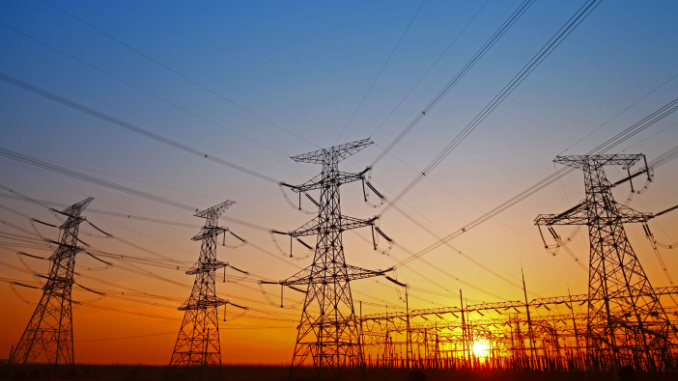
It didn’t make a ton of news in the United States media, but a new study published by the International Energy Agency in mid-October emphasizes the enormous potential roadblock to a successful energy transition posed by a projected need to refurbish and double capacity on global electricity grids.
The study, titled, “Electricity Grids and Secure Energy Transitions,” advises governments that investments in expanding and refurbishing power grids must “nearly double by 2030 to over USD 600 billion per year after over a decade of stagnation at the global level, with emphasis on digitalising and modernising distribution grids.” That level of new investment in just this single piece of the overarching plans for a complete re-tooling of the global energy system is not currently a part of existing policies around the world. Given that most developed countries are already saddled with overwhelming public debt and the lack of means in developing countries, the prospect for a doubling of current grid investments seems dubious at best.
But, if anything, the goals laid out in this IEA missive only become more implausible as one reads through the list. Perhaps the most extraordinary among them is the agency’s estimate that reaching the UN’s goal of net-zero greenhouse gas emissions by 2050 would require the refurbishment, upgrading and build-out of 80 million kilometers of new transmission lines by 2040. For those who struggle with conversion factors, 80 million km is roughly the equivalent of 50 million miles, or 2,000 times the Earth’s circumference.
That is the equivalent of all the transmission capacity built by mankind in history, and the IEA says it must be accomplished in just 17 years for this energy transition to succeed. IEA notes that achieving this extraordinary goal – among other improbable propositions laid out in the report – will require “secure supply chains and a skilled workforce,” neither of which currently exists.
How will this massive expansion in necessary skilled workers be achieved? The report doesn’t really say.
How will those supply chains – almost all of which are currently dominated by a single country, China – be secured? The report says only “Governments can support the expansion of supply chains by creating firm and transparent project pipelines and by standardising procurement and technical installations.” Sounds easy, right? But the U.S. congress has a hard time just agreeing what day of the week it is: The thought that it will suddenly develop the ability to engage in that sort of complex thinking and legislating in a constructive way is absurdly unlikely.
The report then somewhat hilariously points to another elephant residing in the energy transition’s living room, noting that governments all over the world need to streamline their energy permitting processes to accommodate this massive grid expansion. Again, using the U.S. congress as an example, West Virginia Senator Joe Manchin has spent the last 19 months trying to put together enough votes to approve legislation that would address just a small portion of what is really needed in this realm and had no success, with no real prospects of that changing until, at best, 2025, when the next congress will be sworn into office.
Think about this in the context of a story I wrote in June about the TransWest Express transmission project, which had finally received its final permits from the federal government. This is a line that is about 1300 miles long, designed to carry electricity generated by Wyoming wind farms to customers on the West coast. The punch line on this single transmission project is that the permitting process took 17 years to achieve. Assuming no new litigation arises, it will now take about another 3 years to complete and place into service.
Like so many of the work products published by the IEA in recent years, this report’s findings seem to be motivated mostly to help achieve political goals based mainly on wishful thinking, with little consideration given to long-ingrained dynamics at play in the real world. Even if overwhelming debt burdens and resource and supply chain challenges could be just wished away, the political impediments to achieving these unrealistic goals seem destined to force a day of reckoning for the entire energy transition plan.
David Blackmon is a contributor to The Daily Caller News Foundation, an energy writer, and consultant based in Texas. He spent 40 years in the oil and gas business, where he specialized in public policy and communications.
By cutting off oil and gas exploration as part of a global campaign to achieve net zero emissions by 2050, policymakers aligned with climate activists are “misdirecting scarce innovation resources,” according to an analysis of energy transition efforts.
While proponents of Environmental, Social, and Governance investing continue to seize upon the International Energy Agency’s (IEAs) “roadmap” for reaching net zero as a plug for their ambitions, the authors of a new study probing into the agency’s projections find that they are based on faulty assumptions.
The net zero initiatives that IEA foresees can only materialize if demand for coal, oil, and natural gas plummet while consumers gravitate toward so-called renewable energy in the form of wind and solar. But as the report from the RealClearFoundation and the Energy Policy Research Foundation makes clear, this is a dubious proposition.
“Rather than being a plausible description of the future, demand for hydrocarbons withering away is best thought of as an expression of a political or an ideological aspiration, as opposed to an objective assessment of the future,” the report says. “The failure to invest in increased supply is far more likely to result in upwardly spiraling prices as demand increasingly exceeds supply, as the Biden administration understood when it used the Strategic Petroleum Reserve for the nonstrategic purpose of tamping down gasoline prices.”
The foundation is a nonprofit group founded to examine energy economics and policy with an emphasis on energy security. The geopolitical implications of net zero policies and ESG investing figures into its analysis of IEA’s roadmap. A big part of the problem lies with the Organization of Petroleum Exporting Countries, widely known as OPEC, and the leverage it could gain over western nations including the U.S.
If the demand for petroleum is higher than what is projected in IEA’s roadmap, which is highly likely, the foundation estimates that OPEC’s share of global oil market could rise to an astonishing 82 percent by 2050. OPEC includes Iran, Iraq, Kuwait, Saudi Arabia, and Venezuela.
“Wittingly or otherwise, ESG investors are undermining the security interests of the West during a period of rising geopolitical tensions,” the foundation warns in its analysis. The upshot is that the west is well positioned to maintain a healthy level of independence from OPEC with the right mix of policies. The foundation points out that IEA was initially established in response to the “first oil price shock” in the early 1970s “to act as a buyers’ group of western nations in an attempt to counteract OPEC market power.” But given how politically fashionable “net zero” efforts have become, the agency has clearly strayed from its mission.
“The IEA could have chosen to remain faithful to its original mandate, but as the Energy Policy Research Foundation report shows, in seeking to become a cheerleader for net zero, the IEA has allowed itself to be used as a tool for climate extremism, has misled policymakers, and has endangered the world’s economy and Western security, all while forsaking the purpose for which it was created.”
A key part of the foundation’s report focuses on the negative consequences that would flow from halting investment in new oil and gas fields based on the idea that a seamless transition can be made to renewables. American energy consumers can expect to take it on the chin.
In the first decade under net zero emissions, the foundation estimates that global oil and gas fuel receipts will be between $12.2 trillion and $52.6 more than what IEA envisions under its policy scenarios. Put simply, consumers will have to pay more for less oil and gas along with all the costs associated with making the energy transition.
The foundation’s analysis also highlights the environmental degradation that could result from a headlong rush toward net zero that does account for financial and technological realities.
“Reducing oil and gas supply will contribute to various environmental and health effects around the world. First, it will likely lead to a resurgence of coal consumption, as many low- and middle-income countries may struggle to afford higher-priced natural gas for heating, cooking, and electricity generation,” the report warns. “As a result, coal-to-gas switching in many countries may regress, increasing local air pollution and exacerbating health crises in many urban areas.”
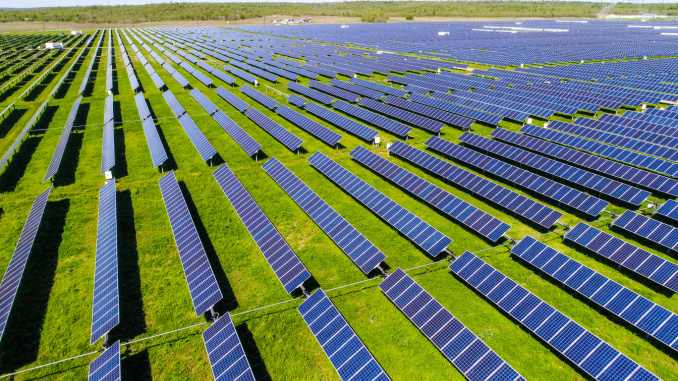
Self-described environmentalists might also want to take a hard look at the amount of land wind and solar could gobble up. The foundation calculates that solar and wind generation capacity needed to achieve net zero requires an area equivalent to the combined size of California and Texas while the bioenergy needed for electricity production would be about the size of France and Mexico combined.
Apparently, there’s more than just raw economics at stake. What environmental advocacy groups typically describe as clean, and green is neither.
The geopolitical, economic, and environmental costs of net zero call out for a political course correction.
Kevin Mooney is a contributor to The Daily Caller News Foundation and the Senior Investigative Journalist at the Commonwealth Foundation, Pennsylvania’s free-market think tank. He writes for several national publications. Twitter: @KevinMooneyDC