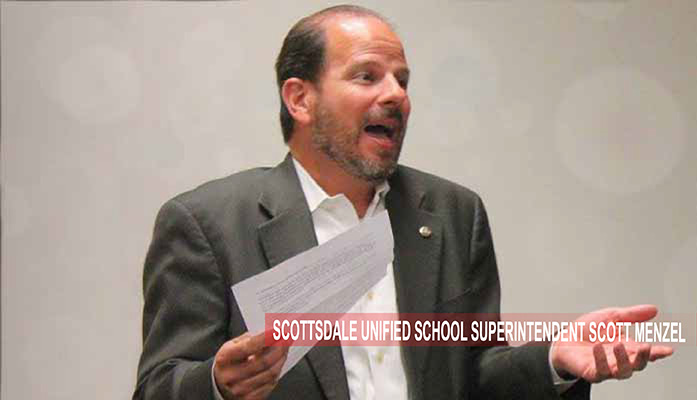
Scottsdale Unified School District (SUSD) is entering a period of upheaval, one that is very concerning to parents, teachers, and taxpayers. Superintendent Dr. Scott Menzel recently announced that the district staff will bring forward proposals for consideration by the Governing Board to deal with the impact of declining enrollment in SUSD, which will reshape several campuses and alter the educational landscape of Scottsdale for years to come.
The first recommendation by district staff under consideration is for Echo Canyon K–8, Pima Elementary schools, and Desert Canyon Elementary and Middle Schools to be repurposed. Dr. Menzel has not made clear exactly what repurposing means. The official explanation for this is straightforward: declining enrollment and a need for “operational efficiency.” But as anyone who has followed SUSD’s trajectory over the past several years knows, declining enrollment is not isolated to a few schools. It is a district-wide problem — one that has deep roots in leadership decisions, cultural conflicts, and misplaced priorities.
A District in Decline
Beyond these four schools, six others have been placed on a “watch list.” These campuses, too, are being monitored for potential closures or repurposing as enrollment continues to fall. Since Dr. Menzel’s arrival in July 2020, the district has lost more than 2,500 students, dropping from over 22,300 to 19,700, an 11% decline in just five years. This decline represents not only a fiscal crisis for the district but also a crisis of confidence among Scottsdale parents.
So, how did we arrive here?
The Menzel Philosophy: Disrupt and Dismantle
If you want to understand how we got here, you need to understand Dr. Menzel’s philosophy of education. In a 2019 interview titled “Public Schools and Social Justice: An Interview with Dr. Scott Menzel,” he explained that understanding how systems operate gives leaders “the opportunity to dismantle, disrupt, and then recreate something that’s socially just and more equitable.”
This wasn’t a throwaway line. It was a mission statement.
Since arriving in Scottsdale, Menzel has followed this blueprint:
He has recommended firing respected teachers while hiring unlicensed social workers and “wellness” staff.
He has proposed cutting classroom budgets while expanding administrative overhead.
He has recommended reducing opportunities for public comment at board meetings.
He has directed teachers not to inform parents about students’ gender transitions unless asked directly.
He has consolidated power and minimized accountability, all while using district communications, podcasts, and social media to promote his leadership as a success story.
He has championed the elimination of valedictorian honors and class rank.
Unfortunately for the students and parents, the board has approved every recommendation made by Dr. Menzel.
At board meetings, Menzel regularly dominates the discussion, often interacting with the board president as though he were chairing the meeting himself. He highlights a few exceptional student achievements as evidence of district success, perhaps a few hundred students out of nearly 20,000, while ignoring the systemic academic underperformance that affects the majority.
The Illusion of Success
The numbers tell a sobering story. In 2024, SUSD reported a 92% graduation rate (down from 94% in 2022) and a 98% promotion rate. Yet proficiency in core academic subjects remains around 52%. In other words, nearly half of all students graduate or advance to the next grade level without mastering reading, writing, math, or science at grade level.
When questioned about these numbers, Menzel points out that SUSD still outperforms the statewide average of roughly 30% proficiency. But comparing yourself to the bottom of the barrel isn’t a standard of excellence — it’s an excuse for mediocrity.
Despite this record, the Governing Board continues to reward Menzel with pay raises, bonuses, and contract extensions. Two successive boards have failed to impose any meaningful accountability or measurable academic goals.
The “Woke” Agenda and Its Consequences
In Scottsdale, Dr. Menzel’s leadership has been defined by his emphasis on Social Emotional Learning (SEL), Diversity, Equity, and Inclusion (DEI), gender identity programs, and related “woke” initiatives, all fully endorsed by the leftist majority on the current Governing Board. These programs were sold as a way to build empathy, inclusion, and belonging. Instead, they have deepened division, distracted from academics, and driven families out of the district.
At the same time, the district has invested heavily in administrative roles tied to “behavioral health,” “equity,” and “inclusion,” while cutting classroom teaching positions. This inversion of priorities is not only financially unsustainable, it’s academically disastrous.
Parents Are Walking Away
Arizona Superintendent of Public Instruction Tom Horne recently provided a candid explanation for the declining enrollment. In a public statement, he argued that “the promotion of woke ideology is a significant reason behind potential school closures in several school districts,” explicitly calling out SUSD’s efforts to promote gender ideology among elementary and middle school students.
He went further:
“This happens because of the expenditure of a large amount of campaign funds to elect woke school board members who do not represent their communities. Parents have a choice, so they move their children. The school boards in these districts have no one to blame but themselves for allowing the classroom to be corrupted from a place of learning to a venue for indoctrination in woke principles.”
Love him or hate him, Horne’s diagnosis resonates with many SUSD parents who feel that the district has prioritized social engineering over education.
The Voter’s Responsibility
While Dr. Menzel and the Governing Boards are directly responsible for what has happened to SUSD, the truth is that Scottsdale voters bear responsibility as well.
In the last election cycle, three board seats were up for grabs, an opportunity to shift power away from the progressive bloc that rubber-stamps every one of Menzel’s initiatives. Instead, voters elected candidates who reinforced the status quo: one a former superintendent from a failing Phoenix district, another who told parents to effectively butt out and leave education decisions to “experts,” and another whose own child attends private school, since it was a “better fit.”
Can SUSD Be Saved?
It’s a painful question to ask, but one that must be faced honestly: Can SUSD be saved under current leadership?
Dr. Menzel has shown no willingness to shift his priorities. The Governing Board has shown no appetite for holding him accountable. Parents are leaving, teachers are demoralized, and the district is closing schools while insisting that everything is fine.
The future of Scottsdale’s public schools doesn’t depend on clever slogans, glossy podcasts, or PR campaigns. It depends on leadership that values education over ideology and on citizens willing to demand it.
Scottsdale’s parents, taxpayers, and voters have few options. With the three progressive members’ terms extending to 2028 and the remaining two members up for re-election next year, the balance of power will remain firmly in Menzel’s camp for the foreseeable future. The progressive board members will allow Dr. Menzel to continue “dismantling and disrupting” SUSD until there’s little left to rebuild.
If we want to restore SUSD to its rightful mission, educating children in reading, writing, math, science, and the arts, parents need to speak up, and demand change now. Waiting for an election in 2028 will be too late.
You can start by attending the public meeting scheduled for November 13, 2025, at 6:00 p.m. in the Governing Board Room located at Coronado High School. The purpose of this meeting is to obtain public comment regarding the potential closure and repurposing of Echo Canyon K-8 School and Pima Elementary School. Each speaker will be given two minutes to voice their opinion on the closure/repurposing of the schools. Don’t feel constrained; you can also voice your opinion on Dr. Menzel and the board members’ actions that have led us to this point.
All SUSD parents should attend the meeting, even if their child does not attend Echo Canyon or Pima. Remember, as enrollment continues to decline, these schools are just the beginning; your child’s school may well be next.
Mike Bengert is a husband, father, grandfather, and Scottsdale resident advocating for quality education in SUSD for over 30 years.
Congressman Hamadeh announced he is directing a group of House Republicans to demand that Fiscal Year 2026 spending bills include explicit language prohibiting federal funding for transgender experiments on animals.
“When Americans send their hard-earned money to Washington, they expect it to be used wisely to secure our borders, to defend our nation, and to provide essential services that protect our citizens. What they do not expect is for their tax dollars to bankroll the latest ideological fads of the radical left,” said Hamadeh.
“No one should be forced to subsidize radical gender ideology, let alone grotesque experiments that inflict suffering on animals in the name of ‘gender transition science.’ This is not medical research; it’s political theater disguised as science,” he added.
The initiative addresses growing concerns over federal funding being used to support immoral and unnecessary experiments involving animals such as monkeys, mice, and rabbits.
These experiments reportedly involve mutilating animals and administering cross-sex hormones to advance theories aligned with radical gender ideology.
“What possible scientific benefit can come from mutilating a rabbit or drugging a monkey with cross-sex hormones? None,” stated Congressman Hamadeh. “These experiments are not about medical advancement; they are about normalizing the transgender agenda.”
Hamadeh’s call to action highlights a broader issue: the capture of America’s research institutions by ideology. Agencies like the National Institute of Health (NIH) have diverted taxpayer dollars to projects that prioritize cultural agendas over scientific integrity.
The Congressman pointed to the Biden administration’s aggressive promotion of gender ideology across education, healthcare, and federal research as a driving force behind these experiments. “Billions of taxpayer dollars have been funneled into projects that redefine biology, undermine parental rights, and confuse children,” he said.
The push to defund these experiments is framed as part of a larger fight to protect American values and restore common sense to government spending.
Hamadeh concluded with a message to all members of Congress, saying, “The American people deserve better. Our children deserve better. And the animals who have no voice at all deserve better. That’s why I will keep leading this charge, because the line must be drawn here, and it must be drawn now. This isn’t politics – it’s common sense.”
Ethan Faverino is a reporter for AZ Free News. You can send him news tips using this link.
Last Tuesday night, the Scottsdale Unified School District (SUSD) Governing Board held what could only be described as a marathon meeting, lasting six and a half hours, including the executive session. The agenda was packed with items, but one issue drew the most attention: the proposed adoption of a new Social Science curriculum.
Eighteen individuals participated in the public comment portion of the meeting. All but one focused on the curriculum. A significant majority urged the Board not to adopt it, citing deep concerns. Opponents argued that the curriculum was saturated with DEI narratives, anti-law enforcement bias, gender ideology, climate activism, misleading COVID-19 claims, and advocacy for student activism over academic learning. Their primary concern: the curriculum fosters political indoctrination, not education.
Despite their differences, both supporters and critics of the curriculum appeared to agree on two points: students need to be taught the truth about current events, and they must learn to think critically. The debate centers on what constitutes the truth and how critical thinking should be developed.
Those supporting the curriculum’s adoption argued that it presents an honest, if uncomfortable, portrayal of America, especially regarding race and law enforcement. The curriculum cites examples like the 2014 police shooting of Michael Brown in Ferguson, Missouri. It emphasizes that Brown, an unarmed Black teenager, was shot six times and killed by a white police officer, and points to the incident as emblematic of systemic racism.
The curriculum also discusses the rise of the Black Lives Matter (BLM) movement and its evolution from protesting police brutality to addressing broader systemic issues like housing, healthcare, and employment disparities for Black Americans.
Additional content includes explanations about gender identity, stating individuals can identify as male, female, both, or neither. The curriculum also addresses the COVID-19 pandemic, stating that the FDA approved two highly effective vaccines and suggesting that lockdowns saved lives. It frames the environmental benefits of lockdowns as evidence of climate change and the need for continued action.
One speaker supporting the curriculum even admitted that for those questioning these narratives, “I don’t know what to say.”
Critics, however, challenged these representations as incomplete or misleading. Regarding the Michael Brown case, there is no mention that the Department of Justice’s investigation found Brown was attacking the officer and trying to take his weapon—his DNA was found on the gun—and that the claim he had his hands up saying “don’t shoot” was debunked in court. By omitting these critical facts, the curriculum pushes a one-sided narrative that paints law enforcement as inherently racist.
If the goal were truly critical thinking, the curriculum would also include studies like that of a Harvard professor, who, despite his preconceived belief that there is racial bias in policing, found no racial bias in police shootings after analyzing hundreds of cases. An honest and open discussion would allow students to examine why Black Americans commit crimes at a rate disproportionate to their population, not just claim they are victims of systemic racism. Perhaps the high rate of crimes being committed by young Blacks might explain their high rate of involvement with the police. But with this curriculum, it is doubtful the students will ever have such a discussion.
Law enforcement professionals also voiced concerns. The President of the Maricopa County Colleges Police Officers Association, a former Scottsdale police officer, and the Maricopa County Sheriff’s Office both criticized the curriculum’s anti-police tone. They warned that such content erodes trust between youth and law enforcement—trust, they say, is essential for community safety.
Rather than comparing the BLM movement to the civil rights movement and implying BLM has done great things for Blacks in America, why not tell the truth that the leaders of BLM stole money and bought houses for themselves? Or that several of the local chapters said nothing has been done by BLM to help Blacks in their communities.
Critics also took issue with how the curriculum handles topics like climate change and COVID-19. The omission of data showing that Antarctica has gained ice in recent years, information that contradicts climate change alarmism, is concerning. While skeptics of the climate narratives are called “science deniers,” the curriculum promotes the idea that there are more than two genders and that gender is fluid is a fact, when it’s really a denial of biological science.
On COVID-19, the curriculum claims the vaccines were effective at preventing infection but fails to acknowledge how the scientific narrative evolved. Initial claims about vaccine efficacy were later revised, with experts clarifying that while vaccines may not prevent infection, they can reduce the severity of symptoms. The curriculum also omits discussion of the high survival rate of COVID-19, 99%, particularly in children, and the long-term educational harm caused by prolonged school closures. There is no mention of the fact that the government actively blocked any negative discussion about the vaccine, including reporting on the severe negative side effects many people experienced.
One especially controversial element of the curriculum encourages students to take political action, such as organizing protests or social media campaigns, in support of transgender rights, or creating NGOs, leading critics to argue that it turns students into political activists.
Questions were also raised about how the curriculum was reviewed and recommended. Supporters of the adoption process claimed the committee’s work was “thorough and inclusive,” but the review committee was composed mostly of teachers, with only one community member, who happened to be the spouse of a former Board member, and no parents on the committee. One supporter of the curriculum told the Board members it was their responsibility to approve the committee’s recommendation, apparently without considering the curriculum themselves and just rubber-stamping the committee’s work. I don’t think so.
There are financial implications, too. Because the curriculum includes DEI and gender identity material, the SUSD risks losing funding—not just from government sources but also due to declining enrollment—as some families opt out of SUSD altogether. This ongoing trend of declining enrollment tracks with Dr. Menzel’s leadership of SUSD. Not only are students leaving, but critical, experienced staff and teachers are leaving. At this time, only about 50% of the eligible students attend SUSD—a dismal number, but reflective of just how well SUSD is perceived in the community.
On May 13th, board members Pittinsky, Sharkey and Lewis voted to defy Superintendent Menzel's "NO DEI" pledge and committed YOUR tax dollars for the purchase of DEI-filled curriculum.
— Scottsdale Unites for Educational Integrity (@ScottsdaleUnite) May 16, 2025
Keep in mind that indoctrination aims to instill a specific set of beliefs or ideas without allowing for critical thinking or questioning, whereas education encourages exploration, curiosity, and independent thought, fostering a deeper understanding through evidence and critical analysis.
After doing your research, ask yourself: Is this curriculum indoctrination or education? Which do you want for your child?
The current Board makeup makes any substantial changes in SUSD unlikely. Dr. Menzel’s apparent security in his position of “leadership” means we can expect him to continue his destruction of SUSD. I expect to see more 3–2 votes going forward and remain skeptical about the Board’s willingness or ability to restore trust and balance in SUSD and the classroom.
As this school year comes to an end, talk to your kids about what has gone on in their classrooms. What have they learned? Go to the SUSD website and look at the materials they will be using next year. If the information you are seeking is not available, use the Let’s Talk feature to question the staff and Dr. Menzel. If you find something objectionable, exercise your rights under Arizona law and opt your kid out of lessons.
Go to the Arizona Department of Education website and check the academic performance of your child’s school, or the new one they will be attending next year. Don’t fall for the SUSD hype of having so many A+ schools; rather, compare that rating to the academic performance of your schools. Does it meet your definition of A+? You just might be surprised at what you find.
Not every parent can take their child out of SUSD. Many will return next year, but despite the challenges, we must continue to strive for change in SUSD. Get involved. Go to Board meetings. Email the Board with your thoughts and concerns. Talk to the teachers. I know everyone is busy, but you can’t sit idly by and expect others to do the work by themselves. The number of people involved matters.
It’s your kid’s future we are talking about.
Mike Bengert is a husband, father, grandfather, and Scottsdale resident advocating for quality education in SUSD for over 30 years.
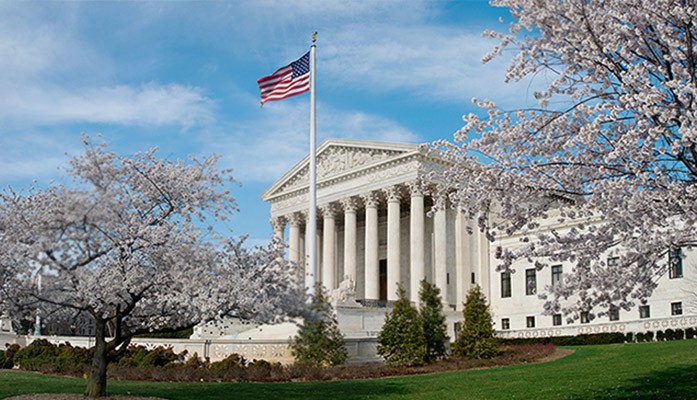
Exactly a century ago this year, the Supreme Court, in its decision in Pierce v. Society of Sisters, recognized the right of parents to direct the education of their children, writing that “[t]he fundamental theory of liberty upon which all governments in this Union repose excludes any general power of the State to standardize its children . . . The child is not the mere creature of the state.” Today, just as they did a century ago, parents rely on the courts to serve as a backstop against abusive government policy.
Sadly, some courts in America are shutting the door of justice in the face of parents seeking to vindicate their rights and the rights of their children. In a case out of Wisconsin called Parents Protecting Our Children v. Eau Claire Area School District in the Seventh Circuit, the federal court of appeals with jurisdiction over cases arising in Wisconsin, Illinois and Indiana, parents challenged the school district’s policy directing school officials to hide a child’s “social gender transition” from their parents. As the school told its employees, “parents are not entitled to know their kids’ identities.That knowledge must be earned.”
Incredibly, the Seventh Circuit found that the parents’ harm in that case was merely speculative. Apparently, since plaintiffs must show harm to have standing to sue, parents must wait until they find out that their son’s school has been helping him dress as a girl and use the girls’ restroom for six months before they can challenge the policy.
The Supreme Court chose not to review the Seventh Circuit’s decision in that case. Justice Samuel Alito wrote a short dissent, joined by Justice Clarence Thomas, explaining that the parents’ harm is not speculative and that “some federal courts are succumbing to the temptation to use the doctrine of Article III standing as a way of avoiding some particularly contentious constitutional questions.”
Nor is this an isolated incident of judges dodging the controversy of gender ideology. The Fourth Circuit, the appeals court with jurisdiction over Maryland, West Virginia, Virginia, North Carolina and South Carolina, came to the same conclusion in John and Jane Parents 1 v. Montgomery County Board of Education. A district court in Ohio did the same in Doe v. Pine-Richland School District.
Parents’ fundamental rights to direct the upbringing of their children, and the right of children to be free from ideological indoctrination by school officials, depends on courts that are willing to protect those rights. That is why Advancing American Freedom is filing an amicus brief asking the Supreme Court to take up Blake Warner’s challenge to an Eleventh Circuit rule which effectively requires parents to hire a lawyer before they can represent their children’s interests in court. Specifically, while people can bring their own claims in court without a lawyer, and parents can sue on behalf of their children, the Eleventh and some other courts have found that parents cannot sue on behalf of their children without hiring a lawyer. While Mr. Warner’s claim is not related to gender ideology, his challenge to this rule is essential because his success would ensure that parents who are unable to afford an attorney can still seek judicial protection for the rights of their children.
On Jan. 29, President Trump issued an executive order that, among other things, ordered the removal of federal funding from schools that engage in “social transitions of a minor student” and directed the attorney general to work with state and local officials “to enforce the law and file appropriate actions” against school officials who “facilitate the social transition of a minor student.” Trump’s order is important but know that gender ideologues will undoubtedly stage massive resistance. Parents must remain vigilant, and courts must begin to take their claims seriously. The Supreme Court should entrench parents’ rights by taking Mr. Warner’s case and striking down the counsel mandate.
You’ve seen “Black Women for Kamala” and even “White Dudes for Kamala,” but don’t expect to see “Parents for Kamala Harris and Tim Walz.”
Vice President Kamala Harris is squarely against parental control of what young children are taught about sex, gender and homosexuality in school. On Tuesday, she chose a running mate — Minnesota Gov. Tim Walz — a former schoolteacher who shares her extreme, anti-parent views.
Harris and Walz are out of line with what most Americans think. Not just Republicans; a majority of Hispanic and Black Democrats don’t want gender ideology in elementary school classrooms, according to Pew Research and You/Gov polls.
On July 25, Harris promised the American Federation of Teachers convention that she opposes the wave of state laws that bar preschool and elementary school teachers from indoctrinating children about sexual orientation and gender choices. Harris also opposes book bans, suggesting she’s OK with giving young children books that encourage them to question their own gender identity.
“We want to ban assault weapons. They want to ban books,” she railed. At issue are books for the youngest readers, like “I Am Jazz,” that tell little girls they can be boys, and little boys that they can be girls. Jazz “had a girl’s brain in a boy’s body. … Jazz was transgender.”
Parental rights and the innocence of young children are at stake in this election, warns Terry Schilling, president of the American Principles Project, which launched an $18 million ad campaign across seven swing states. Schilling calls Harris an “extremist.”
All people, regardless of their sexual orientation, deserve respect. But parents need the final say on what their children are taught.
Harris has a history of bashing lawmakers who side with parents. At a June 23, 2023, pride rally, she called them “extremists.”
Who’s extreme here? You decide.
An AFT report deplores a Henrico County, Virginia, parent for questioning the appropriateness of “I’m a Gay Wizard,” a book in the school library, which depicts two boy characters having oral sex.
Former President Donald Trump vows to cut federal funding for any school or program that tries to push gender ideology and other “inappropriate racial, sexual, or political content on our children.”
On June 18, Harris posted a picture of herself hugging a tall man in drag, dressed in a metallic bikini and stilettos, on Facebook, adding the message, “Our LGBTQI+ children should not fear who they are.”
Of course they shouldn’t. All children deserve respect.
But this battle isn’t about inclusion. Inclusion is a good thing. This is about indoctrination. According to the AFT, “Books that normalize sexual identity confusion can help young people realize that they are not alone in their struggle for identity clarity and confirmation.” What the AFT goes on to say is that “the lack of candid conversations in families” about “nonheterosexual identity development” must be offset by teachers bringing it up.
Sorry, most parents don’t want the AFT — or local school authorities — replacing family. Harris apparently does. So does her new running mate.
Minnesota parents who opposed “Call Me Max,” a book about a transgender boy, being read aloud in kindergarten asked why they should let a teacher plant seeds of doubt in their kindergarteners about their sexual identity. Several states have banned the book from classrooms, but amazingly, California’s state education department recommends it for kindergarteners, first graders and second graders.
On May 22, Walz signed a law barring parental groups from removing books or materials from Minnesota school libraries based on content, calling the parental efforts “regressive.” The bill mimics legislation already passed in California and other blue states that leaves educators, not families, in charge.
Walz also championed legislation to provide tampons in all boys’ bathrooms, in case a transgender needs one. That’s pushing an agenda.
Meanwhile, Harris mocks parents, exclaiming, “Book bans in this year of our Lord 2024.”
The choice in November is between California values — extremely liberal Harris values — or the values your family chooses.
Meanwhile, the real emergency in education is being ignored. Fewer than one-third of fourth graders are proficient in reading, and barely one-third are proficient in math.
Blame the AFT. Its website is all about immigration rights, transgender rights, banning firearms, and other political issues. Not a word about pedagogy — how to teach reading and math effectively.
After Walz’s selection Tuesday, both the AFT and National Education Association rushed to applaud the pick.
Parents: If you care about your children’s innocence and their future, don’t elect AFT toady Harris and her anti-parent running mate in November.
Betsy McCaughey is a contributor to The Daily Caller News Foundation and a former lieutenant governor of New York and chairman of the Committee to Reduce Infection Deaths. Follow her on Twitter @Betsy_McCaughey. To find out more about Betsy McCaughey and read features by other Creators Syndicate writers and cartoonists, visit the Creators Syndicate website at www.creators.com.