During the latest marathon cabinet meeting on Dec. 2, Energy Secretary Chris Wright made news when he told President Donald Trump that “The biggest determinant of the price of energy is politicians, political leaders, and polices — that’s what drives energy prices.”
He’s right about that, and it is why the back-and-forth struggle over federal energy and climate policy plays such a key role in America’s economy and society. Just 10 months into this second Trump presidency, the administration’s policies are already having a profound impact, both at home and abroad.
While the rapid expansion of AI datacenters over the past year is currently being blamed by many for driving up electric costs, power bills were skyrocketing long before that big tech boom began, driven in large part by the policies of the Obama and Biden administration designed to regulate and subsidize an energy transition into reality. As I’ve pointed out here in the past, driving up the costs of all forms of energy to encourage conservation is a central objective of the climate alarm-driven transition, and that part of the green agenda has been highly effective.
President Trump, Wright, and other key appointees like Interior Secretary Doug Burgum and EPA Administrator Lee Zeldin have moved aggressively throughout 2025 to repeal much of that onerous regulatory agenda. The GOP congressional majorities succeeded in phasing out Biden’s costly green energy subsidies as part of the One Big Beautiful Bill Act, which Trump signed into law on July 4. As the federal regulatory structure eases and subsidy costs diminish, it is reasonable to expect a gradual easing of electricity and other energy prices.
This year’s fading out of public fear over climate change and its attendant fright narrative spells bad news for the climate alarm movement. The resulting cracks in the green facade have manifested rapidly in recent weeks.
Climate-focused conflict groups that rely on public fears to drive donations have fallen on hard times. According to a report in the New York Times, the Sierra Club has lost 60 percent of the membership it reported in 2019 and the group’s management team has fallen into infighting over elements of the group’s agenda. Greenpeace is struggling just to stay afloat after losing a huge court judgment for defaming pipeline company Energy Transfer during its efforts to stop the building of the Dakota Access Pipeline.
350.org, an advocacy group founded by Bill McKibben, shut down its U.S. operations in November amid funding woes that had forced planned 25 percent budget cuts for 2025 and 2026. Employees at EDF voted to form their own union after the group went through several rounds of budget cuts and layoffs in recent months.
The fading of climate fears in turn caused the ESG management and investing fad to also fall out of favor, leading to a flood of companies backtracking on green investments and climate commitments. The Net Zero Banking Alliance disbanded after most of America’s big banks – Goldman Sachs, J.P. Morgan Chase, Citigroup, Wells Fargo and others – chose to drop out of its membership.
The EV industry is also struggling. As the Trump White House moves to repeal Biden-era auto mileage requirements, Ford Motor Company is preparing to shut down production of its vaunted F-150 Lightning electric pickup, and Stellantis cancelled plans to roll out a full-size EV truck of its own. Overall EV sales in the U.S. collapsed in October and November following the repeal of the $7,500 per car IRA subsidy effective Sept 30.
The administration’s policy actions have already ended any new leasing for costly and unneeded offshore wind projects in federal waters and have forced the suspension or abandonment of several projects that were already moving ahead. Capital has continued to flow into the solar industry, but even that industry’s ability to expand seems likely to fade once the federal subsidies are fully repealed at the end of 2027.
Truly, public policy matters where energy is concerned. It drives corporate strategies, capital investments, resource development and movement, and ultimately influences the cost of energy in all its forms and products. The speed at which Trump and his key appointees have driven this principle home since Jan. 20 has been truly stunning.
David Blackmon is a contributor to The Daily Caller News Foundation, an energy writer, and consultant based in Texas. He spent 40 years in the oil and gas business, where he specialized in public policy and communications.
Arizona Public Service (APS) is seeking to raise electricity rates by 14% starting in 2026 — a move the Arizona Free Enterprise Club (AZFEC) argues would unfairly burden Arizona families while subsidizing costly “green energy” initiatives and the early closure of a key coal plant.
According to filings with the Arizona Corporation Commission, APS attributes the proposed rate increase largely to battery storage projects and the early retirement of the Cholla Power Plant. The Arizona Free Enterprise Club filed an official response criticizing APS for attempting to block the organization’s intervention in the case, while allowing environmental groups such as the Sierra Club to participate. “APS has no issue letting radical groups like the Sierra Club into their hearings, but they’re trying to block the one organization fighting for Arizona families,” said AZFEC President Scot Mussi.
BREAKING: Arizona Public Service (APS) wants to raise your electricity rates by 14% starting in 2026.
Why? To pay for expensive battery projects and the early closure of the Cholla Power Plant: a plant President Trump directed Energy Secretary Chris Wright to keep online.
Mussi contends APS’s “carbon free” and “carbon neutral” commitments over the past five years have shaped their energy plans — including their Integrated Resource Plans and large-scale renewable energy projects — resulting in higher costs for consumers. “For years, their voluntary commitments have very likely increased costs for Arizona ratepayers,” the organization said in its filing.
Two days after filing its response, the Arizona Free Enterprise Club announced it had been officially granted intervention in the APS case. This designation allows AZFEC to participate directly in proceedings, making it the only organization representing ratepayers who oppose the rate hike.
BREAKING: The Arizona Free Enterprise Club has been granted intervention in APS’s proposed rate hike case!
That means we’re officially in the room, as the only organization standing up for Arizona ratepayers and fighting back against the radical “Green New Scam.”
In the ruling, the Administrative Law Judge overseeing the case described the Club as “the lone proponent” of an energy approach emphasizing reliability, affordability, and independence — priorities the group says align with President Trump’s “American Energy Dominance” agenda.
“While others are lobbying to shut down Arizona’s coal plants and pour billions into unreliable Green New Scam projects, we’re standing up for the ratepayers who will be left to foot the bill,” Mussi said. “We’re proud to be the only organization in this case fighting to keep Arizona’s energy secure, affordable, and free from political interference.”
The Club’s participation ensures that Arizona ratepayers have a voice during the proceedings, according to Mussi and AZFEC Deputy Policy Director Greg Blackie. “This isn’t about politics — it’s about protecting Arizona families and ensuring that our state doesn’t fall victim to the same radical energy policies destroying affordability across the country,” said Blackie. “We intend to shine a light on the real costs, the real numbers, and the real consequences of this so-called green transition.”
The case before the Arizona Corporation Commission will determine whether APS can move forward with its proposed rate hike. The Arizona Free Enterprise Club says it plans to continue pressing for “transparency, accountability, and energy freedom,” ensuring that “ratepayers are not forced to fund reckless green energy policies.”
Jonathan Eberle is a reporter for AZ Free News. You can send him news tips using this link.
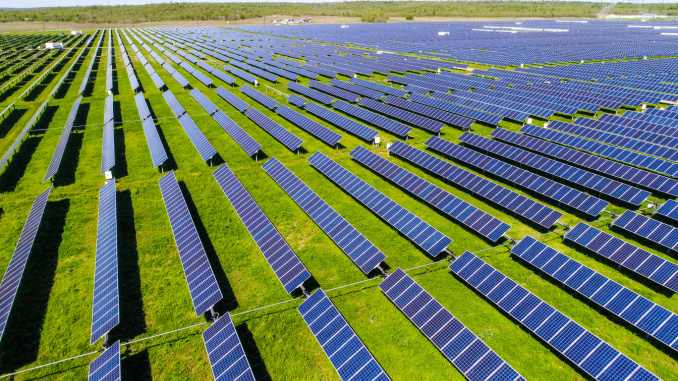
In the first five months of 2025, solar and wind dominated new U.S. electricity generation. Of the 15 gigawatts (GW) added, solar was 11.5, wind was 2.3, and gas was just 1.3, according to the Federal Energy Regulatory Commission (FERC). Industry voices like Stephanie Bosh of the Solar Energy Industries Association hail this as proof that solar delivers power “faster and cheaper than any other source.” Is this true?
As we accelerate toward a grid increasingly reliant on wind and solar, a closer look reveals a troubling reality: these intermittent sources are driving up electricity costs, not slashing them, through a web of hidden expenses that threaten reliability and affordability.
Solar and wind’s part-time nature is the root issue. Solar generates nothing at night, little in the first and last hours of daylight, and falters under clouds, rain, or snow. Wind generation varies unpredictably. This intermittency doesn’t just displace fossil fuels like natural gas and coal—it forces them into inefficient backup roles.
Calling fossil fuels backups is a misuse of the English language that only serves the wind and solar industrial complex. It’s equivalent to calling the starting pitcher a backup in favor of a pitcher who can only play when the wind blows or the sun shines.
Hydrocarbon, coal and natural gas plants, with fixed costs (capital, maintenance, and employees) comprising 60-75% of operational costs, must raise prices on reduced sales volumes to break even. As renewables flood the market during peak production, they suppress wholesale prices temporarily, where subsidized low-bid renewables set the prices for all. In other grids, they get windfall profits, getting the highest price paid for electricity.
Yet, in the “pay-as-clear” system, evening ramps or scarcity periods spike prices, as expensive peaker plants — needed more frequently for renewable gaps caused by the addition of wind and solar — set the highest price, which is paid to all.
Consider the evidence from high wind and solar regions. California’s residential rates are 30-35 cents/kWh—nearly double the U.S. average of 17 cents — despite 50% wind and solar. Germany’s prices top 36-41 cents/kWh with 55% from wind and solar; Denmark and the UK follow suit at 37 and 29-32 cents, respectively.
These ambitious transitions expose the myth: wholesale dips from renewables are overshadowed by retail hikes from taxes, subsidies, grid upgrades, peakers, and using full-time coal and natural gas part-time.
In California, demand from EVs and data centers exacerbates this, and intermittency demands more peakers. These peaker plants run inefficiently, emit more when ramping up, and charge more because they are only used some of the time, causing costly price spikes. They set the price all generators are paid with the take-and-pay system.
In a grid of only hydro, nuclear, gas, and coal — dispatchable sources—peaker needs plummet. These can load-follow predictably, handling demand peaks without the supply volatility renewables cause. Hydro ramps quickly; nuclear provides steady baseload, natural gas and coal are dispatched to match demand. The system worked and was cost effective.
Pre-renewable grids used peakers sparingly, at 4-10%, versus 20% or more in solar-heavy systems like California, where the solar “duck curve” (charting solar generation creates a graph that looks like a duck, no production at night, the belly of the duck, ramp up during the day, the neck of the duck, with a sharp drop as the sun sets, the downward beak of the duck) requires rapid evening ramps of 10-20 GW.
Adding renewables means building more costly, underutilized peaker plants, inflating bills. Cancelling out much of the CO2 emission reductions that are the stated reason for adding costly disruptive wind and solar.
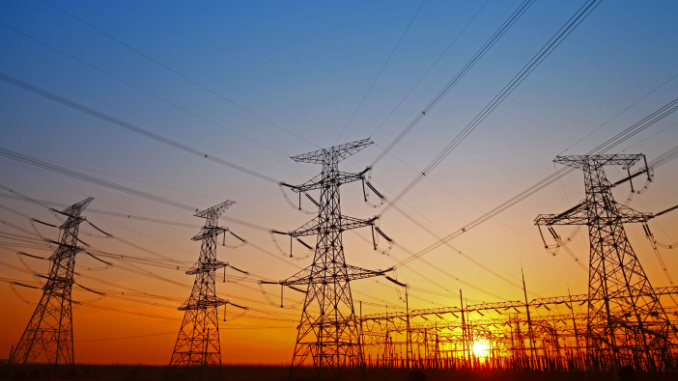
Transmission costs compound the problem. Wind thrives in remote plains or offshore; solar thrives in distant deserts. Connecting these to cities demands expensive high-voltage lines that cost $1-3 million per mile. Thousands of more miles than are needed for nearby hydrocarbon or nuclear plants.
U.S. estimates peg a price tag of $450 billion by 2035 for renewable integration, adding at least 2 cents/kWh to rates. In Germany, €70 billion in upgrades add 3 cents/kWh. Claims of renewables being “cheaper” rely on levelized cost of electricity (LCOE), ignoring transmission and peaker costs. Solar’s $30-50/MWh jumps 30% or more when transmission and backups are factored in.
FERC projects 84% of 133 GW additions by 2028 will come from wind and solar, making our grids less reliable and more expensive.
Policies like the One Big Beautiful Bill Act, which stripped tax subsidies and credits may slow growth, but the trend persists. We need honest accounting. We cannot ignore the wind and solar reality: more blackouts and ever higher prices.
Sandra D. Kennedy, with help and funding from Soros and company, has made it clear that she will bring the Green New Deal to SRP whether customers care or not.
You remember Sandra Kennedy, right? Kennedy tried to pass a Green New Deal regulatory mandate while serving at the Corporation Commission, but it was thankfully defeated by the other Republican Commissioners in 2022. Now, we conservatives need to pay attention again because with the SRP Board elections coming in April, there is a push to flip the board by Sandra Kennedy and her supporters.
Currently, the SRP Board is nearly split between conservatives and Green New Dealers, but the left is pushing hard to flip board members at the SRP election in April. We can’t let that happen.
It is important to understand that SRP does NOT fall under Arizona Corporation Commission jurisdiction, the entity that regulates the other Arizona electric utilities. The Salt River Project Agricultural Improvement and Power District (the District) was officially organized in 1937, formalizing its dual role in managing water resources and providing electricity. This formation was driven by a need to expand the utility’s role in power generation to support the growing population and industries of central Arizona at that time. SRP was formed according to ARS Sec: 48-2301-48-2475, which permits self-governance by a board elected from its members and elections that are completely independent from the regular elections held by city, county, and state.
The next election of Board members (a complex process) will be held April 7, 2026, and all eligible SRP voters must be registered with SRP no later than March 9, 2026. This registration and voting is completely independent of Maricopa County and the Arizona Secretary of State. Maricopa County residents can register to vote here (though you may find that many of you will not be eligible to vote).
Another important point to explore is why all Maricopa County residents who receive electricity from SRP cannot have a vote in who decides on costs of decarbonization, new power plants, and rates to fund these. I have lived in Mesa and Gilbert for the past 45 years and owned 4 houses in that time, but I could only vote in SRP elections at one of the 4 houses, why?
The answer is because the SRP District voting boundaries have never changed since it was incorporated in 1937 even though SRP has expanded service well outside the district’s original boundaries (see here).
The result is that more than 250,000 Maricopa and Pinal County residents have no say in how SRP spends its earnings or sets rates for us customers. This wide swath of Maricopa citizens cannot vote in SRP District elections, and that is just patently unfair!
It is well past time for SRP and the Arizona Legislature to update SRP Governance to include all ratepayers—or give the Corporation Commission the authority to regulate SRP. In the meantime, please do something NOW. Register to vote if you are eligible, and TALK to everyone you know about voting!
David Winstanley is a retired Director of Engineering at Honeywell Aerospace, former Chair of LD15 Republicans, and a conservative activist for local issues in the East Valley.
A Republican lawmaker is taking steps to help Arizona’s power supply during the hot summer months.
This week, Arizona State Senator Frank Carroll announced that SB 1309, which he had sponsored, had been approved by the Committee on Natural Resources, Energy & Water. This bill would “ensure Arizonans have a reliable power supply during the scorching summer months in the desert and the freezing winter months in the high country.”
The bill would require “the Arizona Corporation Commission (ACC) to ensure that any changes made to an electric power grid are capable of producing enough electricity to meet the demand for power in the summer and winter months,” and “a power generation resource mix that avoids both blackouts and brownouts unrelated to severe weather conditions or power quality incidents.”
In a statement that accompanied the announcement, Carroll said, “Because radical Democrats have adopted an extremist environmental agenda, Americans are suffering the consequences during preventable power outages that are endangering lives in the middle of heat waves and dramatic cold spells. Could you imagine if residents in Metro Phoenix experienced a long-lasting power outage when temperatures surge past 110 degrees for days on end?”
Senator Carroll added, “I sponsored SB 1309 to prevent the chaos associated with blackouts, as we’ve seen in states like California, when dangerous green agendas are adopted. We all want a cleaner environment, but not at the potential cost of human life. This commonsense measure will ensure Arizonans’ air conditioners, heaters, lights, and other basic necessities have the power to operate when we need them to.”
On the Arizona Legislature’s Request to Speak System, a representative from the Arizona Free Enterprise Club endorsed the proposal; while representatives from the Climate Cabinet Action, Advanced Energy Economy, Arizona Solar Energy Industries Association, and CHISPA ARIZONA – A Program of League of Conservation Voters, signed into oppose the legislation.
SB 1309 will soon be considered by the full chamber of the Arizona Senate.
Daniel Stefanski is a reporter for AZ Free News. You can send him news tips using this link.