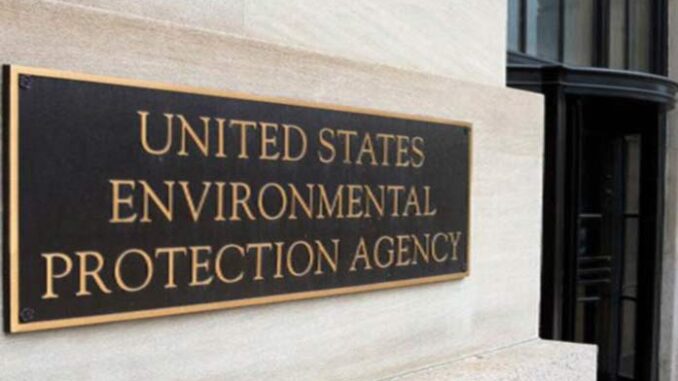
On a crisp, sun-drenched afternoon in the spring of 2023, I found myself walking down Constitution Avenue in Washington, D.C., in front of the William Jefferson Clinton Building, headquarters of the U.S. Environmental Protection Agency (EPA).
Standing in its shadow, I wondered when, or if, sanity would ever return to the building. My mind drifted to the regulatory malfeasance that gave this agency power to treat carbon dioxide (CO2) as a pollutant, the 2009 Endangerment Finding.
For years, this bureaucratic decree masqueraded as settled science. Climate zealots claimed CO2 and other greenhouse gases threatened public health as agents of planetary overheating, ignoring both a paucity of supporting data and contradictory evidence that inexorably accumulated.
Now, three years after my visit, EPA has rescinded the regulation as it applies to motor vehicles. The basis of its action is twofold: First, the agency has concluded that by attempting to regulate greenhouse gases, EPA exceeded its authority under the 1970 Clean Air Act. Second, the environmental effect of regulating tailpipe emissions of greenhouse gases is negligible.
There is more to be done. Reason and good sense would have the EPA remove the Endangerment Finding’s hold over industrial emissions of greenhouse gases, like those coming from power plants, and would undertake to dismantle the rule’s flimsy scientific justifications.
Nevertheless, EPA’s action undermines an ideological foundation for the broad attacks on fossil fuels that have constrained American prosperity and choked the developing world’s aspirations for modern lifestyles.
The 2009 regulation was used to justify the Obama administration’s Clean Power Plan – part of the so-called War on Coal – and tailpipe emissions standards that forced unwanted electric vehicles onto dealership lots. The rule has contributed to the closing of power plants, energy shortages, high electricity prices, and multiple billion-dollar losses for car manufacturers whose customers mostly prefer internal combustion engines. It has also fueled endless litigation against producers of hydrocarbon fuels.
Because CO2 is necessary for all life, beginning with its role in plant photosynthesis, regulation of the gas gave EPA jurisdiction over the entire U.S. economy. Climate crusaders abroad followed EPA’s lead.
Worldwide, the economic waste resulting from the rule is staggering. The Climate Policy Initiative estimates that between 2011 and 2020 that climate spending totaled $4.8 trillion. Estimates for “energy transition investment” – money dumped into the wind, solar and EV rat hole – was $2.3 trillion in 2025 alone.
That is trillions diverted from healthcare, infrastructure, education and genuine alleviation of suffering and advancement of human flourishing. Imagine those resources being directed to improving carbon-intensive energy sectors that have produced the wealthiest and healthiest civilizations in all of history.
Since the dawn of the industrial age, we have witnessed an unprecedented increase in global life expectancy. We have seen a drastic reduction in deaths from natural disasters – not because the weather is milder, but because people are better protected by modern infrastructure and technology made possible by fossil fuels. We have achieved historic highs in agricultural production, feeding a population of 8 billion.
CO2 has played a pivotal role in the greening of the Earth, acting as an atmospheric fertilizer that boosts crop yields and expands forests. Even methane, demonized alongside CO2, is merely a byproduct of a livestock industry essential for providing protein to a ballooning global population. Emissions of neither gas contribute significantly to global temperatures.
Once the EPA designated CO2 a legal hazard, U.S. diplomats, aid agencies and technical experts carried that framing into global climate negotiations, development programs and financing arrangements.
Over time, the EPA’s stance became a de facto reference point for regulators elsewhere. If the U.S. “gold standard” for environmental protection treated CO2 as an endangerment, ministries from Europe to Asia would use similar language in national climate laws.
With the EPA backing away from its regulation of greenhouse gases, developing countries should waste no time in severing whatever restrictions Western climate overseers have placed on their use of fossil fuels. For too long, climate policies have impeded economic growth and denied access to reliable supplies of electricity, to safer indoor fuels for cooking and heating, to refrigeration and to clean water. The result has been higher rates of morbidity and mortality among the world’s poor.
CO2 is not the enemy of humankind. Misguided attempts to criminalize its emissions are!
Vijay Jayaraj is a contributor to The Daily Caller News Foundationand Science and Research Associate at the CO2 Coalition, Fairfax, Va.He holds an M.S. in environmental sciences from the University of East Anglia and a postgraduate degree in energy management from Robert Gordon University, both in the U.K., and a bachelor’s in engineering from Anna University, India. He served as a research associate with the Changing Oceans Research Unit at University of British Columbia, Canada.
As the end of 2025 nears, the question arises: What can Americans expect in the world of energy policy in 2026?
Predicting future events where energy is concerned is always a risky enterprise. After all, if anyone could accurately foresee where, say, the Brent price for crude oil would sit a week from today, that person would soon become fabulously wealthy and never have to work another day in his or her life. But no one can actually do that because too many widely disparate factors impact where prices will head on a daily basis. This overarching theme holds true in most areas of the widely diverse energy space.
Still, just as energy details like exact future oil prices or rig count levels are impossible to know with certainty, some overarching trends are entirely foreseeable. As an example, it was entirely predictable a year ago that 2025 would become a year in which an energy policy revolution would take place. Donald Trump had been elected to a second term and was in the process of naming cabinet nominees who would lead an effort to reverse the onerous regulations and economically ruinous subsidy spending of the Biden years.
A policy revolution was entirely predictable, even though, as I wrote at the time, it would take a somewhat different form than many were expecting. There would be no replay of the “Drill, Baby, Drill” agenda of Trump’s first term mainly due to a series of intractable economic factors. Instead, we’d have a “Build, Baby, Build” revolution in which policy changes have focused on setting the conditions for a boom in energy infrastructure like pipelines, LNG export facilities, baseload power generation, major transmission projects, new and expanded mining operations, and more into place.
With business-oriented cabinet officials like Chris Wright at the Energy Department and Doug Burgum at Interior leading the way, it was easy to predict that the second Trumpian energy revolution would focus on measures that allow markets, not the dictates of central government planners, to lead the charge. The command-and-control schemes, crony capitalism, and green subsidies would be repealed or phased away. Banks and investment houses would be put on notice that their discriminatory, ESG-focused lending practices would be policed. Rather than focus their personal energy on finding ways to punish disfavored energy players, administration officials would spend their days finding ways to speed up permitting processes.
Those things and more all came about in Year One of this second Trump presidency. It has been a true policy-driven revolution.
Now, as the dawn of 2026 nears, the direction of the administration’s Year Two agenda becomes equally predictable: Consolidation of the gains made in 2025.
The ending/phasing out of the green subsidies must be maintained since they distort markets by encouraging irrational allocations of capital. The capital thrown at wind and solar will be more productively allocated to building new natural gas and nuclear baseload plants and ensuring existing coal plants stay up and running to keep America’s lights on. The capital misallocated by legacy carmakers – like Ford and GM – to their foundering EV dreams must be reallocated to making cars American consumers can afford and actually desire to own.
With global markets creating rapidly rising demand for U.S. LNG, it’s time to “Build, Baby, Build” those needed new export facilities and the pipelines needed to feed the gas into them. Those energy gains can’t be consolidated without driving into action the streamlined processes to issue the needed permits.
And then there are the mines. Regardless of how quickly their permits can be issued, America can’t have any of the pipelines, LNG facilities, power plants, AI datacenters, or transmission lines without the raw mineral materials that make them work. America can no longer afford to be held hostage to supply chains for these materials dominated by China. That means more mines, and lots of them.
The President and his people have worked overtime throughout 2025 to ensure the executive branch’s side of this policy revolution is in place. Now, Congress must act to enshrine it permanently in law. Getting that done, consolidating the gains made in 2025 into action and statutes, will dominate the energy policy agenda throughout 2026. It’s all very predictable.
David Blackmon is a contributor to The Daily Caller News Foundation, an energy writer, and consultant based in Texas. He spent 40 years in the oil and gas business, where he specialized in public policy and communications.
I’ve written frequently here in recent years about the financial fiasco that has hit Ford Motor Company and other big U.S. carmakers who made the fateful decision to go in whole hog in 2021 to feed at the federal subsidy trough wrought on the U.S. economy by the Joe Biden autopen presidency. It was crony capitalism writ large, federal rent seeking on the grandest scale in U.S. history, and only now are the chickens coming home to roost.
Ford announced on Monday that it will be forced to take $19.5 billion in special charges as its management team embarks on a corporate reorganization in a desperate attempt to unwind the financial carnage caused by its failed strategies and investments in the electric vehicles space since 2022.
Cancelled is the Ford F-150 Lightning, the full-size electric pickup that few could afford and fewer wanted to buy, along with planned introductions of a second pricey pickup and fully electric vans and commercial vehicles. Ford will apparently keep making its costly Mustang Mach-E EV while adjusting the car’s features and price to try to make it more competitive. There will be a shift to making more hybrid models and introducing new lines of cheaper EVs and what the company calls “extended range electric vehicles,” or EREVs, which attach a gas-fueled generator to recharge the EV batteries while the car is being driven.
In an interview on CNBC, Company CEO Jim Farley said the basic problem with the strategy for which he was responsible since 2021 amounts to too few buyers for the highly priced EVs he was producing. Man, nobody could have possibly predicted that would be the case, could they? Oh, wait: I and many others have been warning this would be the case since Biden rolled out his EV subsidy plans in 2021.
“The $50k, $60k, $70k EVs just weren’t selling; We’re following customers to where the market is,” Farley said. “We’re going to build up our whole lineup of hybrids. It’s gonna be better for the company’s profitability, shareholders and a lot of new American jobs. These really expensive $70k electric trucks, as much as I love the product, they didn’t make sense. But an EREV that goes 700 miles on a tank of gas, for 90% of the time is all-electric, that EREV is a better solution for a Lightning than the current all-electric Lightning.”
It all makes sense to Mr. Farley, but one wonders how much longer the company’s investors will tolerate his presence atop the corporate management pyramid if the company’s financial fortunes don’t turn around fast.
To Ford’s and Farley’s credit, the company has, unlike some of its competitors (GM, for example), been quite transparent in publicly revealing the massive losses it has accumulated in its EV projects since 2022. The company has reported its EV enterprise as a separate business unit called Model-E on its financial filings, enabling everyone to witness its somewhat amazing escalating EV-related losses since 2022:
2022 – Net loss of $2.2 billion
2023 – Net loss of $4.7 billion
2024 – Net loss of $5.1 billion
Add in the company’s $3.6 billion in losses recorded across the first three quarters of 2025, and you arrive at a total of $15.6 billion net losses on EV-related projects and processes in less than four calendar years. Add to that the financial carnage detailed in Monday’s announcement and the damage from the company’s financial electric boogaloo escalates to well above $30 billion with Q4 2025’s damage still to be added to the total.
Ford and Farley have benefited from the fact that the company’s lineup of gas-and-diesel powered cars have remained strongly profitable, resulting in overall corporate profits each year despite the huge EV-related losses. It is also fair to point out that all car companies were under heavy pressure from the Biden government to either produce battery electric vehicles or be penalized by onerous federal regulations.
Now, with the Trump administration rescinding Biden’s harsh mandates and canceling the absurdly unattainable fleet mileage requirements, Ford and other companies will be free to make cars Americans actually want to buy. Better late than never, as they say, but the financial fallout from it all is likely just beginning to be made public.
David Blackmon is a contributor to The Daily Caller News Foundation, an energy writer, and consultant based in Texas. He spent 40 years in the oil and gas business, where he specialized in public policy and communications.
During the latest marathon cabinet meeting on Dec. 2, Energy Secretary Chris Wright made news when he told President Donald Trump that “The biggest determinant of the price of energy is politicians, political leaders, and polices — that’s what drives energy prices.”
He’s right about that, and it is why the back-and-forth struggle over federal energy and climate policy plays such a key role in America’s economy and society. Just 10 months into this second Trump presidency, the administration’s policies are already having a profound impact, both at home and abroad.
While the rapid expansion of AI datacenters over the past year is currently being blamed by many for driving up electric costs, power bills were skyrocketing long before that big tech boom began, driven in large part by the policies of the Obama and Biden administration designed to regulate and subsidize an energy transition into reality. As I’ve pointed out here in the past, driving up the costs of all forms of energy to encourage conservation is a central objective of the climate alarm-driven transition, and that part of the green agenda has been highly effective.
President Trump, Wright, and other key appointees like Interior Secretary Doug Burgum and EPA Administrator Lee Zeldin have moved aggressively throughout 2025 to repeal much of that onerous regulatory agenda. The GOP congressional majorities succeeded in phasing out Biden’s costly green energy subsidies as part of the One Big Beautiful Bill Act, which Trump signed into law on July 4. As the federal regulatory structure eases and subsidy costs diminish, it is reasonable to expect a gradual easing of electricity and other energy prices.
This year’s fading out of public fear over climate change and its attendant fright narrative spells bad news for the climate alarm movement. The resulting cracks in the green facade have manifested rapidly in recent weeks.
Climate-focused conflict groups that rely on public fears to drive donations have fallen on hard times. According to a report in the New York Times, the Sierra Club has lost 60 percent of the membership it reported in 2019 and the group’s management team has fallen into infighting over elements of the group’s agenda. Greenpeace is struggling just to stay afloat after losing a huge court judgment for defaming pipeline company Energy Transfer during its efforts to stop the building of the Dakota Access Pipeline.
350.org, an advocacy group founded by Bill McKibben, shut down its U.S. operations in November amid funding woes that had forced planned 25 percent budget cuts for 2025 and 2026. Employees at EDF voted to form their own union after the group went through several rounds of budget cuts and layoffs in recent months.
The fading of climate fears in turn caused the ESG management and investing fad to also fall out of favor, leading to a flood of companies backtracking on green investments and climate commitments. The Net Zero Banking Alliance disbanded after most of America’s big banks – Goldman Sachs, J.P. Morgan Chase, Citigroup, Wells Fargo and others – chose to drop out of its membership.
The EV industry is also struggling. As the Trump White House moves to repeal Biden-era auto mileage requirements, Ford Motor Company is preparing to shut down production of its vaunted F-150 Lightning electric pickup, and Stellantis cancelled plans to roll out a full-size EV truck of its own. Overall EV sales in the U.S. collapsed in October and November following the repeal of the $7,500 per car IRA subsidy effective Sept 30.
The administration’s policy actions have already ended any new leasing for costly and unneeded offshore wind projects in federal waters and have forced the suspension or abandonment of several projects that were already moving ahead. Capital has continued to flow into the solar industry, but even that industry’s ability to expand seems likely to fade once the federal subsidies are fully repealed at the end of 2027.
Truly, public policy matters where energy is concerned. It drives corporate strategies, capital investments, resource development and movement, and ultimately influences the cost of energy in all its forms and products. The speed at which Trump and his key appointees have driven this principle home since Jan. 20 has been truly stunning.
David Blackmon is a contributor to The Daily Caller News Foundation, an energy writer, and consultant based in Texas. He spent 40 years in the oil and gas business, where he specialized in public policy and communications.
Americans are fed up with the endless partisan chaos pouring out of Washington, D.C. For too long, radical extremists have hijacked our government—stalling progress, undermining confidence, and jeopardizing the American Dream for future generations.
Instead of restoring faith in our republic and passing a clean continuing resolution, Democrats have decided the best idea to survive the second Trump administration is to shut down the federal government, hurting families nationwide and risking our nation’s stability and security. Unfortunately, thanks to the Democrats’ obstinance, this shutdown is quickly becoming one of the lengthiest in our country’s history.
The Democrats’ shutdown, brought about by their pursuit of extremist policies is reckless. According to the Republicans on the U.S. House Committee on Appropriations, the Democrats’ counter proposal included free health care for illegal aliens, electric vehicle access to HOV lanes, taxpayer-funded criminal defense, liberal news programs, DEI projects in foreign countries, and Biden administration grant policies and COVID-era subsidies. These policies rank among the most radical ideas from the left—part of a broader plan to disregard the will of the American people in the General Election of 2024 and continue their transformation of our nation away from the principles that have made the United States the strongest and most prosperous in world history.
Their actions have jeopardized paychecks and services across the country. Families, small businesses, and seniors are being squeezed by the 2025 federal government shutdown. According to the White House Council of Economic Advisors, states would see a decline of billions of dollars of their gross state product each month during the shutdown, thousands of workers would find themselves unemployed weeks away from the holiday season, and Social Security benefits by check would be delayed.
It’s important to note these are just a few of the catastrophic issues facing everyday Americans due to the Democrats’ shutdown shenanigans. The Democrats have compromised pay to our brave men and women who serve in our military and on the front lines of our border. Rather than doing their job, most U.S. Senate Democrats, including Arizona’s own Mark Kelly and Ruben Gallego, have voted twelve times (and counting) to obstruct efforts to reopen the government. This is shameful, but Democrats feel no shame in their blindly partisan rampage to hurt their own constituents. U.S. House Democrat Whip Katherine Clark put her party’s position best when she said, “I mean, shutdowns are terrible and, of course, there will be, you know, families that are going to suffer…. But it is one of the few leverage times we have.”
Worse yet, though, America’s enemies are watching for any opportunity to exploit our weaknesses. China, Russia, and other adversaries are studying this shutdown as they look for ways to take down the world’s greatest superpower. The leaders of these nations see the Democrats’ extremist desires and how those policies conflict with efficient operations to keep America running. They read the stories about the family members of our troops wondering how they might pay bills and put food on the table the longer the shutdown continues, hurting the morale of our military in a critical time for the world. Our enemies are not stupid or ignorant. They are recalculating and recalibrating thanks to the radical left.
Despite these clear and present dangers, Democrats are doubling down on their decision to shut down the government, creating spectacles to distract from harms their antics impose on everyday Americans. One of the top sideshows Democrats have exploited this month is the election of Adelita Grijalva to fill her father’s seat in Arizona’s Seventh Congressional District. Because the U.S. House of Representatives has not been in regular session since her victory, House Speaker Mike Johnson has not had the opportunity to swear her in to office. These facts, however, have not stopped Democrats from harassing Speaker Johnson and other Republicans over this continued vacancy (for legitimate reasons they are alone responsible for). Even Arizona Attorney General Kris Mayes got in on the “fun,” transmitting a letter to the Speaker to threaten legal action if Grijalva was not allowed to assume her position immediately. While Democrats know Grijalva will certainly be sworn in to office, her vacant seat has been used for political fodder.
Americans are not amused, nor are they fooled. A recent poll from YouGov/The Economist showed that more respondents than the week prior blamed Democrats for the shutdown, and that a majority trust Republicans for economic issues. Hardworking men and women around the nation are disgusted with the never-ending partisan games being played at their expense. They want results and the promise of a brighter future for their children and grandchildren—not one-sided political standoffs that jeopardize the happiness, safety, and security of countless families.
This shutdown is not about helping Americans; it’s about defending unpopular priorities like protecting welfare programs for illegal immigrants. It is time for Democrats—both in Congress and across the nation—to end the political games and put hardworking Americans first. Time is of the essence. Let’s open the government and get back to work!
Warren Petersen is the President of the Arizona State Senate and represents Legislative District 14.