by Jonathan Eberle | May 24, 2025 | News
By Jonathan Eberle |
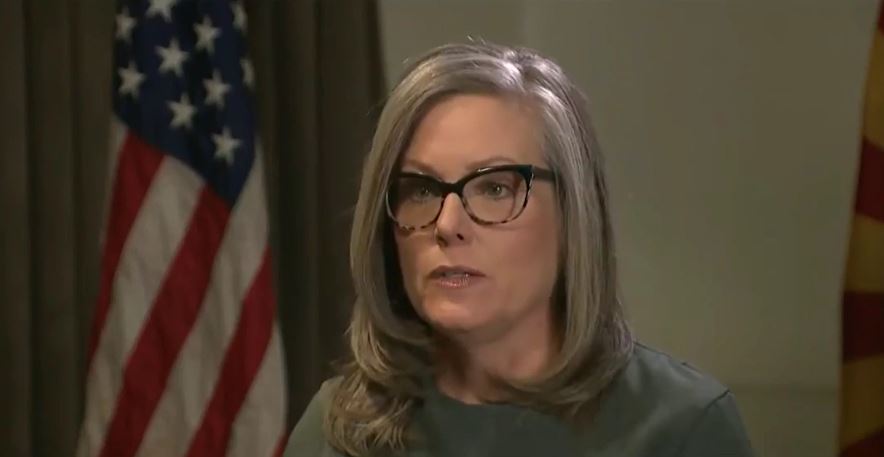
On Thursday, Arizona State Representative Alexander Kolodin (R-LD3) accused Governor Katie Hobbs and Attorney General Kris Mayes of improperly delegating state powers to a Washington, D.C.-based advocacy organization. The accusation raises concerns about transparency and potential conflicts of interest in the administration of state business.
According to documents Kolodin says he obtained through a months-long investigation, both Hobbs and Mayes engaged in undisclosed agreements with the States United Democracy Center, a nonprofit organization focused on protecting elections and democratic norms. Kolodin alleged that the group holds connections to progressive donors and political agendas.
The materials released by Kolodin indicate that Hobbs, during her tenure as Secretary of State, contracted with States United on three separate occasions to provide assistance in managing her office. One such arrangement was reportedly renewed shortly after Hobbs assumed the governorship. Kolodin contends that while these services were presented as being provided at no cost to the state, States United simultaneously received permission to advocate in regulatory and legal proceedings against Arizona’s interests—even while advising top state officials.
The report also includes allegations that the group was allowed to delete public records, potentially in violation of state law. Kolodin claims that the organization’s acknowledgment of this risk was disregarded by AG Mayes, who publicly denied any wrongdoing. The Attorney General’s office, according to Kolodin, has yet to release additional documents tied to its interactions with States United.
“Governor Hobbs and Attorney General Mayes have betrayed Arizonans by allowing radical, dark-money activists to infiltrate and weaponize Arizona’s government,” said Kolodin in a statement. “This corrupt collusion must be exposed. The people deserve answers, transparency, and immediate accountability.”
The allegations are likely to intensify tensions in the state, where debates over election integrity and government transparency have remained prominent in recent years. Representative Kolodin, a Republican, serves in the Arizona House of Representatives and has been a vocal critic of Governor Hobbs’ agenda.
Jonathan Eberle is a reporter for AZ Free News. You can send him news tips using this link.
by Jonathan Eberle | May 9, 2025 | News
By Jonathan Eberle |
A bill aimed at increasing transparency and accountability in Arizona’s Medicaid contracting process has been vetoed by Governor Katie Hobbs, prompting strong criticism from Republican lawmakers who say the governor is shielding her administration from scrutiny.
The legislation, SB 1612, was sponsored by Senate President Pro Tempore T.J. Shope and would have implemented a series of oversight measures affecting how the Arizona Health Care Cost Containment System (AHCCCS) — the state’s Medicaid agency — awards contracts and handles procurement.
In a statement released late Friday, Hobbs vetoed the bill without an accompanying public explanation, though her office has generally opposed what it characterizes as politically motivated legislation. Shope, however, called the veto “an alarming example of the fox guarding the henhouse.”
“I drafted this legislation in response to potential wrongdoing revealed from a probe on how the Hobbs administration provided an unfair advantage when awarding $15 billion worth of state Medicaid contracts,” Shope said. “She appears to be providing favoritism to her friends, allies, and donors using taxpayer dollars.”
The legislation comes in the wake of a 2023 ruling by an administrative law judge that found AHCCCS had improperly awarded contracts related to the Arizona Long Term Care System (ALTCS), which provides care for roughly 26,000 elderly and disabled Arizonans. The judge cited violations of procurement statutes, flawed bid evaluations, and evidence that contract decisions were made based on the interests of the agency rather than the public. Compounding concerns, a June 2023 local media investigation revealed that Sunshine Residential Homes, a state-licensed group home with a record of deficiencies, received millions in contracts from the Arizona Department of Child Safety (DCS) after making campaign donations to Governor Hobbs and the Arizona Democratic Party.
SB 1612 would have removed a statutory exemption allowing AHCCCS to use its own procurement code, requiring adherence to statewide rules; prohibited destruction of internal documentation during request-for-proposal (RFP) evaluations; and required vendors responding to RFPs or applying for state-administered grants to disclose political donations made to the governor or associated campaign committees.
Critics of Hobbs say these measures were a direct response to growing concerns about transparency in her administration. “Had she signed this bill into law, she would have given the citizens of Arizona greater confidence in state government acting in their best interests — not the best interests of political campaign coffers,” Shope said.
Hobbs’ veto is one of more than 100 since taking office in 2023. With Republicans controlling both chambers of the Arizona Legislature and Democrats holding the governorship, partisan tensions over issues like procurement, immigration, and education have dominated the political landscape.
Supporters of SB 1612 say it was a common-sense effort to address documented problems in contract awards that affect the lives of thousands of vulnerable Arizonans. As scrutiny intensifies over both AHCCCS and DCS procurement decisions, it remains to be seen whether lawmakers will revisit the bill in another form or pursue an independent investigation into the allegations.
Jonathan Eberle is a reporter for AZ Free News. You can send him news tips using this link.
by Daniel Stefanski | Feb 7, 2025 | News
By Daniel Stefanski |
A powerful Arizona legislator is continuing to shine the light on the governor’s reported shenanigans with the state’s finances.
Earlier this week, Arizona State Senator T.J. Shope introduced SB 1612 “to hold the Executive Branch accountable and prevent any future conflicts of interest from arising within the state procurement process” by “remov[ing] an exemption allowing the Arizona Health Care Cost Containment System (AHCCCS) to create their own procurement code.” The bill would also “prohibit an agency and state employees from destroying notes and documents created during a request for proposal (RFP) [and] require anyone responding to a state issued RFP or applying for a state administered grant to disclose any donations made to the Governor and campaign affiliates.”
Arizona Senate President Warren Petersen is a cosponsor of the legislation.
The need for this bill, according to Shope’s press release, became heightened after “an administrative law judge concluded AHCCCS improperly awarded contracts for healthcare services for 26,000 elderly and physically disabled individuals enrolled in the Arizona Long Term Care System…based on several factors, including violations of statutes and rules by AHCCCS, prejudice, a lack of transparency, contract awards based on best interests of the agency and not the state, an arbitrary and flawed ranking system of bid proposals, as well as deceptive criteria provided by AHCCS to health care companies on the evaluations of their bid proposals.”
In a statement accompanying the announcement of his bill, Senator Shope said, “The Hobbs Administration has a track record of engaging in questionable and unethical practices where favoritism is given, using taxpayer dollars, to those who are close to or have provided benefits to the Governor, her cabinet, and her allies. This legislation should help address these scandals and prevent future unfair advantages from being provided. Arizonans expect their elected officials to make decisions based on what’s best for the state and its citizens; not what’s best for their own personal agendas and political bank accounts.”
Last year, The Arizona Republic broke a story about the Arizona Department of Child Safety “approv[ing] what amounts to a nearly 60% increase in the rate that Sunshine Residential Homes Inc. charges to care for a child for a day.” The alleged action to approve the rate increase for the one organization was made while “DCS has denied pay increases to home operators and cut loose 16 providers during the contract renewal process.” The Republic also asserted that “no other standard group home provider was approved for any rate increase during Hobbs’ tenure.”
After the story ran in the Republic, Shope sent a letter on June 5 to both Attorney General Kris Mayes and Maricopa County Attorney Rachel Mitchell, asking both officials to “examine the facts surrounding the Department of Child Safety’s alleged decision to approve a nearly 60% rate increase for Sunshine Residential Homes and determine if conduct by any of the involved parties warrants a criminal or civil investigation.”
Daniel Stefanski is a reporter for AZ Free News. You can send him news tips using this link.
by W.H. Williams | Oct 10, 2024 | Opinion
By W.H. Williams |
The Scottsdale teachers’ union has endorsed three candidates for the Scottsdale Unified School District (SUSD) Governing Board, emphasizing their extensive experience as education professionals. While their expertise may seem impressive to some, the pressing question remains: does SUSD need more so-called experts on the Board, or do we require individuals who prioritize common sense, academic excellence, and respect for parents’ rights?
Under the current leadership of Dr. Menzel, an education expert, the SUSD has experienced a troubling decline in academic performance and significant student and staff turnover. Despite promises by the experts that social-emotional learning (SEL) would improve academic educational outcomes, the reality has been disappointing. Not only has academic achievement not improved but it has declined during his tenure.
Dr. Menzel and the experts on the Board, who rubber stamp everything he wants to do, not only have a dismal academic record but have caused over 2,200 students to leave SUSD along with record-high staff turnover.
Some studies and reports suggest that SEL is harming the emotional and mental health of students. The shift in spending away from teachers and to more social workers and counselors further drives down academic performance.
The three endorsed candidates—Dr. Donna Lewis, Matt Pittinsky, and Michael Sharkey—have questionable records that raise concerns about their suitability for the Board, but they also promise to “protect SUSD” and Menzel, ensuring the continued disruption and dismantling of the District.
Dr. Lewis has highlighted her accolade as the national superintendent of the year during her time at the Creighton School District, claiming she improved schools from Cs, Ds, and Fs to As, Bs, and Cs. However, she conveniently omits that only 13% of students were proficient in English Language Arts (ELA) and just 8% in math during her celebrated year. Additionally, her leadership style has been criticized for creating a hostile and toxic environment, prompting a formal public apology from a school board member after her departure.
Matt Pittinsky, another candidate with 25 years in education, has been less than forthcoming about his business ties to SUSD. One of his companies provides services to the district, a fact he only revealed after being confronted publicly. This raises serious questions about his transparency and the potential conflicts of interest in his role as a board member. Furthermore, his acceptance of over $10,000 in out-of-state campaign contributions, primarily from CEOs of companies that sell to schools, adds another layer of concern. What motivations could these out-of-state contributors have for influencing a local election?
Michael Sharkey, who has over 20 years of experience in education, has publicly linked his candidacy to the rise of the parents’ rights movement, which he blames for many of SUSD’s current issues. Sharkey asserts that the “book bans, cultural wars, and dysfunction” that are plaguing SUSD are due to the parents’ rights movement.
He rejects the idea that parents are best positioned to make educational and healthcare decisions for their children, asserting that trained professionals know better. This stance is contrary to the Arizona Revised Statutes, which enshrine parental rights in the Parent’s Bill of Rights. Sharkey’s reluctance to recognize these rights suggests a troubling approach to governance that may not prioritize parental input nor respect their legal parental rights.
Despite Sharkey’s recent claims of wanting to engage with families and welcome their input, it’s important to note that initial statements often reflect true beliefs. His previous rhetoric implies a preference for limiting parental involvement and allowing “experts” to take charge of children’s education and healthcare.
You also must ask yourself why a school board member, who should be focusing on academics, would be involved in making healthcare decisions for the students. Again, Arizona law leaves it up to the parents.
This upcoming election presents a critical choice: we can either “protect SUSD” and continue down the path of endorsing more educational experts who have failed to deliver results and are harming children, or we can elect board members who demonstrate common sense, a focus on academics, and a commitment to respecting parents’ rights. Candidates like Gretchen Jacobs, Jeanne Beasley, and Drew Hassler embody these qualities, promising to be responsible stewards of our tax dollars while prioritizing the safety and educational needs of all students in SUSD.
It’s time for a change that puts our children’s future first.
Mr. Williams is a longtime Scottsdale resident, businessman, grandfather, and the parent of an SUSD graduate.
by Daniel Stefanski | Sep 28, 2024 | News
By Daniel Stefanski |
The Hobbs Administration is again under political fire for alleged conflicts of interest.
This week, Arizona State Senator T.J. Shope, the Senate President Pro Tempore, issued a statement to announce the recent conclusion of an administrative law judge that “the Arizona Health Care Cost Containment System (AHCCS) improperly awarded contracts for healthcare services for 26,000 elderly and physically disabled individuals enrolled in the Arizona Long Term Care System.” According to the release from Senator Shope, the “determination was based on several factors, including violations of statutes and rules by AHCCCS, prejudice, a lack of transparency, contract awards based on best interests of the agency and not the state, an arbitrary and flawed ranking system of bid proposals, as well as deceptive criteria provided by AHCCCS to health care companies on the evaluations of their bid proposals.”
Shope revealed that “while the judge recommended cancellation of the procurement and issuance of a new request for bid proposals, AHCCCS announced this month it would not do so, and instead, would delay the transition to the newly awarded health plans by one year, commencing in October of 2025.”
In a statement, Shope said, “I’m deeply disturbed by what’s transpired under the Hobbs Administration, from the Sunshine Residential pay-for-play scheme, to now this procurement scandal. The integrity of state government and its spending practices have been compromised. As chairman of the Senate Health & Human Services Committee, it’s my goal to get to the bottom of these disputes and determine whether in fact preferential treatment is being provided using the tax dollars of hardworking Arizonans, and whether our citizens who rely on these critical services are being protected.”
The Senate Republican leader added, “I will be on a fact-finding mission in the coming months and will determine the best course of action to address these cases, whether through legislation, or other legal avenues.”
Earlier this year, The Arizona Republic broke a story about the Arizona Department of Child Safety “approv[ing] what amounts to a nearly 60% increase in the rate that Sunshine Residential Homes Inc. charges to care for a child for a day.” The alleged action to approve the rate increase for the one organization was made while “DCS has denied pay increases to home operators and cut loose 16 providers during the contract renewal process.” The Republic also asserted that “no other standard group home provider was approved for any rate increase during Hobbs’ tenure.”
After the story ran in the Republic, Shope sent a letter on June 5 to both Attorney General Kris Mayes and Maricopa County Attorney Rachel Mitchell, asking both officials to “examine the facts surrounding the Department of Child Safety’s alleged decision to approve a nearly 60% rate increase for Sunshine Residential Homes and determine if conduct by any of the involved parties warrants a criminal or civil investigation.”
State Representative Matt Gress followed up with a letter on June 6 to Mitchell, letting her know that “the Auditor General’s Office stands ready to partner with you in getting the facts about this troubling matter,” and that the Joint Legislative Audit Committee “will allocate the resources the Auditor General needs to help restore what appears to be a major breach of trust in our government.”
That day (June 7), Mayes fired off two letters to both Mitchell and the Arizona Auditor General, Lindsey Perry, over the investigation. Mayes told County Attorney Mitchell that “it would not be appropriate or in the best interest of the state to conduct parallel investigations into the same matter,” and that “a separate process conducted by the MCAO could jeopardize the integrity of the criminal investigation that my office will now proceed with.”
Mayes similarly told Auditor General Perry that “while [the Auditor General’s] office is statutorily authorized to examine records and conduct audits at the direction of the Joint Legislative Audit Committee, at this time, the assistance of [her] office is not needed by the Attorney General’s Office for our investigation.”
After the letters from Mayes, Arizona State Treasurer Kimberly Yee sent a letter to Maricopa County Attorney Rachel Mitchell, requesting “that [she] investigate the allegations that have occurred in [her] jurisdiction.” Yee also delivered a letter to Arizona Attorney General Kris Mayes, highlighting that the state’s top cop’s assertion that her office had singular control over any investigation “is not appropriate or authorized by law, as those entities have separate jurisdiction to investigate this matter.”
After receiving the letters from Senator T.J. Shope and Gress, County Attorney Mitchell informed them that her office was “contacted by the Arizona Auditor General asking that the Maricopa County Attorney’s Office serve as the prosecution office that will work with them while they conduct an investigation into this matter.”
Daniel Stefanski is a reporter for AZ Free News. You can send him news tips using this link.