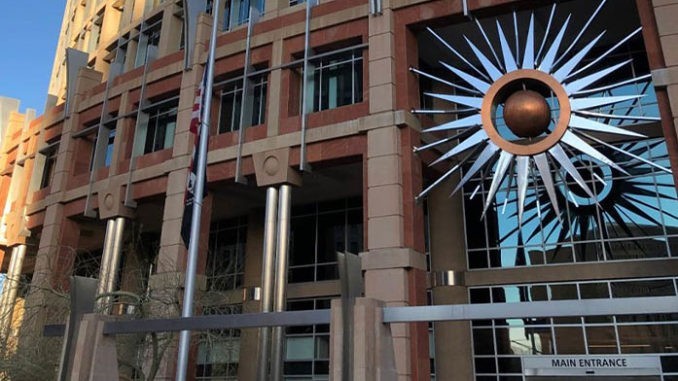
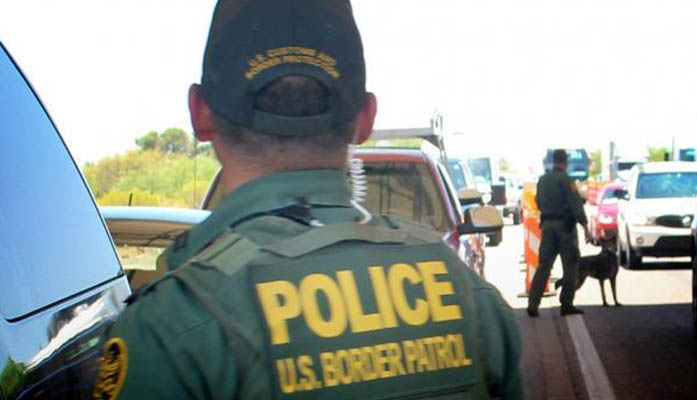
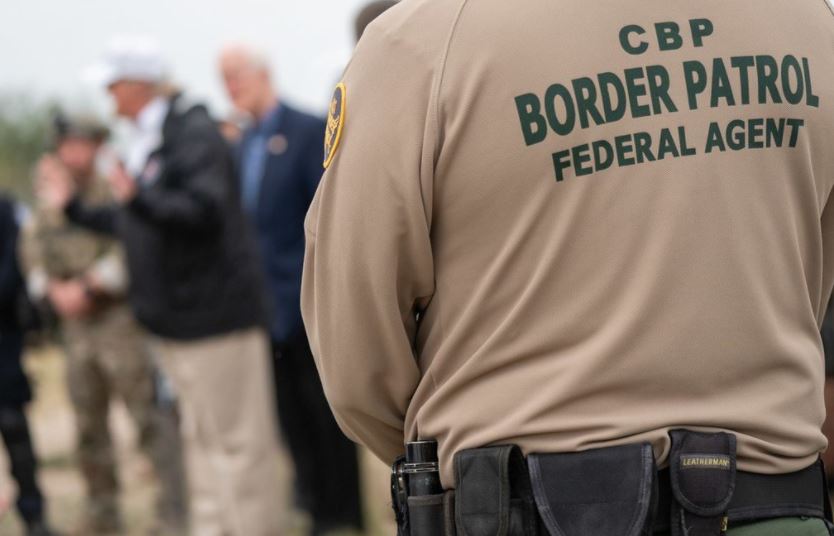
The city of Phoenix is operating a program to investigate federal agencies under President Donald Trump, according to public records.
The city publicly promotes its Community Transparency Initiative (CTI) as a complaint intake system and informational resource for the public on immigration matters.
However, records obtained by Judicial Watch reflect that the city of Phoenix tasks its employees and law enforcement with documenting, reporting, and investigating more than just federal immigration officials.
CTI, developed through the Office of Transparency and Accountability (OAT), was initially developed to take in reports and complaints concerning Immigration and Customs Enforcement (ICE) personnel.
The city’s employee training materials reveal that CTI has a much larger scope of oversight beyond ICE to include more federal agencies. City employees are trained to document and report all encounters involving federal law enforcement personnel. They are also trained to maintain records of time and resources devoted to work done concerning CTI.
Agencies under city of Phoenix employees’ purview were indicated to include the Federal Bureau of Investigation; United States Secret Service; Alcohol, Tobacco, Firearms, and Explosives; United States Postal Inspection Service; Border Patrol; Drug Enforcement Agency; United States Marshals Service; Federal Air Marshal Service; Federal Protective Service; Capitol Police; and the Transportation Security Administration.
Under CTI, the Phoenix Police Department uses its Special Investigations Division to review CTI complaints, investigate for criminal or civil rights violations, and pass along findings to Arizona Attorney General Kris Mayes. Both the police and fire departments have been involved in implementing CTI.
The initiative also connects residents with multiple progressive nonprofit organizations: the national and Arizona chapter of the ACLU, Immigrant Legal Resource Center, National Immigration Law Center, Informed Immigrant, Florence Project, International Rescue Committee, Phoenix Legal Action Network, and the Immigrant Advocacy Network.
CTI also refers residents to its Office of Refugee and Immigrant Support, established in March 2023 amid the height of the illegal immigration crisis under former President Joe Biden. The office provides refugees and asylum seekers with integration services, including access to healthcare, housing, childcare, education, and employment.
Around the same time in 2023, Gov. Katie Hobbs’ administration allocated $60 million to house, feed, and provide other resources to the homeless and illegal immigrants. $13 million went to the city of Phoenix.
In recent years, the city spent around $8 million of its $396 million in American Rescue Plan Act funds on refugee and immigrant services.
In early March of this year, the city authorized spending up to $500,000 through June 2028 for legal counsel through Coppersmith Brockelman PLC, a favorite law firm among top Democrats such as Gov. Katie Hobbs, though the CTI website and later reporting stated that the city spent $1 million to hire the firm. Sam Coppersmith, a managing partner to the firm, was formerly a Democratic congressman for the 1st Congressional District and a chairman of the Arizona Democratic Party.
Judicial Watch didn’t receive any records confirming that the city formally considered any other law firms to provide outside legal counsel for CTI.
Following this authorization for outside legal counsel, the city passed a policy banning ICE enforcement operations from city-owned property. Mayes later issued a defense of the city’s action.
AZ Free News is your #1 source for Arizona news and politics. You can send us news tips using this link.
Federal officials are planning new Border Patrol station projects in Three Points, Casa Grande, and Sonoita-Elgin. U.S. Customs and Border Protection (CBP) is also preparing to build checkpoints in southern and southwestern Arizona using funding from the 2025 federal reconciliation law.
The three station proposals would accommodate a combined 1,000 agents, with each estimated to cost more than $100 million. CBP told the outlet the projects remain in early planning.
CBP said the projects would be funded through the 2025 reconciliation law commonly known as the One Big Beautiful Bill Act. Section 90002(a)(4) appropriated $5 billion nationally for expenses related to leasing, acquiring, constructing, designing, or improving CBP facilities and checkpoints.
At Three Points, a Sept. 11 forecast called for designing and building a station sized for 500 agents. The project was estimated to cost more than $100 million, with Sept. 25 listed as the projected solicitation date.
That forecast projected a contract award between October and December 2026, the first quarter of federal fiscal year 2027, and listed Sept. 1, 2029, as the anticipated contract completion date.
In an Aug. 21 letter to Pima County, CBP described a proposed site of approximately 87 acres about four miles east of the existing Three Points station and requested input for an environmental assessment.
In the letter, CBP specialist John Petrilla wrote, “The purpose of the new BPS is to accommodate the addition of new agents and personnel intended to enhance border security within the U.S. Border Patrol Tucson Area of Responsibility, with an ultimate objective of increasing the probability of apprehension of those that have entered into the U.S. illegally.”
The Casa Grande forecast describes a station for 300 agents and personnel, along with support space and other infrastructure. Its estimated cost also exceeds $100 million, with the same anticipated award quarter and September 2029 completion date. The listing identifies Casa Grande as the project location without specifying a street address.
The Sonoita-Elgin proposal would accommodate 200 agents and also exceed $100 million. The projected capacities describe the size of the facilities, rather than a confirmed increase of 1,000 agents assigned to Arizona.
CBP’s letter also identifies an alternative site along State Routes 82 and 83. The preferred Sonoita-area alternative involves an undeveloped 40-acre parcel approximately four miles southeast of the Sonoita crossroads. County officials said the location appeared to be near Elgin Elementary School.
Santa Cruz County Board of Supervisors Chairman John Fanning said that the county had requested details about site selection and the proposal’s economic, social, and environmental effects. CBP said it would seek community input as it evaluates potential locations.
CBP has not clarified whether the proposed facility would supplement or replace the existing station.
Separate federal forecasts outline two checkpoint projects, each estimated at $50 million to $100 million. The Nogales I-19 checkpoint proposal calls for a new checkpoint and supporting facilities at a preferred location adjacent to the existing checkpoint in Amado. The Wellton I-8 checkpoint proposal describes a new checkpoint and supporting facilities just west of the Dateland offramp in Yuma County. Both forecasts list anticipated contract completion on Sept. 30, 2029.
CBP said that the broader station and checkpoint investments are intended to replace aging facilities, strengthen operations, and support agents confronting human and drug smuggling. In a statement, the agency noted, “As potential locations are evaluated, CBP will seek input from local communities before projects move forward.”
Two men were arrested this week for allegedly drugging, kidnapping, and sexually assaulting a woman earlier this summer.
Zabdiel “Zab” Kofi Echie, 24, and Joaquin Corona Borboa, 21, face sexual assault and kidnapping charges. The two are alleged to have conspired to commit the crimes.
Echie is a Border Patrol agent in training who had served until recently in the Marine Corps. Public records indicate that Echie lived in the Virginia/Washington, D.C. area throughout his high school years, and in the Tucson area for at least the last several months.
Borboa is a college student on hiatus at the University of Arizona (U of A) who works as a handyman with his uncle and is an aspiring fitness influencer according to his social media activity. Unlike Echie, Borboa’s attorney described him as a lifelong Tucson resident dating back to four months old. Borboa’s attorney mentioned that his parents were present for the initial hearing and willing to house him should the judge permit him to be released on his own recognizance. The judge did not.
Court documents revealed that the alleged victim, an 18-year-old woman, told investigators that Echie and Borboa gave her alcohol and then, to her surprise, put an “unknown white powdery substance” in her mouth while driving her from Tucson to Echie’s home in Sahuarita on June 19.
The victim alleged that she became disoriented during the 30-minute drive, and further alleged that Borboa digitally penetrated her.
Once at Echie’s home, the victim claimed that she passed out and later awoke to Echie having sex with her in his bed. She alleged that she attempted to stop Echie but that he held her down with Borboa’s help.
The victim also alleged that Borboa forced her to perform oral sex on him before taking her to his apartment and having sex with her there for several more hours.
The interim complaint reported that Echie’s cell phone contained a short video of the sexual encounter. Investigators noted that the victim was crying on the video, and that Borboa was visibly holding her down as Echie had sex with her.
Investigators also discovered text messages between Echie and Borboa that allegedly reflect they planned the sexual assault.
The judge who oversaw Borboa’s initial court appearance called the data discovered on Borboa’s phone “concerning.”
Echie posted his $150,000 bond; Borboa is being held at the Pima County Adult Detention Complex on a $350,000 bond.
Neither Echie nor Borboa have any criminal history. Attorneys for both men negotiated for lowered bonds, arguing that neither presented a threat to the community based on their lack of criminal history.
Customs and Border Protection (CBP) told 13 News that Echie was an off-duty employee and confirmed that its Office of Professional Responsibility is investigating Echie over the allegations.
“CBP stresses honor and integrity in every aspect of our mission, and the overwhelming majority of CBP employees and officers perform their duties with honor and distinction, working tirelessly every day to keep our country safe,” stated CBP.
AZ Free News is your #1 source for Arizona news and politics. You can send us news tips using this link.
Federal officers arrested a man identified as a person of interest in the fatal shooting of Tucson Police Department recruit Carlos Ramirez as he attempted to enter the United States through the Douglas Port of Entry.
Alexis Monter, 30, approached the port’s pedestrian lane at approximately 7:53 p.m. on Sunday. During the inspection process, a CBP officer checked Monter’s information and received an active National Crime Information Center (NCIC) warrant, according to a CBP announcement.
The warrant identified Monter as a person of interest in the shooting of a Tucson police recruit and advised officers to consider him armed and dangerous. CBP officers detained Monter and contacted the Douglas Police Department, which took custody of him at approximately 8:42 p.m.
“The vigilance of our officers at the Douglas Port of Entry is critical to the safety of our communities,” Douglas Area Port Director Martin Gomez said. “By identifying and apprehending this individual, our officers have ensured that a dangerous subject is removed from the streets and held accountable for his alleged actions.”
CBP described the underlying investigation as the shooting of a Tucson police recruit without identifying Ramirez by name. KVOA connected Monter’s arrest to the Ramirez case, and KOLD reported that Monter was arrested in connection with the Aug. 19 shooting.
ANOTHER ARREST IN TPD RECRUIT KILLING: We just received this release from CBP saying 30-year-old Alexis Monter was arrested in connection to the death of TPD recruit Carlos Ramirez. We've asked PCSD why we're just finding out, and how many suspects there actually are in this… pic.twitter.com/7Tr2ylkt4g
The CBP announcement did not specify Monter’s suspected role in the shooting, disclose the offense listed in the warrant, or identify any charges filed against him following his transfer to Douglas police.
Ramirez, 23, was found shot to death inside his home in the 7700 block of South Enchanted Spring Drive during the early morning hours of Aug. 19. His pregnant fiancée, a Pima County Sheriff’s Department corrections officer, was shot in the shoulder. She and her unborn child survived.
An interim complaint filed in the case states that Ramirez’s fiancée heard banging outside their bedroom before Ramirez told her to retrieve a gun from a safe because two masked men were inside the home. Ramirez fought with the masked men before shots were fired.
Investigators obtained surveillance footage showing a dark Acura SUV leaving the area. Additional footage showed Alex James Barnett and Santiago Jorge Rogers at a gas station near West Valencia Road shortly before the shooting.
Rogers, 39, was arrested on Aug. 22 at a hotel near South Palo Verde Road and charged with first-degree murder and aggravated assault. A judge ordered him held without bond. Barnett, 33, surrendered on Aug. 24 following a three-hour standoff at an apartment complex near Broadway Boulevard and Camino Seco. A judge set his bond at $2 million in the Ramirez case and ordered him held without bond for an alleged probation violation.
Ramirez had completed 23 weeks of training at the Southern Arizona Law Enforcement Training Center and was scheduled to graduate on Aug. 27 with Basic Recruit Class 26-1. His classmates honored him during the graduation ceremony, where his brother, an Arizona Department of Public Safety trooper, accepted Ramirez’s badge and presented it to his fiancée.
The investigation into Ramirez’s killing remains ongoing.
Federal authorities arrested 95 commercial truck drivers identified as illegal aliens during a multi-agency enforcement operation in Arizona’s Yuma Sector, with more than three-quarters carrying commercial driver’s licenses (CDLs) issued by California.
The U.S. Border Patrol conducted the operation with local law enforcement partners from Aug. 10 through Aug. 14, resulting in 143 arrests involving individuals from 18 countries, according to U.S. Customs and Border Protection (CBP).
Of the 95 truck drivers arrested, 76 possessed California CDLs, while six held licenses issued by New York. CBP said the remaining licenses came from other states but did not identify them individually.
The operation also intercepted two human-smuggling attempts, resulting in the arrest of four alleged smugglers and 17 smuggled aliens. Agents seized a firearm, 74 pounds of methamphetamine, and 169 pounds of marijuana.
95 ILLEGAL ALIEN TRUCK DRIVERS ARRESTED.
Working alongside law enforcement partners, @CBP arrested the truckers in Arizona — 76 of whom had driver’s licenses issued by CALIFORNIA.
We won’t stop fighting to get illegal alien truckers OFF our nation’s roads.… https://t.co/OojGPH3lHC
Acting Chief Patrol Agent Dustin W. Caudle of the U.S. Border Patrol’s Yuma Sector said the agency is targeting threats involving improperly qualified commercial drivers as well as criminal organizations engaged in drug and human smuggling.
“We are committed to protecting our citizens from all international threats,” Caudle said, “whether that is from unlicensed or untrained drivers, or transnational criminal organizations engaged in human or drug trafficking.”
Fox News first reported the arrests Monday morning, before CBP publicly released the operation’s results.
The arrests come amid increased federal scrutiny of state commercial licensing programs for foreign nationals and follow an August report by the Federation for American Immigration Reform (FAIR) examining the issuance of non-domiciled CDLs nationwide.
FAIR reported that California issued more than 128,000 non-domiciled CDLs between January 2022 and September 2025, more than doubling the state’s annual issuance during that period, and that in 2025 at least 17 fatal crashes involving foreign national CDL holders cost more than 30 Americans their lives.
A non-domiciled CDL is a separate category of commercial license available under federal law to certain foreign nationals and is not synonymous with a license issued to an illegal alien. Under current federal regulations, foreign-domiciled applicants for a non-domiciled CDL must be lawfully present in the United States under specified employment-based nonimmigrant visa categories.
FAIR’s report found California allowed CDL knowledge examinations in Arabic, Chinese, Punjabi, Russian, and Spanish. According to data cited in the organization’s 31-page investigative report, first-attempt pass rates were 22 percent for applicants taking the test in Arabic and 26 percent for Punjabi, compared with 63 percent for applicants testing in English.
“Our investigation—powered by public records, litigation against New York’s stonewalling, and analysis of FMCSA’s own audits—lays bare systemic noncompliance on a massive scale,” Mateo Forero, FAIR’s director of investigations, said. “California’s 128,000-plus non-domiciled CDLs and abysmal foreign-language pass rates, the multi-state practice of issuing licenses beyond lawful presence, and the growing list of preventable deaths make clear that temporary executive fixes are not enough. Only permanent statutory reform can restore the integrity of the CDL program and protect every American driver.”
Federal regulators separately identified problems with California’s non-domiciled CDL program during a 2025 review.
The Federal Motor Carrier Safety Administration (FMCSA) found that approximately 25 percent of the California records sampled during its review failed to comply with federal requirements.
FMCSA found that California issued some commercial licenses with expiration dates extending beyond the expiration of drivers’ lawful-presence documents. Regulators also found licenses issued to Mexican nationals who were ineligible under the applicable federal rules and found that some temporary commercial credentials were issued without first validating lawful presence or reporting the licenses to the national Commercial Driver’s License Information System.
California informed federal regulators in late 2025 that it had begun proceedings to rescind approximately 17,000 noncompliant licenses. FMCSA subsequently determined California had failed to complete the corrective actions on the agreed schedule and withheld approximately $160 million in federal highway funding in January.
The California DMV later said that, effective March 6, the federal government required it to cancel approximately 13,000 non-domiciled CDLs. The state agency said all affected drivers had federal work authorization and were legally present when their licenses were originally issued. California DMV also said it had sought permission to issue corrected licenses to drivers who remained eligible.
New York has faced similar federal enforcement. An FMCSA audit found 107 of 200 sampled non-domiciled CDL records were issued in violation of federal requirements, a failure rate of more than 53 percent.
The agency found New York’s licensing system routinely issued eight-year non-REAL ID commercial licenses without limiting their expiration dates to the period during which the foreign driver was lawfully present in the United States. FMCSA withheld more than $73 million from New York in April after concluding the state had failed to complete required corrective actions.
Federal rules governing non-domiciled commercial licenses were tightened this year. An FMCSA final rule, effective March 16, limits eligibility to foreign nationals lawfully present in the United States under H-2A temporary agricultural worker, H-2B temporary non-agricultural worker, or E-2 treaty investor status.
The regulations also require states to verify an applicant’s immigration status and require states unable to comply with the new standards to halt issuance of non-domiciled commercial licenses until their systems meet federal requirements.
The Yuma Sector arrests are the latest enforcement action involving commercial drivers as federal transportation and immigration authorities increase scrutiny of the licensing and employment of foreign nationals operating commercial vehicles on U.S. highways.