by Corinne Murdock | Mar 4, 2024 | Economy, News
By Corinne Murdock |
There were over 800 illegal immigrant children released to sponsors in Arizona in the last fiscal year, which would result in an estimated cost of over $10 million to educate them.
This estimate comes from Joint Legislative Budget Committee (JLBC) data, in which average per-pupil spending in 2022 derived from state, local, and federal funding, adjusted for inflation, was over $11,700. The Office of Refugee Resettlement (ORR) reported that there were 861 unaccompanied children released to sponsors in the 2023 fiscal year, which runs from October 2022 to September 2023. Altogether, that amounts to over $10 million.
Per the latest immigration data, another 368 unaccompanied children were released to sponsors from last October to December. JLBC estimated per-pupil spending last year, adjusted for inflation, to sit at about $12,000, and spending in 2024 to sit at about $11,700.
Since the 2021 fiscal year, there have been over 2,600 illegal immigrant children released to sponsors. That’s about 1,000 more in four years than the entire total for the six years spanning the 2015 fiscal year to the 2020 fiscal year (just over 1,700).
Under 2022 costs, that amounts to over $28.6 million. The estimated 2023 costs, adjusted for inflation, amounts to over $31.2 million, with a return to about $28.6 million under 2024 estimated costs.
Nationwide, there were about 113,500 illegal immigrant children released to sponsors in the last fiscal year. That’s a decline from the 2022 fiscal year, about 127,500, but remains a significant increase from all other years prior.
In the first four months of this fiscal year, there have been about 46,300 unaccompanied minors encountered along the southwest border. Border encounter data reveals that there have been over 468,180 unaccompanied minors since President Joe Biden took office.
Encounter totals for accompanied minors register far lower. There have been just over 500 encounters of accompanied minors in the first four months of this fiscal year, and over 7,800 in total since Biden took office.
These latest estimates are just a portion of total migrant children in the education system, and consist of only those reported. In 2022, there were over 90,000 students characterized as English Language Learners (ELLs) in Arizona. Using 2022 education costs, that amounts to over $1 billion.
Corinne Murdock is a reporter for AZ Free News. Follow her latest on Twitter, or email tips to corinne@azfreenews.com.
by Elizabeth Troutman | Mar 2, 2024 | Education, News
By Elizabeth Troutman |
More than 900 Arizona schools declined to answer if they teach Critical Race Theory.
State Superintendent of Public Instruction Tom Horne released figures showing that 900 schools would not answer five academic focus questions related to matters such as ensuring schools do not inappropriately expose students to explicit content and avoiding instruction that promotes racial division such as Critical Race Theory.
Of Arizona’s 2,467 district and charter schools, as of Feb. 29, 1,565 have affirmed that they are following these guidelines, but 902 have not.
Other questions attempt to ensure that any sexual content is developmentally appropriate, administrators fully support teacher discipline, and schools avoid excessive distractions such as Social Emotional Learning.
Social Emotional Learning claims to equip children with the ability to manage emotions, feel empathy for others, and maintain positive relationships, but it integrates Critical Race Theory in the education system.
“It is scandalous to see that more than 900 schools have declined to be transparent with parents who entrust their children to be educated by these schools,” Horne said. “Parents have the right to be fully informed about what their neighborhood schools value and how instructional time is used.”
The media claims public schools don’t teach CRT, Horne said. The superintendent said this is false, as the Balsz Elementary District on the east side of Phoenix explicitly and publicly teaches CRT.
“The fact that more than 900 districts and charter schools did not answer the question proves that the problem is widespread and distractions from academics are contributing to low test scores,” he said.
“Every instructional minute is precious, and every minute should be devoted to academics, not unnecessary distractions, lessons that divide people by race, or exposing students to subject matter that is not developmentally appropriate,” Horne continued.
The schools that declined to answer the questions will have that information on their school report card provided on the department’s website. If schools eventually choose to respond, their report card will be updated with that information.
Early next week, the department will finish compiling and releasing information on whether schools are following state law that requires instruction on the Holocaust and other genocides.
“Schools have a responsibility to teach to the state standards and graduating students who are academically proficient,” Horne said. “This is simple common sense and easily achievable by every school in the state.”
Elizabeth Troutman is a reporter for AZ Free News. You can send her news tips using this link.
by Corinne Murdock | Feb 25, 2024 | Education, News
By Corinne Murdock |
Arizona’s public schools have over $1 billion in surplus, according to the Arizona Department of Education (ADE).
Tim McCain, chief financial officer for ADE, announced the surplus during last week’s meeting in the House Appropriations Subcommittee on State & Local Resources. According to McCain, the maintenance and operations (M&O) budget carry forward is now over $1 billion.
Additionally, the M&O budget carry forward has a generally positive trajectory, growing from $400 million in 2020 to over $1 billion this year. These budgetary increases carried forward function to raise schools’ budgets.
“Budget balance carry forward goes to the next year for their increase, so their budget will be increased by the amount that they carried forward to the next year,” said McCain. “[Schools] would be able to spend those monies in the future as they go forward.”
McCain also reported that the cash not committed to the M&O budget currently amounts to about $300 million, a decrease this year compared to last but an overall increase since 2020.
The school district fund balance increased from $3.5-$3.6 billion for all districts in 2017, to $6.4 billion for all districts in 2023. The percentage of revenue has remained in the 40-50 percent range since 2018.
McCain clarified that some of the funds within the latest balance consists of bond building funds, around $2 billion.
The school district M&O balance has continuously increased from $355 million in 2017 to $1.38 billion in 2023, with the percentage of revenue likewise increasing steadily from six percent in 2017 to 19 percent last year.
McCain explained that these factors contributing to the budgetary growth could be attributed to increased K-12 funding; districts mitigating risk due to inflation, minimum wage increases, current year funding, and drop in enrollment; the teacher shortage; and the lack of a budget balance carry forward cap. Prior to 2017, there was a four percent cap that incentivized a “use it or lose it” approach to budgeting.
Further, McCain said that the federal COVID-19 relief funds served as another factor contributing to budgetary growth. Arizona received over $4 billion in Elementary and Secondary School Emergency Relief (ESSER) funding. Over $277 million expired in September 2022, and over $1.1 billion expired last September. The remaining $2.5 billion are set to expire this September.
“The districts have been able to utilize ESSER funds where they would have normally utilized M&O funds for certain purposes, and be able to carry those funds over into the future,” said McCain.
Another budgetary growth factor according to McCain was the Classroom Site Fund expansion to include Student Support Services in 2022, and a $300-per-student increase in CSF funds.
Corinne Murdock is a reporter for AZ Free News. Follow her latest on Twitter, or email tips to corinne@azfreenews.com.
by Daniel Stefanski | Feb 24, 2024 | News
By Daniel Stefanski |
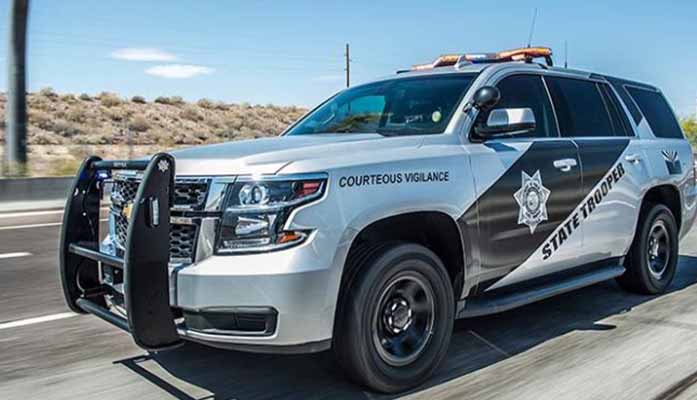
The ranks of state law enforcement are becoming dangerously thin.
This month, the Arizona Troopers Association has been sounding the alarm about the number of vacancies at the Arizona Department of Public Safety.
According to a representative of the Association, “DPS is down approximately 500 troopers.”
The Association has been actively attempting to lobby lawmakers and the Governor’s Office to bring attention to this public safety issue. Earlier in February, President Jeff Hawkins posted a picture of his meeting with State Senator Frank Carroll, where they “discussed the issues that our members are dealing with.”
Hawkins also met with State Representative Hendrix to have “a frank conversation about how many vacancies the agency currently has and [the] dire need to fill them before the situation gets worse.”
Not only are the number of troopers at DPS understaffed, but the number of dispatchers are suffering as well.
Earlier this session, the Association expressed displeasure in the budget released by the state’s governor – particularly with the lack of attention to solving the crisis over DPS vacancies. The “X” account for the Arizona Troopers Association stated, “We are very disappointed Governor Hobbs’ budget won’t do anything to solve the looming crisis AZDPS faces. Historic vacancies are getting worse. Either we spend the money to get a fully staffed highway patrol or face public safety disasters in the future.”
The Arizona State Troopers Association endorsed a bill, SB 1175, that would “appropriate an unspecified amount from the state General Fund to the Department of Public Safety in FY 2025 to pay the cost of stand-by for peace officers employed by DPS.”
This bill easily passed the Senate Committee on Military Affairs, Public Safety and Border Security (6-1) and narrowly passed the Appropriations Committee (5-4 – with one member not voting).
On the Arizona Legislature’s Request to Speak system, representatives from the Fraternal Order of Police (Arizona State Lodge) and the Arizona Police Association indicated their support for the bill. There were no individuals or organizations signed in to oppose the proposal.
Senator David Gowan, a Republican, is the sponsor of SB 1175.
Daniel Stefanski is a reporter for AZ Free News. You can send him news tips using this link.
by Elizabeth Troutman | Feb 20, 2024 | Education, News
By Elizabeth Troutman |
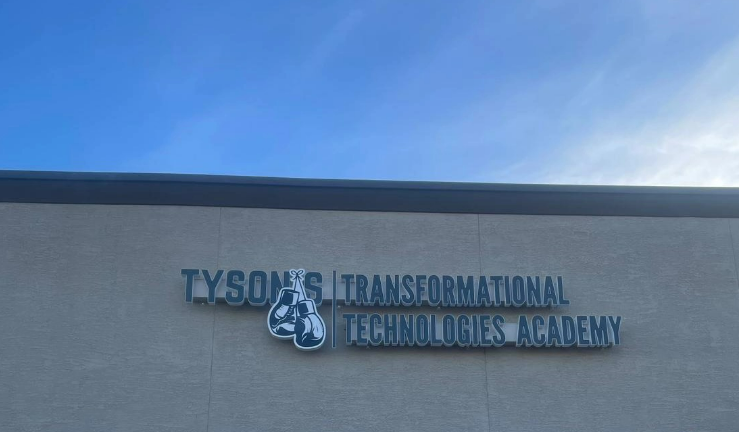
Former boxing champion Mike Tyson recently launched a middle and high school in Phoenix, Arizona.
Tyson Transformational Technologies Academy is a Cognia Accredited Micro-School in Arizona for grades six to 12.
The world Champion boxer, entertainer, and entrepreneur partnered with the Foundations Academies School System and undefeated MMA fighter Daniel Puder to start the school.
“It’s important to me that I am able to share my life experiences to inspire the next generation,” Tyson said. “This new educational institution will build core values that I am honored and grateful to be part of the Arizona community. I was thrilled to be part of the ribbon cutting ceremony and meeting some of the students.”
The price of tuition is covered through the Empowerment Scholarship Accounts (ESAs) and internal school scholarships.
Since late 2022, all Arizona students have been eligible for an ESA as a K-12 student or as a preschool student with a disability. Families with qualifying students enrolled in the ESA program can use their ESA funds for expenses including educational services, education providers, curriculum, and other educational expenses.
Tyson’s school aims to “redefine learning by combining innovation, financial literacy, mentorship, and community engagement.” The academy will provide quality education and opportunities for personal growth to every youth regardless of their academic challenges, ethnicity, or socio-economic status, the Feb. 15 news release says.
“As a society, we get to build our youths for the next generation,” Puder said. “We are so blessed to have Mike Tyson part of our school system. He inspires our students.”
To enroll their child, parents can contact (480) 448-5181.
Elizabeth Troutman is a reporter for AZ Free News. You can send her news tips using this link.