by Terri Jo Neff | Jan 14, 2023 | News
By Terri Jo Neff |
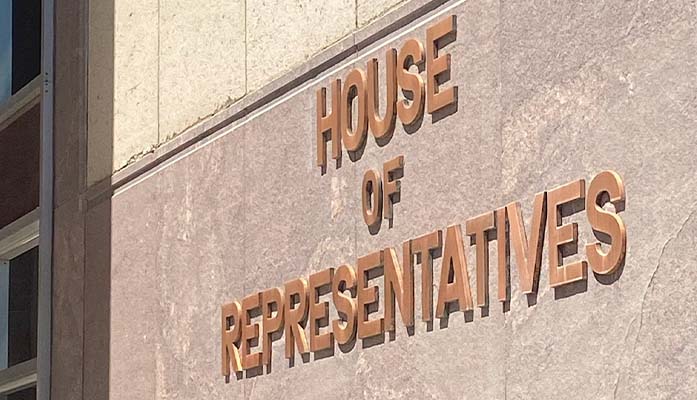
The Republican-controlled Arizona House of Representatives took its first steps this week to lower the state’s corporate income tax rate in four successive years starting Jan. 1, 2026
House Bill 2003 would gradually decrease the current 4.9 percent business tax rate to only 2.5 percent. The bill sponsored by Rep. David Livingston was approved Wednesday by the House Ways & Means Committee and the House Appropriations Committee.
All of the Democrats on the two committees cast nay votes.
Arizona’s current corporate income tax rate in place since Tax Year 2017 is the greater of $50 or 4.9 percent of net income. Under HB 2003, that rate would drop to 4 percent for Tax Year 2023, then 3.5 percent the next year, and 3 percent the following year. For Tax Year 2026 and each year thereafter the rate would be only 2.5 percent.
Livingston (R-Peoria), who serves as chair of the House Appropriations Committee, said reducing Arizona’s corporate income tax (CIT) rate is a matter of fairness and sound tax policy.
“Cutting the corporate rate continues the state’s commitment to creating a low tax environment,” Livingston said after the two committee votes. “We’ve done great work to lower the rate on personal income and now we must take the next step to equalize our rate for C-Corps to make them even with other businesses who file via the personal income tax, such as S-Corps and partnerships.
The Joint Legislative Budget Committee (JLBC) advised lawmakers it is difficult to determine the revenue impact from the proposed change, due to the fact most corporations do not follow a calendar-year fiscal year. A final note issued by JBLC includes a “highly speculative” estimated impact on state coffers of nearly $1.7 billion.
But such estimates must be interpreted with caution at this time, according to JLBC.
“Finally, we would note that the estimates above do not reflect the potential behavioral response of taxpayers to the changes under the proposed CIT rate reduction,” the final note explained. “For example, all else equal, a reduction of corporate income taxes can serve as an incentive for businesses to invest in more capital and hire more labor than they would otherwise. Such ‘dynamic’ effects may result in an increase in economic output, which in turn may generate more tax revenue dollars for the state General Fund than what a ‘static’ analysis assumes.”
HB 2003 will move on to the House Committee of the Whole on a date to be announced.
READ HB2003 HERE
Terri Jo Neff is a reporter for AZ Free News. Follow her latest on Twitter, or send her news tips here.
by Terri Jo Neff | Jan 13, 2022 | News
By Terri Jo Neff |
With the introduction of legislation this week in the Arizona House of Representatives to prohibit many public entities from using public funds to pay for ransomware attacks, AZ Free News recently spoke with Sen. David Gowan about the security of the Legislature’s own computer systems.
Gowan says that the dedicated IT staff of the Arizona Legislature have ensured that its system protections are up to date and meet or exceed industry standards. This would allow the legislative session to continue with little impact if hit with the type of ransomware attack suffered by the Virginia Legislature last month.
“Nothing is 100 percent guaranteed, but we try to figure it out before a hacker can,” he said. “And we have the ability to move forward and maneuver, even if we have to do some things on paper.”
The Dec. 10 ransomware attack on servers used by Virginia lawmakers led to the disabling of the legislature’s voicemail system, its budgeting portal, and the platform used to draft bills. Even access to the Virginia Constitution and state code normally accessible online had to be taken down after the attack, which one state official blamed on an “extremely sophisticated malware.”
For a short time the website serving Virginia’s Division of Capitol Police was also down but there was no report of impacts to critical functions.
Whoever hacked the Virginia Legislature’s system left a ransom note, although it did not include a ransom price nor due date, according to a senior staff member. It is the first reported cyber security attack on a state legislature, although at dozens of public entities across the country were hit in 2021.
Gowan is pleased that Arizona’s legislative staff has safeguards in place which will allow lawmakers to “quickly move forward with our work” if hit by an attack like Virginia experienced. He credits the fact that the legislature’s IT personnel conduct refresher training for lawmakers and staff about suspicious emails, which is the easiest way for a cyber attacker to get into a system.
There is also frequent spot checks of the legislature’s systems. And it helps, Gowan noted, that Arizona has one of the nation’s premiere cybersecurity programs, with the Arizona Department of Homeland Security, the Arizona Department of Public Safety, and the Department of Emergency and Military Affairs all major players, along with local and federal agencies.
Two controversial bills recently introduced by a state representative would make significant changes to Arizona’s laws related to cyberattacks. One would tie the hands of public officials in responding to a ransomware attack, while the other seeks to require anyone who does business in Arizona to report a computer security breach or face a civil penalty from the Arizona Attorney General’s Office.
HB2145 would bar the State and any political subdivision of the state (such as a county, city, town, or school district) from making ransomware payments to secure the release of data. It would also require immediate notification of such an attack to the Director of the Arizona Department of Homeland Security.
Meanwhile, HB2146 would mandate anyone who “conducts business in this state and that owns, maintains or licenses unencrypted and unredacted computerized personal information” to report any security system breach to the Director of the Arizona Department of Homeland Security within 45 days.
A willful violation of the notification statute could lead to a civil penalty of up to $500,000, according to the bill.
by AZ Free News | May 11, 2021 | Education, News
On Monday, the Arizona House passed Senate Concurrent Resolution 1044. The resolution allows voters to decide if students who are in the country illegally but have attended for two years and graduated from an Arizona high school can be eligible for in-state college tuition.
SCR 1044 also exempts post-secondary education from the definition of a state or public benefit. Currently, Arizona residents who do not have legal immigration status do not qualify to receive those benefits.
Last week, Republican State Reps. Michelle Udall and Joel John forced a vote on the resolution by joining all House Democrats. Republicans Rep. David Cook and Rep. Joanne Osborne joined the group later and voted in favor of the matter. The move shifted power away from the Republican Caucus momentarily, but left a deep division.
Speaker Rusty Bowers expressed his disappointment in the tactic employed by Udall and John before casting his vote against the measure:
The measure will now go before the Arizona voters on a ballot in 2022.
The ballot initiative would repeal a 15-year-old ban on in-state tuition for undocumented high school graduates, including about 2,000 Dreamers per year. Voters created that ban in 2006 when they approved Proposition 300, which denies public benefits to those not in the country legally, including reduced cost tuition.