by Jonathan Eberle | Mar 16, 2025 | News
By Jonathan Eberle |
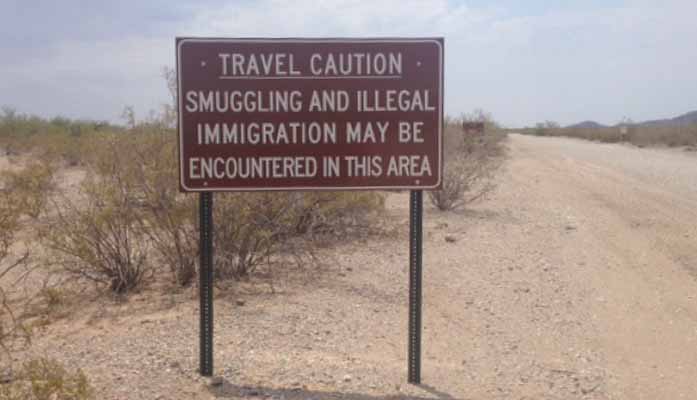
On Monday, Arizona Senate Republicans made significant progress toward enhancing the state’s role in federal immigration efforts by passing three bills aimed at improving border security and protecting Arizona communities. The bills, all sponsored by Senator John Kavanagh (R-LD3), are designed to address the increasing strain on local detention facilities, provide critical support for law enforcement, and assist federal agencies in deporting criminal illegal aliens.
All three bills have passed the Arizona Senate and are now being sent to the House of Representatives for further consideration.
The first bill, SB 1294, Leasing Marana Prison to the U.S. Government, is designed to address overcrowding in detention centers and create more space for the federal government to house criminal illegal aliens. The bill mandates that the Arizona Department of Administration lease the Marana Prison—currently vacant—to the U.S. government for just $1 per year. The prison, located near the U.S.-Mexico border and several airports, would be an ideal location to detain criminal illegal aliens, according to Senator Kavanagh.
“This measure is a no-brainer. The federal government should have access to the empty Marana Prison to house these dangerous criminal illegal aliens so that Arizonans are protected from further threats,” Kavanagh said. “Detention centers are running at max capacity, and as a result, illegal aliens are being released back into communities.”
The bill also includes a provision that allows Arizona to terminate the lease if the state requires the prison for its own incarcerated individuals, ensuring flexibility in future use.
The second bill, SB 1299, Law Enforcement Personnel Grant Program, establishes a Law Enforcement Personnel Grant Program, which would provide $2 million from the state’s general fund to the Arizona Department of Public Safety (DPS). The program would reimburse local law enforcement agencies for the costs associated with immigration-related training. This measure aims to equip officers with the tools and knowledge necessary to handle immigration enforcement, improving public safety for Arizona residents.
“It’s our duty as lawmakers to support our law enforcement with resources to protect our citizens, and this bill does just that,” Kavanagh stated. “With additional training, we can ensure that our front-line officers are equipped for the job, protecting both themselves, and the people of this great state.”
The third bill, SB 1610, Requiring Detention Facilities to Share Inmate Information with ICE, mandates that county detention facilities provide personal identifying information and access to detainees upon request by U.S. Immigration and Customs Enforcement (ICE). This bill is designed to support federal deportation efforts by facilitating communication between local detention centers and ICE, enabling the federal agency to efficiently carry out removals of individuals with criminal records or immigration violations.
“Voters made it very clear in the last election – they are FED UP with the massive tsunami of people who have been entering this country illegally,” Kavanagh said. “With this bill, we are supporting the federal government’s deportation efforts by requiring detention facilities to supply inmate information to ICE.”
Senator Kavanagh emphasized the importance of standing in solidarity with the Trump administration’s efforts to curb illegal immigration and protect U.S. communities from individuals who have committed crimes.
Jonathan Eberle is a reporter for AZ Free News. You can send him news tips using this link.
by Jonathan Eberle | Mar 16, 2025 | Economy, News
By Jonathan Eberle |
Arizona lawmakers are facing mounting backlash over a proposed pay raise bill that would increase the salaries of state legislators by a significant margin. Senate Concurrent Resolution 1003, introduced in the Arizona State Senate, seeks to boost the base pay for Arizona legislators, raising concerns about the timing of the proposal and the growing burden on taxpayers in an already financially strained state.
The bill, which passed initial stages in the legislature, aims to increase the base salary of lawmakers from $24,000 to $48,000, a 100% increase. Additionally, it proposes an increase in per diem payments and other benefits. The bill’s sponsors argue that this pay increase is necessary to attract qualified candidates to public office as well as keeping up with inflation.
The bill’s sponsor, Senator John Kavanaugh, says that he’s not worried about potential pushback from Arizona voters. “I do not think those voters wanted their $24,000 raise diluted by inflation to about $11,000,” Kavanaugh said. He said this calculation was based on the buying power that figure had in 1998—the last time Arizona lawmakers received a pay raise.
However, critics of the bill argue that such a significant pay raise for lawmakers comes at a time when many Arizonans are struggling to make ends meet due to rising costs of living and a housing crisis that has left many families in financial hardship. The proposal has raised questions about whether elected officials are out of touch with the economic realities faced by their constituents.
The timing of the bill has led some to question the motivation behind it. Critics argue that lawmakers, many of whom already have full-time jobs outside of their legislative duties, should not be seeking a pay raise while so many Arizonans are still struggling financially. Others believe the pay raise is necessary to ensure current lawmakers can make ends meet.
Democrat Senator Eva Burch recently announced her resignation from the legislature, citing that she’s struggling to make ends meet and to find balance with her legislative work and her job as a healthcare provider. “I know that I am not the first, nor will be the last, good person to find themselves a casualty of legislative pay,” said Burch.
As SCR 1003 makes its way through the Arizona Legislature, the controversy surrounding the proposed pay raise for state lawmakers is unlikely to subside anytime soon. With many Arizonans still feeling the financial pressure from rising living costs, the bill has become a flashpoint in the ongoing debate over government priorities and fiscal responsibility.
Jonathan Eberle is a reporter for AZ Free News. You can send him news tips using this link.
by Jonathan Eberle | Mar 14, 2025 | News
By Jonathan Eberle |
Arizona lawmakers are advancing a series of bills aimed at increasing transparency, accountability, and taxpayer protection. These measures tackle issues ranging from government spending on elections to school board meetings and travel, with a focus on ensuring that public funds are used responsibly and efficiently. With strong support from various groups, these bills reflect ongoing concerns about how taxpayer money is spent and how local government actions are conducted.
One of the most significant pieces of proposed legislation, HB2722, is backed by the Arizona Free Enterprise Club and sponored by Rep. Neal Carter (R-LD15). The bill seeks to prevent taxpayers from indirectly subsidizing private businesses through government gifts. Specifically, it targets “gift clauses” in state and local government contracts, which some argue allow for inappropriate use of taxpayer funds to benefit private entities.
The Arizona Free Enterprise Club has been vocal about the need for stronger protections against such expenditures. The organization has stated that this bill is necessary to curb the growing trend of government spending on private corporations without clear public benefit.
“Taxpayers should not be used as a backdoor financing mechanism for private companies,” said Arizona Free Enterprise Club officials. “This bill is about ensuring that public dollars are spent in a way that directly benefits the public, not private interests.” If passed, this bill would create stricter guidelines on how public funds can be spent and would allow taxpayers to hold officials accountable when misused funds are discovered.
Another bill making its way through the Arizona legislature is SB1036, supported by the Goldwater Institute and sponosred by Sen. John Kavanagh (R-LD3). This bill targets government spending on influencing elections, a topic that has sparked considerable debate in recent years. SB1036 would create a private right of action for taxpayers, allowing individuals to sue if they believe government funds are being spent on efforts that influence an election. This would make it easier for citizens to challenge the use of taxpayer money in elections, particularly when the spending appears to be partisan or otherwise improper.
The Goldwater Institute has argued that taxpayers have a right to ensure their money isn’t used to sway political outcomes. According to a recent report by the organization, there have been multiple instances of local governments spending taxpayer funds to advocate for policies that align with political interests, which has raised concerns about government overreach.
“Governments should not be using taxpayer money to influence the political process,” said Goldwater Institute officials. “This bill provides taxpayers with the ability to stand up for their rights and ensure public resources are not misused.”
Another bill, HB2169, which was introduced by Representative Matthew Gress (R-LD4), seeks to address transparency within Arizona’s public school districts. The bill would require school board meetings to be held in public facilities within the district, ensuring that they are easily accessible to the communities they serve. Additionally, the bill mandates that school boards must receive public approval before engaging in out-of-state travel, making it more difficult for administrators to make costly decisions without community oversight.
This legislation gained near-unanimous support, with proponents arguing that it ensures greater accountability for how public schools operate and how funds are spent. Critics of the current system have pointed to examples of school board members using taxpayer money for luxury travel without clear, public approval or benefit. A notable incident involved a local school district that faced backlash after spending taxpayer funds on extravagant trips while simultaneously requesting additional funding from voters for educational needs.
“Public education is about serving the community,” said Representative Gress in a statement. “We need to make sure that the actions of school boards are always in the public interest. This bill strengthens public trust in our school systems.”
Jonathan Eberle is a reporter for AZ Free News. You can send him news tips using this link.
by Jonathan Eberle | Mar 11, 2025 | News
By Jonathan Eberle |
A proposed measure to close a significant loophole in Arizona’s election security passed the State Senate last week, bringing it one step closer to the 2026 election ballot. Senate Concurrent Resolution (SCR) 1027, sponsored by Senator Shawnna Bolick (R-2), aims to prevent foreign actors from influencing the state’s elections, especially in relation to ballot measures.
The resolution would prohibit foreign nationals, entities, and committees from contributing money or services to influence the outcome of any election in Arizona. If SCR 1027 passes the House and receives voter approval, it would be placed on the 2026 ballot, where Arizona residents will have the opportunity to cast their votes on whether to ban foreign money from election-related activities.
Senator Bolick says the bill is a response to an ongoing vulnerability in the election process that allows foreign money to potentially sway the outcome of elections. While contributions from foreign nationals to political committees are already prohibited, the current laws do not extend this prohibition to all aspects of the election process, particularly when it comes to ballot measures.
“This is a commonsense, carefully crafted measure to ensure that Arizona’s elections are free from foreign interference,” said Bolick. “The people of Arizona must be confident that foreign funds are not influencing any part of our election process. If the House approves SCR 1027, the people of Arizona will have the chance to vote on this measure to say once and for all—no foreign money in ANY part of our elections in Arizona.”
The measure is designed to add a layer of transparency and accountability to election funding. Under SCR 1027, any person or group attempting to influence the outcome of a ballot measure would be required to file a campaign finance report within 48 hours of making an expenditure. They would also need to certify under penalty of perjury that no foreign national provided funding or resources for preliminary election activities. This would be enforced by the Secretary of State’s office to ensure compliance.
Arizona is not alone in its concerns; other states have passed similar laws in recent years to protect their elections from foreign meddling. In 2020, Washington State implemented restrictions on foreign donations to initiatives, following concerns over foreign money being funneled into state campaigns.
Supporters of SCR 1027 argue that this measure will protect the integrity of the state’s election process and send a strong message about Arizona’s commitment to safeguard its elections from foreign influence. Critics, however, may raise concerns about the potential for overreach or unintended consequences that could hinder legitimate political activity.
Jonathan Eberle is a reporter for AZ Free News. You can send him news tips using this link.
by Jonathan Eberle | Mar 11, 2025 | News
By Jonathan Eberle |
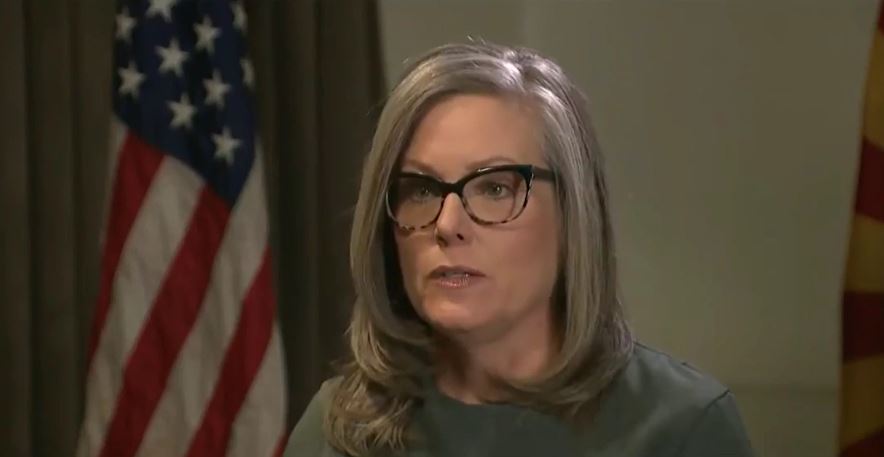
Arizona’s House Republican leadership has issued a strong condemnation of Governor Katie Hobbs’ handling of the state’s Developmental Disabilities (DDD) program, citing a $122 million budget shortfall and accusing the administration of gross mismanagement. The joint statement, released last week, criticized the governor for reckless spending decisions and a lack of consultation with the legislature, which they say has contributed to a financial crisis in the program.
House Speaker Steve Montenegro, Majority Leader Michael Carbone, Majority Whip Julie Willoughby, and Speaker Pro Tempore Neal Carter joined forces to decry what they called Hobbs’ failure to take responsibility for the growing issues facing the program. The DDD program, which serves Arizona’s most vulnerable citizens—those with developmental disabilities—has seen its financial situation worsen due to an unsustainable increase in costs.
The Arizona Developmental Disabilities program is a $4 billion initiative that provides essential services and care for individuals with developmental disabilities. According to the House Republicans, the program is on track to double in cost from fiscal year 2023 to fiscal year 2026, creating a serious budget shortfall that the governor’s office has failed to adequately address.
Republican leaders were especially vocal in their criticism of Governor Hobbs’ management of the program, accusing her of making “reckless spending decisions” that have led to the current crisis. The lawmakers pointed out that the governor’s administration had failed to work collaboratively with the legislature to develop solutions, instead opting for unilateral actions that have only exacerbated the problem.
“Governor Hobbs’ gross mismanagement puts Arizona’s most vulnerable citizens at risk,” the joint statement reads. “Her administration’s reckless spending decisions—made without consulting the Legislature—have bankrupted the DDD program, creating an avoidable crisis. Now, she’s demanding a taxpayer bailout without accountability or reforms.”
Adding fuel to the fire, the House Republicans also highlighted the recent shake-up within the governor’s administration. Governor Hobbs’ budget director resigned, she demoted the director of the Department of Economic Security (DES), and removed her health policy advisor—all actions that Republican lawmakers argue signal a lack of leadership and accountability within the administration.
Instead of collaborating with lawmakers to address the growing concerns, House Republicans claim that Governor Hobbs has deflected blame, choosing to focus on political tactics rather than on solving the issue at hand. They argue that these leadership changes are a direct result of the administration’s inability to manage the program effectively.
Jonathan Eberle is a reporter for AZ Free News. You can send him news tips using this link.