by Jonathan Eberle | Apr 5, 2025 | Education, News
By Jonathan Eberle |
Arizona lawmakers have passed SB 1437, a bill aimed at increasing accountability for school employees and officials who fail to report sexual misconduct involving students. The bill, which received bipartisan support, now awaits Governor Katie Hobbs’ signature.
Sponsored by Arizona Senator Carine Werner (R-LD4), SB 1437 expands the list of mandatory reporters for cases of sexual misconduct in schools. Under the proposed law, school district governing board members, charter school governing body members, substitute teachers, and school safety officers will be legally required to report any incidents of sexual misconduct by school employees to law enforcement.
The bill was introduced in response to multiple cases of abuse that came to light during Werner’s tenure as a governing board member. Advocates argue that strengthening reporting requirements will close existing loopholes and help prevent potential predators from evading accountability.
SB1437 received bipartisan backing in the Arizona Legislature, with supporters emphasizing the need to ensure student safety and hold perpetrators accountable.
“It is imperative that we work together to protect children and take action against sexual predators who are abusing their trusted positions and flying under the radar in schools,” said Senator Werner. “Parents should be able to have confidence in knowing there are safeguards in place to prevent this abuse from happening.”
Supporters argue that increasing the number of mandatory reporters will deter potential misconduct and ensure swift action against offenders. The bill also reinforces Arizona’s commitment to child protection policies in schools.
“Not only does justice need to be served for inflicting life-altering acts on children, but parents should be able to have confidence in knowing when they send their child to school, there are safeguards in place to prevent this abuse from happening,” Senator Werner continued. “This bill, passing with bipartisan support, serves as a force-multiplier to ensure cases of sexual misconduct against children are reported. I applaud my colleagues in both chambers for getting this bill to the finish line. The people of Arizona are relying on us to implement laws to better protect our most vulnerable communities, and there’s no better way to deliver on this promise, than for the governor to sign this bill and support the effort.”
With the bill approved by both chambers of the legislature, it moves to Governor Hobbs’ desk for final consideration. If signed into law, Arizona will join other states that have recently strengthened mandatory reporting laws in response to concerns over child safety in educational settings.
The passage of SB 1437 underscores Arizona’s ongoing efforts to enhance protections for students and ensure greater accountability among those responsible for their well-being. The law would reinforce existing safeguards while signaling a tougher stance on preventing and addressing sexual misconduct in schools.
For further updates, stakeholders and the public are encouraged to follow legislative announcements and Governor Hobbs’ decision on the bill in the coming days.
Jonathan Eberle is a reporter for AZ Free News. You can send him news tips using this link.
by Jonathan Eberle | Apr 2, 2025 | News
By Jonathan Eberle |
Arizona Governor Katie Hobbs has vetoed SB1119, a piece of bipartisan legislation aimed at prioritizing affordable and reliable utility services for Arizonans. The bill, sponsored by Senator Tim Dunn (R-LD25), sought to direct the Residential Utility Consumer Office (RUCO) to focus exclusively on minimizing utility rates rather than considering environmental policies that could contribute to higher costs.
In a press release following the veto, Senator Dunn criticized the decision, arguing that it would negatively impact consumers already struggling with rising costs. “SB 1119 would have required the Residential Utility Consumer Office to focus its efforts on fighting for the safest and most reliable utility service achievable at the lowest retail rate possible, instead of prioritizing any costly radical environmentalist agendas,” Dunn stated. He went on to say that the veto was “short-sighted” and would ultimately burden Arizona residents.
Utility costs have been a growing concern for Arizona residents, particularly in the wake of inflation and increased energy demand. The state’s energy policies have often been a point of contention, with debates centering around balancing affordability with sustainability. RUCO, an independent agency that represents residential utility customers, currently considers multiple factors when making policy recommendations.
Supporters of SB 1119 argued that the bill would have strengthened consumer protections by ensuring that RUCO prioritized affordability above all else. The veto is expected to spark further discussions among lawmakers and stakeholders on how to bring more affordable utility rates to Arizonans. As the state continues to grapple with rising utility costs, future legislative efforts may seek to address the concerns raised by both proponents and critics of SB 1119.
Jonathan Eberle is a reporter for AZ Free News. You can send him news tips using this link.
by Jonathan Eberle | Mar 31, 2025 | News
By Jonathan Eberle |
Arizona State Senator Carine Werner (R-LD4), Chair of the Senate Health & Human Services Committee, has called for a legislative probe into the Arizona Department of Child Services (DCS) group home regulations. Werner called for the investigation after the gruesome murder of 14-year-old Emily Pike. Pike had run away from a state-licensed facility in January before being killed.
In a press release, Werner expressed deep concern over the failure of the system to protect vulnerable children. She announced plans to convene a bipartisan hearing through the Joint Legislative Oversight Committee on the Department of Child Safety. The hearing will include DCS officials, law enforcement, lawmakers, tribal councils, and social services departments to examine existing policies and identify areas for reform.
“Arizona’s licensed group homes have repeatedly made headlines for egregious mistakes that have cost lives and threatened the safety of staff,” Werner stated. “There may be underlying systemic issues requiring immediate reforms, so we must assess where mistakes are occurring and determine the next steps.”
Werner also called for the Arizona Attorney General’s Office to launch an investigation, though no official inquiry has been announced at this time.
Arizona’s child welfare system has faced long-standing criticism over group home conditions and the safety of children placed in state care. Reports of abuse, neglect, and inadequate oversight have raised alarms among lawmakers and child advocates. The tragic case of Emily Pike has reignited demands for stricter oversight and accountability.
The Senate hearing is expected to focus on the effectiveness of existing DCS policies, safety measures in group homes, and potential legislative solutions to prevent future tragedies. Senator Werner has pledged to keep the public informed on the progress of the investigation and any forthcoming policy recommendations.
As Arizona lawmakers push for answers, the case underscores the ongoing debate over child welfare reforms and the role of state oversight in protecting the most vulnerable children.
Jonathan Eberle is a reporter for AZ Free News. You can send him news tips using this link.
by Jonathan Eberle | Mar 31, 2025 | News
By Jonathan Eberle |
The Arizona House Judiciary Committee has advanced legislation to continue the Arizona Criminal Justice Commission (ACJC), a key agency overseeing law enforcement funding, crime prevention, and criminal justice policy implementation in the state.
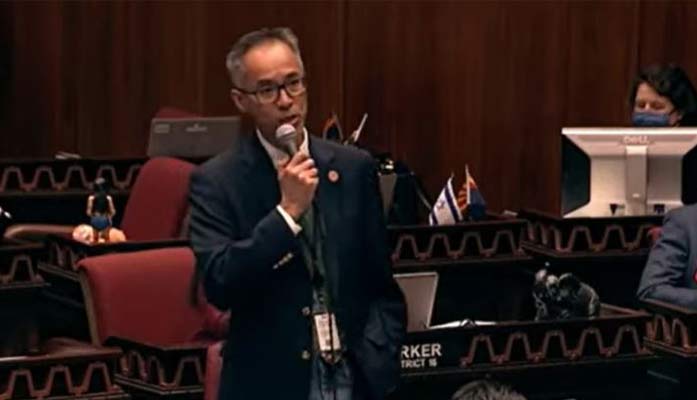
The bill, SB 1227, was sponsored by Senator Shawnna Bolick (R-LD2) and passed the committee after a “strike everything amendment” from Rep. Quang Nguyen (R-LD1). If encated, it would extend ACJC for two years while modifying its structure and operations.
The legislation, which passed the committee by a 7-1 vote, introduces several changes to ACJC’s governance: it expands the population size eligibility for police chiefs, county attorneys, and sheriffs serving on the commission; prohibits members from using a designee to represent them; adds an additional victim advocate member to the commission; requires ACJC to meet at least four times a year instead of once annually; and subjects ACJC to a sunset review by the Auditor General after two years.
The reforms are designed to ensure ACJC remains focused on its mission of supporting law enforcement, allocating federal grants, and coordinating crime prevention efforts across Arizona.
“This legislation sends a strong message that Republican lawmakers will continue to push for resources to protect the men and women in law enforcement,” said Senator Bolick. “I am thankful Rep. Nguyen, and I were able to work together on a plan that prevents ACJC from dissolving, ensuring our criminal justice system receives uninterrupted resources and support.”
The Arizona Criminal Justice Commission plays a central role in the state’s criminal justice system. It monitors the implementation of laws, conducts statistical analyses, and provides reports to state officials. Additionally, ACJC administers funding for various law enforcement initiatives and victim services programs.
The push to extend ACJC comes amid broader debates on criminal justice policy in Arizona. Supporters of the bill argue that the commission is critical in securing federal grants that benefit local law enforcement and victim support programs. They contend that reforms will strengthen ACJC’s oversight and ensure its operations remain effective.
With its passage in the House Judiciary Committee, the bill now moves to the full House for consideration before heading back to the Senate. If enacted, ACJC will continue its operations with the proposed modifications and remain under legislative scrutiny.
Senator Bolick and Representative Nguyen have emphasized that the bill reinforces Republican lawmakers’ commitment to law enforcement resources and public safety. “We would be doing a disservice to the selfless individuals who protect our communities if we allow ACJC to become obsolete,” Bolick stated.
As the Arizona Legislature continues to debate the future of criminal justice policy, the outcome of SB 1227 will determine whether ACJC remains a key player in law enforcement and public safety efforts across the state.
Jonathan Eberle is a reporter for AZ Free News. You can send him news tips using this link.
by Jonathan Eberle | Mar 30, 2025 | Education, News
By Jonathan Eberle |
The Arizona State Senate is considering HB 2880, a bill that would prohibit individuals from establishing or occupying encampments on university and community college campuses. The bill, sponsored by State Representative Alma Hernandez (D-LD20), passed the Arizona House of Representatives with a 41-17-2 vote and outlines enforcement procedures and penalties for violators.
The legislation defines an encampment as a temporary shelter, including tents, set up on campus for overnight or prolonged stays. If an individual or group is found in violation, university or college administrators would be required to order the encampment dismantled and direct the individuals to vacate. Failure to comply would result in charges of criminal trespass and possible legal action, including removal by law enforcement.
Additionally, students who refuse to leave could face disciplinary action under their institution’s student code of conduct. Violators would also be held liable for any damages resulting from the encampment, including costs related to removal, campus restoration, and property repair.
The bill aligns with Arizona laws protecting free speech on college campuses, allowing restrictions only when expression violates laws, disrupts university operations, or falls outside First Amendment protections. While supporters argue that the bill upholds campus safety and prevents disruptions, critics contend it could limit protest activities and infringe on student rights.
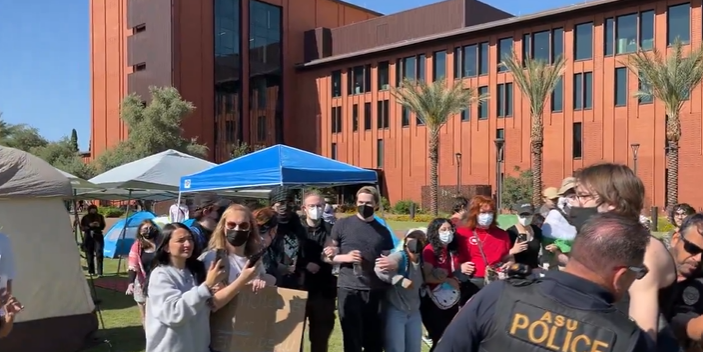
The issue of campus encampments recently came to the forefront in Arizona following the arrests of protesters at Arizona State University (ASU). According to reports, multiple demonstrators were detained during an anti-Israel protest on campus, where students and activists had set up an encampment in defiance of university regulations. Law enforcement intervened after the protest was deemed disruptive to campus operations.
The incident at ASU has intensified discussions surrounding HB 2880, with supporters arguing that the bill is necessary to prevent similar disruptions, while critics claim it could be used to suppress student activism. The event highlights the broader national debate over the limits of protest on college campuses and the role of law enforcement in maintaining order. Several states have introduced similar legislation in response to high-profile protests that have disrupted campus operations.
If enacted, the bill would require enforcement by campus security and local law enforcement agencies. The Arizona Board of Regents (ABOR) and community college governing boards would ensure compliance with student conduct policies.
The bill now awaits further deliberation in the Senate. As the debate continues, lawmakers, university administrators, and students will likely weigh the balance between maintaining order on campuses and protecting the right to protest.
Jonathan Eberle is a reporter for AZ Free News. You can send him news tips using this link.