A bipartisan-backed bill aimed at closing a critical gap in Arizona’s mental health and public safety system was signed into law this week. The bill ensures that individuals deemed both severely mentally ill and dangerous are not prematurely released into communities without appropriate care and oversight.
SB 1604, sponsored by Republican Senator Hildy Angius (R-LD30), mandates that individuals who are involuntarily committed to a Secure Behavioral Health Residential Facility (SBERF) be housed in separate facilities depending on whether they are placed through the civil or criminal legal processes.
“This new law will ensure that individuals who need intensive mental health care are placed in facilities equipped to address their needs,” said Angius in a statement. “Arizonans deserve to live in an environment where their safety is not compromised, including those citizens who are severely mentally ill.”
Under current Arizona law, individuals can be involuntarily committed to a secure facility under two separate legal frameworks Title 13 (Criminal): For individuals deemed incompetent to stand trial and dangerous; and Title 36 (Civil): For individuals committed due to severe mental illness, but not necessarily criminally charged.
Previously, both populations could end up housed in the same facility, raising concerns from mental health professionals and law enforcement alike over safety, treatment appropriateness, and Medicaid reimbursement eligibility — particularly for civil commitment cases.
SB 1604 seeks to ensure that those committed through the criminal justice system are not housed with those committed for civil mental health reasons. Mental health advocates say the change is critical for improving treatment outcomes and protecting the safety of both patients and staff.
The new law is also intended to address a growing shortage of secure residential treatment beds for individuals with complex psychiatric needs. Without proper placement, law enforcement and medical providers have often been forced to rely on emergency rooms, jails, or inadequate short-term care facilities.
While SB 1604 provides a new legal framework for separating these populations, implementation depends heavily on the construction and funding of additional SBERFs. Senator Angius noted that a companion funding proposal, SB 1442 from Senator Carine Werner, is currently being considered as part of broader state budget negotiations.
“We’ve laid the legal foundation, but the missing piece to the equation is funding,” Angius said. “I’m hopeful this request will be included in the state budget.”
The bill passed with bipartisan support in both chambers, underscoring a shared concern across party lines over the state’s capacity to handle individuals with severe mental health needs who also pose a risk to public safety.
SB 1604 is scheduled to take effect 90 days after the Legislature adjourns, marking a step toward reform but also placing pressure on the state to fund and build the facilities needed to carry out the law’s requirements.
Jonathan Eberle is a reporter for AZ Free News. You can send him news tips using this link.
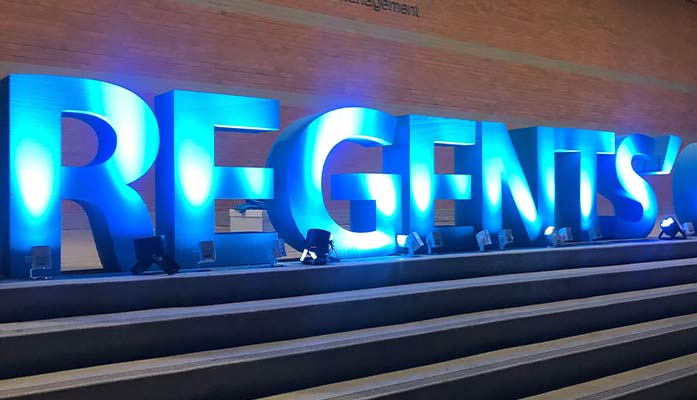
Governor Katie Hobbs has named a new student regent to the Arizona Board of Regents (ABOR).
The newest student regent, Felipe Garcia, is a Tucson native and rising junior studying political science and creative intelligence and innovation at the University of Arizona (UofA). Garcia will replace Arizona State University (ASU) student David Zaragoza.
“Felipe Garcia is committed to ensuring Arizona’s public university students succeed, and I am proud to appoint him to the Arizona Board of Regents,” said Hobbs. “As a student at the University of Arizona, Felipe will be an effective voice, working to ensure that students are represented in university decisions and they have regular updates and communications from the Board’s perspective.”
“On behalf of the board, we commend Governor Hobbs on her thoughtful selection of Felipe Garcia, an outstanding University of Arizona undergraduate, to be Arizona’s newest student regent,” said ABOR Chair Cecilia Mata in a statement. “Student regents serve as a crucial voice in shaping policies that directly impact students. Felipe’s perspective and dedication will be invaluable, and we eagerly anticipate his contributions to our work.”
Garcia is also a “Courage Fellow” with the gun control organization Giffords. Courage Fellows receive six months of gun control advocacy training.
Garcia formerly served on the Arizona Model United Nations, UofA’s Associated Students, and the Governor’s Youth Commission. Garcia also served as a youth commissioner for Hobbs’ Commission on Service and Volunteerism.
“I am incredibly honored to be chosen by Governor Hobbs to represent Arizona students,” said Garcia in a press release from the governor’s office. “I am excited to work with the Board to be a valuable resource for Arizona’s public universities.”
Student regents serve two-year terms; in their first year, student regents sit as non-voting members. The other student regent on the board to serve alongside Garcia is Northern Arizona University (NAU) student Jadyn Fisher. Like Garcia, Fisher was appointed with a background in gun control activism. Fisher organized a protest at her middle school to advocate for gun control and remember school shooting victims.
Last month, Zaragoza and Fisher opted to meet only with the Democratic members of Congress during their inaugural National College Attainment Network (NCAN) Leadership Summit: Sens. Mark Kelly and Ruben Gallego, and Congressman Greg Stanton. The pair discussed federal financial aid through the Free Application for Federal Student Aid (FAFSA), federal Pell Grants, and student mental health.
Zaragoza and Fisher were both nominated to ABOR by Hobbs.
The two student regents have convinced ABOR to dedicate more time and resources to mental health. Zaragoza and Fisher were integral to establishing ABOR’s Mental Health Workgroup. The workgroup will lead campus-wide listening sessions at the state’s three public universities to determine how the institutions can improve on their mental health initiatives and tailor them to students.
AZ Free News is your #1 source for Arizona news and politics. You can send us news tips using this link.
Despite escalating tensions between the executive and legislative branches in Arizona, the Senate Committee on Director Nominations advanced the confirmation of Robyn Sahid as Commissioner of the State Land Department during a hearing held last week.
The confirmation process continued as scheduled, even as Republican members of the committee criticized Democratic Governor Katie Hobbs over remarks she made last week. GOP lawmakers described Hobbs’ comments as an “explosive temper tantrum” and a threat to bypass the Senate’s confirmation process—a move they characterized as unlawful.
“Senate Republicans will continue to be the adults in the room and serve as the critical check and balance on the executive, as the citizens of Arizona expect of us,” said Committee Chair Sen. Jake Hoffman, referring to Hobbs’ remarks during a press gaggle. Hoffman said the governor’s comments lacked legal grounding and had no impact on the committee’s work.
Senator John Kavanagh echoed that sentiment, calling Hobbs’ statements a “meltdown,” while commending the committee’s decision to confirm Sahid. “We confirmed a competent, non-partisan, qualified individual to serve as commissioner for the State Land Department,” he said.
Sahid, who has served in multiple public sector roles, received praise from lawmakers for her qualifications and demeanor. President Pro Tempore T.J. Shope emphasized that the committee remains open to nominees who demonstrate professionalism and nonpartisanship. “Robyn Sahid fit the bill today, and she should serve as an example to Governor Hobbs of the type of individuals we are looking to advance,” Shope said.
This latest episode is part of an ongoing power struggle between Governor Hobbs and the Republican-controlled Arizona Senate over executive appointments. Since taking office in 2023, Hobbs has clashed with lawmakers over the confirmation process, at one point even withdrawing several nominees in protest of what she described as a partisan and obstructive approach by the Senate.
Arizona law requires that many agency heads appointed by the governor must be confirmed by the state Senate. Tensions have mounted as Republicans have used their majority to exert a more thorough vetting process over appointments.
Jonathan Eberle is a reporter for AZ Free News. You can send him news tips using this link.
In a move aimed at tightening online protections for children, the Arizona House of Representatives has passed HB2112, a bipartisan bill that would require pornography websites to verify users’ ages before granting access.
The bill, introduced by Rep. Nick Kupper (R-LD25), targets commercial pornography platforms that fail to implement “reasonable” age verification systems—an approach proponents say balances child safety with user privacy. Under HB2112, companies could face civil penalties up to $250,000 if minors are able to access explicit content due to a lack of proper age checks.
“There’s no excuse for letting kids have unlimited access to hardcore pornography,” said Kupper in a press release. “HB2112 puts the responsibility where it belongs—on the companies making money off this material.”
Kupper, who serves as Vice Chair of the House Ways & Means Committee, emphasized that the bill does not store or share personal user data, a provision designed to address privacy concerns. HB2112 also gives parents the right to take civil action against companies that fail to comply.
While the bill does not replace existing parental controls, it adds what Kupper called “another layer of protection” against minors’ exposure to online pornography. “Arizona families want action, not excuses,” he said. “The Governor has a chance to do the right thing. This bill defends children’s safety and puts Arizona on the right side of a growing national effort.” The Arizona House GOP echoed the message in a social media post accompanying the announcement.
✅Arizona Legislature Passes Bipartisan Bill to Block Adult Content Access for Minors
“There’s no excuse for letting kids have unlimited access to hardcore pornography. HB2112 puts the responsibility where it belongs—on the companies making money off this material. If they… pic.twitter.com/uVsP5G8IP0
— Arizona House Republicans (@AZHouseGOP) May 7, 2025
The bill has attracted support from both sides of the aisle, a notable development in a polarized legislature. If enacted, HB2112 would make Arizona one of the first Western states to adopt legally enforceable age verification requirements for adult websites.
Jonathan Eberle is a reporter for AZ Free News. You can send him news tips using this link.
A special legislative committee examining Arizona’s family court system will convene again Monday, May 12, as allegations of widespread abuse and violations of children’s civil rights take center stage.
State Senator Mark Finchem, chair of the Joint Legislative Ad Hoc Committee on Family Court Orders, is encouraging parents who have been negatively affected by the state’s family courts to testify during the second of five planned hearings.
According to Finchem, the committee has been inundated with stories from parents and children who say they have been mistreated or silenced by the court system. In a statement, he described the issue as not just a statewide concern, but a “nationwide crisis.”
“We expect to see over 400 people at the upcoming hearing after the traumatic stories we’ve heard and evidence we’ve seen,” Finchem said. “At this committee, we will address concerns over children’s civil rights being violated, unlicensed court-appointed medical ‘professionals’ infiltrating the system, and we will allow every voice to be heard.”
The committee’s investigation was launched following mounting complaints about Arizona’s family courts, which handle custody, divorce, and parental rights cases. Critics say the system too often fails to protect the best interests of children and allows unqualified professionals—such as court-appointed therapists or evaluators without proper licenses—to influence life-altering decisions.
The committee’s first hearing, held earlier this year, drew emotional testimony from parents alleging coercion, judicial overreach, and lack of due process. Lawmakers are using the hearings to gather testimony and evidence that could inform future legislation aimed at reforming family court procedures.
Arizona is not alone in facing scrutiny over its family courts. In recent years, states like California, Connecticut, and Georgia have also seen public outcries over custody rulings, allegations of judicial misconduct, and concerns about the lack of oversight of court-appointed professionals.
The committee will recess at noon and reconvene after the Senate and House floor sessions adjourn. Hearings are expected to continue through the summer, with three additional sessions scheduled before the end of the year.
Jonathan Eberle is a reporter for AZ Free News. You can send him news tips using this link.