by Jonathan Eberle | Aug 20, 2025 | News
By Jonathan Eberle |
Lawmakers on the Arizona Senate Health and Human Services Committee held a tense hearing Monday as state officials faced questions over one of the largest Medicaid fraud scandals in state history, a scheme that exploited the American Indian Health Program and cost taxpayers an estimated $2.8 billion.
Committee Chair Sen. Carine Werner (R-LD4) opened the hearing by describing the fraud as “staggering” and said it exposed major lapses in licensing, monitoring, and fiscal safeguards. She noted that while corrective actions have been taken, the state’s response has sometimes harmed legitimate providers through delayed payments and abrupt regulatory shifts.
Officials from the Arizona Health Care Cost Containment System (AHCCCS), the state’s Medicaid agency, outlined how fraudulent providers recruited vulnerable Native Americans into unlicensed sober living homes. Investigators reported that some individuals were lured with alcohol or drugs, their Medicaid identification numbers used to bill the state for services never provided. In many cases, patients were moved repeatedly between facilities, deprived of food and basic necessities, and in some instances locked inside rooms. The schemes often involved “ghost billing,” duplicate charges, and shell companies.
Marcus Johnson, a deputy director at AHCCCS, told senators the abuse centered on the American Indian Health Program, a fee-for-service system that was exploited between 2020 and 2023. Spending through the program jumped from $84 million to $372 million in just three years, with average monthly costs per patient tripling. Johnson said the agency has since suspended payments to 327 providers and instituted stricter verification of tribal status to prevent non-eligible individuals from being enrolled.
Inspector General Vanessa Templeman detailed the human toll of the fraud. Her teams encountered patients living out of trash bags, denied medical choice, and stripped of personal belongings by facility operators. “Most disturbingly,” she said, “we have seen patients denied informed consent and locked in unsafe conditions.” Templeman emphasized her office has referred multiple cases to law enforcement and continues to work seven days a week investigating suspected abuse.
In response, AHCCCS described reforms that include pre-payment claim reviews, new documentation requirements, temporary provider enrollment moratoriums, and technology upgrades designed to detect suspicious billing patterns more quickly. Officials said the agency has fielded more than 36,000 calls through a dedicated victim hotline and provided emergency lodging to thousands displaced by fraudulent operators.
Despite these efforts, lawmakers pressed for answers on accountability. Chair Werner repeatedly asked who signed off on payments, including $650 million allegedly funneled to an individual in Pakistan. Johnson declined to provide specifics, citing ongoing litigation. Senators voiced frustration, with Werner warning that unanswered questions were unacceptable to taxpayers, providers, and patients still suffering the consequences.
Some members also raised concerns about the impact of heightened scrutiny on legitimate behavioral health providers. Senator Shope noted that reimbursement rates have not been updated in a decade, even as costs have risen, and questioned whether the appeals process for suspended providers is fair. AHCCCS officials maintained that due process is in place, pointing to 104 suspensions that were later rescinded after providers demonstrated compliance.
As the hearing closed, Werner pledged continued oversight, stressing that Arizona must both restore public trust and ensure that fraud prevention measures do not destabilize access to care. “We owe it to the people of Arizona,” she said, “to break the cycle of harm and build a behavioral health system that is transparent and resilient.”
Jonathan Eberle is a reporter for AZ Free News. You can send him news tips using this link.
by Jonathan Eberle | Aug 20, 2025 | News
By Jonathan Eberle |
On National Nonprofit Day, August 17, the Arizona Department of Revenue (ADOR) urged nonprofit organizations across the state to check whether they had unclaimed property waiting to be recovered.
ADOR officials noted that many nonprofits may not have realized they were entitled to unclaimed assets such as forgotten bank accounts, uncashed checks, or insurance proceeds. Recovering those funds, the department emphasized, could provide a valuable boost to organizations that serve Arizona communities.
“Every dollar returned to a nonprofit is a dollar that can support the essential work they perform,” the agency stated.
The search process is free, simple, and takes only a few minutes. Nonprofits are encouraged to visit ADOR’s unclaimed property website at azdor.gov/unclaimed-property to see if funds are available. Organizations can search by their nonprofit name and any states in which they operated. Claim forms and filing instructions were also available online. Nonprofits were also encouraged to use the nationwide database missingmoney.com for a broader search.
ADOR says the effort aims to help nonprofits reconnect with resources that belong to them, strengthening their ability to continue providing services across Arizona.
Jonathan Eberle is a reporter for AZ Free News. You can send him news tips using this link.
by Jonathan Eberle | Aug 19, 2025 | Economy, News
By Jonathan Eberle |
Arizona businesses are taking on some of the nation’s largest loans, according to a new study that analyzed Small Business Administration (SBA) lending data from 2021 through 2024.
The report, compiled by Fleysher Law Bankruptcy & Debt Attorneys, found that companies in Arizona borrowed an average of $699,343 per loan, placing the state sixth highest nationwide. In total, 5,293 SBA loans worth more than $3.7 billion were approved in Arizona during the study period.
Georgia topped the list, with businesses borrowing an average of $795,216 per loan across 8,099 approvals, amounting to $6.4 billion. Texas and California followed, averaging $770,887 and $765,968 per loan respectively. California led all states in both total approvals (31,610) and overall loan value ($24.2 billion).
Other high-borrowing states included Alaska ($725,285), North Carolina ($722,981), Louisiana ($663,950), Nevada ($647,991), Alabama ($637,609), and Utah ($630,412). Maine ranked lowest, with businesses averaging just $272,290 per loan.
The study highlights wide regional differences in borrowing patterns, particularly with Southern states recording higher average loans. Analysts note that while large loans may suggest increased financial obligations, they are often a sign of investment rather than distress.
“This data shows clear differences in how businesses across the country access financing,” a spokesperson from Fleysher Law said. “Though large loans mean that the company needs money, it doesn’t automatically signal financial trouble. Many businesses borrow for working capital, equipment purchases, or product development.”
The report reviewed three types of SBA loans:
- 7(a) Loans, which provide flexible funding for a variety of business needs.
- 504 Loans, designed for fixed assets such as real estate, buildings, or large equipment.
- Microloans, offering up to $50,000 for smaller businesses or startups.
The findings underscore how companies across the U.S. are leveraging federal loan programs to finance operations and growth. With economic pressures continuing, access to capital remains a critical factor in business sustainability.
Jonathan Eberle is a reporter for AZ Free News. You can send him news tips using this link.
by Jonathan Eberle | Aug 18, 2025 | Economy, News
By Jonathan Eberle |
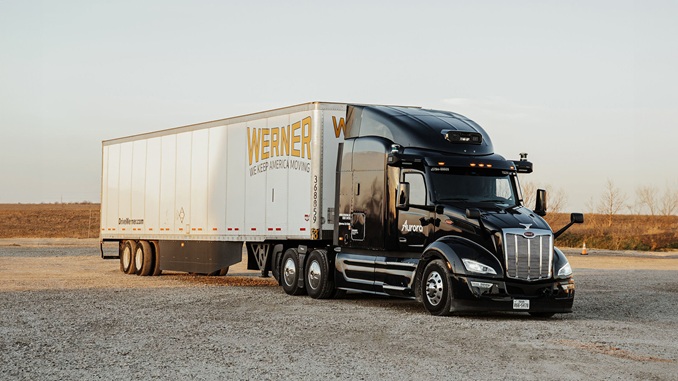
Pittsburgh-based autonomous trucking company Aurora Innovation Inc. has officially opened a terminal in Phoenix, marking a significant step in the company’s efforts to expand its commercial footprint beyond Texas.
The newly operational site supports driverless freight runs, including nighttime operations, and is part of Aurora’s strategy to scale its autonomous vehicle network across the southwestern United States. The company confirmed that the Phoenix terminal opened in June and is already servicing commercial routes for two of its key partners: Hirschbach Motor Lines and Werner Enterprises.
This development follows Aurora’s earlier announcement, reported last fall, that it would extend its existing autonomous freight corridor — which previously connected Fort Worth and El Paso — to include Phoenix. The move marks Aurora’s first expansion outside of Texas and signals growing confidence in its driverless trucking technology.
While Aurora declined to provide the terminal’s exact location, a company spokesperson said it is situated a few miles from the Loop 202 and Interstate 10 interchange in Phoenix — a strategic logistics hub for commercial transport. Details on staffing at the terminal, including how many employees are currently working on site or whether they are permanently based in Arizona, were not disclosed.
The expansion comes as Aurora and its competitors in the self-driving freight sector race to commercialize their technology at scale. With rising demand for long-haul freight solutions and persistent driver shortages, autonomous trucking is increasingly being positioned as a critical innovation in the logistics industry.
Aurora has not yet announced additional expansion locations, but its continued growth outside of Texas suggests a broader national rollout may be on the horizon.
Jonathan Eberle is a reporter for AZ Free News. You can send him news tips using this link.
by Jonathan Eberle | Aug 17, 2025 | Economy, News
By Jonathan Eberle |
Main Street confidence ticked upward in July, with the NFIB Small Business Optimism Index rising 1.7 points to 100.3, edging above its long-term average for the first time in months. The lift was driven largely by more owners reporting better business conditions and viewing it as a good time to expand.
The latest figures, however, paint a mixed picture. While sentiment improved, NFIB’s Uncertainty Index climbed eight points to 97, and labor quality has re-emerged as the top challenge, cited by 21% of owners, the highest share since early spring.
Survey results show growing confidence in day-to-day operations. Thirteen percent of owners rated their business health as “excellent,” up five points from June, and 52% said it was “good,” up three points. Reports of “fair” or “poor” conditions declined. Owners’ outlook on the economy also improved: the net share expecting better business conditions jumped 14 points to 36%, well above historical norms. Sixteen percent said it is a good time to expand, up from 11% last month.
Even with the improved outlook, sales remain a point of concern. Eleven percent named poor sales as their most pressing problem — the highest since February 2021. Inflation worries held steady at 11%, the lowest level since September 2021, though 28% plan to raise prices in the months ahead, a sign that cost pressures persist.
Worker shortages remain acute. Thirty-three percent of owners reported job openings they could not fill, the lowest since December 2020 but still well above average. Of those hiring, 84% said they had few or no qualified applicants. Plans to boost pay are cooling: 27% reported raising compensation in July, down six points, and 17% plan to do so in the next three months. Labor costs were named the top concern by 9% of respondents.
Capital investment showed modest improvement. Fifty-five percent of owners reported spending in the past six months, with the largest share buying new equipment. Still, plans for future capital outlays remain below long-term averages. Borrowing conditions are relatively stable, with only 4% saying their last loan was harder to get. Interest rate concerns remain low, though 25% of owners borrow regularly — a historically small share.
Jonathan Eberle is a reporter for AZ Free News. You can send him news tips using this link.