Starmer’s remarks came as he disembarked from a carbon-spewing jet upon arrival in Azerbaijan to attend the UN-sponsored COP29 climate conference.
The annual COP conferences, remember, are where the world’s elites gather each year to discuss ways to leverage climate-alarm dogma as a means of destroying western democracy and trapping the world’s masses in energy poverty while they consume $1,000 Wagyu steaks and $2,000 bottles of wine over dinner.
“I have repeatedly emphasized the importance of global leadership when it comes to the climate challenge,” said Starmer, “and therefore it is very important for me to come to COP… I see the climate challenge as a huge opportunity for the UK if we get it right, and that is why we have made it one of our missions to have clean power by 2030.”
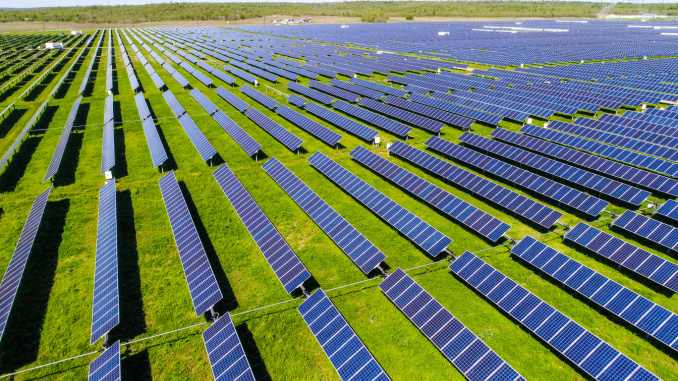
Among the means Starmer’s government is using to show “global leadership” on the climate alarm front is to provide heavy subsidies for costly, low-efficiency offshore wind farms and cover up vast swaths of the UK’s farmlands and countryside with enormous solar arrays. Starmer’s government has simultaneously presided over the closing of the UK’s last remaining coal power plant and one of its last steelmaking factories as part of what appears to be a focused effort to deindustrialize its once-powerful economy.
Trump has made it crystal clear that his approach to energy policy will be diametrically opposite that of Starmer’s Labor government. Trump has already said he plans to pull the United States out of the Paris Climate agreement again, an action he took during his first term, but which was reversed by President Joe Biden.
Trump has also laid out plans to re-industrialize America’s economy with a carrot-and-stick approach that will include incentives for companies building new factories and assembly plants in the United States and imposing tariffs on those who choose to invest in capacity overseas. In a recent pre-election interview, Trump detailed plans to address instability and capacity shortages on the U.S. electric grid by implementing policies to speed up permitting and building of new natural gas and nuclear power generation.
“We have to produce massive electricity that we don’t have. But the environmental impact statements won’t allow us to do that. The rules and regulations that we currently have won’t allow us to do any of it,” Trump said. “But if I’m president, we’ll be able to do it and we’ll do it through natural gas, which is clean. And we’ll do it through primarily natural gas and nuclear.”
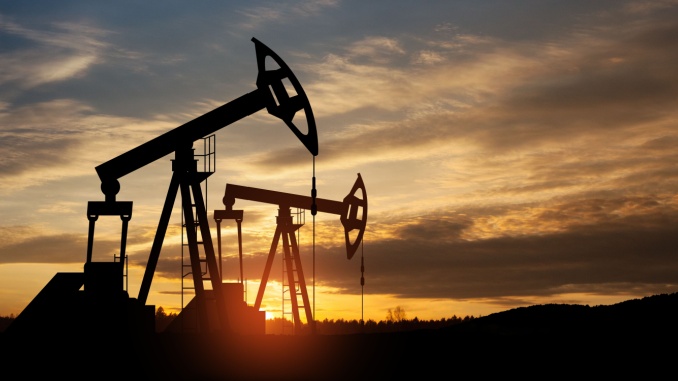
While on the campaign trail, Trump repeatedly promised to bring back his first-term policies designed to stimulate the domestic oil-and-gas industry and return the United States to the position of “energy dominance” it enjoyed under his previous administration.
In kicking off the COP29 festivities, Azerbaijan leader Ilham Aliyev created a stir among the climate zealots who make up the preponderance of attendees by appearing to endorse the Trump approach.
Referring to oil and natural gas as a “gift of God,” the Azerbaijani President said, “Countries should not be blamed for having them and should not be blamed for bringing these resources to the market because the market needs them. The people need them.”
At another point, Aliyev appeared to lecture western elitists like Starmer, saying: “Unfortunately double standards, a habit to lecture other countries and political hypocrisy became kind of modus operandi for some politicians, state-controlled NGOs and fake news media in some Western countries.”
In an interview at the summit, Starmer displayed a shocking lack of self-awareness by claiming his government has no plans to “start telling people how to live their lives. We are not going to start dictating to people what they do.”
That is of course exactly what Starmer is doing, and exactly the sort of thing Trump plans to avoid doing regardless of any demands from the globalist climate-alarm industry. Americans stand to be the main beneficiaries from the contrast in policy approach.
David Blackmon is a contributor to The Daily Caller News Foundation, an energy writer, and consultant based in Texas. He spent 40 years in the oil and gas business, where he specialized in public policy and communications.
The catalog of Vice President Kamala Harris’s history on energy policy is as thin as the listing of her accomplishments as President Joe Biden’s “Border Czar,” which is to say it is bereft of anything of real substance.
But the queen of word salads and newly minted presumptive Democratic presidential nominee has publicly endorsed many of her party’s most radical and disastrous energy-related ideas while serving in various elected offices — both in her energy basket-case home state of California and in Washington, D.C.
What Harris’s statements add up to is a potential disaster for America’s future energy security.
“The vice president’s approach to energy has been sophomorically dilettantish, grasping not only at shiny things such as AOC’sGreen New Deal but also at the straws Americans use to suck down the drinks they need when she starts talking like a Valley Girl,” Dan Kish, a senior research fellow at Institute for Energy Research, told me in an email this week. “To be honest, she’s no worse than many of her former Senate colleagues who have helped cheer on rising energy costs and the fleeing American jobs that accompany them. She doesn’t seem to understand the importance of reliable and affordable domestic energy, good skilled jobs or the national security implications of domestically produced energy, but maybe she will go back to school on the matter. No doubt on her electric school bus.”
During her first run for the Senate in 2016, Harris said she would love to expand her state’s economically ruinous cap-and-trade program to the national level. She also endorsed then-Gov. Jerry Brown’s harebrained scheme to ban plastic straws as a means of fighting climate change.
Tim Stewart, president of the U.S. Oil and Gas Association, told me proposals like that one would lead during a Harris presidency to the “Californication of the entire U.S. energy policy.” “Historically,” he added, “the transition of power from a president to a vice president is designed to signal continuity. This won’t be the case, because a Harris administration will be much worse.”
But how much worse could it be than the set of Biden policies that Harris has roundly endorsed over the last three and a half years? How much worse can it be than having laughed through a presidency that:
As Biden’s successor for the nomination, Harris becomes the proud owner of all these policies, and more.
But Harris’ history shows it could indeed get worse. Much worse, in fact.
While mounting her own disastrous campaign for her party’s presidential nomination in 2020, Harris endorsed a complete ban on hydraulic fracturing, i.e., fracking. She later conformed that position to Biden’s own, slightly less insane view, but only after being picked as his running mate.
Consider also that while serving in the Senate in early 2019, Harris chose to sign up as a co-sponsor of the ultra-radical Green New Deal proposed by New York Rep. Alexandria Ocasio Cortez. It is not enough that the Biden regulators appeared to be using that nutty proposal and climate alarmism as the impetus to transform America’s entire economy and social structure: Harris favors enacting the whole thing.
As I have detailed here many times, every element of climate-alarm-based energy policies adopted by the Biden administration will inevitably lead the United State to become increasingly reliant on China for its energy needs, in the process decimating our country’s energy security. By her own words and actions, Harris has made it abundantly clear she wants to shift the process of getting there into a higher gear.
David Blackmon is a contributor to The Daily Caller News Foundation, an energy writer, and consultant based in Texas. He spent 40 years in the oil and gas business, where he specialized in public policy and communications.
The U.S. Olympic team will be supplied with room air conditioning units, joining other countries like Germany, Australia, the United Kingdom, Canada and Italy.
Organizers of the Summer Olympics Games to be held in Paris next month were hoping to force the games to be held sans air conditioning — what a wonderful virtue signal that would send to the climate-alarmed public!
The plan, as USA Today reported, was to force all event venues and athlete housing units to rely on a geothermal cooling system devised by the French. But, you know, it can get hot in Paris in the summer, and participating athletes and countries had some concerns about it.
So, despite the grand, centrally planned net-zero initiatives financed by trillions of debt-funded dollars and euros and pounds, many countries are planning to keep their athletes calm, collected and properly cooled with electricity-hogging room a/c units.
Note that the list of countries above includes some that are led by the world’s most aggressive and notorious climate scolds.
German leaders in this century have succeeded in largely destroying what had been the industrial powerhouse of Europe at the altar of climate alarmism, investing billions of debt-funded euros in a Quixotic attempt to power their society with windmills. That plan has been so successful to date that last winter, in a desperate attempt to avoid power blackouts, the government there resorted to reactivating mothballed coal plants and tore down a wind development to expand a domestic coal mining operation.
In the UK, the Tories — ostensibly the “conservatives” in Britain — now face an electoral wipeout of unprecedented proportions due in part to their buying whole hog into climate alarmist dogma.
In Canada, Prime Minister Justin Trudeau, whose public approval rating would make President Joe Biden blush, faces a similar fate for similar reasons in national elections that will take place in 2025.
The governments of Australia and New Zealand, in nominally “conservative” or “liberal” regimes alike, have also embarked well down the net-zero path to deindustrialization.
Yet every one of these countries will be shipping out hundreds of energy consuming, greenhouse-gas-emitting air conditioners to Paris.
No national government has invested more time and more debt-funded dollars in virtue signaling and lecturing the public about climate change in recent years than the Biden regime. To hear President Joe Biden, Energy Secretary Jennifer Granholm, Transportation Secretary Pete Buttigieg, Climate Envoy John Podesta, former Climate Envoy John Kerry and Vice President Kamala Harris tell it, a 1.5-degree rise in temperature is in fact an “existential threat,” one that requires us to saddle our great-grandchildren with trillions of more dollars in unsustainable debt to address right now, or — wait for it — we will all die!
But hey, we can’t have our Olympic athletes suffering in rooms where the Paris geothermal cooling system might only get temperatures down to an unbearable 78 degrees Fahrenheit, so it is imperative that the United States join the room a/c caravan across the Pond to gay Paree.
That is basically what USA Today quotes U.S. Olympic and Paralympic CEO Sarah Hirshland as saying: “We have great respect for the work that’s been done by the Paris organizing committee in particular and their focus on sustainability,” Hirshland said. “As you can imagine, this is a period of time in which consistency and predictability is critical for Team USA’s performance. In our conversations with athletes, this was a very high priority and something that the athletes felt was a critical component in their performance capability.”
But wait: If climate change is truly an existential threat to all mankind, shouldn’t the desires of a few thousand Olympics athletes to stay cool in their rooms simply be ignored? For the “greater good” and all that stuff?
After all, that is what the central governments in every one of these countries do whenever public opinion disapproves of their policy choices. Why should this become an exception?
The global religious belief that mankind can control the climate like it has a thermostat we can turn up and down at will is an example of unbridled hubris that is unrivalled in human history. That hubris is only exceeded by the rank hypocrisy practiced by the loudest and most visible of the religion’s adherents.
David Blackmon is a contributor to The Daily Caller News Foundation, an energy writer, and consultant based in Texas. He spent 40 years in the oil and gas business, where he specialized in public policy and communications.
A new report by the Institute for Energy Research (IER), a nonprofit dedicated to the study of the impact of government regulation on global energy resources, finds that U.S. inventories of oil and natural gas have experienced stunning growth since 2011.
The same report, the North American Energy Inventory 2024, finds the United States also leading the world in coal resources, with total proven resources that are more than 53% bigger than China’s.
Despite years of record production levels and almost a decade of curtailed investment in the finding and development of new reserves forced by government regulation and discrimination by ESG-focused investment houses, America’s technically recoverable resource in oil grew by 15% from 2011 to 2024. Now standing at 1.66 trillion barrels, the U.S. resource is 5.6 times the proved reserves held by Saudi Arabia.
The story for natural gas is even more amazing: IER finds the technically recoverable resource for gas expanded by 47% in just 13 years, to a total of 4.03 quadrillion cubic feet. At current US consumption rates, that’s enough gas to supply the country’s needs for 130 years.
“The 2024 North American Energy Inventory makes it clear that we have ample reserves of oil, natural gas, and coal that will sustain us for generations,” Tom Pyle, President at IER, said in a release. “Technological advancements in the production process, along with our unique system of private ownership, have propelled the U.S. to global leadership in oil and natural gas production, fostering economic benefits like lower energy prices, job growth, enhanced national security, and an improved environment.”
It is key to understand here that the “technically recoverable” resource measure used in financial reporting is designed solely to create a point-in-time estimate of the amount of oil and gas in place underground that can be produced with current technology. Because technology advances in the oil and gas business every day, just as it does in society at large, this measure almost always is a vast understatement of the amount of resource that will ultimately be produced.
The Permian Basin has provided a great example of this phenomenon. Just over the past decade, the deployment of steadily advancing drilling and hydraulic fracturing technologies has enabled producers in that vast resource play to more than double expected recoveries from each new well drilled. Similar advances have been experienced in the other major shale plays throughout North America. As a result, the U.S. industry has been able to consistently raise record overall production levels of both oil and gas despite an active rig count that has fallen by over 30% since January 2023.
In its report, IER notes this aspect of the industry by pointing out that, while the technically recoverable resource for U.S. natural gas sits at an impressive 4.03 quads, the total gas resource in place underground is currently estimated at an overwhelming 65 quads. If just half of that resource in place eventually becomes recoverable thanks to advancing technology over the coming decades, that would mean the United States will enjoy more than 1,000 years of gas supply at current consumption levels. That is not a typo.
Where coal is concerned, IER finds the US is home to a world-leading 470 billion short tons of the most energy-dense fossil fuel in place. That equates to 912 years of supply at current consumption rates.
No other country on Earth can come close to rivaling the U.S. for this level of wealth in energy mineral resources, and few countries’ governments would dream of squandering them in pursuit of a political agenda driven by climate fearmongering. “And yet, many politicians, government agents, and activists seek to constrain North America’s energy potential,” Pyle says, adding, “We must resist these efforts and commit ourselves to unlocking these resources so that American families can continue to enjoy the real and meaningful benefits our energy production offers.”
With President Joe Biden and former President Donald Trump staking out polar opposite positions on this crucial question, America’s energy future is truly on the ballot this November.
David Blackmon is a contributor to The Daily Caller News Foundation, an energy writer, and consultant based in Texas. He spent 40 years in the oil and gas business, where he specialized in public policy and communications.
The whole “net-zero by 2050” narrative that cranked up in earnest in early 2021 has now become a public relations problem for the climate-alarm movement, according to a senior official at the United Nations.
Chris Stark, the outgoing chief executive of the UN’s Climate Change Committee (CCC), said as reported by the Guardian: “Net zero has definitely become a slogan that I feel occasionally is now unhelpful, because it’s so associated with the campaigns against it. That wasn’t something I expected.”
As seems to always be the case among the globalist sponsors of this government-subsidized rush to saddle the world with unreliable power grids and short-range electric cars, the conversation among the leaders of the movement immediately moves not to perhaps reconsidering the approach to address public concerns, but to rejiggering the narrative. Stark recommends shifting the label and the narrative to more of a focus on investment and how renewables and EVs somehow improve energy security.
“We are talking about cleaning up the economy and making it more productive – you can call that anything you like,” he said.
That would be a neat trick, inventing a narrative about benefits that don’t really exist. But it wouldn’t be the first time it’s been tried.
At last November’s COP 28 conference, UN Secretary General Antonio Guterres floated the term “climate collapse” as a new name for what the climate alarmists have successively called “global warming,” “climate change,” “climate crisis,” and “climate emergency.” Each successive label has been replaced as its cache’ with the public has faded; and apparently the whole “climate emergency” has lost its punch, so another fright narrative must be concocted.
The trouble there, of course, is that the climate is not collapsing. But then again, it isn’t in any sort of an emergency, either, or a crisis.
The climate is always changing, though, so at least the long-abandoned “climate change” label had the ring of truth to it. Maybe let’s go back to that and try to deal with something that is at least a real thing? But, no, that would cut down on the alarm and make it harder for political leaders to enact bad “solutions” and subsidize them with debt combined with skyrocketing utility bills for average citizens.
So, as Stark says, call it anything you want, just so long as it is alarming. Stark’s boss at the UN, Guterres, used the term “global boiling” to describe the current climate situation. So, maybe we change “net-zero by 2050” to “no bubbles by 2050.” That would at least have the advantage of some semblance of consistent thought.
A colleague suggested that we simply change the problematic label to “Stone Age,” since that is where we are heading if the alarmists continue to get their way. She has a point.
The most amazing thing about Stark’s concerns is that anyone is really surprised that “net-zero by 2050” has become a problematic term. How else would officials at the UN and other governments expect the public to react to what has become the umbrella label for a set of authoritarian government actions that have destabilized power grids, caused the cost of living to rise rapidly, reduced consumer choice, and begun to rob citizens in nominally “free” countries of their individual rights?
The central problem today with this climate change narrative is that it has gone on for so long that is has become a bit of a joke with an increasingly aware and skeptical public. And the reason they’re skeptical is not due to any disbelief in science, as the alarmists invariably claim, but because they have seen nothing but bad outcomes and personal deprivations from the alleged solutions being subsidized into existence.
Stark assures us that, “the lifestyle change that goes with this is not enormous at all,” but painful results to date tell another story.
If Stark were truly thoughtful and serious about wanting to deal with the increasing unpopularity of the “net-zero by 2050” construct, he would suggest that everyone take a step back and re-evaluate the nature and effectiveness of the solutions being pushed.
By merely advocating for the concoction of yet another shift in the narrative, a troublesome lack of sincerity is laid bare.
David Blackmon is a contributor to The Daily Caller News Foundation, an energy writer, and consultant based in Texas. He spent 40 years in the oil and gas business, where he specialized in public policy and communications.