In a story that seems to be becoming increasingly common as time goes on, The Western Journal reported this week about a Canadian EV owner experiencing some massive sticker shock over the cost of replacing the damaged battery in his electric vehicle.
Now, those of us who have always driven internal combustion engine (ICE) cars have at one time or another been faced with big repair bills for some of those vehicles. I can remember spending $4,000 on a new radiator for a 10-year-old Infiniti QX 50 with 220,000 miles on it that I just couldn’t bear to part with several years back. I did finally retire that wonderful vehicle when faced with the prospect of a $6,000 tag for a rebuilt transmission.
So, all cars will eventually cost you or your insurance company big money to repair — no one is saying that’s unique to EVs. But where EVs are concerned, it’s the magnitude of the price for replacing a damaged or worn-out battery that is often quite eye-popping.
I wrote a story in September about a fellow in the U.S. deciding to junk his paid-off EV when he got an estimate of $30k to replace his battery. We now see frequent reports that auto insurance companies are charging higher rates for EVs than for comparable ICE cars due in large part to this extravagant battery replacement cost.
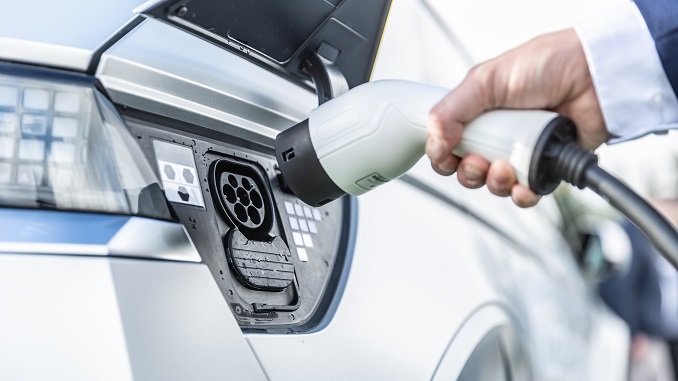
If you think that $30,000 is extravagant, well, get ready, because it apparently isn’t even close to the worst-case scenario. Per the Western Journal, a Canadian man, Kyle Hsu, paid roughly $55,000 Canadian ($41,583 US) in 2022 to buy a brand new Hyundai IONIQ 5. But, less than a year later, Mr. Hsu was involved in what seemed to be a minor accident resulting in superficial damage to his beautiful EV.
Unfortunately for Hsu, it turned out that the battery protector cover on his car’s undercarriage was warped, a problem that could in certain instances cause the battery to explode. This meant that he would have to replace his car’s battery pack in addition to fixing its structural damage. Hsu says he was shocked when the estimate to replace the battery came in at $61,000 Canadian, or about $46,000 in US dollars. That’s almost $6,000 more than he paid for the car when he purchased it brand new.
Even worse, because the damage was caused by an accident, the bill was not covered by the car’s warranty, leaving Hsu with the alternative of filing a claim with his insurance carrier. But the resulting insurance implications were enormous, with Mr. Hsu facing a rate increase of up to 50% if he filed the claim. His only other choice would be to foot the repair bill himself and now have over $87,000 US dollars invested in a $41,000 car.
This is insane. This is not sustainable. The EV industry simply cannot have stories like this one popping up with increasing frequency and hope to sustain growing demand for its products.
When you combine horror stories like this one with:
range anxiety that pops up any time the weather isn’t perfect;
the lack of charging infrastructure;
the unreliability of the infrastructure that does exist;
the non-recyclability of the battery materials;
the increasing restrictions on charging due to the massive load EVs place on the grid;
and all the other significant issues EV makers have yet to address,
you see an industry that is almost doomed to failure before it really gets up and running.
I frequently remind readers that EVs have been around since the 1880s. They are not a new idea in any sense of that word. If they were really the answer to displacing ICE cars at societal scale, it seems likely they would have already done so. What we see popping up with increasing frequency now in the form of stories like this one are simply manifestations of the reasons why that has not already happened.
EVs today are what they have always been: A niche product, a luxury item suitable to fill discreet purposes for the upper 5% or so elites in any society. The technology simply is not there yet to make them anything more than that.
David Blackmon is a contributor to The Daily Caller News Foundation, an energy writer, and consultant based in Texas. He spent 40 years in the oil and gas business, where he specialized in public policy and communications.
China’s National Development and Reform Commission (NDRC) recently announced a new program in which the Xi Jinping government will subsidize the building of new coal-fired electricity generation plants. Part of an effort to ensure power grid reliability and stability into the future, NDRC’s notice says the program will commence January 1, 2024.
The program will enable new coal-fired power plants to recover about 30% of their capital costs in just the first two years of operation. The government subsidies will be funded from tariffs directed to operators of coal-fired plants by the country’s various electricity grids, using monies collected from commercial and industrial users.
The new program is just another proof point that China is continuing to increase the pace of expansion of its coal-fired power sector as time goes on. Indeed, a report released earlier this year by Global Energy Monitor and the Centre for Research on Energy and Clean Air (CREA) showed China permitted more coal-fired power plants in 2022 than it had since 2015, and has six times more coal-fired power plants under construction currently than the rest of the world combined.
Meanwhile, as the Xi government continues its massive expansion of coal-fired electricity to ensure grid reliability, the Biden government in the U.S. remains intent on destroying its own coal sector. The Institute for Energy Research (IER) notes that this effort is being underwritten by liberal billionaire philanthropists like former Democrat presidential candidate and New York City Mayor Michael Bloomberg, who has now pledged $1 billion from his personal fortune to, as he put it, “finish the job on coal.”
In September, Bloomberg Philanthropies stated, “With 372 of 530 coal plants announced to retire or closed to date—more than 70 percent of the country’s coal fleet—this next phase will shut down every last U.S. coal plant.” The effort also targets cutting natural gas-fired generation capacity by half, and would block any new plants from being built in the future. Noting that coal and natural gas power plants account for 98% of U.S. plant closures during 2023, IER points to the fact that the federal government’s forcing of those closures is now negatively impacting reserve margins on the nation’s power grids.
Until the recent hyper focus on cutting atmospheric carbon dioxide, it was customary for grid managers to work to maintain a reserve of up to 20% of total dispatchable generating capacity to be available to come online during severe weather conditions and other instances during which demand threatens to overwhelm supply. Grid managers are finding it increasingly difficult to avoid blackout conditions as grids become increasingly overwhelmed by intermittent, unpredictable wind and solar capacity at the expense of reliable dispatchable baseload.
The problem of lack of dispatchable reserves was highlighted in a deadly way in Texas during February 2021’s Winter Storm Uri, a series of three severe cold fronts that froze most of the state for almost a week, leading to blackouts in which an estimated 300 Texans died. In the storm’s wake, the legislature and regulators identified a series of issues on the grid and at grid manager ERCOT that needed correcting, many of which were dealt with in that year’s legislative session.
But the grid’s shortage of dispatchable thermal capacity – a long-known issue – was left unresolved that year. The 2023 legislature enacted a ballot proposal (Proposition 7) creating a fund to subsidize the rapid building of up to 10 GW of new natural gas generation capacity in the coming years. It is exactly the opposite approach being pushed by the Biden government and its political funders in the climate alarmist community, like Bloomberg.
Texas voters overwhelmingly approved Proposition 7 in the November 7 election. In doing so, Texans rejected the notion that their state, which produces more natural gas than all but two other countries, should ever be subjected to an unreliable, unstable power grid that causes hundreds of deaths during weather emergencies.
Sadly, Americans living in other parts of the country will remain saddled with the destructive Biden approach, with little hope for anything improving until at least 2025.
David Blackmon is a contributor to The Daily Caller News Foundation, an energy writer, and consultant based in Texas. He spent 40 years in the oil and gas business, where he specialized in public policy and communications.
It seems that any meeting between President Joe Biden and Chinese leader Xi Jinping inevitably presents another opportunity to render the U.S. increasingly reliant on China for its energy security.
This week’s meetings at the APEC conference in a suddenly cleaned-up San Francisco were no exception.
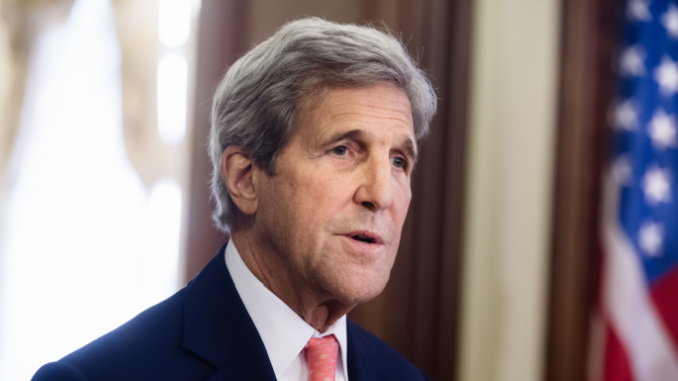
One of the most disturbing aspects of the bilateral meetings between the U.S. and China was the looming presence of John Kerry at the table. Kerry serves as Biden’s “climate envoy,” a made-up job that is not even a confirmed position and does not merit a seat at such meetings. But there he was, making sure the President and other U.S. officials toe the line on climate commitments.
Fox News reports that Kerry’s efforts resulted in more security compromising fruit, as State Department officials agreed with their Chinese counterparts to triple down on commitments to further inhibit American energy and national security in the name of climate change. The two governments agreed to “accelerate the substitution for coal, oil and gas generation” with renewables and electric vehicles in the coming years, a pledge that China has already undermined with its implementation of a new round of subsidies for the acceleration of its already-massive expansion of coal-fired power plants in the coming years.
It is the sort of deal China has routinely violated in recent years as it continues to prioritize its own energy security at the expense of stated climate goals. It is also the sort of deal that Kerry, Biden and other Democrats have systematically used over recent decades to render the U.S. increasingly reliant on China for its own energy future.
“The agreement speaks heavily about advancing — doubling down and tripling down on renewables, wind and solar. The majority of them are made in China,” Daniel Turner, the founder and executive director of Power The Future, told Fox News Digital. “It is basically guaranteeing China decades of wealth, guaranteeing America is going to buy their products.”
Turner isn’t wrong, and the effects on climate change from the latest Kerry-led deal will be negligible, if not actually negative given China’s far lower environmental regulations and standards. Even worse, China’s control of the supply chains for most of the parts and metals that go into the making and deployment of renewables and EVs leaves the U.S. and other western nations with a steadily diminishing sphere of geopolitical leverage.
But Americans did receive a bit of positive news in the green energy realm this past week from a seemingly unlikely source: Oil major ExxonMobil. The biggest U.S.-based oil company announced the kickoff of a new project to produce lithium from a deep underground saltwater formation in southern Arkansas called the Smackover.
Somewhat ironically, ExxonMobil will deploy standard oil and gas drilling, production and reinjection technologies and processes to produce, extract and process the lithium. If successful, the project will turn America’s biggest major oil company into one of the country’s biggest lithium companies, too.
This is probably not exactly the model Biden’s regulators, many of whom are alumni of leftist anti-fossil fuel lobby groups, envisioned when they began launching their myriad efforts to subsidize and regulate this artificial energy transition into being, but they should be glad to take the help where they can get it.
Given that the ExxonMobil project will qualify for the tax incentives contained in the Orwellian-named Inflation Reduction Act, the Biden officials will even be able to point to it as a success story related to that costly legislation.
Given that the administration’s own efforts to source domestic supplies of critical energy metals and free their supply chains from Chinese dominance have to this point borne little fruit, the project being mounted by ExxonMobil amounts to a great leap forward.
What it all demonstrates is that all the handshake deals between government Mandarins like Kerry in the world cannot match the power of innovation and ingenuity from America’s private sector. It also demonstrates the absolute necessity of maintaining a healthy and robust domestic oil and gas industry, without which none of this is remotely possible.
David Blackmon is a contributor to The Daily Caller News Foundation, an energy writer, and consultant based in Texas. He spent 40 years in the oil and gas business, where he specialized in public policy and communications.
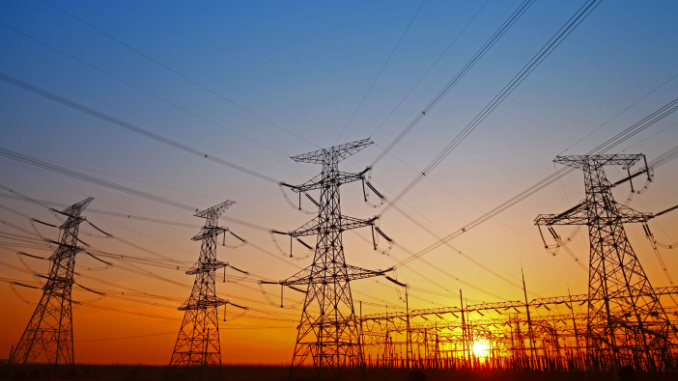
It didn’t make a ton of news in the United States media, but a new study published by the International Energy Agency in mid-October emphasizes the enormous potential roadblock to a successful energy transition posed by a projected need to refurbish and double capacity on global electricity grids.
The study, titled, “Electricity Grids and Secure Energy Transitions,” advises governments that investments in expanding and refurbishing power grids must “nearly double by 2030 to over USD 600 billion per year after over a decade of stagnation at the global level, with emphasis on digitalising and modernising distribution grids.” That level of new investment in just this single piece of the overarching plans for a complete re-tooling of the global energy system is not currently a part of existing policies around the world. Given that most developed countries are already saddled with overwhelming public debt and the lack of means in developing countries, the prospect for a doubling of current grid investments seems dubious at best.
But, if anything, the goals laid out in this IEA missive only become more implausible as one reads through the list. Perhaps the most extraordinary among them is the agency’s estimate that reaching the UN’s goal of net-zero greenhouse gas emissions by 2050 would require the refurbishment, upgrading and build-out of 80 million kilometers of new transmission lines by 2040. For those who struggle with conversion factors, 80 million km is roughly the equivalent of 50 million miles, or 2,000 times the Earth’s circumference.
That is the equivalent of all the transmission capacity built by mankind in history, and the IEA says it must be accomplished in just 17 years for this energy transition to succeed. IEA notes that achieving this extraordinary goal – among other improbable propositions laid out in the report – will require “secure supply chains and a skilled workforce,” neither of which currently exists.
How will this massive expansion in necessary skilled workers be achieved? The report doesn’t really say.
How will those supply chains – almost all of which are currently dominated by a single country, China – be secured? The report says only “Governments can support the expansion of supply chains by creating firm and transparent project pipelines and by standardising procurement and technical installations.” Sounds easy, right? But the U.S. congress has a hard time just agreeing what day of the week it is: The thought that it will suddenly develop the ability to engage in that sort of complex thinking and legislating in a constructive way is absurdly unlikely.
The report then somewhat hilariously points to another elephant residing in the energy transition’s living room, noting that governments all over the world need to streamline their energy permitting processes to accommodate this massive grid expansion. Again, using the U.S. congress as an example, West Virginia Senator Joe Manchin has spent the last 19 months trying to put together enough votes to approve legislation that would address just a small portion of what is really needed in this realm and had no success, with no real prospects of that changing until, at best, 2025, when the next congress will be sworn into office.
Think about this in the context of a story I wrote in June about the TransWest Express transmission project, which had finally received its final permits from the federal government. This is a line that is about 1300 miles long, designed to carry electricity generated by Wyoming wind farms to customers on the West coast. The punch line on this single transmission project is that the permitting process took 17 years to achieve. Assuming no new litigation arises, it will now take about another 3 years to complete and place into service.
Like so many of the work products published by the IEA in recent years, this report’s findings seem to be motivated mostly to help achieve political goals based mainly on wishful thinking, with little consideration given to long-ingrained dynamics at play in the real world. Even if overwhelming debt burdens and resource and supply chain challenges could be just wished away, the political impediments to achieving these unrealistic goals seem destined to force a day of reckoning for the entire energy transition plan.
David Blackmon is a contributor to The Daily Caller News Foundation, an energy writer, and consultant based in Texas. He spent 40 years in the oil and gas business, where he specialized in public policy and communications.
Is the much-hyped “energy transition” starting to crumble at its foundations now? In recent weeks we have seen the following:
Ford Motor Company warns investors its electric vehicle division will lose $4.5 billion in 2023;
Reports that China has commissioned another 50 GW of new coal-fired electricity generation capacity;
The British government led by Prime Minister Rishi Sunak beginning to back away from absurdly aggressive transition timelines amid public outcry over rising energy bills and other deprivations;
The German government continuing to reactivate mothballed coal plants and facilitating new mining for coal;
The Scottish government forced to admit it has facilitated the felling of 16 million trees in this century to make way for new wind farms;
The Japanese government moving to reinvigorate its own coal-fired power sector;
Global demand for crude oil rapidly growing and outpacing supply growth, surprising all the supposed experts;
The U.S. Department of Energy forced to admit its initial estimate of consumer “savings” from converting from gas stoves to more expensive electric models was grossly overstated.
This list could go on and on, but the macro view is clear: Everywhere one looks, the aggressive timelines and heavily subsidized plans for a rapid transition are falling apart. Nowhere is the dynamic becoming clearer than in the wind industry.
In an Aug. 7 report titled “Wind Industry in Crisis as Problems Mount,” the Wall Street Journal catalogues $30 billion in planned investments in new wind projects in the U.S. and elsewhere that have now been delayed due to an expanding variety of factors. “After months of warnings about rising prices and logistical hiccups, developers and would-be buyers of wind power are scrapping contracts, putting off projects and postponing investment decisions,” the story says, emphasizing that the problems are becoming especially severe in the offshore wind business that has been so heavily promoted by the Biden administration.
I wrote a story in July detailing the fact that some of the so-called “Big Oil” companies have recently made big inroads into the offshore wind business, winning bids in the U.S. and Germany for licenses to develop large projects. But the Journal’s story quotes Anders Opedal, CEO of Norwegian oil giant Equinor, saying, “At the moment, we are seeing the industry’s first crisis.”
Along with British oil major BP, Equinor has plans in place to develop three wind farms off the Atlantic coast of New York, but recently warned state officials they would need to renegotiate power prices or the projects would not be able to obtain the needed financing. This demand by the two oil companies echoed a call by traditional wind developer Orsted in June for more subsidies from the U.K. government if its planned projects in the North Sea are to remain viable.
Make no mistake about it: Developing these offshore wind projects doesn’t come cheap. Orsted pulled out of a competitive bidding auction in Germany last month for government licenses to develop 7 GW of new offshore wind capacity when BP and French oil major TotalEnergies ran the final bids up to almost $14 billion.
“Orsted very deliberately chose not to pay record high concession prices for new offshore projects in Germany,” Orsted CEO Mads Nipper said in a post on LinkedIn. Orsted objected to the process that awarded the licenses based on the willingness of developers to pay the government for the right to develop — the same process used in oil and gas leasing all over the world — rather than the government offering more and more subsidies to incentivize development.
Therein lies the central conundrum for this subsidized transition: At some point, wind, like solar, electric vehicles and all the other rent-seeking solutions being promoted in this energy transition will have to become viable without an expectation of permanently rising subsidies, since governments already seeing their credit ratings downgraded due to overwhelming debt won’t be able to just keep printing money forever.
But, at the present moment, the business models in play do not appear to be headed for that outcome. And that’s why this energy transition seems to be falling off the rails.
David Blackmon is a contributor to The Daily Caller News Foundation, an energy writer, and consultant based in Texas. He spent 40 years in the oil and gas business, where he specialized in public policy and communications.