By Staff Reporter |
One of the main priorities for Arizona Democrats upon taking over the state legislature majority will be to end the universality of the state’s school choice program.
The Empowerment Scholarship Account (ESA) program gained universality in 2022 under former Gov. Doug Ducey, a Republican, meaning any family is eligible to enter the program. Prior to the change in law in 2022, only certain students were eligible to enroll: mainly those with disabilities, but also students who were zoned in schools with “D” or “F” grades, belonging to military families, and in the foster care system.
Both House Majority Leader-elect Nancy Gutierrez (D-LD18) and Senate President-elect Priya Sundareshan (D-LD18) have said that they are leaning toward initiating a gradual rollback of the program by imposing an income cap of $150,000 on eligibility for enrollment.
Gutierrez told the Arizona Daily Sun last week that she was unwilling to divulge further details on Democrats’ plans to end the universality of the program, though she did tell ABC15 this week that there may be further restrictions on which curriculum would qualify for program expenditures.
“We’re not going to move forward without talking to our stakeholders and the people at play,” said Gutierrez.
Gov. Katie Hobbs has consistently been vocally opposed to the universality of the program and sought to roll it back, but her efforts were never taken up by the Republican-controlled legislature.
Following her party’s flip of the state legislature, Hobbs hinted that the program may go away entirely. The Arizona Department of Education projected the program with its enrollment of more than 110,600 students to cost the state $1 billion annually. Hobbs promised in a victory speech that the Democrats would deliver $1 billion to public schools.
“We’ll crack down on the waste, fraud, and abuse in the out-of-control ESA entitlement program while delivering $1 billion to our public schools without raising taxes,” said Hobbs.
Gutierrez affirmed to ABC15 that the legislature would greatly increase funding for public schools. The majority leader-elect said that she hoped the increased funds would go to teacher salaries and classroom funds, but rejected the idea of the legislature dictating how districts spend their additional income.
“I think for the state legislature who really knows not too much about public education to go in and tell districts you must do this or that with your money, it sets them up to fail,” said Gutierrez.
A spokesperson for Hobbs said that the governor may source that $1 billion by renewing Proposition 123, the measure that funds public education through the state’s land trust fund. The proposition expired last year.
As of this report, more than 110,600 students are enrolled in the ESA program for the 2026-2027 school year.
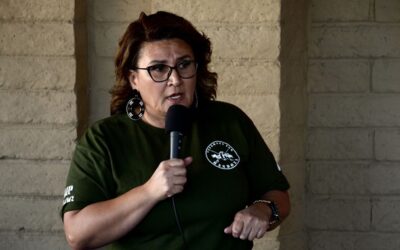
Teresa Leyba Ruiz, the incoming superintendent of public instruction, says she plans to reduce the accessibility of the ESA program prior to any legislative changes by ending automatic approval for transactions under $2,000. Ruiz told the Arizona Republic that she supported an end to universality of the program, citing Arizona voters rejecting universal expansion in 2018.
Ruiz also said that she plans to create an online, public dashboard to display how ESA program funds are being spent.
AZ Free News is your #1 source for Arizona news and politics. You can send us news tips using this link.