By Matthew Holloway |
The Goldwater Institute is criticizing the financial incentives behind Phoenix’s revived photo radar program, pointing to vendor payments and surcharges supporting Arizona’s public campaign financing system as voters consider Proposition 319.
In a recent analysis, Goldwater Senior Attorney Scott Day Freeman argues that the program creates financial incentives for collecting traffic fines and raises questions about motorists’ ability to contest alleged violations. Goldwater supports Prop 319, which would require local voter approval for continued operation of qualifying photo enforcement programs.
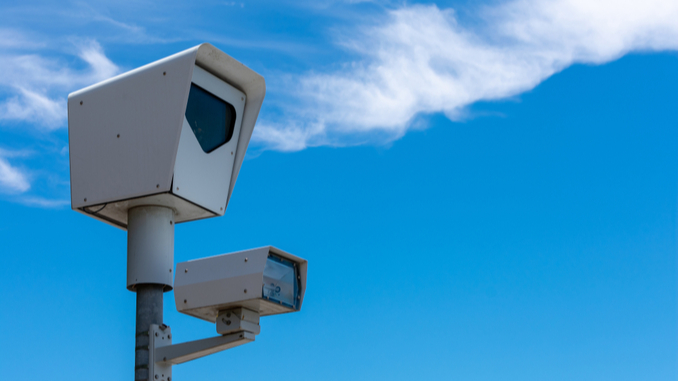
Phoenix began issuing photo enforcement citations March 25, following a 30-day warning period. The city reported that nine corridor cameras recorded more than 70,000 speeding events during that warning period.
The broader program includes 17 speed-monitoring cameras. The mayor and City Council approved it in October 2024 as part of Phoenix’s Vision Zero Road Safety Action Plan. The city contracts with third-party vendor Verra Mobility to operate the equipment.
The payment arrangement includes $3,000 per camera per month and $20 for each paid ticket. For 17 cameras, the monthly equipment payments would total $51,000, or $612,000 over a full year, before per-ticket payments.
Goldwater argues that tying part of the contractor’s compensation to collected citations creates an incentive to increase ticket volume and pursue payment.
Phoenix describes the program as a cost-recovery operation, with citation revenue covering city personnel and vendor expenses. Its published guidance says remaining funds will support the Vision Zero plan. The city also says Phoenix police review recorded events and determine whether citations should be issued.
Where the Surcharges Go
Goldwater’s criticism also focuses prominently on where the court surcharges go.
Under A.R.S. § 16-954, Arizona imposes an additional 10% surcharge on covered civil and criminal fines and penalties and deposits the proceeds into the Citizens Clean Elections Fund. The statute also addresses funding available to qualifying participating candidates and requires transfers of money designated as excess to the state’s general fund.
A separate statute, A.R.S. § 16-976, establishes an additional 1% surcharge deposited into a separate account within the Clean Elections Fund. That account supports implementation and enforcement of campaign finance disclosure requirements, with unused money available for other commission-approved purposes. The law requires suspension of the surcharge for one to three years if the commission determines it can perform the required functions during that period without the additional revenue.
“A safety tool that also subsidizes campaigns is not a neutral safety tool. It’s a political campaign financing tool,” Freeman said.
Freeman also questioned whether the revived cameras have produced a measurable reduction in traffic deaths and argued that delayed notices can make it harder for drivers to reconstruct road conditions or preserve evidence relevant to their defense.
Proposition 319, a legislative referral addressing photo enforcement, could change the legal landscape for similar future programs. The official ballot description says the measure would prohibit state agencies and local governments from using the systems unless provided for by contract as of Dec. 31, 2026, and require local voter approval for continued operation.
The text of the corresponding Senate Concurrent Resolution 1004 specifies that a signed operating contract must be in place on or before that date. Local authorities with qualifying contracts would have to seek voter approval at the next general election immediately following the provision’s effective date.
If voters reject continued operation, the local authority would have to stop using the system within 90 days of that election. Approval would allow operation for 10 years, with subsequent voter approval required every decade.
Approval of Proposition 319 would therefore establish a separate local decision point on existing programs. Phoenix’s cameras would not automatically shut down if the statewide measure passed.
Matthew Holloway is a senior reporter for AZ Free News. Follow him on X for his latest stories, or email tips to Matthew@azfreenews.com.